How to Spot-and-Stalk Montana Moose
Hunting moose in Montana on your own terms, especially with the spot-and-stalk method, can feel like trying to find a needle in a haystack—a very large, often wet, and incredibly dense haystack. The sheer vastness of Montana's wilderness combined with the elusive nature of these incredible animals presents a challenge that often leaves even seasoned hunters scratching their heads. This comprehensive guide is here to unravel the complexities, offering detailed strategies and insights to increase your chances of successfully spotting and stalking a Montana moose.
Understanding Montana Moose and Their Habitat
Before you can even think about a spot-and-stalk approach for a Montana moose, you've got to truly understand the animal itself. Moose are magnificent creatures, but they're not like deer or elk. They have different habits, different preferences, and they certainly don't live everywhere. Getting a tag for a moose in Montana is a privilege, often requiring significant time building points, so you want to be as prepared as possible when your number finally comes up.
Moose Behavior and Preferences
Moose are creatures of habit, but their habits are often hidden deep within the most rugged and remote parts of the landscape. Unlike elk, which tend to congregate in larger herds and often move between open feeding grounds and timbered bedding areas, moose are more solitary and prefer dense cover. They're often found near water sources like willow-choked creek bottoms, beaver ponds, and high-elevation lakes. These areas provide both the abundant browse they need – primarily willows, aquatic vegetation, and young aspen – and the thick cover to escape predators and summer heat. They are also adept at navigating heavy timber. A mature bull moose might have a home range of several square miles, but within that range, he'll likely have specific preferred bedding areas, feeding zones, and travel corridors, all characterized by dense vegetation.
Their daily routine often involves feeding during the cooler parts of the day, particularly dawn and dusk, and bedding down in thick cover during midday. In hot weather, they'll seek shade and often stand in water to cool off and escape insects. During the rut, typically in late September and October, bulls become more vocal and active, sometimes moving through more open areas as they search for cows, which can offer a small window of opportunity for visibility. However, outside of the rut, they are incredibly reclusive. Finding them often means wading through swamps and dense riparian zones, areas that hunters often shy away from due to the difficulty of travel. You might be surprised at how much ground they cover in seemingly impenetrable areas. Understanding these nuances is crucial for developing an effective strategy for How to Hunt Moose in Montana.
Key Montana Moose Habitats
Montana's diverse landscape offers various prime moose habitats, but generally, you'll be looking at high-elevation timbered areas, dense riparian zones, and marshy, brush-filled basins. The western and southwestern parts of the state, particularly areas within the Beaverhead-Deerlodge, Gallatin, and Flathead National Forests, hold significant moose populations. These are mountainous regions characterized by thick conifer forests, numerous small lakes, and extensive willow drainages. The habitat here is often steep and rugged, but it provides the solitude and forage that moose crave.
In these specific regions, moose often stick to north-facing slopes with dense timber during warmer periods, moving to lower elevations and river bottoms as winter approaches. Focus your scouting efforts, both physically and through e-scouting tools like GoHunt, on areas with ample willow growth, alder thickets, and stands of subalpine fir or lodgepole pine. Look for benches and saddles that connect feeding areas to bedding cover. You'll often find tell-tale signs like fresh tracks, heavily browsed willows (moose strip bark and twigs differently than deer or elk), and rub lines, especially during the pre-rut and rut. Even if you don't secure a permit in these prime zones, understanding these habitat types is key to identifying potential moose areas in other districts, as detailed in our guide on Montana Moose Range and Districts. Remember, where there’s water, willows, and thick cover, there’s a good chance of moose.
Essential Gear for Spot-and-Stalk Moose Hunting
Spot-and-stalk moose hunting in Montana isn't just about knowing the animal; it's about being prepared for the environment. The places moose call home are often wet, rugged, and dense, demanding a specific set of gear to ensure comfort, effectiveness, and safety. Skimping on the right equipment will only add to the already formidable challenges you’ll face.
Optics for Moose Country
When you're trying to locate a creature that blends seamlessly into dark timber and thick willows, high-quality optics are your best friend. A good pair of 10x or 12x binoculars are essential for scanning thick pockets of cover and identifying moose antlers or dark bodies at a distance. Don't underestimate the value of a steady image; consider binoculars with image stabilization or carry a tripod adapter. Given the low light conditions often encountered in dense timber or early mornings, prioritize optics with excellent light gathering capabilities.
A spotting scope, ideally a 60-80mm objective, is also incredibly useful, especially when you think you've spotted something and need to confirm it's a moose (and a legal bull, if that's what your tag allows) before committing to a lengthy stalk. Moose tend to hold tight in cover, so you might only catch a glimpse of an ear or the shine of an antler. A spotting scope allows you to scrutinize these faint signs without moving in too close prematurely. When considering your gear, check out our insights on Best Optics for Montana Big Game for detailed recommendations. Platforms like GoHunt also offer detailed maps and satellite imagery that, when combined with your high-quality optics, can help you pick apart terrain even before you step foot in it. This combination of digital and physical glassing is paramount for spotting these elusive giants.
Footwear and Clothing for Wet Terrain
Hunting moose often means venturing into swamps, crossing beaver ponds, and navigating boggy meadows. Waterproof footwear isn't just a suggestion; it's a necessity. Invest in high-quality, insulated rubber boots or waterproof hiking boots with gaiters that extend high up your leg. Your feet will get wet if you're not prepared, and cold, wet feet can quickly end a hunt or lead to misery. Ensure your boots are well broken in and comfortable for covering significant distances over varied terrain.
Your clothing system needs to be just as robust. Layers are key. Start with a moisture-wicking base layer, add insulating layers for warmth, and top it all with a waterproof and windproof outer shell. Quiet fabrics are crucial for stalking. Avoid anything noisy that will rustle against brush or stiffen in cold weather. Think about materials like brushed fleece or soft-shell synthetics. Moose have excellent hearing, and any extraneous noise will give you away. Given the prevalence of mosquitoes and other biting insects in moose habitat, especially during the early season, consider permethrin-treated clothing and a head net. Staying dry, warm, and quiet will significantly increase your odds of a successful stalk.
Navigation and Communication Tools
Moose country is often remote, rugged, and devoid of cell service. Reliable navigation and communication tools are non-negotiable for safety and efficiency. A dedicated GPS unit or a smartphone with a robust hunting app (like GoHunt, which offers detailed offline maps) is essential for knowing exactly where you are, tracking your progress, and marking key features like moose sightings, tracks, or escape routes. Always carry a physical map and compass as a backup, and know how to use them. Technology can fail, but old-school navigation never does.
For communication, especially when hunting solo or in areas without cell service, a satellite messenger or a satellite phone is a lifesaver. Devices like Garmin inReach or Zoleo allow you to send emergency messages, communicate with family, and even receive weather updates, providing invaluable peace of mind. A portable power bank to keep your electronic devices charged is also a wise addition to your pack. This ensures you can always navigate back to camp and call for help if needed, as outlined in our guide on Montana Backcountry Hunting Safety Tips. Being prepared for the remote nature of moose hunting means you can focus more on the hunt itself, rather than worrying about getting lost or isolated.
The Spot-and-Stalk Methodology for Moose
Now that you're geared up and understand the quarry, let's talk about the actual "how-to" of spot-and-stalk moose hunting. This method demands immense patience, keen observation, and a methodical approach, especially in the thick, unforgiving terrain where moose often reside.
Strategic Glassing Techniques
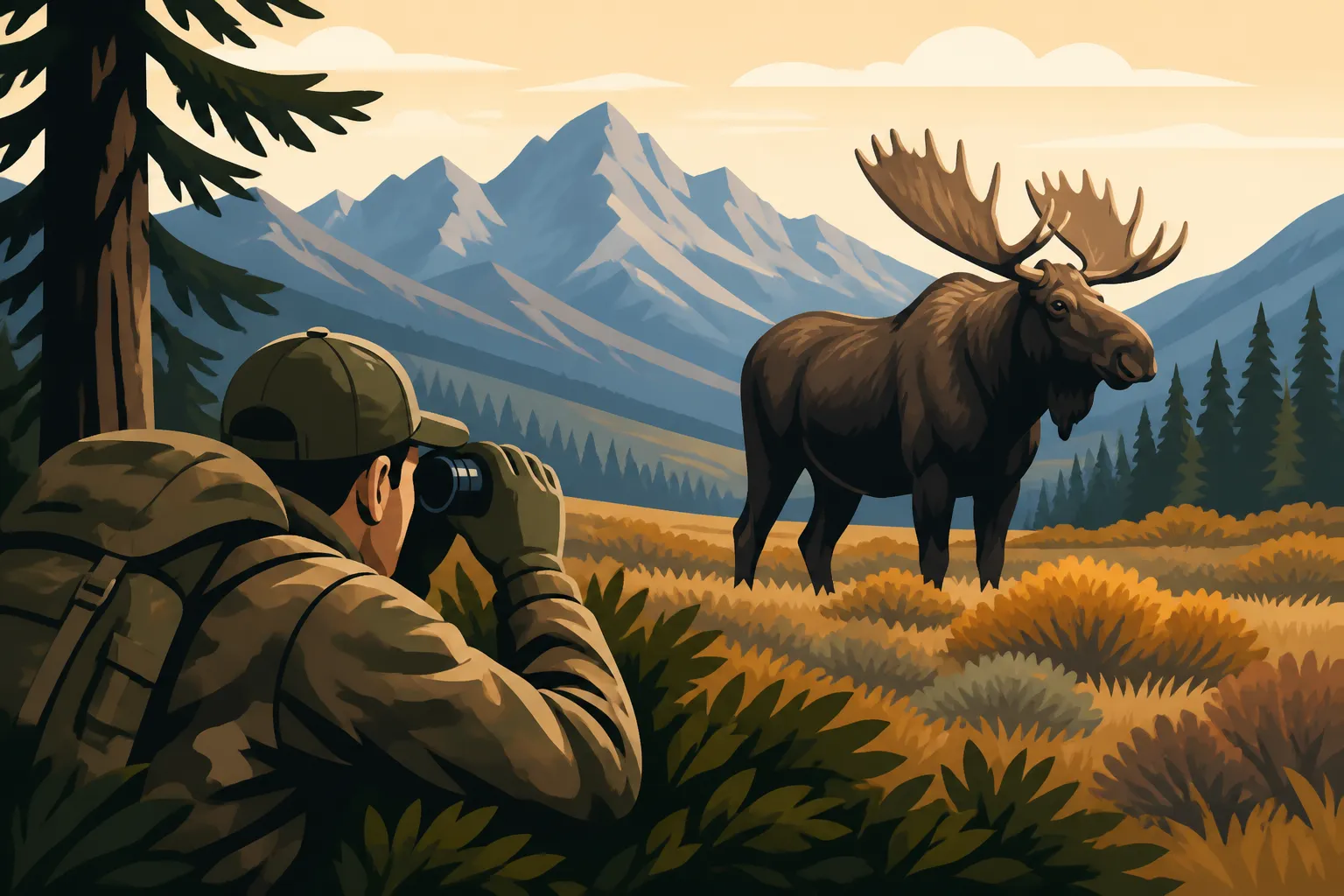
Glassing for moose is a different beast than glassing for elk or mule deer. You're not typically looking for animals silhouetted on a ridge or moving across open parks. Instead, you're often searching for small, subtle clues within dense cover. This means breaking down the landscape into smaller, manageable grids and meticulously scrutinizing every dark patch, every clump of willows, and every shadow. Position yourself on a vantage point that offers a broad view of potential moose habitat—creek bottoms, lake edges, and benches with thick timber.
Start by systematically scanning the most obvious spots where moose might feed or bed, then move to less obvious areas. Look for the distinct dark shape of a moose body, the paddle of an antler poking above a willow bush, or the flick of an ear. Moose are masters of camouflage in their preferred environment. Patience is paramount; spend extended periods behind your glass, letting your eyes relax and search for anomalies. Sometimes, a moose will only be visible for a few seconds as it shifts its weight or takes a step. Early morning and late evening are prime times, as moose are often most active. If you locate a potential moose, use your spotting scope to confirm and evaluate. For more advanced techniques, refer to How to Glass Montana's Big Country.
The Approach: Mastering Stealth and Wind
Once you've spotted a moose and confirmed it's a legal animal you want to pursue, the real challenge of the stalk begins. Moose have an incredible sense of smell and hearing, and navigating their dense habitat quietly is exceptionally difficult. The wind direction is your absolute priority. Always approach from downwind, allowing thermals and prevailing winds to carry your scent away from the animal. In mountainous terrain, remember that thermals typically rise in the morning as the air warms and fall in the evening as it cools. Plan your approach accordingly, taking advantage of these natural air currents.
Movement needs to be painfully slow and deliberate. Take a step, pause, observe. Scan for other animals that might spook and alert your target moose. Use every bit of available cover—trees, brush, terrain features—to break up your outline. Avoid stepping on dry sticks or rustling through dense leaves. Sometimes, moving through water or wet areas might be the quietest option, even if it means getting your boots wet. The goal is to get within an ethical shooting range without being detected, which for most hunters means within 100-200 yards, or much closer for archery. This requires an almost zen-like focus on your surroundings and every single step.
Final Stalk and Shot Placement
As you close the distance, the pressure mounts, and your movements must become even more precise. Identify your shooting lanes beforehand and move to a position that offers a clear, ethical shot. Moose are large, tough animals, and proper shot placement is critical for a quick, humane kill. Their vital organs are located similarly to deer and elk, but their sheer size can be deceiving. Aim for the heart-lung area, typically behind the shoulder, slightly lower on the body.
Manage your adrenaline. Take deep breaths to calm your nerves and steady your aim. Once in position, confirm the moose's identity and gender one last time if antler restrictions are in place. Wait for the moose to offer a broadside or slightly quartering-away shot. Never take a frontal shot on a moose unless absolutely necessary and you are highly proficient. If the moose senses you and starts to move, assess if you still have an ethical shot. If not, let it go and try to relocate it. A wounded moose in thick cover is a dangerous and often unrecoverable situation. Success here isn't just about bagging an animal; it's about doing so ethically and responsibly.
Overcoming Challenges in Moose Country
Hunting moose is rarely a walk in the park. The very attributes of their habitat that make it ideal for them also make it incredibly challenging for hunters. Anticipating and preparing for these difficulties is just as important as knowing how to stalk.
Dealing with Dense Cover and Visibility Issues
Moose are experts at disappearing into their environment. One minute you might spot a bull through a small opening in the willows, and the next, he's vanished, leaving you wondering if you imagined him. Dense cover, be it thick timber, alder thickets, or head-high willow bottoms, drastically limits visibility. This means your effective spotting range is often much shorter than in open elk country. You'll spend a lot of time "still-hunting" slowly and quietly through these areas, stopping frequently to listen and scan.
To combat poor visibility, focus on listening. Moose are large animals, and they make noise when they move through dense vegetation. Listen for the rustle of branches, the splash of water, or the muffled thud of hooves. Use your binoculars to pick apart every patch of dark timber, looking for horizontal lines that don't belong (like a moose's back) or the distinctive glint of an antler. Sometimes, you'll need to get down on your hands and knees to see underneath thick branches. Employ calling techniques, like a soft cow call, to get a moose to stand up or take a step, revealing its position. This kind of hunting requires patience that most other big game doesn't demand.
Managing Weather and Terrain
Montana moose live in areas that can experience rapid and extreme weather changes. You could start your day with crisp, clear skies and end it battling a snowstorm or torrential rain. Wet conditions, combined with the often-boggy terrain, mean mud is a constant companion. Steep, timbered slopes and rocky drainage bottoms add another layer of physical exertion. All of these factors can make an already difficult stalk even more arduous and dangerous.
Being prepared for diverse weather means packing appropriately layered, waterproof clothing. Consider bringing along extra dry socks and gloves. When navigating steep or wet terrain, reliable footwear with excellent traction is crucial to prevent slips and falls. Use trekking poles for stability and to test the depth of muddy patches or stream crossings. If snow falls, it can be a blessing and a curse; it makes tracking easier, but also adds to the cold and wet challenge. Always check local weather forecasts, but be prepared for anything. This rugged country tests your grit, and sometimes, the biggest challenge isn't finding the moose, but simply enduring the conditions.
Physical and Mental Preparation
A successful spot-and-stalk moose hunt in Montana is as much about physical and mental fortitude as it is about skill. Moose often inhabit high-elevation basins and steep, rugged terrain, requiring significant physical exertion, especially when packing out a trophy. You'll be covering miles over uneven ground, often with significant elevation gain, and potentially in adverse weather. Being in peak physical condition is essential.
Start a rigorous fitness regimen months before your hunt, focusing on cardiovascular endurance, leg strength, and core stability. Practice hiking with a loaded pack, mimicking the weight you'd carry with gear and potentially meat. Mentally, moose hunting demands extreme patience and resilience. You might go days without seeing a moose, or you might blow a stalk due to a change in wind or an unseen obstacle. Don't let frustration derail your efforts. Maintain a positive attitude, stay focused, and remember that persistence often pays off in the end. This journey is similar to what's needed for How to Prepare for High-Country Montana Hunting, but with its own unique soggy, timber-choked twists.
| Factor | Ideal for Spot-and-Stalk Moose Hunting | Challenging for Spot-and-Stalk Moose Hunting |
|---|---|---|
| Wind & Thermals | Consistent wind/thermals from target; predictable air currents | Swirling winds; unpredictable thermals in complex terrain |
| Visibility | Openings in timber; benches overlooking willow bottoms; sparse cover | Dense, unbroken timber; head-high willows; heavy fog/rain |
| Terrain Quietness | Soft, damp ground; light snow; mossy forest floor | Dry leaves/sticks; loose rock slides; crunchy snow |
| Moose Behavior | Actively feeding in semi-open areas; slow, deliberate movement | Bedded in impenetrable thickets; quick, nervous movements; spooked easily |
| Hunter Preparation | Excellent physical condition; quiet, waterproof gear; patient mindset | Poor fitness; noisy or inadequate gear; easily frustrated or rushed |
| Optics Use | Long periods of systematic glassing from vantage points | Quick, sporadic glances; attempting to "push" animals out of cover |
Disclaimer
Hunting is an inherently dangerous activity. The information provided in this guide is for informational purposes only and is not a substitute for professional instruction, adherence to all local, state, and federal hunting regulations, and personal responsibility. Always prioritize safety, respect wildlife, and obtain the necessary licenses and permits from Montana Fish, Wildlife & Parks before engaging in any hunting activities. Conditions in the field can change rapidly, and hunters should always be prepared for the unexpected.