Best Method to Hunt Montana Whitetail Deer
There’s a common misconception that Montana is solely the domain of towering bull elk and wide-racked mule deer, overshadowing the incredible opportunities for hunting whitetail deer. But for those of us who appreciate the challenge and stealth of pursuing these elusive creatures, Montana offers some truly fantastic whitetail hunting. These intelligent deer thrive in diverse habitats across the state, and consistently finding success means understanding their behavior and employing the right tactics. This guide isn't about general deer hunting; it's a deep dive into the very best methods to effectively hunt Montana whitetail deer, helping you fill your freezer and perhaps even hang a trophy on the wall.
Understanding Montana Whitetail Behavior and Habitat
To really dial in your whitetail hunting strategy, you first have to get inside their heads, so to speak. These animals are masters of cover and concealment, and knowing why they choose certain areas is half the battle. Montana's landscape offers a variety of whitetail havens, each requiring a slightly different approach.
Preferred Cover and Terrain
Montana whitetails are truly creatures of edge and dense cover. Unlike their mule deer cousins who often prefer wide-open spaces and rimrock country, whitetails are homebodies, sticking close to areas where they can vanish in an instant. This means focusing your efforts on specific types of terrain.
River bottoms and riparian zones are absolute magnets for whitetails. Think about the big rivers like the Yellowstone, the Milk River, or even the mighty Missouri and its tributaries. These areas provide everything a whitetail needs: dense willow thickets, cottonwood stands, and pockets of brush for bedding, ample water, and a constant supply of nutritious forage. The thick cover along these waterways acts as a natural sanctuary, allowing them to move undetected. During the day, they'll often bed down in the nastiest tangles you can imagine, only to emerge at dawn and dusk to feed in nearby agricultural fields or open meadows. Hunting these river bottoms requires patience and an understanding of how deer use the wind and thermals within these linear strips of cover.
Beyond the rivers, you'll find whitetails gravitating towards agricultural fields bordered by thick timber or dense brushy coulees. The crops offer a buffet, while the adjacent cover provides immediate security. It's a classic whitetail setup, and identifying these transitions where food meets cover is paramount. In areas with more broken timber, like parts of western Montana, whitetails will seek out north-facing slopes with heavy timber, especially during colder weather, where they can escape the wind and find thermal protection. They are incredibly adept at using even small folds in the landscape or patches of thick brush to remain hidden, making them incredibly challenging to spot without proper glassing techniques or strategic stand placement.
Seasonal Movement and Rut Behavior
A whitetail's behavior changes dramatically throughout the year, influenced by food availability, weather, and of course, the rut. Understanding these shifts is critical for timing your hunts and employing the most effective methods.
In the spring and early summer, whitetails are generally more dispersed. Does are focused on fawning, finding secluded spots to raise their young, while bucks are busy growing antlers and feeding heavily to recover from the previous rut. They'll often be found in lush, green areas, often closer to water and high-nutrient forage. As early fall arrives, deer start to establish more predictable patterns, often revolving around specific food sources. Bucks will begin to lay down rubs and scrapes, marking their territory and starting to flex their dominance. This "pre-rut" phase can be an excellent time to target bucks, as they are still somewhat predictable in their movements but are starting to become more active.
Then comes the magic of the peak rut, typically from late October through mid-November in Montana. This is when buck movement becomes less predictable, as their focus shifts from food to finding and breeding does. You'll see bucks covering more ground, chasing does, and responding more aggressively to calls or rattling. This is often the time when hunters are able to capitalize on a buck's vulnerability due to their distraction. After the peak rut, in the late season, whitetails tend to "yard up" in areas with dense thermal cover and reliable food sources, conserving energy as winter sets in. They become more nocturnal and secretive, and hunting them effectively often means finding these wintering grounds and patiently waiting for them to move, often during daylight hours when conditions are harshest. For a deeper dive into this crucial period, check out our guide on Montana Whitetail Rut Timing.
Key Hunting Methods for Montana Whitetail
When it comes to actually pursuing whitetails in Montana, there are a few tried-and-true methods that consistently yield results. Each has its strengths and weaknesses, and the most successful hunters know when to apply which technique based on the terrain, conditions, and deer behavior.
Stand Hunting Tactics
Stand hunting is arguably one of the most popular and effective methods for whitetails, and for good reason. It allows you to get off the ground, control your scent, and observe a wider area without giving away your position.
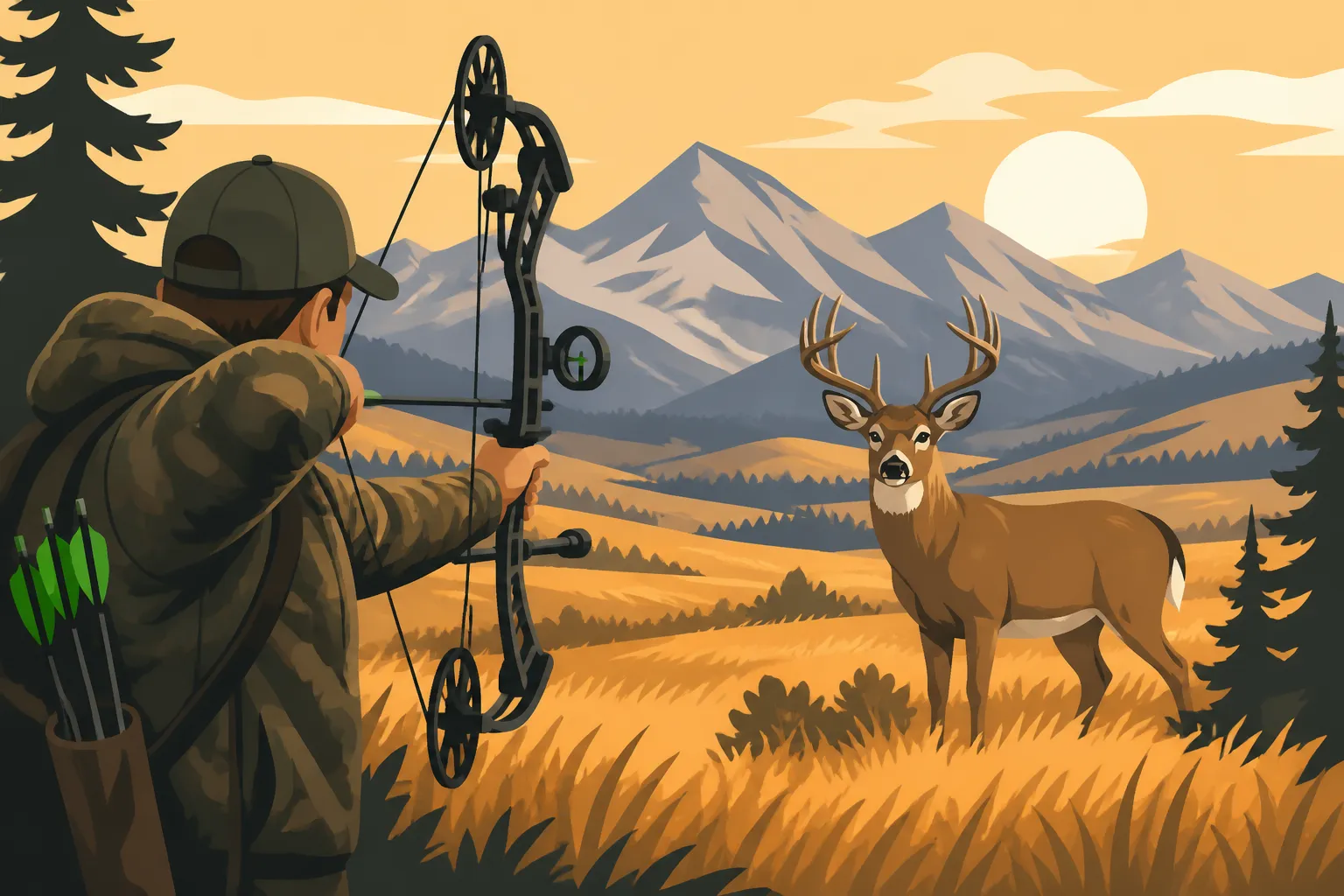
Tree stands, whether fixed ladder stands or portable climbers, offer a fantastic advantage. Getting elevated significantly helps with scent dispersal, allowing your scent cone to blow over deer rather than directly into their noses. The elevated position also gives you a better vantage point, making it easier to spot deer moving through dense cover or identify subtle movements. Proper placement is everything: think about natural funnels where deer are forced to travel, like narrow strips of timber between fields, saddles on ridges, or pinched-down sections of river bottom. Targeting active travel corridors, especially those leading to or from known food sources or bedding areas, is crucial. Setting up on the edge of an alfalfa field or a heavily browsed area can also be highly productive, especially during the early season or late in the day. Remember, patience is your best friend when stand hunting, as is impeccable scent control. For a comprehensive look, read our article on How to Hunt Montana Whitetail from a Tree Stand.
Ground blinds, on the other hand, offer an excellent alternative, especially in areas where suitable trees for stands are scarce or for hunters who prefer to stay on terra firma. Modern pop-up blinds provide incredible concealment, breaking up your outline and allowing for movement inside without spooking deer. They're also a great option for hunting with youth or in inclement weather. When placing a ground blind, look for natural cover to help break up its outline even further. Thick brush lines, fence rows, or the edge of a timber block are ideal locations. Just like tree stands, placement should be strategic, focusing on pinch points, field edges, or near water sources. Scent control remains paramount, as deer at ground level will bust you much faster if the wind is wrong. Our guide on How to Hunt Montana Whitetail in a Ground Blind offers more detailed advice.
Still-Hunting and Stalking in Dense Cover
For those who prefer a more active, hands-on approach, still-hunting and stalking can be incredibly rewarding ways to hunt Montana whitetails, particularly in the state's thicker river bottoms and timbered coulees. This method requires a completely different mindset: extreme patience, heightened senses, and an intimate understanding of the terrain.
Still-hunting is about moving through the habitat at an agonizingly slow pace, taking only a few steps, then stopping to scan, listen, and glass every piece of cover. You're not trying to push deer; you're trying to find them before they find you. This is where playing the wind becomes absolutely critical – always move into the wind or with a crosswind. Pay close attention to subtle signs like a flick of an ear, a patch of brown hair against the brush, or the glint of an antler. Reading deer sign on the ground, such as fresh tracks, rubs, and scrapes, can tell you where deer have been and where they might be going. In snowy conditions, fresh tracks become your roadmap, allowing you to follow a deer's path through the timber. This method demands quiet movement, often taking a minute or more to cover just a few yards, meticulously picking your footsteps to avoid snapping twigs. For more specialized insights into this technique, consider our article on How to Still-Hunt Montana Timber.
Stalking takes still-hunting a step further – it's the art of closing the distance on a deer you've already spotted. This is a game of calculated risk and stealth. Once you see a deer, you need to assess the wind, terrain, and available cover to formulate a plan to get within shooting range. Using every piece of topography, every bush, and every shadow to your advantage is key. Often, it means making a wide loop to get into a more favorable position, sometimes taking hours to cover a short distance. This method is particularly effective in broken country with good cover, allowing you to move from one vantage point to the next, slowly picking apart the landscape until a whitetail reveals itself.
Drive Hunting and Group Tactics
While often less refined than stand hunting or still-hunting, drive hunting can be incredibly effective for pushing whitetails out of specific, dense cover patches where they love to hide. This is typically a group effort and demands careful planning and safety precautions.
The basic premise is simple: a line of "drivers" walks through a section of cover, pushing deer towards a line of "blockers" or "standers" positioned at strategic escape routes. Drive hunting is particularly useful in thick river bottom tangles, small timber blocks, or brushy draws where deer can easily evade single hunters. It's about dislodging those bucks that are hunkered down, refusing to move.
Success hinges on several factors. First, good communication is vital – everyone needs to know their role, their boundaries, and exactly where others are. Safety is paramount, with clear shooting lanes and designated zones for each blocker. The drivers need to move slowly and systematically, making enough noise to get deer moving but not so much that they just bust through the line. Blockers need to be positioned in areas where deer are likely to exit the cover, such as pinch points, open field edges, or natural funnels. While it can be a more chaotic method, when executed correctly, drive hunting can be an excellent way to harvest whitetails from areas that would otherwise be impenetrable. It’s also a fantastic social hunting experience, allowing friends and family to participate.
E-Scouting and On-the-Ground Preparation
In today's hunting world, preparation often starts long before you ever set foot in the woods. Modern technology has revolutionized the way we scout, and combining that with solid on-the-ground recon will give you a significant edge in finding Montana whitetails.
Leveraging Technology for Whitetail Success
Gone are the days when you needed to spend weeks blindly hiking to find prime hunting spots. Now, powerful e-scouting tools can help you narrow down your search from the comfort of your home. Platforms like GoHunt and onX Hunt are indispensable for whitetail hunters in Montana.
Using satellite imagery, you can meticulously analyze potential hunting units. Look for those classic whitetail hotspots: river corridors, agricultural fields bordering dense timber, and brushy coulees or creek bottoms. Identify potential bedding areas (often the thickest, nastiest cover), feeding areas (green fields, crop stubble), and the travel corridors or pinch points that connect them. You can mark these waypoints on your phone or GPS, creating a detailed map of your chosen district. This allows you to eliminate unproductive ground and focus your limited hunting time on areas with the highest potential. For example, a hidden alfalfa field tucked into a public land timber block, only visible from above, could be a goldmine. Our guide on How to E-Scout Montana Hunting Units offers a deep dive into these techniques.
Beyond identifying habitat, these mapping tools also clearly delineate public and private land boundaries, which is absolutely critical in Montana. You can easily find Block Management Areas (BMAs) or State Trust Lands that are open to public hunting. Cross-referencing what you see on these apps with Montana Fish, Wildlife & Parks (FWP) hunt unit data can help you understand specific regulations and antler restrictions for your chosen area. The ability to overlay different map layers, such as topo maps for elevation changes or public land ownership, makes it an incredibly powerful tool for planning your hunt and maximizing your time afield. Remember to always download offline maps before heading into areas with no cell service, which is common in much of Montana's prime whitetail country. If you want to master your digital scouting skills, be sure to read How to Use onX for Montana Hunting.
Pre-Season Scouting and Sign Recognition
While e-scouting is fantastic for narrowing down locations, there’s no substitute for getting boots on the ground. Pre-season scouting allows you to confirm your e-scouting suspicions and find fresh sign that tells you exactly where deer are active.
Walk the areas you’ve identified on your maps, but do so strategically, trying to minimize your disturbance. Look for fresh rubs (where bucks scrape their antlers on trees) and scrapes (pawed-out patches of ground where bucks deposit urine and scent). These are clear indicators of buck activity and often show where a buck is marking his territory or checking for does. Pay close attention to deer trails – not just the main highways, but the subtle, faint paths that indicate regular movement between bedding and feeding areas. Understanding how deer use these trails in relation to wind direction and cover will help you position yourself effectively.
Identifying bedding areas is another critical piece of the puzzle. These are often in very thick cover, sometimes on a slight rise for observation, or in dense river bottom tangles that offer maximum security. While you don’t want to stomp through bedding areas during the season, understanding where they are will help you predict entry and exit routes. Strategically placing trail cameras along trails, near scrapes, or on the edges of food sources can give you invaluable intel on deer movement patterns, timing, and even help you identify specific bucks in the area. This real-time information can be the difference between a frustrating hunt and a successful one. For more detailed advice on this, check out our guide on How to Scout a Montana Hunting District.
Optimizing Your Hunt: Gear, Scent Control, and Calling
Even with the best scouting and understanding of whitetail behavior, your hunt can be made or broken by your gear, your commitment to scent control, and your ability to use calling and decoys effectively. These elements can tip the scales in your favor.
Essential Gear for Whitetail Hunting
Having the right gear won't guarantee success, but it will certainly make your hunt more comfortable, efficient, and ultimately, more productive. Montana weather can be unpredictable, so dressing in layers is paramount. Think quality base layers, insulating mid-layers, and a waterproof/windproof outer shell. Camouflage patterns that blend well with the local foliage (timber, brush, or open plains, depending on your hunting spot) are also important. Quiet clothing is a non-negotiable; noisy fabrics will give you away in the silent whitetail woods.
Optics are critical for whitetail hunting. A good pair of 10x binoculars will help you pick apart dense cover, spot subtle movements, and identify deer at a distance. A reliable rangefinder is also essential for ethical shot placement, especially in varying terrain. For low-light conditions at dawn and dusk, a high-quality scope on your rifle or clear pins on your bow sight are invaluable. Don't forget a headlamp, knife, game bags, and a first-aid kit. Footwear should be comfortable, waterproof, and provide good ankle support, especially if you're doing a lot of still-hunting or stalking in rugged terrain. For a broad overview of essential optics, you might find our article on Best Optics for Montana Big Game helpful, even if it's not specific to whitetail, the principles apply.
Mastering Scent Control
Whitetails have an incredible sense of smell, arguably their most potent defense mechanism. Neglecting scent control is one of the quickest ways to spook a deer and ruin your hunt. Mastering scent control is not a one-step process; it's a multi-faceted approach.
Start with your personal hygiene: shower with scent-free soap and shampoo before heading out. Wash all your hunting clothes in scent-free detergent and store them in airtight bags or containers, separate from everyday clothes. Consider using carbon-lined clothing, which is designed to absorb human odor. Once dressed, use scent-eliminating sprays on your boots, backpack, and outer layers. The goal is to minimize, if not eliminate, any human odor you might be carrying.
However, the most important aspect of scent control is playing the wind. No amount of spray or carbon clothing will completely fool a whitetail if the wind is blowing your scent directly toward them. Always approach and hunt with the wind in your face or with a favorable crosswind. Use a wind checker (a small bottle of powder or milkweed fluff) constantly to monitor shifting air currents. Understanding thermals, especially in hilly or mountainous terrain, is also crucial. Air typically flows downhill in the morning and evening, and uphill in the middle of the day. Using these natural air currents to your advantage can prevent your scent from reaching deer in their bedding or feeding areas.
Incorporating Calls and Decoys
Calling and decoying can add an exciting and effective dimension to your Montana whitetail hunting, especially during the rut. When used correctly, they can entice a curious or dominant buck right into your shooting lane.
Whitetail calls can mimic various deer sounds. Grunts, snort-wheezes, and bleats are among the most common. A buck grunt can simulate a buck looking for a doe or challenging another buck, often drawing in curious deer. During the peak rut, a snort-wheeze can be a powerful challenge call, sometimes enough to bring an aggressive buck charging in. Doe bleats, especially estrous bleats, can attract bucks looking for receptive does. Learning when and how aggressively to use these calls is an art form. Start subtly, and if there's no response, gradually increase the volume and intensity. For a more focused discussion, you might find our guide on How to Rattle for Montana Whitetail particularly useful during the breeding season.
Decoys, primarily buck or doe decoys, can also be incredibly effective, especially when paired with calling. A realistic decoy can catch a deer's attention from a distance, drawing them in for a closer look or a challenge. Placing a buck decoy downwind of your position, facing away from you, can make it appear non-threatening and encourage an approaching buck to circle to get a better look, bringing them closer to your stand. Doe decoys can attract rutting bucks looking for a mate. However, decoys aren't without risks. They can sometimes spook wary deer, and you must be absolutely certain of your target before shooting, as another hunter might mistake your decoy for a real animal. Always consider the hunting pressure in your area and the visibility when deciding whether to deploy a decoy.
Whitetail Hunting Method Comparison
To help summarize and contrast the various hunting methods we've discussed, here's a table outlining their key characteristics.
| Method | Pros | Cons | Best Scenarios |
|---|---|---|---|
| Tree Stand | Elevated vantage, good scent control, wide field of view, silent setup | Fixed position, limited mobility, can be uncomfortable in cold/wind, transport | Funnels, food plot edges, dense timber borders, active travel corridors |
| Ground Blind | Excellent concealment, weather protection, less noise, comfortable, portable | Limited view at ground level, ground-level scent dispersal, deer may detect new object | Thick brush lines, field edges, near water, where trees are scarce |
| Still-Hunting | Highly mobile, adaptable, intimate understanding of terrain, exciting | Requires extreme patience, sharp senses, perfect wind, physical exertion | Timbered river bottoms, thick coulees, post-snow tracking, areas with broken cover |
| Drive Hunting | Effective for pushing deer from dense cover, can be a group activity | Requires multiple hunters, safety risks (communication), can be chaotic | Small, well-defined blocks of dense cover, brushy draws, thick river bends |
Ultimately, the "best" method to hunt Montana whitetail deer isn't a single, universally applicable technique. It's about combining your knowledge of whitetail behavior and habitat with smart e-scouting and pre-season preparation. It's about having the right gear, meticulously managing your scent, and knowing when to use calls or decoys to your advantage. Most importantly, it's about being adaptable. The conditions on any given day, the specific piece of ground you're hunting, and the deer's response will dictate which method will be most effective. Whether you're patiently waiting in a stand overlooking a hidden field or slowly slipping through a river bottom, the thrill of pursuing a Montana whitetail is an experience truly unique and rewarding.
Disclaimer
Hunting is an inherently dangerous activity. Always prioritize safety, adhere to all Montana Fish, Wildlife & Parks regulations, and ensure you have proper training and equipment. The information provided in this guide is for informational purposes only and should not replace professional guidance or official hunting regulations.