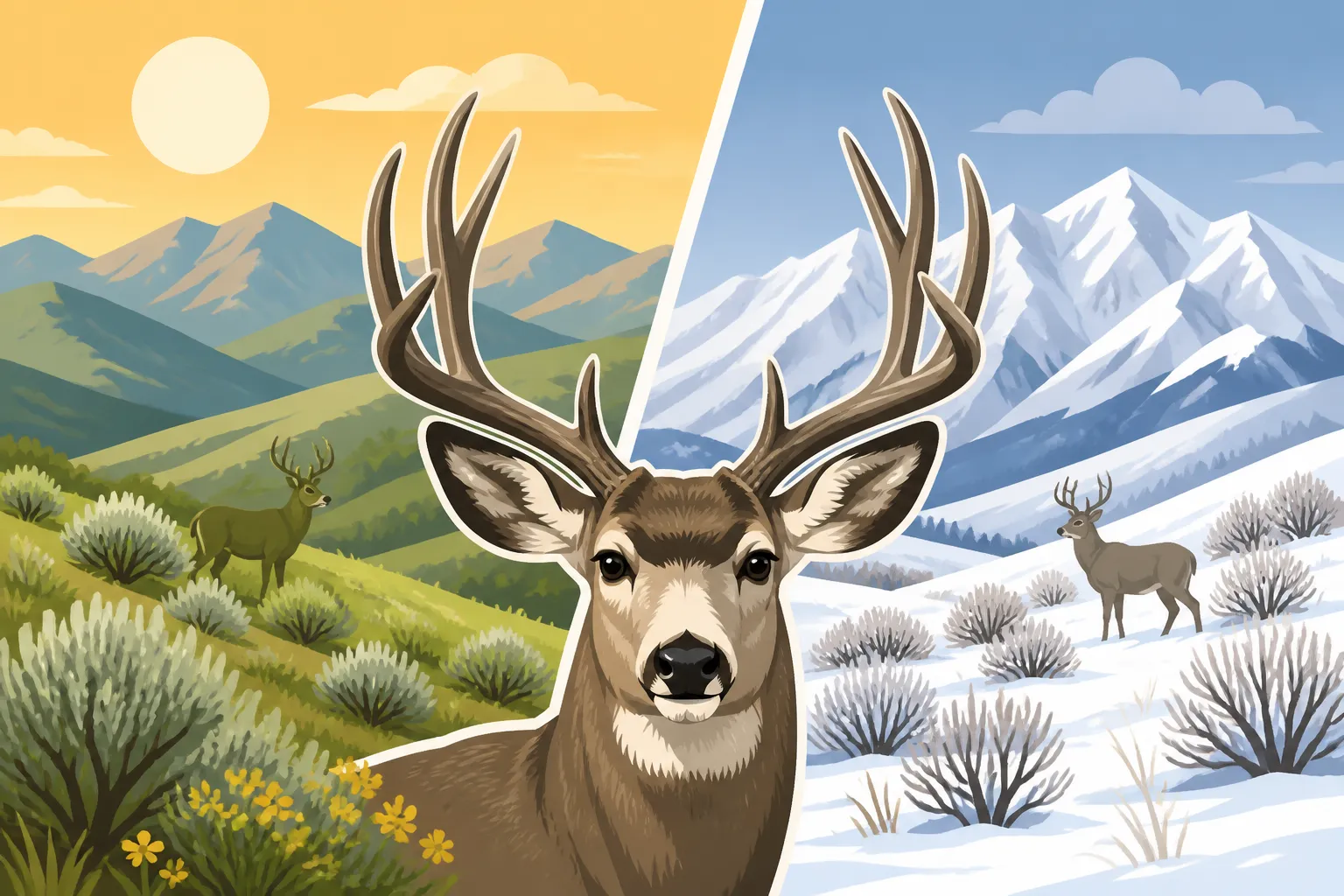
Montana Mule Deer Summer vs Winter Range
Hunting mule deer in Montana can be a puzzle, especially when you're trying to figure out where they go as the seasons change. It's a common frustration to scout an area in summer, only to find it completely devoid of deer come hunting season, or vice versa. Understanding the distinct difference between Montana mule deer summer and winter ranges is absolutely crucial for any hunter hoping to consistently find success, and this guide is here to unravel that mystery for you.
Understanding Mule Deer Migration in Montana
Montana's diverse landscape, from its towering mountain ranges to its sprawling plains, plays a massive role in how mule deer live and move throughout the year. These aren't creatures that just pick a spot and stay there; their lives are a constant ebb and flow with the seasons, driven by essential needs that shape their movements.
Why Mule Deer Migrate
The primary drivers behind mule deer migration are quite simple when you boil them down: food availability, cover from the elements, and avoiding predation pressure. As the seasons shift, so do these critical factors, forcing deer to adapt and move.
In spring, melting snow reveals new growth in higher elevations, drawing deer upward to take advantage of the fresh, nutrient-rich forage. They're seeking the best possible food sources to recover from the lean winter months and to support antler growth in bucks and gestation in does. As summer peaks, these high-elevation areas offer cooler temperatures and a reprieve from the heat and biting insects found at lower altitudes. Come autumn, the dwindling forage in the high country, coupled with increasing snow depths, signals a necessary descent. They need to find areas where snow won't bury their food and where they can conserve energy during the harsh Montana winter. Predation also plays a role; while bears and mountain lions are year-round threats, winter often concentrates deer, making them more vulnerable, so finding areas with adequate cover is vital.
The Concept of Seasonal Range
When we talk about seasonal range for mule deer, we're really looking at a spectrum of habitats they utilize over the course of a year. It's not just a binary choice of "summer" or "winter" but a complex system that often includes distinct transition zones.
Summer Range typically refers to the higher elevation, lush mountain meadows and forested slopes where deer spend the warmer months. These areas are characterized by abundant, high-quality forage, ample water, and cooler temperatures. It's where they bulk up, raise their fawns, and bucks grow their impressive antlers. The deer are usually more dispersed across the landscape here, taking advantage of the vast resources.
Winter Range, on the other hand, consists of lower elevation areas, often on south-facing slopes, with less snow accumulation and access to critical thermal cover. Food sources here are typically sparser and of lower quality, so energy conservation is paramount. Deer tend to concentrate in these areas, making them vital but also more vulnerable.
Between these two extremes are Transition Zones. These are the corridors and habitats that mule deer use during their ascent to summer range in spring and their descent to winter range in fall. These areas are incredibly important for hunters, as deer can be found in high numbers as they move through. Understanding these seasonal movements is key to knowing Montana Mule Deer: Where to Find Them.
Delving into Montana's Summer Mule Deer Range
Montana's summer range for mule deer is truly a sight to behold, offering a stark contrast to the barrenness of their winter haunts. This is where the deer spend their most productive months, flourishing in the abundance that the mountains provide.
Characteristics of Summer Habitat
During summer, mule deer seek out environments that offer a trifecta of benefits: abundant, nutritious forage, consistent water sources, and protective cover, all within a generally cooler climate. You'll find them scattered across alpine basins, open ridges, and timbered slopes in the higher elevations.
The forage is typically lush and varied, consisting of nutrient-rich forbs, succulent grasses, and tender browse. These plants are crucial for antler growth in bucks, milk production for does, and rapid growth in fawns. Water is readily available from snowmelt streams, seeps, and alpine lakes. The higher elevation also means cooler temperatures, providing a welcome escape from the heat and insect pressure that can plague lower areas. This can influence Montana Mule Deer Hunting: Spot-and-Stalk Tactics as deer might be bedding down in shady areas during the hottest parts of the day. Hunter pressure is generally sparser in these high, rugged areas due to difficult access, though dedicated backcountry hunters will certainly be present. Look for areas with a mix of open areas for feeding and dense timber patches or rocky outcrops for bedding and escape.
Key Regions for Summering Mule Deer
Montana is a big state, and while mule deer can be found almost everywhere, their summer range is most pronounced in the vast mountain ranges across the western and central parts of the state. These regions offer the necessary elevation and habitat diversity.
Consider areas within the expansive national forests like the Beaverhead-Deerlodge National Forest, the Custer Gallatin National Forest, or the Helena-Lewis and Clark National Forest. These forests, along with wilderness areas such as the Bob Marshall Wilderness Complex, provide huge tracts of relatively undisturbed habitat perfect for summering deer. For example, in the Gravelly Range or the Tobacco Root Mountains, you'll find deer spread out across high-elevation meadows and timberlines, often at 7,000 to 10,000 feet. The Bitterroot Valley, with its surrounding mountains, also holds significant summering populations. Understanding these specific areas can greatly inform your pre-season scouting, particularly when using resources like GoHunt's mapping tools to identify high-elevation public land. Knowing the general layout of a Montana National Forest Hunting Guide will give you a leg up on where these summer herds reside.
Navigating Montana's Winter Mule Deer Range
As the vibrant colors of autumn fade and the first snows begin to fall, Montana's mule deer embark on their journey to winter range. This transition is a critical period, dictating their survival through the leanest months of the year.
Characteristics of Winter Habitat
Winter range is a complete departure from the summer high country. Mule deer seek out lower elevations where snow accumulation is less severe and where they can find vital thermal cover. South-facing slopes are gold in winter because they catch more sunlight, melting snow faster and exposing valuable forage sooner than north-facing aspects.
These areas often consist of sagebrush-steppe environments, river bottoms, or open timber stands on lower mountain flanks. Food sources, though scarcer, typically include bitterbrush, sagebrush, and other hardy browse that can withstand cold temperatures and snow. Coniferous forests provide crucial thermal cover, shielding deer from brutal winds and heavy snowfall. This cover helps them conserve energy, which is paramount when food is limited. During winter, deer often "yard up" or concentrate into larger groups, which can make them easier to locate for survival but also more susceptible to predation and disease. For a hunter, finding these concentrated herds is key to Montana Mule Deer Hunting: Rifle Tactics in late season.
Critical Wintering Areas and Their Challenges
Across Montana, specific regions are renowned as critical wintering grounds for mule deer. These areas, while vital for the deer, often present their own set of challenges, particularly concerning access and conservation.
The lower slopes of many mountain ranges, the breaks along major rivers like the Missouri River, and the open sagebrush country in central and eastern Montana are prime winter habitats. For instance, the Missouri Breaks region, while rugged, offers crucial winter forage and protection. The river bottoms of eastern Montana also concentrate deer, especially whitetails, but mule deer will use the bluffs and coulees. These areas often border or include significant amounts of private land, which can complicate hunting access for public land hunters. Severe winters can lead to high winter kill rates, especially for fawns and older animals, impacting Montana Mule Deer Population Trends for years to come. Understanding these areas is not just about hunting; it's about appreciating the delicate balance these animals strike to survive the Montana elements. When researching potential wintering units, a thorough review of Montana General Deer License Explained regulations can help you navigate private land restrictions, especially if they impact specific mule deer B licenses.
Transition Zones and Hunting Implications
The periods between summer and winter are often overlooked, but the transition zones hold immense importance for mule deer and present unique opportunities for hunters. These corridors are where the deer are most actively moving, making them predictable, yet challenging, targets.
The Importance of Transition Corridors
Transition corridors are the routes mule deer use to travel between their distinct seasonal ranges. These aren't always straight lines; they can be broad bands of habitat, narrow river valleys, or specific mountain passes that offer the safest and most energy-efficient paths.
These corridors act as natural funnels, concentrating deer as they move. In spring, they follow the receding snowline upwards, grazing on fresh green-up. In fall, they descend in response to increasing snow and decreasing forage, often taking more direct routes. The timing of these movements is highly dependent on weather patterns, particularly the first significant snowfalls in the high country. A sudden, heavy snowstorm can trigger a rapid, mass migration, bringing deer down from the mountains almost overnight. Conversely, a mild autumn might see deer linger in their summer range much longer. Identifying these migration routes and pinch points is a critical element of How to E-Scout Montana Hunting Units and can be a game-changer for early or late-season hunters. GoHunt’s detailed mapping layers, which often include historic migration corridors, can be exceptionally useful for pinpointing these vital areas.
Hunting Strategies Based on Seasonal Movement
Understanding the intricate dance of mule deer migration allows hunters to develop more effective strategies, timing their hunts and focusing their efforts on the most productive areas at any given time.
During the early archery season, often coinciding with late summer, you'll want to focus on high-elevation summer ranges. This might mean physically demanding hunts, often requiring a Montana Backcountry Hunting Guide. Bucks will still be in their summer patterns, often in bachelor groups, focused on feeding. Look for them in alpine basins, above timberline, or on high, remote ridges. Learning Montana Mule Deer Hunting: Archery Tactics for these conditions is essential.
As the general rifle season progresses into October and November, weather becomes the dominant factor. The first heavy snows will push deer down into those transition zones. This is when watching weather forecasts and understanding historical migration patterns pays off. Deer will be moving, making them more visible, but also more pressured. Hunters positioned along these migration corridors, especially where they cross public land, can intercept significant numbers of deer. Later in the season, as deer settle into their winter ranges, scouting low-elevation south-facing slopes, and areas with good thermal cover becomes crucial. This is also when the Montana Mule Deer Rut Explained can influence behavior, with bucks becoming more active and less cautious as they seek out does. Using a combination of e-scouting and on-the-ground reconnaissance is key to adapting to these shifts.
Here’s a quick overview of how the ranges compare:
| Characteristic | Summer Range | Winter Range | Transition Zones |
|---|---|---|---|
| Elevation | High (often 7,000 – 10,000+ feet) | Low (often 3,000 – 6,000 feet) | Mid-elevations, along migration corridors |
| Forage Quality | Abundant, lush, high-nutrient forbs, grasses, tender browse | Scarce, lower quality browse (sagebrush, bitterbrush), dormant grasses | Variable, depending on timing; can be good early fall/late spring |
| Snow Depth | Light to moderate; localized deep pockets in high country early season | Heavy, but often blown off south-facing slopes; deep in sheltered areas | Variable, depending on weather; can quickly become deep or melt out |
| Temperatures | Cooler, mild days; chilly nights | Cold, harsh; severe winds and sub-zero temperatures | Fluctuating; can swing wildly between warm and cold |
| Deer Concentration | Dispersed, often in smaller groups (bachelor groups for bucks) | Highly concentrated, often in larger herds for survival | Concentrated along specific travel routes |
| Hunter Pressure | Moderate in accessible areas, low in remote backcountry | Can be high in accessible lower elevations; some areas restricted by private land | Often high due to predictable movement, especially after first snowfalls |
| Cover Type | Mixed conifer, open timber, rocky outcrops, alpine basins | Sagebrush, juniper, rimrock, dense conifer stands, river breaks | Mixed, often following drainages, timbered ridges, and natural contours |
Disclaimer
Please remember that hunting regulations, seasons, and land access rules can change. Always consult the most current Montana Fish, Wildlife & Parks regulations and local land management guidelines before planning any hunt. This information is for educational purposes and general guidance only.