Montana Pronghorn Horn Size Explained
If you've spent any time glassing the vast, open country of Montana for pronghorn, you know the frustration. One minute you spot a buck that looks like a monster, the next you put your binos on him again, and he seems to shrink right before your eyes. Judging pronghorn horn size in the field is notoriously tricky, leading to countless cases of "ground shrinkage." This guide is here to unravel the mysteries of Montana pronghorn horn growth and give you the tools to accurately assess a buck's trophy potential before you ever take a step.
Understanding Pronghorn Horns
Before we dive into the nitty-gritty of field judging, it's really helpful to understand what makes a pronghorn's headgear so unique. Unlike deer or elk antlers, which are true bone and shed annually from pedicles on the skull, pronghorn have horns. These are a different beast entirely, and knowing their construction and growth cycle is your first step to becoming a more confident judge.
Basic Anatomy and Growth Cycle
A pronghorn's horn is a fascinating structure. At its core, there's a permanent bony pedicle, much like the pedicle on a deer. However, this bony core is covered by a keratinous sheath – basically, a hardened layer of skin and hair, similar to your fingernails or a rhino's horn. It's this outer sheath that sheds annually, not the entire horn. Typically, the shedding process happens in late fall or early winter, often starting around November or December. The old sheath loosens and falls off, revealing a new sheath already growing underneath, protecting the bony core. This new growth continues through the winter and spring, reaching its full length and mass by late summer, just in time for the breeding season (the rut) and the hunting seasons.
The "prong" itself is a forward-projecting branch of this keratin sheath. It’s a distinctive feature that gives the animal its name and is a critical measurement when it comes to scoring. The length and shape of this prong can vary significantly between individual bucks, influenced by age and genetics. Understanding that the horn is a sheath over bone, rather than solid bone, helps you appreciate why they can look so thin or massive, depending on the thickness of that outer layer. This annual shedding and regrowth means that a buck's horn size can fluctuate slightly year to year, although mature bucks tend to stay within a general range.
Key Characteristics for Field Judging
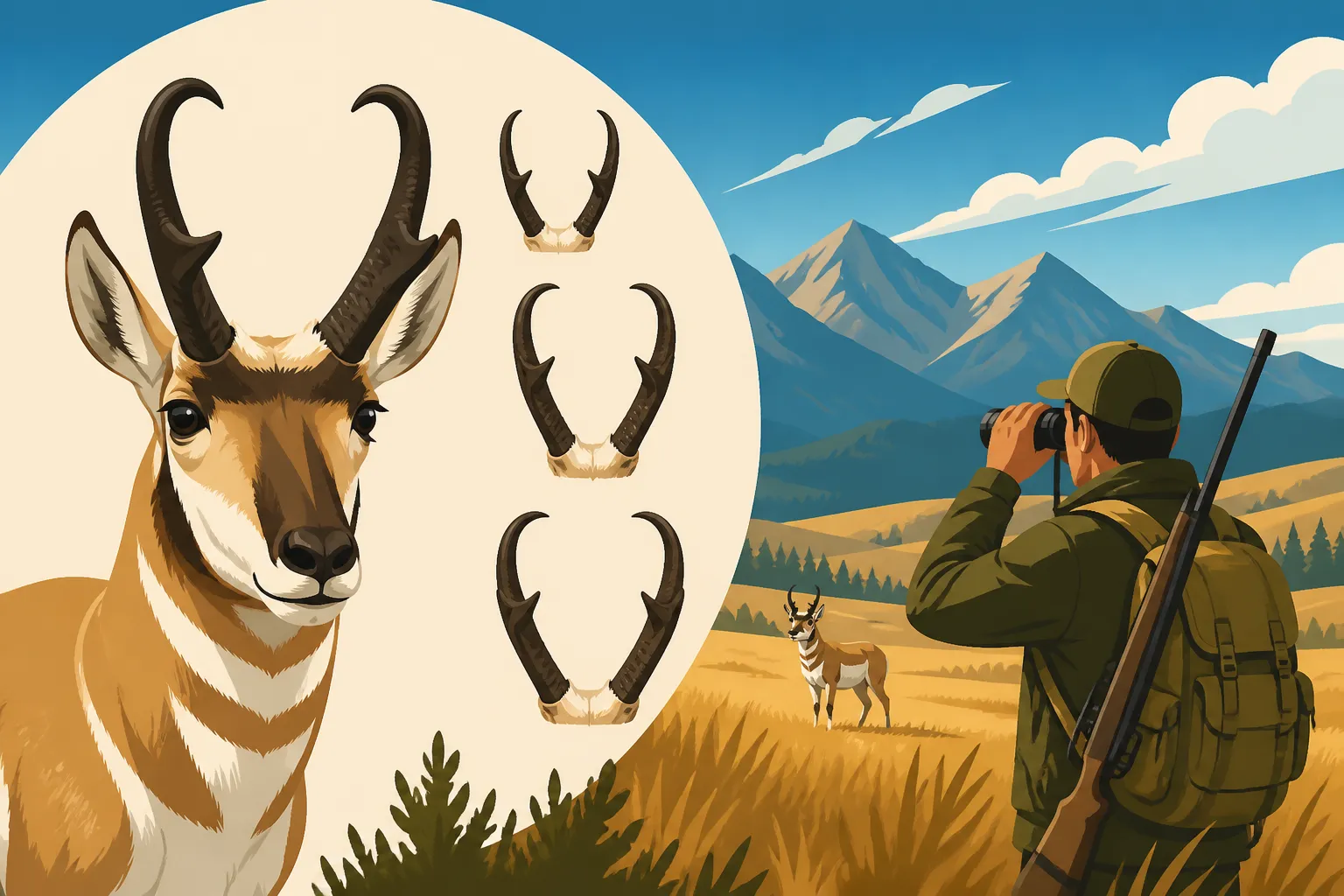
When you’re staring through your spotting scope at a buck across a vast Montana prairie, there are four main characteristics you're trying to evaluate: length, mass, length of the prong, and overall symmetry. Each plays a vital role in determining a buck's trophy quality.
Length is perhaps the most obvious. It's measured from the base of the horn, along the outer curve, to the tip. A long horn often means a high-scoring buck, but it's not the only factor. What often fools hunters is trying to estimate this length against the animal's head. That's where reference points become crucial, which we’ll discuss later. Mass refers to the circumference or thickness of the horn. A heavy, thick horn adds significant points to a score and can make a buck appear much more impressive. This mass is typically measured at various points: the base, the quarter points, and above the prong. Good mass carries all the way up, not just at the bottom.
The prong is the defining feature, and its length and position are key. A long, well-defined prong that extends far forward contributes greatly. The location of the prong along the main beam also matters; usually, a prong set higher up the horn is more desirable. Finally, symmetry, while not a direct score measurement in the same way, contributes to the overall aesthetic appeal of a buck. While minor asymmetries are common in nature, a buck with two horns that are relatively even in length, mass, and prong development often just looks "better" and scores higher by accumulation of points. Getting good at assessing these four elements simultaneously is what separates a seasoned pronghorn hunter from a novice.
Factors Influencing Horn Size
It's easy to just look at a pronghorn and think, "Big horns!" or "Small horns!" but there's a lot more going on behind the scenes that dictates how those horns develop. Understanding these factors can help you predict potential, especially when you're scouting specific areas of Montana. A tool like How to E-Scout Montana Hunting Units can really help you identify areas known for bigger bucks.
Age Classes and Development
Just like with deer or elk, a pronghorn buck's horn size is heavily correlated with its age. They don't just pop out with massive horns. There's a clear progression, and learning to identify these age classes in the field is a game-changer for successful hunting.
- Yearlings (1.5 years old): These young bucks typically have short, straight horns, often no longer than their ears, and sometimes they don't even have a distinct prong. Their horns might look like little daggers. While they’re still fun to watch, you won’t find a trophy here.
- Young Bucks (2.5 to 3.5 years old): At this stage, bucks start developing more noticeable prongs and their horns gain some length. They might exceed ear length, perhaps reaching 10-12 inches, but they often lack significant mass. This is where the temptation begins, as they can look "good," but haven't reached their full potential.
- Mature Bucks (4.5 to 6.5 years old): This is the sweet spot for trophy potential. During these years, bucks typically display their best horn growth. They'll have good length (often 13-16+ inches), excellent mass that carries well up the horn, and strong, well-defined prongs. Their horns will usually extend well past their ear tips, sometimes by several inches. These are the bucks you're usually targeting if you're looking for a higher-scoring animal.
- Old Bucks (7.5+ years old): While some bucks maintain impressive horn growth into old age, many will start to decline slightly in overall mass or length as they get older, similar to aging deer. Their horns might become more spindly, or the prongs might not be as robust. However, these old warriors often carry a lot of character and are still a great challenge to hunt. Being able to mentally classify a buck into one of these age groups quickly will drastically improve your field judging accuracy.
Genetics and Nutrition
Beyond age, a buck's genetic makeup and the quality of its diet are absolutely paramount to horn development. You could have a 5.5-year-old buck, but if his genetics aren't geared for massive horns, or if he's lived in an area with poor forage, he simply won't reach the same potential as a buck with top-tier genetics in a lush environment.
Montana offers a vast range of habitats, from the sagebrush plains of the east to the mountain valleys. Pronghorn in areas with consistently rich, diverse forage, like certain parts of Eastern Montana's agricultural fringe or prime rangeland, tend to grow larger horns. They have access to the protein, minerals, and energy necessary for robust growth. Conversely, bucks in drought-stricken areas or overgrazed pastures, no matter how good their genes, will struggle to put on impressive horn growth. This is why certain hunting districts consistently produce bigger bucks than others. Before you apply for a specific unit, understanding the forage quality and historical trophy production of that area is crucial. You can often find this kind of information when researching specific Montana Antelope Draw Odds Explained. Even GoHunt's Insider platform offers excellent data and maps to help identify these prime zones.
Field Judging Techniques for Montana Pronghorn
Alright, let's talk about the practical stuff. Spotting a pronghorn from a mile away is one thing; deciding if it's the buck you want to pursue is another. This is where good field judging techniques come into play, and mastering them takes practice, patience, and good optics.
Using Ear Length as a Reference
This is, hands down, the most crucial and widely used reference point for judging pronghorn in the field. A pronghorn's ear, from its base to its tip, typically measures around 5 to 6 inches on a mature animal. This relatively consistent size provides an excellent benchmark.
Here's how you use it:
- Total Length: Imagine laying the buck's ear alongside his horn. If the horn barely reaches the tip of the ear, or is only slightly longer, it's likely a younger buck with horns in the 6-8 inch range. If the horn extends a full ear length past the ear, you're looking at a much larger animal, likely in the 10-12 inch range. For a truly big buck (14+ inches), the horn will extend significantly more than one ear length beyond the ear tip.
- Prong Location: The prong's location relative to the ear is also telling. On a trophy buck, the prong is often located somewhere around eye level or just above, and it extends well past the front of the ear. If the prong is very low or barely protrudes past the front of the ear, it's probably not a top-tier buck.
- Mass Comparison: You can also use the base of the ear to get a sense of mass. A horn with good mass will appear thick at its base, significantly wider than the base of the ear. If the horn looks spindly and no wider than the ear all the way up, it's lacking in mass.
The beauty of the ear reference is that it’s always there, and it’s a fairly consistent size. It’s what helps you overcome the optical illusions that make a buck look huge in certain light or at certain distances. Always try to get a side profile of the buck to make this comparison most effective. This skill is critical for anyone planning to How to Hunt Antelope in Montana and seeking a trophy.
Assessing Mass and Prongs
Beyond just length, mass and prong development are huge score builders and indicators of maturity. These can be harder to judge from a distance, but with practice, you'll start to recognize what good looks like.
- Base Mass: The base of the horn should be thick and heavy, appearing substantial where it emerges from the head. This "heaviness" should ideally carry well up the horn. If the horn tapers rapidly or looks skinny right above the base, it loses significant mass points. Use the diameter of the eye or the base of the ear as a comparative measure. A truly heavy-horned buck will have a base mass that looks almost as wide as his eye.
- Mass Carry: After the base, look at how the mass carries up towards the prong and then to the tip. Does it maintain its thickness, or does it become pencil-thin after a few inches? Trophy bucks often have good mass that continues past the prong, right up to the tip. This is what gives a buck that "blocky" or "heavy" appearance.
- Prong Length and Definition: A good prong should be long and clearly defined, extending forward like a spear point. Aim for prongs that are at least 4-6 inches long, measured from the front of the main beam to the tip of the prong. The higher the prong is located on the main beam, the more desirable it usually is, especially for Boone & Crockett scoring. A prong that kicks out strongly and is well-defined from the main beam indicates a mature, quality animal. Sometimes you'll see bucks with short, stubby, or ill-defined prongs; these typically won't be high scorers. Learning to differentiate these characteristics is key, especially if you're trying to identify a buck that might qualify for the Montana Big Game Record Book.
Recognizing Trophy Potential
So, what exactly constitutes a "trophy" pronghorn in Montana? While every hunter's definition of a trophy is personal, for many, it means a buck that scores well under one of the recognized systems like Boone & Crockett or Pope & Young. Generally, a buck that scores over 70 inches B&C is considered an excellent trophy, with 80+ inches being truly exceptional.
When you're looking for that kind of potential, here’s what you’re trying to find:
- Exceptional Length: Horns consistently 14 inches or longer are a great start. Many top-end bucks will push 15-16 inches.
- Heavy Mass Throughout: Not just at the base, but mass that carries well up the horn, often maintaining thickness even above the prong.
- Long, Well-Placed Prongs: Prongs that are 5-7+ inches long and set high on the horn (often above the halfway point of the horn's length).
- Good Tip Length: The part of the horn above the prong should also be significant, adding to the overall length.
- Symmetry and Overall Balance: While not a scoring factor, a balanced, symmetrical set of horns often indicates a healthy, mature animal operating at peak horn production.
It's a combination of all these elements working together that creates a high-scoring buck. Don't get fixated on just one factor. A buck with average length but incredible mass and prongs can score higher than a buck with great length but thin horns. Practice really makes perfect here; the more you glass pronghorn, the better you’ll get.
Here's a quick reference for general pronghorn horn characteristics:
| Characteristic | Yearling (1.5 yrs) | Young Buck (2.5-3.5 yrs) | Mature Buck (4.5-6.5 yrs) | Trophy Potential (70+ B&C) |
|---|---|---|---|---|
| Overall Length | 5-8 inches | 9-12 inches | 13-16+ inches | 14-17+ inches |
| Length vs. Ear | Even with or slightly past ear | 1/2 to 1 ear length past ear | 1 to 1.5 ear lengths past ear | 1.5+ ear lengths past ear |
| Base Mass | Thin, pencil-like | Modest, slightly thicker than ear base | Heavy, clearly wider than ear base | Very heavy, significant thickness |
| Mass Carry | Tapers quickly | Tapers moderately | Good, carries well to prong | Excellent, carries to tip |
| Prong Length | Often absent or stubby | Short (1-3 inches) | Defined (4-6 inches) | Long & Defined (5-7+ inches) |
| Prong Location | N/A | Low on beam | Mid to high on beam | High on beam |
| Tip Length | Short | Short to medium | Good, extends well past prong | Excellent |
Common Mistakes and How to Avoid Them
Even with all the knowledge in the world, pronghorn are notorious for making even seasoned hunters doubt their judgment. There are a few common pitfalls that lead to those dreaded "ground shrinkage" stories.
The "Ground Shrinkage" Phenomenon
Ah, ground shrinkage. It's almost a rite of passage for every hunter who's pursued pronghorn. You glass a buck, he looks absolutely enormous through your high-powered optics, especially at last light. You make your move, execute a perfect stalk, and when you finally get your hands on him, you realize those "giant" horns are… well, not quite as giant as you remembered. It's a truly deflating feeling, and it happens for a few reasons.
Firstly, distance itself distorts perception. The vast, open plains of Montana can make distances incredibly hard to judge, making animals appear both closer and larger than they actually are. Secondly, the excitement of the hunt can play tricks on your mind. Adrenaline can make an average buck look like a Boone & Crockett contender. To combat this, the first and most important step is to always use your ear reference method. Seriously, commit to it. Before you even think about a stalk, get a solid side profile and compare those horns to the ear length. Another trick is to use a rangefinder. Not just for shooting, but for judging. Knowing the exact distance can help you mentally calibrate what you’re seeing. Sometimes, it's just the angle; a buck facing slightly away can look incredibly wide or long, but a slight turn can reveal a much more modest set of horns. Don't be afraid to take your time, observe the buck from multiple angles, and if possible, get a second opinion from a hunting partner. This patience is key to a successful Montana DIY Elk Hunting Guide hunt, and it applies just as much to pronghorn.
Distance and Optical Illusions
Hunting in Montana's vast, open country means you'll often be glassing animals at extreme distances, sometimes a mile or more away. This distance, combined with the often shimmering heat waves of the prairie, creates significant optical illusions that can lead to misjudgment.
- Heat Waves/Mirage: On a warm day, especially mid-day, the heat rising from the ground creates a mirage effect that can distort images, making horns appear wavy, thicker, or longer than they are. Try to glass early in the morning or late in the evening when the air is cooler and more stable. If you must glass in the heat, increase your magnification slowly and try to find moments of clarity between the shimmers.
- Angle of View: As mentioned, the angle at which you view a buck can drastically alter its appearance. A buck quartering away can look incredibly long, or one directly facing you might look super wide. Always try to get a clear, broadside view. If you can't, mentally adjust for the angle. For example, if he's quartering away, assume the horns are actually shorter than they appear to be stretching out.
- Background and Lighting: A buck standing against a dark background, like a stand of timber, might make his horns pop and appear larger. Conversely, a buck silhouetted against a bright sky can make horns seem less substantial. Early morning or late evening light, with its long shadows, can also exaggerate horn size. Be aware of these factors and try to compensate. A great way to gain this kind of field experience is by spending time just observing animals, even if you don't have a tag in hand. Sites like GoHunt provide unit profiles that can help you understand the terrain and typical glassing distances, allowing you to prepare your optics and strategies. Remember, sometimes the best choice is to simply pass on a buck if you're not absolutely sure of its size. There’s always another antelope on the plains, especially if you know Best Montana Antelope Hunting Areas.
Conclusion
Judging pronghorn horn size in Montana is a challenging but incredibly rewarding skill that comes with dedicated practice and patience. By understanding the unique anatomy of their horns, recognizing the factors that influence their growth, and diligently applying field judging techniques like using the ear as a reference, you'll greatly reduce the chances of ground shrinkage. Remember, the vast landscapes of Montana hold incredible animals, and part of the adventure is in the discerning eye and the careful pursuit. Don't rush the process; enjoy the challenge, trust your optics, and most importantly, trust your judgment after putting in the time to learn these critical skills.
Disclaimer
Please note that hunting regulations, season dates, and license requirements are subject to change. Always consult the official Montana Fish, Wildlife & Parks (FWP) regulations for the most current and accurate information before planning any hunting trip. This guide is for informational purposes only and does not supersede state regulations.