How to Beat the Crowds on Montana Public Land
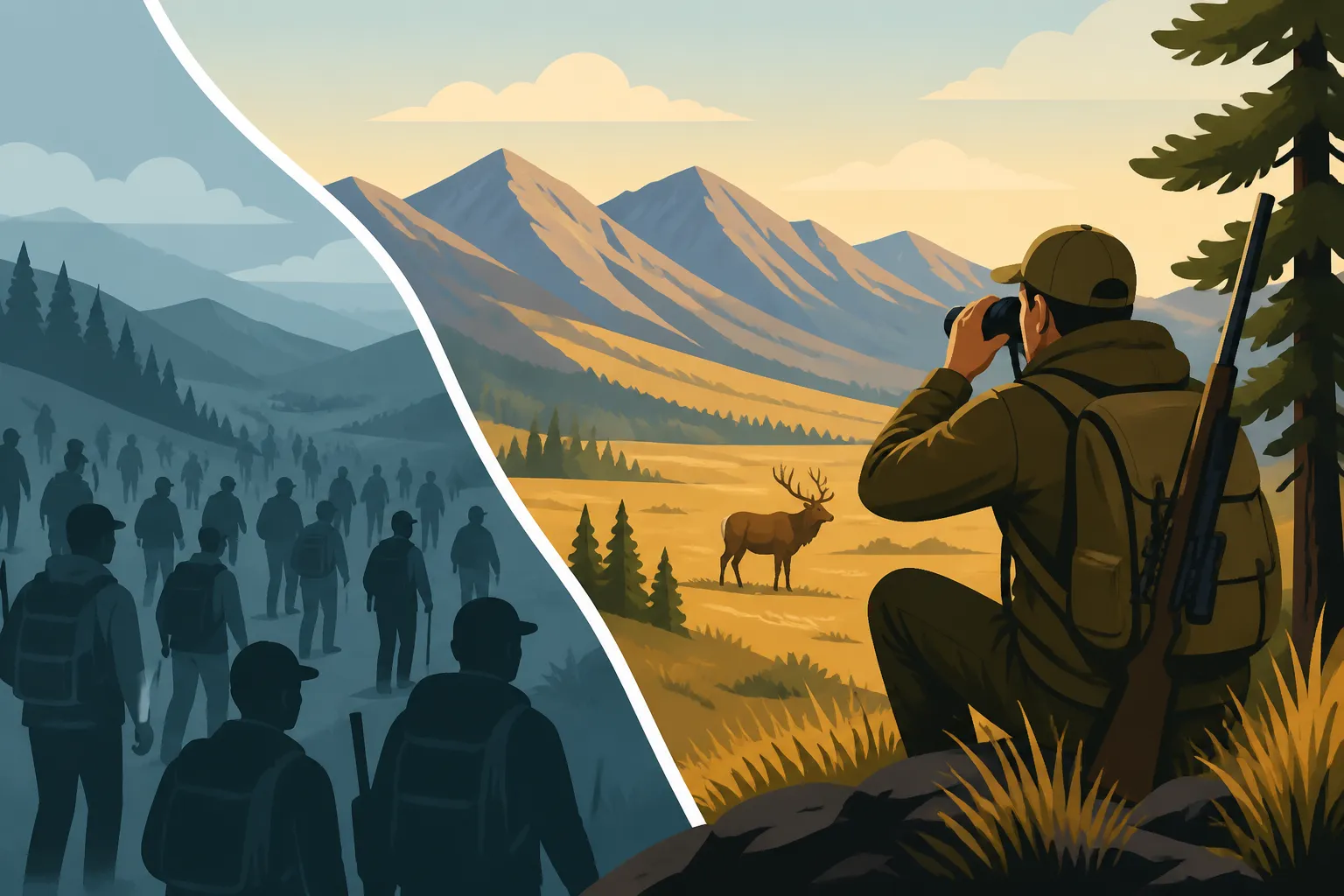
It’s a common lament among hunters in Montana: you’ve planned your dream public land hunt, driven for hours, hiked miles, and then you see orange vests everywhere you look. That feeling of solitude, of truly being in the wild, can quickly vanish, replaced by the disheartening sight of other hunters in "your" spot. This guide is all about helping you navigate Montana's popular public hunting grounds and find those elusive pockets of unpressured game, allowing you to experience the Big Sky Country the way it was truly meant to be.
Understanding Where the Pressure Comes From
Before you can beat the crowds, you need to understand why and where they gather. It’s not just random; hunter pressure often follows predictable patterns. Recognizing these patterns is the first crucial step in planning a successful, solitary hunt on Montana's vast public lands.
Identifying High-Traffic Areas
Most public land hunters, whether resident or nonresident, tend to stick to the path of least resistance. This means trailheads, easily accessible Forest Service roads, and areas within a mile or two of vehicle access points are often saturated. Think about the parking lots at popular hunting units near towns like Bozeman, Missoula, or Kalispell during the general rifle season. They're often overflowing. Hunters, by nature, are creatures of habit, and many will return to the same areas year after year simply because they know them, or because they’ve seen success there in the past, even if that success now comes with a side of company.
This phenomenon is particularly noticeable in certain hunting districts that are known for consistent elk or deer populations, or those that are particularly scenic and well-advertised. Even within a district, specific drainages or basins with clear access will draw the majority of hunters. For a deeper dive into the overall strategies, check out our guide on Montana Public Land Hunting Guide. Many hunters also focus on areas that are explicitly designated as accessible, such as certain Block Management Areas, which, while offering access, can sometimes draw significant attention if not chosen carefully.
Seasonal and Weekend Crowds
The timing of your hunt dramatically impacts the amount of pressure you'll encounter. Opening weekend of rifle season, for example, is almost universally the busiest time on public land across Montana. It’s a tradition for many, a chance to get out, and for some, their only opportunity to hunt. Weekends throughout the general season also see a noticeable increase in activity compared to weekdays. This isn't just because people are off work; it’s also when hunting camps are often established, and friends and families gather.
Archery season, while generally less crowded than rifle season, still experiences peak pressure during the bugle-heavy weeks of the elk rut, especially around weekends. As the season progresses into late fall, pressure can shift. Early season pressure often focuses on higher elevations where elk are still in summer ranges, while later in the season, hunters might concentrate on wintering grounds or migration corridors as snow pushes animals down. Understanding these ebbs and flows is key to finding solitude.
Strategic Planning and E-Scouting for Success
The battle against crowds is often won before you ever set foot in the field. Effective pre-season planning and diligent e-scouting are your secret weapons to finding unpressured hunting grounds on Montana’s public lands.
Leveraging Digital Tools and Maps
In today's age, technology has revolutionized how we scout and plan our hunts. Gone are the days of relying solely on paper maps and word-of-mouth. Digital mapping applications and online platforms are indispensable. Tools like GoHunt's Insider platform, or even simpler apps like onX Hunt, allow you to overlay various land ownership maps, topographical data, and even historical satellite imagery. You can identify public land boundaries with precision, marking national forest, BLM, and state trust lands.
When e-scouting, look for areas with minimal road access, steep terrain, or geographical features that would deter the average hunter. Pay close attention to public land that is bordered by private land, as these "edges" can create natural barriers to entry, often leaving sections of public land less disturbed. Use topographical maps to identify saddles, benches, and thick timber pockets that might serve as natural hiding spots for game, and potential ambush points for you. You can even use these tools to identify areas where there is a considerable hike-in or a challenging river crossing, knowing that most hunters will opt for easier access. For detailed guidance on this, our article on How to E-Scout Montana Hunting Units can be incredibly helpful. Remember, the more difficult an area appears on a map, the less likely it is to be heavily hunted.
Researching Lesser-Known Hunting Districts
While iconic areas like the Bob Marshall Wilderness or parts of the Bitterroot National Forest are renowned, they also draw significant attention. Sometimes, the best strategy is to look beyond the popular hotspots. Montana has 7 regions and over a hundred hunting districts, each with its own unique characteristics and pressure levels. Instead of focusing on the districts with the highest success rates, which are often the most crowded, research districts that might have lower hunter densities but still offer good populations of game.
This often means studying Montana FWP (Fish, Wildlife & Parks) harvest statistics and hunter effort reports. These documents provide valuable insights into how many hunters pursued a particular species in a district and how successful they were. Districts with lower hunter days per harvest often indicate less pressure or more productive hunting per individual. Don't be afraid to look at districts that are less mountainous or more heavily timbered if that's where the crowds are absent. Sometimes, a district with a "general" tag, rather than a limited-entry permit, can still offer incredible opportunities if you're willing to go where others won't. Our comprehensive guide on Montana Hunting Districts Explained can assist you in this crucial research phase.
On-the-Ground Tactics for Solitude
Even with the best e-scouting, the real work begins when you step out of the truck. Your physical and mental approach to hunting Montana's public lands can make all the difference in finding solitude and unpressured animals.
Going Deeper and Harder
This is perhaps the most fundamental principle for escaping crowds: go where others won't. The vast majority of hunters on public land don't venture more than a mile or two from a road or established trail. If you're willing to hike 3-5 miles, or even further into true backcountry, your chances of finding unpressured game skyrocket. This isn't just about covering distance; it's about gaining elevation, navigating thick timber, and crossing rough terrain.
This strategy requires a commitment to physical fitness and proper gear. You need comfortable, durable boots, a reliable pack capable of carrying everything you need for an extended stay, and the mental fortitude to push through fatigue. Think about packing light, but smart, for a multi-day trip. Even if you're just out for the day, a long, difficult hike in can put you in elk country that hasn't seen another hunter in weeks. Learning How to Pack Into the Montana Backcountry is essential for this approach. This dedication to getting off the beaten path is often rewarded with encounters with less wary animals.
Timing Your Hunt Effectively
While opening day and weekends are popular, smart hunters use timing to their advantage. Hunting mid-week is a no-brainer if your schedule allows. Mondays through Thursdays generally see significantly fewer hunters in the woods. Additionally, consider hunting during less desirable weather conditions. A light drizzle, a cold snap, or even a dusting of snow can deter fair-weather hunters, leaving the woods quieter for you.
Beyond the week-to-week timing, think about the time of day. Most hunters are active during the first few hours of daylight and the last few hours before dark. Consider a "middle of the day" push. While game animals might be bedded, a calculated still-hunt through thick timber during these quiet hours can often surprise animals that feel safe from daytime pressure. If you're hunting elk during Montana's General Rifle Season, for example, don't be afraid to hunt aggressively through the middle of the day in dense cover. Sometimes, the elk are just waiting for the typical hunter to head back to camp for lunch.
Utilizing Overlooked Habitat
Animals, especially elk and deer, quickly learn to associate human activity with danger. They will often seek refuge in areas that offer heavy cover, steep terrain, or less desirable forage, simply because those spots offer security. These are often the "overlooked" habitats that hunters tend to avoid. Think about dark, north-facing timber slopes, incredibly steep canyons, or benches high up that seem too isolated to hold game. These are often precisely where animals will be holed up during periods of high pressure.
Many hunters stick to open, easy-to-glass areas, but pressured game will often gravitate toward thick, nasty cover. Learning How to Find Elk in Montana Dark Timber is a prime example of utilizing overlooked habitat. Instead of hunting the open parks, dive into the thick stuff. Bushwhack through dense regenerating clear-cuts or dark old-growth forests. These areas are tough to navigate and even tougher to hunt, which is exactly why they often hold unpressured animals. Don't discount smaller patches of timber or draws that seem insignificant on a map; even a small pocket of cover can provide refuge for game.
Alternative Strategies and Access Points
Sometimes, simply going deeper isn't enough, or your physical limitations might prevent it. That's when you need to think outside the box and explore alternative access and strategies to find unpressured hunting opportunities.
Exploring Block Management and State Trust Lands
Montana’s Block Management Program (BMP) is a phenomenal resource, opening up millions of acres of private land to public hunting. However, some popular BMPs can also get crowded. The key is to understand the different types of Block Management Areas (Type I vs. Type II) and to do your homework. Type I areas often allow hunters to sign in and go, which can mean more traffic. Type II areas, on the other hand, might require contacting the landowner beforehand or have a limited number of hunters allowed per day, which often translates to less pressure.
When utilizing Block Management, look for the areas that require a little more effort, perhaps a longer walk-in or a more remote location. Don't just pick the first one you see. Call FWP game wardens or biologists for insights into which areas might be less frequented. Additionally, Montana has a significant amount of State Trust Land. These lands are managed by the Department of Natural Resources and Conservation (DNRC) and are generally open to public recreation, including hunting, with the purchase of a State Land Use License. While some are easy to access and can see pressure, many tracts are remote or landlocked by private property, creating incredible opportunities for those willing to Montana State Trust Land Hunting access challenges. Accessing these requires meticulous e-scouting with tools like GoHunt to identify the exact boundaries and legal access points.
Hunting Mid-Week and Off-Peak Times
We touched on this earlier, but it bears repeating with more emphasis on actionable advice. If your job allows, plan your hunting trips for Monday through Friday. Even a single day off during the week can put you in the woods when most other hunters are at work. This is particularly effective during the general rifle season when weekend warrior traffic is at its peak.
Beyond just the weekdays, consider the shoulder seasons or hunting during less conventional times. Late season hunting, especially after a significant snowfall, can often thin out the crowds as many hunters have either filled their tags or hung up their gear for the year. This can be some of the most challenging but also most rewarding hunting. Similarly, hunting during a sustained period of less-than-ideal weather – a week of constant rain or a deep cold snap – will often cause many hunters to pack up and head home, leaving the woods wide open for the determined few. Being prepared for these conditions, both mentally and with the right gear, is crucial. If you're a nonresident, scheduling your trip to include a full work week rather than just a weekend can give you a significant advantage.
Comparing Hunter Strategies
| Strategy for Avoiding Crowds | Common Hunter Behavior | Why It Works | Considerations |
|---|---|---|---|
| Go Deep & Hard | Stays within 1-2 miles of roads/trails | Most hunters won't exert the effort; game feels safer further in. | Requires physical fitness, good gear, and potentially overnight stays. |
| Hunt Mid-Week/Bad Weather | Hunts weekends, fair weather only | Fewer people are in the woods during these times. | Requires flexible schedule, appropriate clothing/shelter. |
| Utilize Overlooked Habitat | Focuses on open parks, easy-to-navigate terrain | Game seeks refuge in thick, steep, or brushy areas; these deter most hunters. | Difficult hunting conditions, requires patience and quiet movement. |
| E-Scout Remote Access Points | Uses readily available trailheads | Finds lesser-known access, or public land surrounded by private, requiring effort. | Demands advanced mapping skills, permission if crossing private, longer hikes. |
| Target Lesser-Known Districts | Focuses on "trophy" districts or traditional hotspots | Spreads out pressure, finds districts with good game numbers but lower hunter density. | Requires in-depth research of FWP data and potentially lower "trophy" expectations. |
| Explore Type II Block Management | Uses Type I Block Management or general public lands | Controlled access limits hunter numbers, offering a more private experience. | Requires pre-planning (calls to landowners), limited availability. |
Final Thoughts on Finding Solitude
Beating the crowds on Montana's public land isn't about luck; it's about strategic planning, embracing discomfort, and having the mental toughness to go where others won't. It means trading the ease of access for the potential of a truly wild experience. Whether you're planning a full Montana Backcountry Hunting Guide adventure or just a day trip, remember that every extra mile you walk, every steep ridge you climb, and every hour you spend e-scouting will significantly increase your odds of finding that solitary experience and that unpressured game. Good luck out there, and remember that sometimes the best trophy is the quiet, uninterrupted moment in the vastness of Montana. For more specific tactics to find those elusive animals, check out our guide on How to Locate Elk on Montana Public Land.
Disclaimer
The information provided in this guide is for general informational purposes only and does not constitute professional advice. Hunting regulations, seasons, and access can change frequently. Always consult the official Montana Fish, Wildlife & Parks regulations and local land management agencies before planning any hunting trip. Hunter safety is paramount; always be aware of your surroundings, carry appropriate safety gear, and respect other hunters and landowners.