Best Optics for Montana Big Game
Hunting in Montana is an experience unlike any other, but the vastness and diversity of its landscapes can leave even seasoned hunters scratching their heads when it comes to optics. Trying to pick the right binoculars or a spotting scope for everything from timbered mountains to wide-open plains feels like an impossible task, often leading to frustration and gear that just doesn't quite cut it. This comprehensive guide is here to demystify the world of hunting optics, helping you select the perfect setup to maximize your success and enjoyment on your next Montana big game adventure.
Understanding Montana's Diverse Hunting Environments and Their Optical Demands
Montana isn't a one-size-fits-all hunting state, and neither are its optical needs. What works wonders for spotting a trophy mule deer across vast plains won't necessarily be your best friend when you're slipping through dark timber chasing a bull elk. Recognizing these distinct environments and their unique challenges is the first step to building an effective optics kit.
Mountainous Terrain and Long-Range Glassing
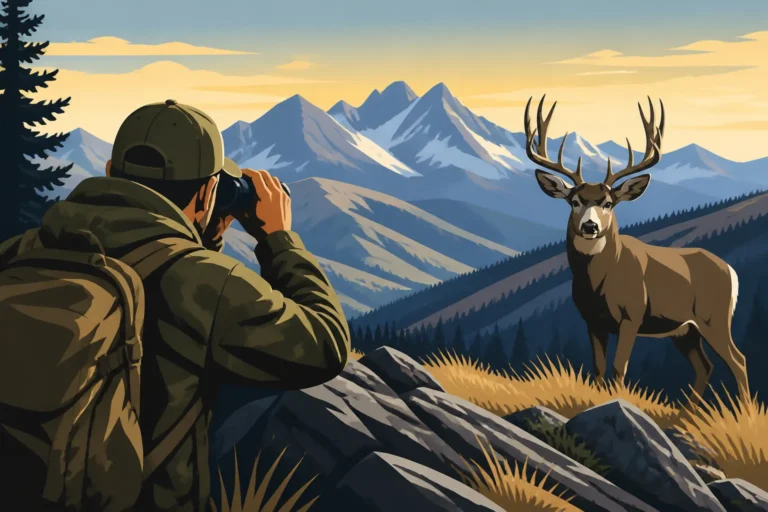
Imagine yourself perched on a ridge overlooking an expanse of timber and open parks in the Gravelly Range or the Bob Marshall Wilderness. This is classic western big game country, home to elk, mule deer, and bighorn sheep. Here, animals often blend seamlessly into their surroundings, and the distances can be deceivingly vast. Your success hinges on your ability to glass effectively for hours, picking apart distant hillsides for the tell-tale flicker of an ear or the horizontal line of a bedded elk.
In these mountainous regions, optical demands lean heavily towards high magnification, superior resolution, and excellent light transmission. You'll be spending a lot of time behind your glass, so comfort and stability are paramount. Thermals, the rising and falling air currents, can play havoc with your image quality, especially mid-day. Investing in optics that can cut through some of this haze, combined with a rock-solid tripod, will make a world of difference. When you're trying to How to Glass Montana's Big Country, a quality spotting scope and powerful binoculars are indispensable.
Open Plains and Rolling Hills
Shift your mental image now to the expansive grasslands and rolling coulees of Eastern Montana, perhaps near the Missouri Breaks or the Powder River Country. This is prime habitat for antelope and plains mule deer, where the game is often visible for miles. The challenge here isn't necessarily finding the animals, but rather accurately judging their size and closing the distance without being detected.
For these environments, the priority remains high magnification and excellent light gathering, but with an added emphasis on field of view and edge-to-edge clarity. You'll be scanning huge swaths of land, so a wide view helps you cover ground quickly. Durable, waterproof optics are essential to withstand the often dusty and sometimes rainy conditions. If you're planning on How to Hunt Antelope on Montana's Plains, you'll quickly realize that your binoculars are almost constantly at your eyes, making comfort and clarity non-negotiable.
Timber and River Bottoms
Now, let's dive into the denser, more intimate settings found along Montana's river bottoms, like the Yellowstone or Clark Fork, or the thick timber pockets within the National Forests. This is whitetail deer and timber elk country, where encounters are often close, fast, and fleeting. You're less likely to be glassing for miles and more focused on picking out movement in shadows or identifying game at closer ranges.
Here, high magnification can actually be a hindrance, making it difficult to find and track an animal in dense cover. Instead, you'll want optics with a wider field of view for quick target acquisition, good low-light performance to penetrate the shadows, and a durable, compact design that can withstand bumps and scrapes as you move through brush. Quick access is key, so a comfortable bino harness is crucial. For tactics like How to Still-Hunt Montana Timber or How to Hunt Whitetail in Montana River Bottoms, your optics need to be ready to go in an instant.
Essential Optics for Montana Big Game Hunters
No matter where you hunt in Big Sky Country, a core set of optics forms the backbone of any successful hunter's toolkit. Understanding the role each plays and what features to prioritize will ensure you're well-equipped for any situation.
Binoculars: Your Primary Scouting Tool
Your binoculars are, without a doubt, your most important piece of optical equipment. They are your eyes, allowing you to scan vast landscapes, pick out details, and locate game without making a single step.
-
Optimal Magnifications and Objective Lens Sizes: For general Montana hunting, a 10×42 binocular is often considered the gold standard. The 10x magnification offers a good balance of power for distant viewing and a wide enough field of view for scanning. The 42mm objective lens gathers ample light, making it effective in early morning and late evening conditions. However, for hunters spending most of their time in truly open country chasing How to Hunt Mule Deer on Montana Public Land or antelope, a 12×50 or even 15×56 can offer a significant advantage, providing more reach and light gathering, though they often require a tripod for steady viewing. For dense timber hunting, an 8×42 might be preferred for its wider field of view and steadier image when hand-held.
-
Key Features and What They Mean:
- Prism Types (Roof vs. Porro): Most modern hunting binoculars use roof prisms, which result in a more compact, streamlined design. Porro prisms are bulkier but can sometimes offer a slightly brighter, more three-dimensional image at a lower cost. For rugged Montana hunting, the durability and compactness of roof prisms are generally preferred.
- Lens Coatings: This is critical! Multi-coated or fully multi-coated lenses significantly reduce glare, improve light transmission, and enhance contrast. This is especially important in Montana's often bright conditions or low-light situations.
- Waterproof and Fogproof: Absolutely non-negotiable in Montana. Weather can change in an instant, and you need your optics to perform flawlessly whether it's raining, snowing, or you're moving from a cold vehicle to warm air. Nitrogen or argon purging prevents internal fogging.
- Eye Relief: If you wear glasses, look for binoculars with generous eye relief (15mm or more) so you can see the full field of view without removing your spectacles.
- Ergonomics and Durability: Comfortable hand feel, easy-to-grip armor, and robust construction are crucial for sustained use in challenging environments.
When considering various options, sites like GoHunt offer a wealth of information and reviews on different binocular brands and models, helping you compare performance characteristics and find the best fit for your specific hunting style and budget.
Spotting Scopes: Reaching Out and Confirming
While binoculars are your primary scouting tool, a spotting scope extends your reach dramatically, allowing you to meticulously evaluate game at extreme distances without disturbing them. This is especially vital when How to Field Judge a Montana Bull Elk or a mule deer buck from afar.
-
When a Spotting Scope is Indispensable: If you're hunting vast, open landscapes—think the Missouri Breaks for mule deer, or the high country for sheep and goats—a spotting scope is a game-changer. It allows you to determine antler or horn size, count points, identify sex, and confirm if an animal is legal without hiking miles, potentially wasting precious energy or blowing out an animal. It's also invaluable for How to E-Scout Montana Hunting Units to identify potential game hot spots from a distant vantage point.
-
Magnification Ranges and Objective Lens Sizes: Most hunting spotting scopes range from 15-45x or 20-60x magnification. The 60x end is fantastic for fine details, but the image can dim and become more susceptible to heat shimmer. Objective lens sizes typically fall between 60mm and 85mm. Larger objective lenses gather more light, offering a brighter image, especially at higher magnifications or in low light, but also add to the scope's weight and bulk.
-
Angled vs. Straight Eyepieces:
- Angled: More comfortable for prolonged glassing, especially when pointing uphill or if multiple people (of different heights) will be using the scope. It also allows for a lower tripod height, which can be more stable in windy conditions.
- Straight: Easier and quicker to locate your target, especially if an animal is moving. Some hunters find it more intuitive to follow game with a straight eyepiece. The choice often comes down to personal preference and primary use.
-
The Absolute Necessity of a Sturdy Tripod: A spotting scope is utterly useless without a stable tripod. Even the slightest wobble at 60x magnification will make judging an animal impossible. Look for a lightweight yet rigid carbon fiber tripod with a smooth, fluid pan head that allows for precise adjustments. This is not an area to skimp!
Rangefinders: Precision in the Field
Knowing the exact distance to your target is critical for making an ethical shot, especially in Montana's varied terrain where uphill and downhill shots can significantly affect bullet trajectory.
-
Importance for Ethical Shots: Modern hunting rifles are incredibly accurate, but only if you know the exact range. Misjudging distance by just 50 yards at longer ranges can result in a missed shot or, worse, a wounded animal. A good rangefinder takes the guesswork out of it, allowing you to hold correctly or dial your scope with confidence.
-
Angle Compensation Features: Many quality rangefinders now include angle compensation, which calculates the "true ballistic distance" for uphill or downhill shots. This is essential in the mountains of Montana, where you'll rarely find a perfectly flat shot. This feature provides a much more accurate range to input into your ballistic calculator or to use for your holdover.
-
Maximum Range Capabilities and Ease of Use: Look for a rangefinder that can reliably range big game out to and beyond your comfortable shooting distance. For example, if you're confident out to 500 yards, a rangefinder that can consistently range elk at 800-1000 yards gives you a buffer. Features like a "scan mode" for ranging moving animals or multiple targets, and a clear, easy-to-read display (red OLED displays are excellent in low light) enhance usability in the field.
Advanced Optics Considerations and Setup
Once you have the core pieces, there are ways to refine your setup for even greater efficiency and performance in the demanding environments of Montana.
Integrated Binoculars and Rangefinders
The market has seen a rise in integrated binocular-rangefinder units, combining your primary glassing tool with your ranging device.
-
Pros:
- Convenience: One less item to carry, one less item to grab. You can glass and range almost simultaneously, which is a huge advantage when an animal presents a fleeting opportunity.
- Speed: No fumbling for a separate rangefinder means quicker target acquisition and ranging, critical in fast-paced hunting scenarios.
- Weight Savings: Often lighter than carrying a separate high-quality binocular and rangefinder.
-
Cons:
- Cost: These units typically carry a premium price tag, often significantly more than buying separate high-quality binoculars and rangefinders.
- Performance Compromise: While improving rapidly, some argue that the optical clarity of the binocular or the ranging performance might not quite match dedicated, top-tier standalone units at a similar total price point.
- Single Point of Failure: If the unit breaks, you lose both your binoculars and your rangefinder.
Brands like Leica Geovid, Swarovski EL Range, and Zeiss Victory RF are popular choices, offering excellent performance for hunters who value the seamless integration and efficiency. If your budget allows, they are a fantastic option for a Montana DIY Elk Hunting Guide.
Tripods and Adaptors: Stability is Key
We've touched on it already, but it bears repeating: a tripod is not optional for serious glassing in Montana, especially with a spotting scope or higher-magnification binoculars.
-
Why Stability is Non-Negotiable: Even the steadiest hands can't hold a 12x or 15x binocular perfectly still for extended periods, let alone a 20-60x spotting scope. A stable tripod eliminates shake, allowing you to fully resolve details, judge antlers, and identify game at distances that would be impossible handheld. It also reduces eye strain during long glassing sessions, which is critical when you're glassing for hours on end, trying to turn up that elusive bull or buck.
-
Different Tripod Materials and Head Types:
- Carbon Fiber: Lightweight, durable, and excellent at dampening vibrations. This is the preferred choice for backcountry hunting where every ounce counts, like when planning a How to Pack Into the Montana Backcountry.
- Aluminum: Heavier and can transmit more vibration, but generally more affordable. Good for front-country hunts or if weight isn't a primary concern.
- Head Types: A ball head offers maximum flexibility but can be tricky to make fine adjustments. A pan-tilt head is excellent for smooth panning and tilting, ideal for glassing. Some dedicated fluid heads offer the best of both worlds for spotting scopes.
- Quick-Release Plates: Essential for quickly attaching and detaching your optics from the tripod. Make sure your binocular adapter and spotting scope are compatible with your tripod head's plate system.
For serious e-scouting and on-the-ground glassing, a stable platform is key. GoHunt, for example, heavily emphasizes the use of mapping tools to find remote areas, and a good tripod allows you to maximize your glassing once you get there, making the most of your time in the field.
Harnesses and Protection
Protecting your investment in quality optics and ensuring quick access is just as important as the optics themselves.
-
Chest Harnesses for Comfort and Quick Access: A good binocular chest harness keeps your binoculars secure against your chest, preventing them from bouncing around while hiking, yet allows for silent, quick access when you spot something. It distributes the weight comfortably across your shoulders and back, rather than having them swinging from your neck, which can be a real pain (literally!) after a few miles. Look for models with integrated pockets for a rangefinder, wind checker, or small GPS unit.
-
Protective Covers:
- Binocular Covers: Many harnesses come with integrated covers, but dedicated rain guards and objective lens caps are crucial to protect your lenses from dust, moisture, and scratches.
- Spotting Scope Covers: A high-quality padded soft case or a fitted "stay-on" cover protects your spotting scope from bumps, dings, and the elements while it's in your pack or even mounted on your tripod. Investing in good covers will prolong the life and performance of your optics.
Choosing the Right Optics for Your Montana Hunt Style
Ultimately, the "best" optics are those that best serve your specific hunting style and the environment you'll be in. Let's break down some common Montana hunting scenarios.
The Backcountry Elk Hunter's Optics Kit
For the hunter venturing deep into the vast wilderness areas, like the Absaroka-Beartooth or Flathead National Forests, where every ounce counts and every step is earned, a balanced, lightweight, and rugged optics kit is paramount.
- Binoculars: A premium 10×42 or 12×50 binocular is typically the core. It needs to be lightweight, incredibly durable, and offer exceptional low-light performance to find those elk moving at dawn and dusk. Models from companies known for backcountry performance like Swarovski, Leica, or Zeiss are often favored.
- Spotting Scope: A compact, lightweight spotting scope (e.g., 15-45x65mm or 20-60x65mm) is usually sufficient. It adds weight but provides that critical extra reach for judging distant bulls. Choose one with a carbon fiber body if possible.
- Rangefinder: A compact, accurate rangefinder with angle compensation is essential. Integrated bino-rangefinders can be an excellent choice here to save weight and consolidate gear.
- Tripod: A lightweight carbon fiber tripod with a versatile head (like a small fluid head or a quality ball head) is a must. This setup ensures you can efficiently scout and stalk in challenging terrain, which is fundamental to a Montana Backcountry Hunting Guide.
The Plains Mule Deer and Antelope Hunter's Setup
Hunting the wide-open spaces of Eastern Montana demands maximum glassing power and the ability to pick apart vast areas for subtle signs of game. You'll spend more time behind the glass than walking.
- Binoculars: This is where you might consider stepping up to a 12×50 or even 15×56 binocular for maximum reach and detail, often mounted on a tripod for steady viewing. These allow you to pick up bedded deer or the subtle flick of an antelope's ear at extreme distances.
- Spotting Scope: A powerful spotting scope (20-60x80mm or similar) is almost mandatory. This allows you to scrutinize bucks and rams, determining if they're worth the stalk from several miles away. The larger objective lens really helps with image brightness and clarity over long distances.
- Rangefinder: A long-range rangefinder (capable of ranging out to 1500+ yards) with angle compensation is highly recommended. You'll often be ranging objects far beyond your shooting capabilities just to determine landmarks or game movement.
- Tripod: A sturdy carbon fiber tripod is still ideal, but given you might be less concerned about ultra-light weight than a backpack hunter, a slightly heavier but more robust model isn't out of the question. For those trying to figure out Best Method to Hunt Montana Antelope, effective glassing is often the answer.
The Timber Whitetail or Elk Hunter
When hunting in denser cover, such as river bottoms or thick timber patches in the mountains, the emphasis shifts from long-range glassing to quick, agile target acquisition at closer distances.
- Binoculars: An 8×42 or 10×42 binocular is generally ideal. The wider field of view of the 8x can be an advantage for quickly picking up movement in thick brush, while the 10x provides a bit more detail without being too shaky when hand-held. Excellent low-light performance is key to spotting deer in shaded timber.
- Spotting Scope: Often, a spotting scope is optional or unnecessary for this style of hunting. If included, it would be a very compact, lightweight model primarily for confirming animals at slightly longer distances in more open patches within the timber.
- Rangefinder: A compact, fast-ranging unit is perfect. You might use it for quick ranges on a deer that just stepped out or to confirm shooting lanes in thick cover. Angle compensation is still beneficial for shots across ravines or up steep draws.
- Harness: A comfortable, quick-access chest harness is crucial. You'll want your binoculars immediately available and protected as you navigate through brush and tight spaces, especially when employing Montana Elk Hunting: Calling Tactics in close quarters.
No matter your chosen quarry or terrain, remember that the best optics are the ones you trust, understand, and use effectively. Investing in quality glass is an investment in your success and enjoyment in the vast and beautiful hunting grounds of Montana.
| Binocular Magnification | Objective Lens Size | Primary Use Case in Montana | Pros | Cons |
|---|---|---|---|---|
| 8x | 42mm | Dense Timber, River Bottoms (Whitetail, Timber Elk) | Wide field of view, steady image, excellent in low light | Limited reach for long distances |
| 10x | 42mm | Versatile All-Around (Elk, Mule Deer, Antelope in varied terrain) | Good balance of power and field of view, manageable hand-held | Can be shaky on long glassing sessions, less light than 50mm |
| 12x | 50mm | Open Plains, Mountain Glassing (Mule Deer, Antelope, Elk) | More reach, better low-light, good for judging trophies | Often requires tripod, heavier/bulkier |
| 15x | 56mm | Extreme Long-Range Glassing (Plains Mule Deer, Antelope, High-Country Sheep) | Maximum detail and reach, superb low-light | Heavy, bulky, almost always requires a tripod |
Disclaimer
Hunting is an inherently dangerous activity. This guide provides general information and recommendations. Always consult the most current Montana Fish, Wildlife & Parks regulations, seek proper training, and prioritize safety in the field. The author and publisher are not responsible for any incidents or injuries that may occur.