How to Hunt Elk After the Rut
Hunting elk after the glorious chaos of the rut can feel like a completely different game, leaving many hunters scratching their heads and wondering where all the animals went. One day you're hearing bugles echoing across the canyons, and the next, the mountains seem eerily silent. It's a common frustration, trying to decipher elk movements once those breeding urges subside and they start focusing on survival. This guide is dedicated to helping you understand and successfully navigate the challenging, yet incredibly rewarding, period of hunting Montana elk after the rut has wrapped up.
Understanding Post-Rut Elk Behavior
After the intense breeding season, bull elk are often worn down, losing significant body weight and energy. Cows, on the other hand, are beginning to focus on regaining their strength for the winter ahead and the coming calving season. This shift dramatically alters their behavior, making your earlier rut-focused strategies far less effective.
The Shift from Breeding to Survival
During the rut, elk are driven by instinct to reproduce, leading them to be more vocal, less cautious, and often found in open areas where they can display dominance and attract mates. They're preoccupied, making them somewhat predictable in their unpredictable nature. However, once the rut concludes, usually by early to mid-November in many parts of Montana, that primal drive disappears. The bulls scatter, often seeking solitude to recover, while cows and calves consolidate into larger herds, prioritizing security and nutrition. They become incredibly wary, less vocal, and much more attuned to their surroundings, making them harder to find and even harder to approach. This is when the real chess match begins, where patience and precision trump aggressive calling.
Prioritizing Food, Cover, and Thermal Protection
As the temperatures drop and snow begins to fall across Montana's vast landscapes, elk switch their focus to conserving energy and finding reliable food sources, dense cover, and thermal protection. Their metabolism slows, and every calorie counts. You’ll notice them moving away from the higher, exposed areas where they might have been during the rut and descending into lower elevations or south-facing slopes. These areas often retain snow less, allowing for easier access to forage. They also seek out thick timber stands, deep canyons, or even dense brush where they can escape harsh winds and cold, preserving body heat. This is often where they'll spend the majority of their day, only emerging to feed during brief, strategic windows, typically at dawn and dusk. Understanding this fundamental shift is your first step toward cracking the code of post-rut elk.
Locating Elk After the Rut in Montana
Finding elk after the rut demands a completely different scouting approach than what you might employ during the rut. Instead of listening for bugles, you'll be looking for signs of their presence and anticipating their movements based on the landscape and weather.
Scouting for Winter Range and Food Sources
The key to finding post-rut elk is to understand their transition to winter range. This means shifting your focus from the high-country basins to lower elevations, often south-facing slopes, and areas with abundant thermal cover and accessible forage. Think about what they need to survive the coming winter: food and shelter. In many parts of Montana, this means dense conifer stands on northern aspects for bedding, providing protection from the sun and wind, and then moving to south-facing slopes or open meadows to feed. These feeding areas might be benches holding residual green grasses, recent timber cuts where new growth is emerging, or even agricultural fields adjacent to public land.
Using tools like How to E-Scout Montana Hunting Units is crucial here. Programs like GoHunt's mapping platform or other robust satellite imagery services allow you to identify these crucial features from your living room. Look for areas where dense timber transitions to more open feeding grounds, especially those that provide easy escape routes back into security cover. Don't be afraid to put in the legwork for traditional scouting, either. Hiking into these transition zones before the season ends can reveal fresh tracks, droppings, and rubbed trees (though fewer than during the rut) that indicate where elk are moving and feeding. Focus on identifying north-facing slopes with good cover for bedding and south-facing slopes for feeding, keeping in mind that these can be quite localized.
Identifying Travel Corridors and Bedding Areas
Once you've identified potential winter range and food sources, your next task is to pinpoint the travel corridors elk use between these areas and their preferred bedding locations. Elk are creatures of habit, especially when conserving energy. They will often use the path of least resistance, which can be old game trails, natural saddles, or draws that provide cover. These travel routes are often defined by topography, funnels, and natural pinch points.
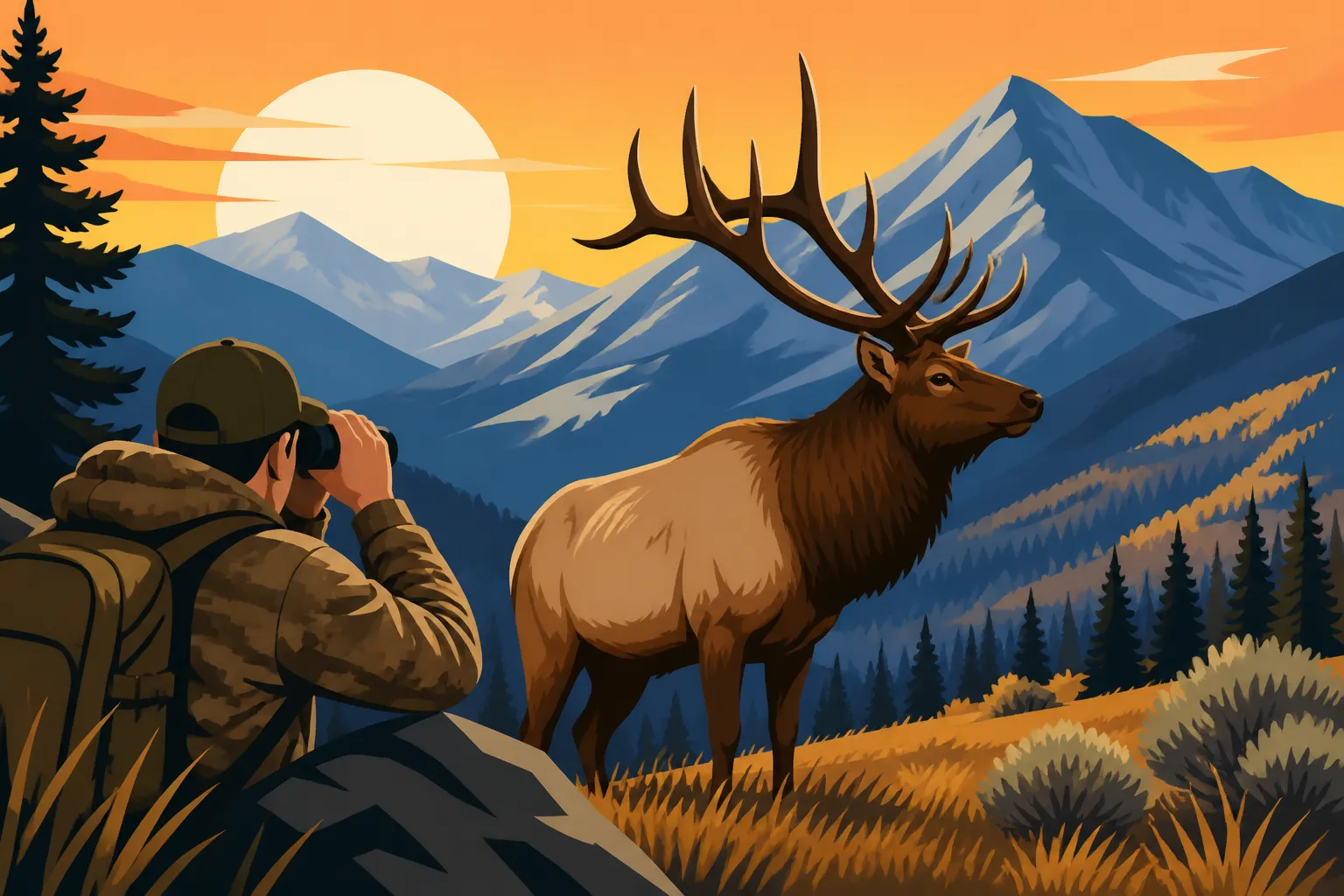
Bedding areas post-rut are almost always in the densest, most protected cover available. This could be dark timber, thickets of dogwood, or even deep canyons that offer refuge from wind and snow. When looking for these areas, remember that elk value security above almost all else during this period. They will bed in places that offer good visibility downwind and provide a quick escape route. Often, you'll find bedding areas on the leeward side of a ridge or within thick timber patches on benches that offer a view of approaching threats. A good pair of binoculars, like those you'd use for How to Glass Montana's Big Country, can help you pick apart distant hillsides for these critical spots. Look for flattened grass, fresh droppings, and broken branches from their movements. This focused scouting, whether virtual or boots-on-the-ground, is paramount to success when elk have gone quiet.
Effective Hunting Tactics for Late Season
The silence of the post-rut means bugling and aggressive calling tactics often fall flat. Your focus needs to shift to quiet movement, patience, and anticipating elk behavior rather than trying to elicit a response.
Still-Hunting and Spot-and-Stalk Techniques
When elk are quiet and wary, still-hunting through their likely bedding and feeding areas becomes incredibly effective. This means moving slowly, deliberately, and with extreme stealth. Think of it as stalking in slow motion. Take a few steps, then stop and carefully scan your surroundings, using your binoculars to pick apart every shadow, every tree trunk, and every patch of cover. Pay attention to the wind direction, making sure it's consistently in your favor, as a swirling wind is the quickest way to spook a herd. This is especially critical in timbered areas where visibility is limited, and elk can appear out of nowhere. If you're exploring How to Still-Hunt Montana Timber, remember that sound discipline is paramount. Every crunch of a twig, every rustle of your clothing, can give you away.
Spot-and-stalk is another potent strategy, particularly in more open, rolling terrain or when elk are feeding on slopes where you can observe them from a distance. This requires patience and often involves sitting for long periods, glassing likely areas at dawn and dusk. Once you spot elk, plan your approach carefully, utilizing topography and natural cover to get within shooting range. Remember that late-season elk are constantly scanning their surroundings, so a low profile and a methodical approach are essential. This method is often detailed in guides like Montana Elk Hunting Methods Explained, emphasizing the adaptability required for different scenarios.
Using Terrain and Weather to Your Advantage
The changing weather conditions after the rut are not just a challenge; they're an opportunity. Snowfall can be your best friend, silencing your footsteps and making fresh tracks incredibly easy to spot. A fresh blanket of snow, especially during or after a cold front, can drive elk into dense timber for protection, making their location more predictable. When hunting How to Hunt Elk in Montana Snow, focus on tracking fresh sign and moving with purpose, knowing that elk will likely be concentrated in areas offering shelter.
Thermals, the upward and downward drafts of air caused by temperature changes throughout the day, become even more critical to understand. In the morning, cold air sinks, carrying your scent downhill. As the sun warms the slopes, air rises, carrying your scent uphill. This means planning your approach based on the time of day and the aspect of the terrain. For instance, hunting up a draw in the morning might be ideal, but reversing that approach in the afternoon could blow your cover. Understanding How to Use Thermals in Montana Elk Country is not just academic; it's a practical necessity for getting close to wary post-rut elk without them ever knowing you were there.
The Role of Minimal Calling
While aggressive bugling is generally out, a little subtle calling can still play a role. Soft cow calls, muffled mews, or even a soft grunt can sometimes stop a moving animal or elicit a curious glance. It's not about challenging a bull or drawing him in from a mile away; it's about reassurance or subtly getting an animal to pause. These sounds should be used sparingly and cautiously, mimicking the natural, quieter communication of elk post-rut. Think of it as a subtle nudge rather than a full-blown conversation. If you’re really skilled, you might try to locate a "loner" bull or a small herd with very minimal, almost accidental-sounding calls. This can be a high-risk, high-reward strategy, as over-calling will almost certainly blow your cover with these extra-wary animals.
Gear and Preparation for Cold Weather Hunts
Hunting Montana after the rut means dealing with significantly colder temperatures, potential snow, and shorter daylight hours. Your gear and physical preparation need to reflect these tougher conditions to ensure safety and comfort.
Layering for Extreme Cold and Inclement Weather
Effective layering is paramount for late-season elk hunting in Montana. Forget bulky, single-layer garments; you need a system that allows you to add or shed layers as your activity level and the weather change. Start with a moisture-wicking base layer, preferably merino wool, which insulates even when wet and manages odor. Over that, a mid-layer for insulation, like a fleece or a puffy jacket, is essential. Your outer layer should be waterproof, windproof, and durable, capable of shedding snow and blocking icy gusts. Consider a quality system from brands like Sitka Gear or Kuiu, known for their performance in extreme conditions.
Don't forget the extremities. A warm hat that covers your ears, a neck gaiter, and insulated gloves or mittens are non-negotiable. Many hunters use thin liner gloves for dexterity and then pull a warmer, waterproof mitt over them when not actively manipulating their rifle or bow. Proper footwear is also critical; invest in insulated, waterproof boots, ideally rated for sub-zero temperatures. You’ll also need thick wool socks, and perhaps even boot warmers for those long hours of sitting motionless. This comprehensive approach to layering allows you to stay comfortable and focused, even when temperatures plummet and a Montana winter storm rolls in.
Navigation Tools and Emergency Preparedness
Even with extensive e-scouting using a platform like GoHunt, having reliable navigation tools in the field is crucial. A fully charged GPS device or a smartphone with downloaded offline maps (like those from onX Hunt) is essential. Carry a physical map and compass as a backup, and know how to use them, especially in areas where GPS signals might be unreliable, such as deep canyons or dense timber. A headlamp with extra batteries is non-negotiable, as daylight hours shorten dramatically, and you might find yourself packing out an elk after dark.
Emergency preparedness for Montana Backcountry Hunting Guide situations becomes even more critical in colder weather. Carry a basic first-aid kit, a fire starter, an emergency shelter (like a bivy bag or space blanket), extra high-energy food, and plenty of water or a water filter. Tell someone your exact hunting plan, including your intended route and expected return time. Weather can change quickly in Montana, turning a pleasant day into a dangerous blizzard in a matter of hours. Being prepared for an unexpected night out in freezing conditions could literally save your life.
Physical Conditioning and Stamina
Hunting elk after the rut often means covering more ground in tougher conditions. The snow adds resistance to every step, and the cold saps energy. Your physical conditioning needs to be top-notch. Focus on cardiovascular endurance (hiking with a weighted pack, trail running) and leg strength (squats, lunges) in the months leading up to your hunt. Being able to hike silently, often uphill through snow, for hours on end is a requirement, not a suggestion. This is especially true if you're pursuing a Montana DIY Elk Hunting Guide strategy.
Mental stamina is just as important. The frustration of not hearing bugles, the discomfort of biting winds, and the physical demands can wear you down. Cultivate patience, persistence, and a positive mindset. Remind yourself that late-season success often comes down to one brief window of opportunity after hours, or even days, of grinding. Having a detailed Montana Elk Hunt Fitness Plan can give you the edge you need to stay in the game when others have packed up and gone home.
Navigating Public Land Challenges and Pressure
Montana's public lands are a treasure, but they also see significant hunter pressure, especially during the general rifle season which often extends into the post-rut period. Understanding how to navigate this pressure is key to finding success.
Dealing with Increased Hunter Pressure
Once the general rifle season opens, public lands can become crowded. Elk, being smart animals, quickly learn to avoid areas with high human activity. This means you need to be prepared to hike farther, hunt harder, and explore areas that others overlook. If you're wondering How to Hunt Elk in Montana Rifle Season Pressure, consider hunting during weekdays when pressure is typically lower, or targeting areas that require significant physical effort to access. This can mean navigating steep terrain, crossing drainages, or pushing into dense timber where few other hunters venture.
Another strategy is to identify safe havens where elk retreat when pressured. These are often thick, nasty patches of timber, private land inaccessible to most, or deep wilderness areas that take days to reach. While you might not be able to hunt private land, understanding its proximity can help predict how elk move onto adjacent public ground. Using mapping applications to identify roadless areas or wilderness boundaries can reveal pockets where elk might feel secure, even when surrounded by hunting activity. The more you can think like a pressured elk, the better your chances of finding them.
Utilizing Block Management Areas and State Lands
Montana’s Block Management Program (BMA) is an incredible resource for hunters seeking access to private land. After the rut, some BMAs can still offer good hunting, especially if they border large tracts of public land. It's crucial to check the specific rules for each BMA, as access dates, species allowed, and hunter numbers can vary widely. Some BMAs might require sign-in, while others operate on a reservation system. Consulting the Montana Fish, Wildlife & Parks (FWP) website and using their mapping tools to locate and understand BMAs is highly recommended. These areas can often provide crucial winter forage or cover for elk moving off adjacent public land.
Similarly, state trust lands offer additional hunting opportunities. While often smaller and more fragmented than national forests or BLM lands, they can hold surprisingly good numbers of elk, especially if they are nestled next to agricultural fields or larger public parcels. Just like with BMAs, it's essential to confirm access regulations, as some state lands may have specific rules or require an Antelope Conservation License for certain activities. Combining knowledge of public land, BMAs, and state lands gives you a much larger mosaic of potential hunting grounds, which can be invaluable when elk are spread out and hunkered down.
Strategic Planning for Post-Rut Success
To consistently harvest elk after the rut, you need to be meticulous in your planning, adapting your expectations and strategies to the unique challenges of this period.
Focusing on Specific Terrain Features
Elk movements after the rut are heavily influenced by terrain and their need for energy conservation. Focus your efforts on specific terrain features that provide both food and shelter. South-facing slopes are prime feeding grounds because they receive more sunlight, melting snow faster and exposing valuable forage. Look for benches or saddles on these slopes that offer flat ground and a reprieve from climbing. Timbered draws and north-facing slopes, conversely, often hold bedding areas where elk seek refuge from wind and cold. They offer dense thermal cover and security.
Pay close attention to subtle changes in elevation, even small ones. A slight depression or a rise in terrain can offer a crucial thermal advantage or provide a vantage point for elk. Consider areas where timber transitions to meadows, or where dense cover provides a natural funnel to water sources. These transition zones are often high-traffic areas. Remember, you're not just looking for elk; you're looking for elk habitat that provides everything they need to survive winter, and those habitats are often dictated by the contours of the land.
The Importance of Patience and Persistence
Hunting elk after the rut is rarely a fast-paced, action-packed affair. It demands extreme patience and unwavering persistence. You might spend hours, or even days, slowly covering ground, seeing little to no sign, before you finally cut a track or spot a glimpse of brown hide in the timber. Don't get discouraged by the silence or the lack of visible activity. Elk are masters of concealment in this period.
It's about making small, calculated moves and being ready to capitalize when an opportunity arises. This might mean sitting for hours, glassing a particular hillside, or painstakingly still-hunting through a section of timber. Every step is a gamble, every pause a chance to observe. The reward for this patience is often a mature bull or cow that has eluded other hunters who gave up too soon. Understanding the mindset required for Late-Season Elk Hunting in Montana is as important as the physical skills.
Post-Harvest Logistics
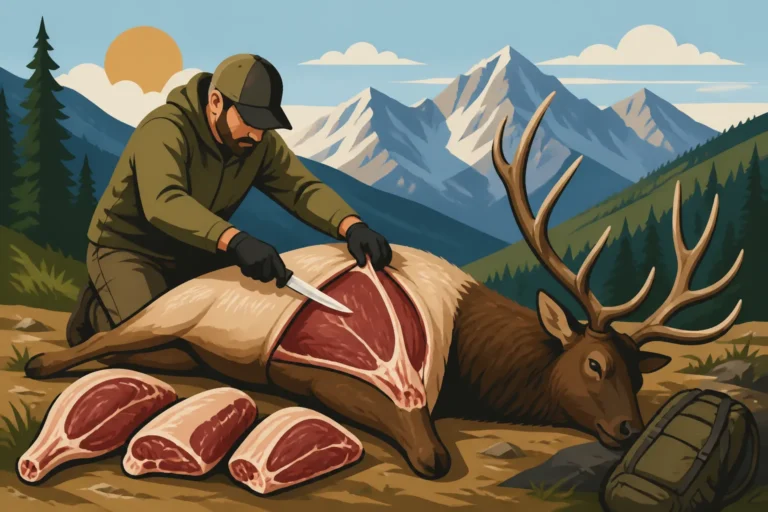
Finally, it's crucial to think about what happens after you pull the trigger. Packing out an elk in deep snow or freezing temperatures is a monumental task. Have a solid plan for field dressing and packing out your animal. This includes proper knives, game bags, and a sturdy pack frame capable of handling heavy loads. Consider bringing a sled if hunting in deep snow, which can make moving quarters significantly easier.
Knowing How to Pack Out an Elk in Montana quickly and efficiently is essential, not just for your own well-being but for preserving the meat quality. Cold weather is a double-edged sword: it keeps meat cool, but it also makes the physical labor much harder. If you're a solo hunter, this planning becomes even more critical. Think about where you'll make your cuts, how you'll manage the hide, and the safest, most efficient route to get your hard-earned meat back to your vehicle or camp. This is not a task to improvise in the moment.
Table: Rut vs. Post-Rut Elk Hunting Dynamics
| Feature / Behavior | During the Rut (Sept-Oct) | Post-Rut (Nov-Dec) | Hunting Strategy Adaptations |
|---|---|---|---|
| Elk Behavior | Vocal, aggressive, focused on breeding, less wary | Quiet, wary, focused on survival (food, cover), scattered | Stop calling aggressively; focus on stealth, patience, and observation. |
| Primary Location | High-country basins, open meadows, timber fringes (for display) | Lower elevations, dense thermal cover, south-facing slopes, sheltered drainages | Shift scouting to winter range, food sources, and heavy cover. |
| Movement Patterns | Active throughout the day, driven by breeding; chasing cows | Often nocturnal or crepuscular, minimal movement between bedding and feeding | Hunt bedding areas and travel corridors at dawn/dusk; use still-hunting in dense cover during the day. |
| Vocalization | Frequent bugling, cow calls, grunts | Minimal vocalizations; soft mews or grunts (rarely) | Use very minimal, soft cow calls or mews to stop animals; avoid aggressive bugling. |
| Hunter Tactics | Aggressive calling, setting up on bugling bulls | Spot-and-stalk, still-hunting, tracking, ambushing | Prioritize silent movement, wind control, and using optics for long-range spotting. |
| Gear Considerations | Standard archery/rifle gear, medium layers | Insulated, waterproof clothing; extreme cold weather gear; snowshoes/traction | Invest in comprehensive layering, insulated boots, and reliable navigation/safety equipment. |
| Environmental Factors | Mild to cool temps, changing leaves, some early snow | Cold to extreme cold, significant snow, shorter daylight | Use snow for tracking and silent movement; leverage thermals; prepare for blizzards. |
Disclaimer
Hunting is an inherently dangerous activity. The information provided in this guide is for informational purposes only and is not a substitute for proper hunter education, safety training, and adherence to all local, state, and federal hunting regulations. Always prioritize safety, respect wildlife, and obtain the necessary licenses and permits before heading into the field. Weather conditions in Montana can change rapidly and become severe; be prepared for all eventualities and inform others of your hunting plans.