What Gear a Montana Outfitter Provides
One of the biggest head-scratchers when you're planning a guided hunt in Montana is figuring out what exactly your outfitter is going to provide. It's a common frustration, especially for those venturing out west for the first time, to wonder if you need to pack everything but the kitchen sink or if the essentials are covered. This comprehensive guide will help clear up the confusion, detailing what gear you can generally expect your Montana outfitter to supply and, just as importantly, what you'll definitely need to bring yourself.
The Core Question: What Does an Outfitter Typically Provide?
When you’re shelling out good money for a guided hunt, you expect a certain level of service and provision. The exact list of gear can swing wildly depending on the type of hunt, the outfitter's specialty, and even the specific district you're heading into, but there are some common threads. Generally, an outfitter is there to facilitate the hunting experience, handle the logistics, and put you in the best position for success. This almost always includes a base camp, food, and often the means to get you into remote areas.
The Big Ticket Items: Camp, Food, and Horses
Let's start with the non-negotiables. Almost every guided hunt in Montana will provide a comfortable (or at least functional) camp, food, and, if it's a true backcountry experience, the horses or mules to get you there. Imagine trying to haul a wall tent, a wood stove, cots, cooking gear, and a week's worth of food miles deep into the Bob Marshall Wilderness on your own two feet—it's just not feasible. That's where the outfitter truly shines. They handle the heavy lifting, setting up the entire infrastructure. This includes robust wall tents, often with wood stoves for warmth, sleeping cots or pads, and cooking facilities. The food provided is usually hearty, calorie-dense fare designed to fuel strenuous days in the mountains, from hot breakfasts before dawn to dinners under the stars. Think of it as a mobile, high-altitude restaurant service in the wilderness. For many hunters, the experience of riding into an untouched basin on horseback is part of the dream, and outfitters are experts at navigating this rugged terrain. They'll pack your personal gear in and, hopefully, pack your game out.
General Hunting Gear: Shared Resources and Essentials
Beyond the living quarters, many outfitters will also provide certain shared hunting essentials. This might include spotting scopes and tripods for glassing vast Montana landscapes, especially when hunting species like mule deer or antelope in more open country. They often have satellite communication devices or radios for safety and coordination. For those embarking on a Montana Backcountry Hunting Guide expedition, this connectivity can be a lifesaver. Some outfitters may even have backup firearms or bows, though relying on these is generally not recommended. They'll have a fully stocked first-aid kit, crucial for any wilderness adventure. Additionally, they’ll have the necessary tools for field dressing and quartering game, from sharp knives to game bags and often a game cart if the terrain allows for it. Don't forget their extensive knowledge of the local game movements and habits—that's perhaps their most valuable "provided gear" of all.
The Gray Areas: What Varies Greatly by Outfitter
Now, here’s where things get a bit fuzzy, and it's essential to clarify specifics directly with your outfitter. Items like sleeping bags are a common point of contention. Some outfitters provide them, especially for those traveling from afar, while others expect you to bring your own high-quality, cold-weather bag. Rain gear or outer layers might be available as a loaner in some camps, but these are almost always better when custom-fit and personally owned. Flashlights, headlamps, and personal water filtration systems are other examples of gear that could be provided but are safer to assume you need to bring. Even something as simple as a daypack might be an outfitter loaner or your own responsibility. This is where researching your outfitter thoroughly, perhaps through platforms like BookYourHunt or by reading reviews, becomes absolutely critical. The type of hunt, such as a Montana Drop Camp Hunts Explained versus a fully serviced lodge hunt, will significantly influence what falls into these gray areas.
Your Responsibility: What You Absolutely Need to Bring
Despite what an outfitter provides, there's a significant amount of personal gear you are undeniably responsible for. These are the items that make your hunt successful, safe, and comfortable. Think of your gear as an extension of yourself in the field; it needs to be reliable and familiar.
Personal Hunting System: Optics, Weapon, and Ammo
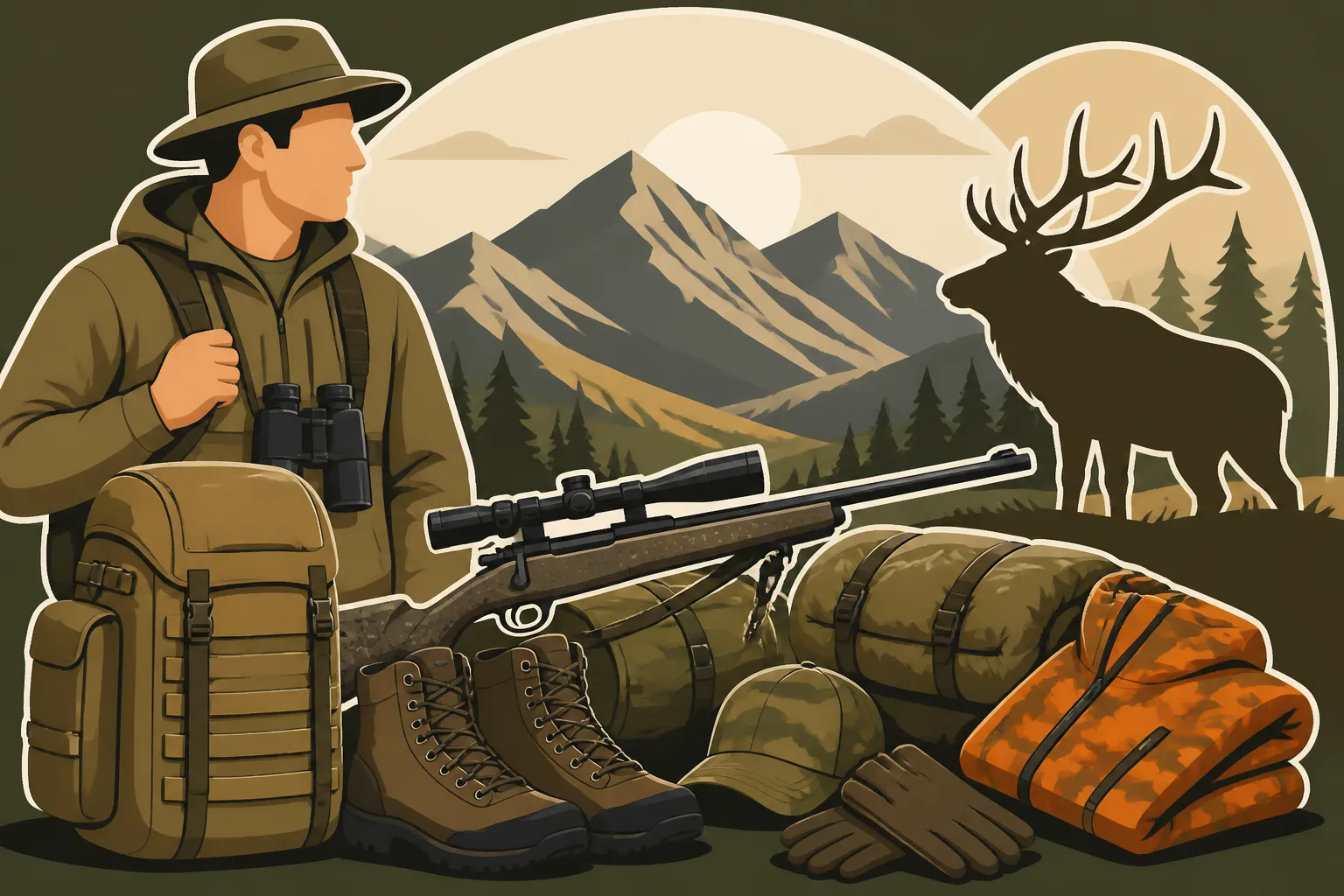
Your personal hunting system is paramount and is your responsibility. This means your rifle or bow, ammunition or arrows, and all your personal optics. Nobody knows your rifle's zero like you do, or the feel of your bowstring. Bring your primary weapon, a sufficient supply of ammunition (and perhaps a few extra, just in case), and your chosen broadheads or bullets. Your binoculars are your eyes in the field, crucial for How to Glass Montana's Big Country and spotting game from afar. While an outfitter might have a shared spotting scope, your personal binos are indispensable for quick scans and close-up identification. Rangefinders are also a must-have, allowing you to accurately judge distances in mountainous terrain. Make sure everything is sighted in and tested well before you leave home. This preparation is a core component of Montana Elk Hunting Methods Explained.
Clothing Layers and Footwear: Montana Weather is Fickle
Montana weather is notoriously unpredictable, especially in the mountains. You can experience all four seasons in a single day. Therefore, a comprehensive layering system is not just recommended, it's essential. This means wicking base layers, insulating mid-layers (fleece, puffy jackets), and a waterproof, windproof outer shell. You'll need multiple pairs of quality hunting socks to prevent blisters and manage moisture. Your footwear is arguably the most critical item on your personal packing list. Invest in high-quality, broken-in hunting boots that are waterproof and offer excellent ankle support. Nothing will ruin a hunt faster than wet, sore feet. Consider bringing camp shoes or sandals for evenings to give your feet a break. Don't forget gloves or mittens, and a warm hat or beanie—most of your body heat escapes through your head. Referencing a general Montana Backcountry Hunting Gear List can provide an excellent starting point for your personal clothing system.
Personal Comfort and Hygiene Items
While an outfitter handles the general camp setup, your personal comfort and hygiene items are your domain. This includes your toothbrush, toothpaste, any personal medications (crucial!), sunscreen, lip balm, and perhaps some wet wipes for quick clean-ups. Many hunters also bring a small personal towel. If you use any specific toiletries, pack them. Think about small creature comforts that can make your experience better, like a compact pillow or an eye mask for better sleep in a shared tent. Some hunters even bring a small battery pack for charging phones or GPS devices, though relying heavily on electronics in the backcountry is usually discouraged. Keep these items lightweight and compact, as you'll be carrying them in and out with your personal gear.
Understanding Outfitter Tiers and What They Offer
Not all guided hunts are created equal, and understanding the different tiers of service is paramount to knowing what gear to expect. The type of experience you book directly impacts the provisions and level of luxury (or ruggedness) you'll encounter.
Drop Camps vs. Fully Guided Experiences
This is perhaps the biggest distinction in outfitter services. A drop camp means the outfitter packs you and your gear into a remote location, provides a pre-set camp (tent, stove, cots, sometimes basic cooking gear), and then leaves you to hunt on your own. They'll typically return on a pre-arranged date to pack you out, and hopefully, your game. In this scenario, you are responsible for all hunting, cooking, navigating, and emergency planning. You’ll need to bring your own food, sleeping bags, navigation tools, and a much more extensive personal gear list. It's a fantastic option for experienced DIY hunters who want to cut out the strenuous pack-in. In contrast, a fully guided experience means a guide is with you every day of the hunt, from pre-dawn to dark. They handle cooking, navigating, field dressing, and all the daily logistics. For a fully guided hunt, the outfitter provides the majority of the camp and food, making your personal packing list significantly shorter and focused on personal clothing, hunting gear, and hygiene. Platforms like GoHunt offer detailed information that can help you understand the nuances between these options and what might be the best fit for your hunting style.
Luxury Lodge Hunts vs. Remote Wall Tents
The accommodations vary wildly. At one end of the spectrum, you have "lodge hunts" or "ranch hunts" that might include comfortable beds, indoor plumbing, home-cooked meals served in a dining room, and daily transport to hunting areas. For these, your personal gear needs are minimal—you're basically packing for a comfortable stay with hunting trips during the day. At the other end, you have remote wall tent camps deep in wilderness areas. These are rugged, rustic, and often miles from the nearest road. While the outfitter provides the tent and wood stove, conditions are basic. Your personal gear needs to be robust and designed for extreme weather and comfort in primitive settings. It’s all about fitting into that small space efficiently. When looking at potential hunts, clarify the exact nature of the lodging: is it a heated cabin, a canvas tent, or somewhere in between? This will dictate how much personal comfort gear you need to bring. This distinction is often crucial when budgeting for a trip and is a key part of understanding Montana Guided Elk Hunt Cost.
Specialty Hunts: Archery, Muzzleloader, or Specific Species
Certain specialty hunts can also impact what an outfitter provides. An archery elk hunt, for instance, might require more specific gear like tree stands or ground blinds, which some outfitters may have available, though many bowhunters prefer their own familiar setups. For a Montana Archery Elk Hunting Guide, detailed attention to silent movement and precise shooting is crucial, and your gear reflects that. Similarly, a muzzleloader hunt has its own unique equipment needs. If you're hunting a specific species, like bighorn sheep or mountain goats in extremely steep terrain, the outfitter might provide specialized climbing gear or extra spotting scopes for intense glassing sessions. Always inquire if the outfitter has specific gear tailored to your chosen hunting method or target species.
How to Confirm Gear Details with Your Outfitter
The golden rule here is: never assume. What one outfitter provides, another might expect you to bring. Communication is key to a smooth and successful hunt.
Asking the Right Questions Before You Book
Before you even put down a deposit, have a detailed conversation with your prospective outfitter about their gear policy. Don't be shy! Ask specific questions:
- "Do you provide sleeping bags, or do I need to bring my own?"
- "What kind of cooking equipment is in camp if it's a drop camp?"
- "Are there any shared optics available, like a spotting scope?"
- "What do you recommend for personal first aid supplies beyond the general camp kit?"
- "Is there a daily packing list you provide, or a recommended clothing list?"
A reputable outfitter will be happy to answer these questions thoroughly and openly. If they're vague or dismissive, that's a red flag. This due diligence is part of How to Choose a Montana Hunting Outfitter wisely. Some outfitters even offer a detailed Montana Guided Hunt Packing List on their website or will email one to you.
Reviewing the Contract and Packing List
Once you've decided on an outfitter, carefully review your contract. It often outlines what services and provisions are included. Many will also send a comprehensive packing list. Treat this list as gospel! It's compiled based on their experience in the specific hunting areas and conditions you'll face. Pay close attention to any "required" versus "recommended" items. If you have any doubts after reviewing these documents, pick up the phone and get clarification. It's much better to know exactly what you need to bring before you're standing at the airport baggage claim in Bozeman or Missoula. Understanding What to Expect on a Guided Montana Elk Hunt includes knowing these logistical details.
Utilizing Online Resources and Hunter Reviews
Beyond direct communication, leverage online resources. Many outfitters have websites with FAQ sections or testimonials that might shed light on their gear provisions. Hunting forums and online communities are also treasure troves of information. Search for reviews of your specific outfitter – often, past clients will mention what they loved (or wished they had brought) regarding gear. Sites like BookYourHunt can sometimes provide standardized information on what's included in different hunt packages, helping you compare apples to apples. GoHunt's forums and articles can also be great places to gather general packing advice for Montana hunts, even if they don't directly review a specific outfitter's gear list. Remember, a little research beforehand can save you a lot of headache and expense once you're on the ground in Montana.
| Category | Fully Guided Camp (Example) | Drop Camp (Example) | Your Responsibility (Always) |
|---|---|---|---|
| Shelter/Sleeping | Wall tent, cot, wood stove | Wall tent, cot, wood stove | Sleeping bag, pillow (optional) |
| Food/Drink | All meals, snacks, water | Basic cooking gear | All food, snacks, personal water bottle/filter |
| Transportation | Horses/mules, vehicle to trailhead | Horses/mules to drop point | Personal daypack |
| Hunting Tools | Shared spotting scope, maps, GPS | Basic map/compass (sometimes) | Binoculars, rangefinder, weapon, ammo/arrows, hunting knife, GPS/onX, headlamp |
| Field Care | Game bags, first aid kit | Game bags, basic first aid kit | Personal first aid items |
| Personal Items | Basic camp chairs | Basic camp chairs | All clothing layers, boots, hygiene, medications, small personal items |
| Communication | Satellite device, radios | (Often) Satellite device for emergencies | Personal phone (for signal where available), battery bank |
Disclaimer
This article is for general informational purposes only and does not constitute professional advice. Laws, prices and regulations vary by location and change over time. Consult a qualified professional for guidance on your specific situation.