How to Enter the Montana Combo Draw Online
Applying for hunting licenses, especially as a nonresident eyeing that coveted Montana combination tag, can feel like navigating a maze blindfolded. The deadlines are tight, the system can seem opaque, and the fear of making a mistake that costs you a year (or more!) of waiting is a real, gnawing anxiety. This comprehensive guide is here to unravel the mystery, walking you through the entire online application process for the Montana combination draw, ensuring you feel confident and prepared every step of the way.
Understanding the Montana Combo Draw Landscape
Montana offers some of the most sought-after big game hunting opportunities in the West, drawing thousands of hunters annually. For nonresidents, the primary gateway to hunting elk and deer (both mule deer and whitetail) on general public lands is often through the "Nonresident Combination License." This isn't just a simple tag; it's a bundled license package that includes your general hunting license, a conservation license, an upland game bird license, a fishing license, and crucially, your general elk and general deer tags. It’s a significant investment, both in terms of money and hopes, so understanding its nuances before you dive into the application is absolutely critical.
The draw for these combination licenses, particularly for elk and deer, is highly competitive, especially for nonresidents. Montana employs a preference point system for these combination licenses, meaning that the more points you have, the better your chances of drawing become in subsequent years. This system is designed to reward loyalty and patience, but it also means that getting a tag on your first try without points is incredibly challenging. Knowing this upfront helps manage expectations and strategize your application. You can learn more about how to navigate this system in our guide on Montana Nonresident License Draw Explained.
Key Deadlines and Strategic Timing
The Montana Fish, Wildlife & Parks (FWP) sets strict application deadlines, and missing them is an automatic disqualification, regardless of how many preference points you’ve accumulated or how much research you've done. For the nonresident deer and elk combination licenses, the deadline typically falls in early Spring, often around April 1st. However, specific permit applications (for limited-entry districts) have earlier deadlines, sometimes in mid-March. It's imperative to always check the official FWP website for the exact dates for the upcoming season, as they can shift slightly year to year.
Beyond just the combination license, many hunters also apply for specific "permit" tags within designated hunting districts. These permits are for areas with restricted harvest quotas, often targeting trophy animals or specific herd management goals. These are drawn separately, using a bonus point system, and require an additional application. You might be applying for your combo license in April, but a special permit application could be due earlier. Understanding the difference between general tags and limited-entry permits is crucial, and our guide on Montana General vs Permit Tags Explained offers a detailed breakdown. Strategic timing means not only hitting the deadlines but also understanding how your application for a combo license interacts with any special permit applications you might pursue.
Preparing Your FWP Account and Information
Before you even think about selecting a hunt code, you need to ensure your FWP online licensing system account is in perfect order. This means verifying all your personal information – name, address, date of birth, and most importantly, your FWP customer ID number. For first-time applicants, you'll need to create a new customer account, which can take a few minutes. Don't wait until the last minute to do this, as technical glitches or forgotten passwords can cause immense stress right before a critical deadline.
Having all your necessary documents ready, such as hunter education certification numbers if required (especially for younger hunters or those new to Montana), can also streamline the process. Montana requires all hunters born after January 1, 1985, to complete a hunter education course or provide proof of prior hunting license from any state or province. It's a fundamental step that many overlook until they're deep into the application process and suddenly hit a roadblock.
Your Step-by-Step Montana Online Application Walkthrough
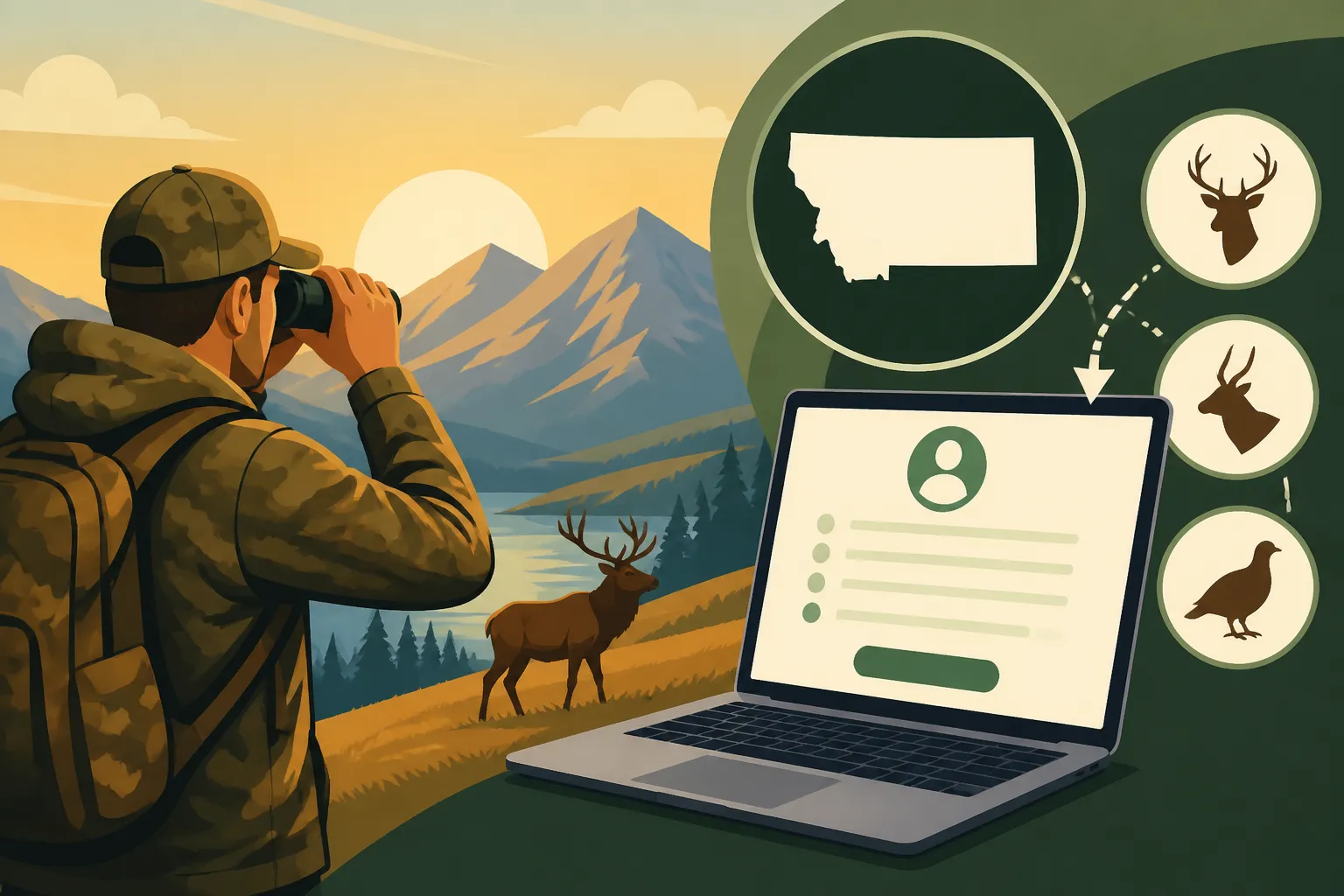
The FWP's online licensing system is the central hub for all things related to hunting and fishing licenses in Montana. While it's designed to be user-friendly, the sheer number of options and specific requirements can be overwhelming. We'll break down the process into manageable steps, focusing on the nonresident combination license, which is often the first step for many seeking to hunt Montana's elk and deer.
Accessing Your FWP Account
Your journey begins at the official Montana FWP licensing website. You'll either log in with your existing FWP customer ID and password or, if you're a first-timer, create a new account. When creating an account, ensure all information precisely matches your government-issued ID. Any discrepancies can cause issues later, especially if you successfully draw a tag and need to prove your identity. It's not uncommon for hunters to misspell a middle name or use a different address, only to face headaches down the line. Take your time during this initial setup.
Once logged in, you'll see a dashboard that might display your current licenses, available applications, and your preference point totals. This is also where you'll find the option to purchase or apply for new licenses. Don't rush into clicking the first hunting license option you see; scour the menu for the specific "Nonresident Combination License" or a similar title, usually found under a "Hunting" or "Big Game" category.
Navigating the License Application Portal
After selecting the combination license application, you'll be guided through a series of screens. These typically include:
- Personal Information Confirmation: Double-check that all your details are correct.
- Required Add-ons: You'll be prompted to purchase a Conservation License, which is mandatory for all hunters in Montana, and an Aquatic Invasive Species (AIS) Prevention Pass. These are non-negotiable and are automatically added to your cart with your combination license.
- License Type Selection: Here's where it gets specific. You'll select the "Nonresident Big Game Combination License" which grants you a general elk tag and a general deer tag. There might also be options for other licenses, like an "Antelope License" or "Black Bear License," if you plan to hunt those species. If you're a nonresident and want to hunt elk and deer, this is the one you need.
- Preference Point Application: This is a crucial step for nonresidents applying for the combination license. You'll be asked if you want to apply for a preference point for the current year's draw. Always select "yes" unless you're absolutely certain you don't want to accrue points. These points are invaluable for future draws, especially for the popular combo tags. Our guide on Montana Preference Points vs Bonus Points provides an in-depth look at how these systems function.
- Optional Permit Applications: If you plan to apply for any special limited-entry permits (e.g., specific elk or deer districts), this is where you’d add them. Remember, these usually have separate draw deadlines and a different point system (bonus points). The FWP application will link these, but it's important to understand you're applying for multiple things.
The Preference Point Strategy
For nonresidents, securing a Montana combination license typically requires accumulating preference points. When you apply for the combination license, you have the option to purchase a preference point (or redeem one if you have it). A preference point essentially moves you up the queue in future draws for the combination license. It's a "cost of doing business" for many nonresident hunters who dream of a Montana hunt. The cost of a preference point is typically a non-refundable fee, usually around $100 for nonresidents, but it's a small price for the potential return.
You can also apply for a preference point as a standalone option if you don't plan to hunt that particular year but want to build points for the future. This is a common strategy for hunters who know they can't make it to Montana every year but want to keep their draw odds improving. If you are applying as a group, ensure each member understands the preference point system, as group applications typically average the points of all members, which can affect your collective draw odds. For a deeper dive into the mechanics, see How to Build Preference Points in Montana.
Montana Nonresident Combination License Application Flow (Simplified)
| Step | Action | Key Consideration |
|---|---|---|
| 1. Access Account | Log in or Create FWP Customer Account | Ensure all personal info is accurate and matches ID. |
| 2. Select Application | Navigate to "Nonresident Combination License" | Don't confuse with resident licenses or single-species tags. |
| 3. Confirm Details | Review personal info, add Hunter Ed. # (if needed) | Mandatory for specific birth years; crucial for validity. |
| 4. Add Mandatory Items | Auto-include Conservation License & AIS Prevention Pass | These are required for all hunting licenses in Montana. |
| 5. Apply for Preference Pt. | Select "Yes" to apply for a Preference Point (for the Combo License) | Essential for improving draw odds in future years for nonresidents. |
| 6. Optional Permits | Add any special limited-entry permit applications (e.g., 270 Elk Permit) | These are separate draws with different point systems (bonus points) and may have earlier deadlines. |
| 7. Review & Pay | Carefully check all selections and total cost before finalizing payment | Missing items or incorrect selections can invalidate your entire application. |
Reviewing and Submitting Your Application
This is where attention to detail truly pays off. Before you click "submit" and provide payment, meticulously review every single detail on your application summary page. Check the license types selected, ensure your preference point application is marked correctly, and verify that any additional permit applications (if applicable) are included. The cost will be clearly itemized, showing the combination license fee, the preference point fee, and any other associated costs.
Once you’re confident everything is correct, proceed to payment. Montana FWP accepts major credit cards for online applications. Upon successful payment, you should receive a confirmation email with a transaction ID. Save this email! It's your proof of application. If you don't receive it, check your spam folder, and if it's still missing, contact FWP directly. This confirmation is vital for any future inquiries about your application status or draw results.
Common Missteps and How to Sidestep Them
The online application process, while straightforward in theory, often trips hunters up with small details or misunderstandings of Montana’s unique system. Avoiding these common errors can save you significant frustration and potentially years of waiting.
Overlooking Key Details and Missing Deadlines
It's easy to get caught up in the excitement of applying and skim over important information. One of the most frequent mistakes is simply missing the application deadline. As mentioned, the general combination license deadline is usually April 1st, but special permits can vary. Set reminders, mark your calendar, and maybe even have a friend check in with you. Another common oversight is failing to purchase the mandatory Conservation License and AIS Prevention Pass. While the online system usually guides you, always double-check these are included. They are required for any hunting license in Montana.
Another subtle but critical detail is understanding hunt codes. Every hunting district and specific tag has a unique hunt code, like 399-20 or 270-00. If you’re applying for a specific permit, you need to enter the correct code. Incorrect codes lead to incorrect applications, which are essentially wasted money and points. Platforms like GoHunt provide excellent tools for researching these codes and understanding their implications for different districts. They often have updated guides on Montana Hunt Codes Explained that can be invaluable.
Understanding Draw Odds and Point Creep
Many nonresident hunters apply annually for the combination license, diligently building preference points. This consistent application by many hunters leads to "point creep," where the number of points required to draw a particular tag slowly increases over time. What might have taken 4 points to draw a few years ago might now require 5 or 6. This is a common frustration, as it feels like the goalpost is always moving.
Understanding these dynamics is crucial for setting realistic expectations. Services like GoHunt compile draw odds data, allowing you to see historical success rates for specific districts and point levels. This data helps you make informed decisions about whether to apply for a general combination license or to use your preference points for a better chance, or if you should consider applying for a limited-entry permit where bonus points are used. While a general combination license is the easiest to draw with enough preference points, drawing a highly desired special permit can take many years of accumulating bonus points. Don't go into it blind; research the draw odds thoroughly.
What Happens After You Apply
Once you’ve submitted your application and payment, the waiting game begins. You’ll typically be notified of the draw results in late April or early May. This notification usually comes via email, but you can also log into your FWP account to check your status. If you draw, congratulations! Your license will be available digitally or mailed to you. If you don't draw, it can be a gut punch, but it’s not the end of the world. Montana has a system for what happens next.
If you don't draw your combination license, your preference point for that year is automatically applied, setting you up for a better chance next season. Your application fee for the combination license (excluding the preference point fee, which is non-refundable) is generally refunded. If you drew a general combination license but failed to draw a specific limited-entry permit, you still have your general tags to hunt. For more details on what to do if the draw doesn't go your way, check out What to Do If You Don't Draw in Montana.
Beyond the Application: Boosting Your Odds and Preparing for Success
Drawing a tag is only the first hurdle. To truly make the most of your Montana hunting experience, you need to pair your application strategy with thorough preparation. This means not only understanding the draw but also the hunting grounds and the game itself.
Utilizing E-Scouting Tools and Resources
In today's hunting world, e-scouting is no longer a luxury, it's a necessity. Once you've applied for your tags (or even before, to decide where to apply), using robust mapping and data platforms is invaluable. Tools like GoHunt's Insider platform offer detailed public land maps, harvest statistics, historical draw odds, and filtering capabilities that allow you to analyze specific hunting districts. You can layer satellite imagery, topographical maps, and public/private land boundaries to identify potential elk and deer habitat, access points, and remote areas with less pressure.
For example, you can research Montana Hunting Districts Explained and then use GoHunt to overlay timber stands, water sources, and elevation changes to pinpoint potential bedding areas or migration corridors. This type of detailed research, done from the comfort of your home, is crucial for developing a sound hunt plan, especially if you're traveling from out of state. E-scouting can help you understand How to E-Scout Montana Hunting Units long before your boots hit the ground, maximizing your precious time in the field.
Planning for the Hunt Itself
Even with a successfully drawn tag, the work isn't over. Montana’s vast and rugged landscapes demand physical and mental preparation. For elk hunting, especially, this means being in top physical condition. The mountains are unforgiving, and packing out an animal is a monumental task. Start a fitness regimen months in advance, focusing on cardio and strength training relevant to mountainous terrain.
Research the specific Montana Elk Season Dates Guide for your chosen hunting district, as dates can vary. Understand the general behavior of elk and deer during that time of year – whether it's the bugling rut, post-rut dispersion, or late-season migration. Gear planning is also paramount; reliable optics, a quality backpack, and suitable clothing for unpredictable mountain weather are all essential. Being prepared means not only increasing your chances of success but also ensuring a safe and enjoyable experience in Montana's incredible wild spaces. For those embarking on a backcountry adventure, our Montana Backcountry Hunting Guide is an essential read.
Final Checks and Considerations
As the draw results approach, resist the urge to constantly refresh your FWP account. Notifications will come. If you draw, immediately confirm your tag and start planning the logistics of your trip. Consider travel, lodging, and meat processing options early, especially if you're coming from afar. Many small towns in Montana get booked up quickly during hunting season.
If you don't draw, don't despair. Re-evaluate your strategy for the next year. Perhaps consider different districts, or focus on accumulating more preference points. Remember, the Montana draw is a marathon, not a sprint, and patience often pays off in the long run.
Disclaimer
The information provided in this guide is for general informational purposes only and is subject to change. Hunting regulations, season dates, and application procedures are determined by Montana Fish, Wildlife & Parks (FWP) and can be updated annually. It is the hunter's responsibility to consult the official FWP website and current year's regulations booklet for the most accurate and up-to-date information before applying for any licenses or tags. We are not responsible for any omissions or errors.