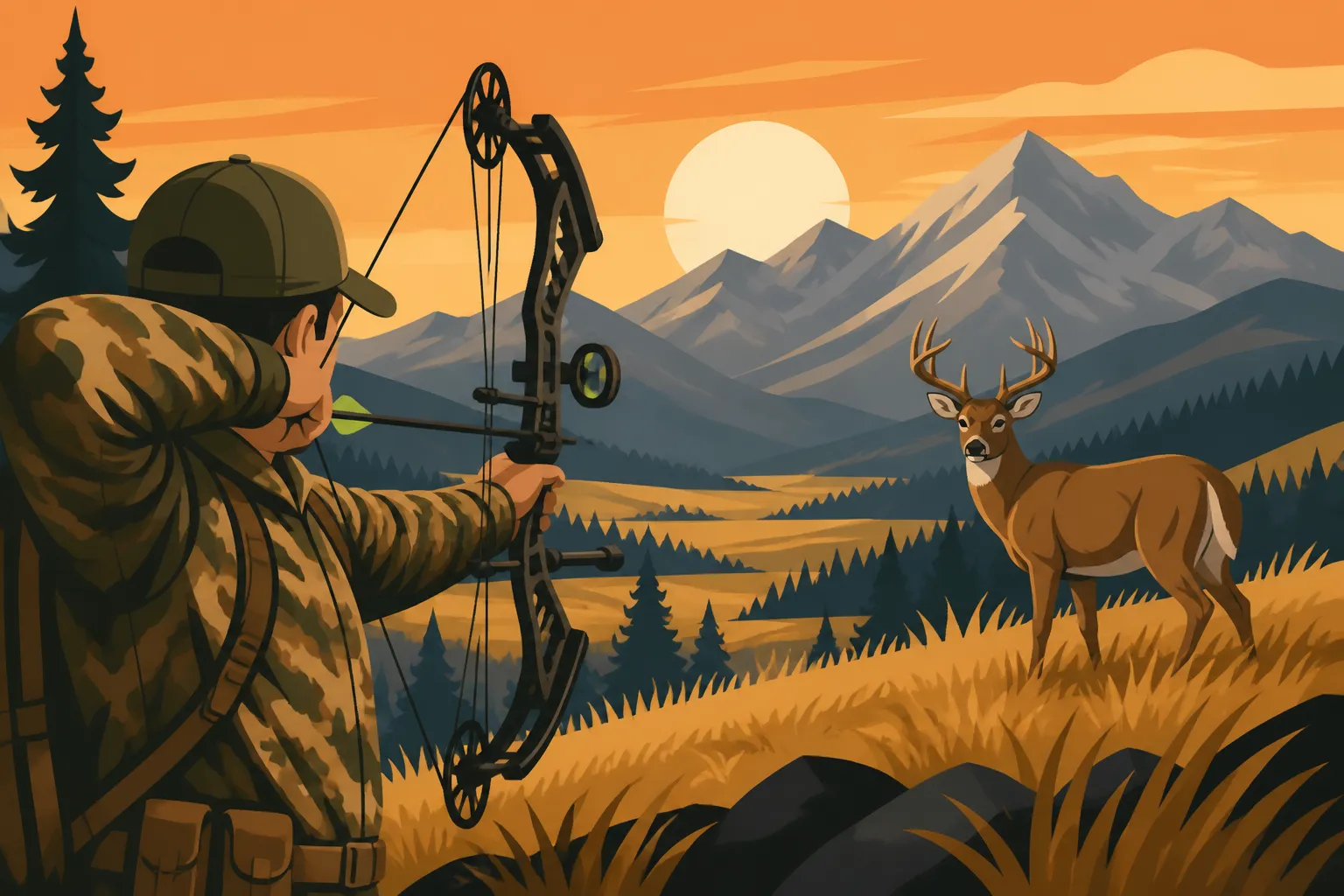
Montana Whitetail Deer Hunting for Beginners
For those dreaming of a Montana deer hunt, the majestic mule deer often gets all the glory, but don't overlook the elusive whitetail. These cunning creatures offer a uniquely challenging experience, especially for beginners who might be intimidated by the vastness of the landscape or the subtle nature of these deer. This comprehensive guide is designed to cut through the confusion and set you on the path to a successful Montana whitetail hunt, demystifying their habits, habitats, and the most effective tactics for a first-timer.
Understanding Montana Whitetail Deer Behavior for Beginners
Hunting whitetails in Montana isn't like hunting the wide-open plains for antelope or glassing distant mountains for elk. Whitetails are creatures of cover, masters of concealment, and understanding their behavior is the absolute first step for any beginner. They thrive in different environments and respond to pressures in distinct ways, making them a fascinating challenge.
Whitetail Habitat and Preferred Cover
When you think "Montana big game," your mind might conjure images of towering peaks and expansive sagebrush flats. While parts of Montana certainly offer that, whitetails have a completely different preference, especially here. They are deeply tied to riparian zones and dense cover, making them a puzzle to solve if you're used to spotting game from miles away.
Along river bottoms, creeks, and agricultural field edges, whitetails find everything they need: thick cover for bedding and security, water sources, and abundant food. Think about the winding river systems like the Yellowstone, Missouri, or Clark Fork, and their tributaries. These areas often feature a mosaic of cottonwood stands, willows, dogwood thickets, and dense underbrush. This heavy cover provides excellent thermal regulation, crucial during Montana's intense summers and bitter winters, and an almost impenetrable fortress against predators, including hunters. For a beginner, this means your hunting strategy will likely involve getting deep into these thickets or finding strategic ambush points along their fringes. They aren't going to be skylined on a ridge waiting for you; they'll be tucked away, watching you. You'll want to focus your e-scouting efforts on identifying these key habitat types. Tools like GoHunt's mapping features can be invaluable here, allowing you to highlight different vegetation types and potential travel corridors from the comfort of your home before you even set foot in the field.
Seasonal Movement and Patterns
Just like any deer species, Montana whitetails change their patterns throughout the year, driven by basic needs: food, water, cover, and reproduction. For a beginner, understanding these shifts is key to knowing where to focus your efforts and when. It's not just about knowing the Montana Whitetail Deer Season Dates and Tags; it's about knowing what the deer are doing within those dates.
In the early archery season (September), whitetails are generally still in their summer patterns. Bucks might be in bachelor groups, focused heavily on feeding in agricultural fields or lush creek bottoms to put on weight before the rut. They're fairly predictable, often moving from bedding areas to food sources and back, typically under the cover of darkness or low light. As hunting pressure increases, especially once the general rifle season opens in late October, their movements become more nocturnal and cautious. They'll use the densest cover available, sometimes barely moving during daylight hours.
As October transitions into November, the pre-rut begins, building into the peak of the rut, typically in mid-November. This is when bucks start to become less predictable and more aggressive, driven by the urge to breed. Their focus shifts from solely feeding to seeking out does, making them more visible during daylight hours. They'll rub trees, scrape the ground, and cruise through cover, following scent trails. This period can offer incredible opportunities for beginners, as bucks are more prone to making mistakes. You can learn a lot by researching Montana Whitetail Rut Timing to predict peak activity. After the rut, in late November and December, deer revert to prioritizing food and recovery, often forming larger groups, especially does and fawns, and conserving energy. Bucks will be exhausted and seeking nutrient-rich foods to regain lost weight, often congregating in more open, easily accessible food sources if hunting pressure has subsided.
Essential Gear and Setup for Beginner Whitetail Hunters
Stepping into the world of Montana whitetail hunting can feel overwhelming when it comes to gear. Everyone has an opinion, and the market is flooded with options. But for beginners, focusing on the essentials will make a huge difference in comfort, effectiveness, and overall enjoyment. You don't need the most expensive kit, but you do need reliable tools that perform when it counts.
Optics and Scouting Tools
In whitetail country, especially the dense river bottoms, you won't always be glassing across vast distances like you would for mule deer in the breaks or elk in the high country. However, quality optics are still absolutely vital for spotting subtle movement, identifying deer in thick cover, and ensuring a responsible shot.
A good pair of 10×42 binoculars is a non-negotiable item. They allow you to pick apart shadows, scan dense timber, and confirm if that flicker of white is a deer flag or just a bird. Look for reputable brands like Vortex, Leupold, or Maven that offer good light transmission for those crucial dawn and dusk hours. A rangefinder is equally important, especially when hunting from a stand or blind. Knowing the exact distance to key landmarks or potential shooting lanes helps you mentally prepare and ensures ethical shot placement. If you're bowhunting, a rangefinder with angle compensation is a huge asset. Beyond physical optics, digital scouting tools are a beginner's best friend. Platforms like GoHunt provide incredibly detailed topographic maps, satellite imagery, and public land overlays. You can spend hours e-scouting from your couch, identifying potential bedding areas, travel corridors, water sources, and pinch points where deer might be funneled. This can save you countless hours of unproductive walking and is a core component of How to E-Scout Montana Hunting Units. You can also use these tools to mark potential stand locations, access routes, and escape corridors, giving you a tangible plan before you even leave home.
Weapon Choices and Effectiveness
Choosing your weapon is a personal decision, often influenced by the season you're hunting, personal preference, and state regulations. For Montana whitetail, both archery and rifle hunting are popular and effective, each with its own set of considerations for a beginner.
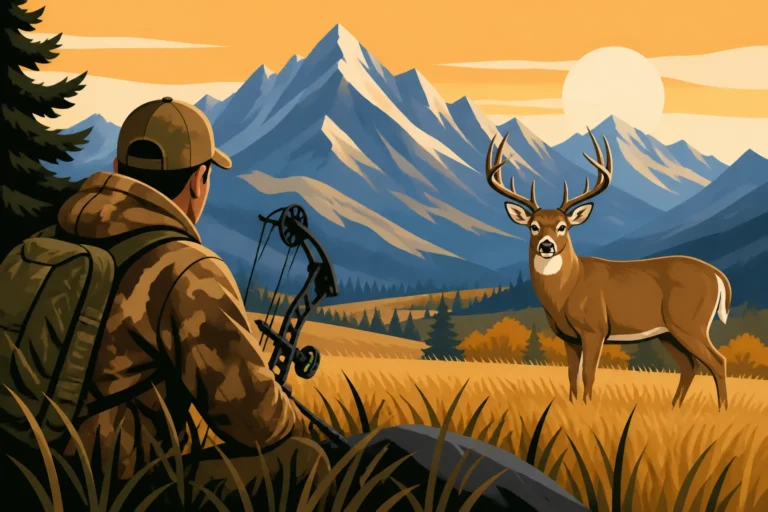
For archery hunters, a compound bow is the most common choice. Modern compounds are incredibly accurate and relatively forgiving. The key for a beginner is to get properly fitted at an archery shop and practice extensively. You need to be confident and consistent out to your effective range, which for most beginners is 20-30 yards. Accessorize with a good sight, a reliable rest, and properly spined arrows tipped with razor-sharp broadheads. Remember, bowhunting whitetails often means close encounters in dense cover, requiring stealth and quick, silent draws. For rifle hunters, Montana offers a wide array of cartridge choices. For whitetails, calibers like the .270 Winchester, .308 Winchester, 6.5 Creedmoor, or .30-06 Springfield are excellent choices, offering plenty of power without excessive recoil. Accuracy is paramount, so ensure your rifle is sighted in properly, and practice shooting from various field positions. A quality scope with good low-light performance is also crucial for those early morning and late evening hunts when whitetails are most active. Regardless of your chosen weapon, remember that ethical hunting means knowing your limitations and making a clean kill. Spend time at the range, get comfortable, and practice shooting in conditions similar to what you'll encounter in the field.
Clothing and Scent Control
Whitetails are notoriously skittish and possess an incredibly keen sense of smell. For a beginner, mastering scent control and choosing the right clothing are two of the most critical elements for success, especially when hunting their close-quarters habitats.
Clothing needs to be quiet, comfortable, and layerable. Montana weather can be fickle, swinging from warm afternoons to freezing mornings. Opt for synthetic or wool base layers that wick moisture, mid-layers for insulation, and an outer layer that's water and wind-resistant. Avoid noisy fabrics like stiff cotton or some older synthetic blends that can rustle when you move. Camouflage patterns should blend with the local vegetation; darker, more broken patterns work well in the timbered river bottoms whitetails frequent. Brands like Sitka Gear or First Lite offer excellent layering systems designed for hunters, though more budget-friendly options can be found that still prioritize quietness and warmth.
Scent control is where many beginners fall short, and it's often the deciding factor in whether a deer winds you or not. Whitetails can detect human scent from hundreds of yards away, especially if the wind is wrong. Start by washing all your hunting clothes in scent-free detergent. Store them in airtight bags or containers, separate from your everyday clothes. Shower with scent-free soap and shampoo before heading out. Consider using scent-eliminating sprays on your clothes, boots, and gear, although these are often secondary to playing the wind correctly. The absolute best scent control method is playing the wind. Always know which way the wind is blowing and position yourself downwind of where you expect deer to approach. If the wind shifts unexpectedly, be prepared to move or adjust your strategy. A small wind checker bottle, which puffs out fine powder, is an inexpensive and indispensable tool for every whitetail hunter.
Beginner-Friendly Hunting Tactics for Montana Whitetail
Alright, you've got your gear sorted and a basic understanding of whitetail behavior. Now, how do you actually go about hunting them? Montana whitetails require a patient and often stealthy approach. For beginners, certain tactics stand out for their effectiveness and relatively lower learning curve.
Stand Hunting Strategies
Stand hunting, whether from a tree stand or a ground blind, is a classic and highly effective method for whitetails, especially on private land or in areas with consistent deer movement. It allows you to remain concealed, minimize scent dispersion, and wait for deer to come to you. You can learn more specifics about these methods in How to Hunt Montana Whitetail from a Tree Stand and How to Hunt Montana Whitetail in a Ground Blind.
Tree stands offer a clear advantage: elevation. Getting above a deer's line of sight and improving your scent cone dispersion are huge benefits. For beginners, portable hang-on stands or ladder stands are good choices. Choose a tree with good cover, like an oak or cottonwood, and set up 15-20 feet high. Placement is everything. Look for pinch points, natural funnels (like where a thicket narrows between two fields), or trails leading from bedding to feeding areas. Always face your stand so your shooting lanes are clear in the direction you expect deer to approach, and ensure the prevailing wind carries your scent away from those approach routes. Safety is paramount: always use a full-body harness when climbing and sitting in a tree stand.
Ground blinds are excellent alternatives, especially if you're uncomfortable with heights, hunting with a youth, or need to contend with tricky terrain. Modern pop-up ground blinds offer excellent concealment, often blending into the surroundings. They also help contain your scent to some degree. Set up your blind well in advance, if possible, to allow deer to get used to its presence. Place it along a field edge, a thick travel corridor, or overlooking a food plot or water source. Make sure you have clear shooting lanes out of multiple windows. For both stand types, try to set up during the middle of the day when deer are least active, minimizing disturbance.
Still-Hunting and Spot-and-Stalk Basics
While stand hunting is effective, sometimes you need to be more mobile, especially when hunting larger tracts of public land. Still-hunting and, to a lesser extent, spot-and-stalk tactics can be incredibly rewarding, though they demand more patience and woodsmanship from a beginner. You can gain further insight into still-hunting in How to Still-Hunt Montana Timber.
Still-hunting is essentially hunting extremely slowly. You move a few steps, then stop and carefully observe your surroundings for several minutes, scanning for subtle signs like flicking ears, a horizontal line (a deer's back), or just a patch of unnatural color. The goal isn't to walk a mile, but to cover 100 yards with extreme stealth. Focus on moving into the wind or crosswind, using terrain features and dense cover to break up your silhouette. This method works exceptionally well in timbered river bottoms or brushy draws where visibility is limited. It's a game of patience, trying to see the deer before it sees you. Look for fresh tracks, droppings, and browse lines that indicate recent deer activity.
Spot-and-stalk is more commonly associated with mule deer in open country, but it can be adapted for whitetails in certain Montana environments, particularly where timber breaks into small clearings or along the edges of agricultural fields. This involves finding a vantage point, using your binoculars to locate deer, and then carefully planning a route to get within shooting range undetected. This is where e-scouting with tools like GoHunt really shines, helping you identify potential cover and approach routes. The key is to use all available cover, move slowly, stay low, and always pay attention to the wind. Remember, whitetails are experts at using even the slightest cover, so your approach needs to be flawless.
Reading Sign and Tracking
For a beginner, one of the most exciting and frustrating aspects of whitetail hunting is deciphering the "language" of the deer. Whitetails leave behind a wealth of clues, or "sign," that can tell you where they've been, where they're going, and what they're doing. Learning to read this sign is like becoming a detective in the woods.
Tracks are perhaps the most obvious sign. Fresh tracks are sharply defined, with dirt or mud still moist. Larger tracks typically indicate bigger deer. Pay attention to the direction of travel and if there's a distinct pattern, such as a large track followed by smaller ones, indicating a buck chasing a doe. Rubs are areas where bucks have rubbed their antlers on small trees or saplings, often stripping off the bark. Fresh rubs will show moist wood. These are territorial markers and often indicate a buck is actively using that area. Scrapes are patches of ground cleared of leaves by a buck, often beneath an overhanging branch (the "licking branch"). Bucks will urinate in these scrapes, leaving behind their scent, and will often smell and chew on the licking branch. Scrapes are communication hubs during the rut, indicating where bucks and does are interacting.
Other signs include droppings (fresh, moist droppings mean deer are nearby), beds (depressions in the leaves or grass where deer have rested), and browse lines (where deer have consistently fed on leaves and twigs, creating a noticeable line). Learning to differentiate between fresh and old sign is crucial. Fresh sign means you're in an active area. If you find a cluster of fresh rubs and scrapes, especially during the rut, you've found a prime location for a stand or for still-hunting. Take your time, walk slowly, and constantly scan for these subtle indicators.
Navigating Montana's Whitetail Hunting Regulations and Access
Montana's hunting regulations can feel like a labyrinth, especially for non-residents or those new to the state. Understanding how to get a tag and where you can legally hunt are foundational elements for a beginner whitetail hunter. Don't let the rules deter you; instead, see them as a roadmap to a successful and legal hunt.
Understanding Tags and Licenses
In Montana, whitetail deer are generally managed under a statewide deer license, but there are nuances that beginners need to understand. Unlike elk, which often require specific permits in certain districts, whitetail opportunities are often more accessible, but specific rules still apply.
Most whitetail hunting falls under the general deer license. For residents, this is usually part of a base license package. For non-residents, drawing a non-resident Combination License (either the Big Game Combo or the Deer Combo) is often the pathway to hunt deer. The Big Game Combo includes an elk and deer tag, while the Deer Combo covers deer only. Both are highly sought after and often require applying in the annual draw, typically by April 1st. It’s important to research Montana Nonresident License Draw Explained to understand this process. Once you have a general deer license, you can hunt whitetails in any hunting district that is open for general deer hunting, which is a vast amount of public land. However, some districts have antler-point restrictions or specific "B" licenses for antlerless deer, which are often drawn permits used to manage local populations. Always double-check the specific regulations for the Hunting District you plan to hunt. These details are found in the annual Montana FWP hunting regulations. Familiarize yourself with Montana Whitetail Deer Season Dates and Tags to ensure you're hunting within legal seasons.
Public vs Private Land Access for Whitetail
One of Montana's greatest appeals is its abundance of public land. However, for whitetail, the best habitat often lies in a mix of public and private property, particularly in river bottoms and agricultural areas. Understanding how to access these lands legally is paramount.
Montana offers fantastic opportunities on public lands, including National Forests, Bureau of Land Management (BLM) lands, and State Trust Lands. While whitetails do inhabit mountainous National Forest areas, their highest concentrations are often found in the lower elevations and river bottoms, areas that might be a mix of public and private. Utilize tools like GoHunt's mapping subscription or the Montana FWP Hunt Planner to clearly identify public land boundaries. Pay close attention to checkerboard land ownership, where public and private parcels alternate, as landlocked public land can be tricky to access.
For beginners, a fantastic program is Block Management Areas (BMAs). These are private lands enrolled by landowners with Montana Fish, Wildlife & Parks (FWP) to provide public hunting access. They are often agricultural lands or river bottom properties that hold excellent whitetail populations. Access rules vary by BMA; some are sign-in at a kiosk, others require advance permission or a limited number of hunters per day. Always respect the specific rules of each BMA. You can find out more by researching Montana Block Management Areas Explained or even How to Use Block Management for DIY Hunts. Another option is seeking landowner permission for private land. This requires courtesy, respect, and often knocking on doors well in advance of the season. Dress nicely, be polite, clearly state your intentions, and offer to share game or help with chores. Many landowners appreciate hunters who ask for permission and respect their property. Remember, hunting private land without permission is trespassing and carries severe penalties in Montana. When hunting for How to Hunt Montana Whitetail in Farm Country, BMAs and landowner permission often unlock some of the best opportunities.
Montana Whitetail Season Behavior Quick Guide
To help beginner whitetail hunters visualize the seasonal changes, here's a quick reference table. This will give you a general idea of what to expect and where to focus your efforts throughout the Montana hunting seasons.
| Season Phase | Typical Dates (Approx.) | Whitetail Behavior | Habitat Focus | Beginner Tactics |
|---|---|---|---|---|
| Early Archery | Sep 1 – Oct 20 | Summer patterns, feeding heavily, bachelor groups. | Crop fields, lush river bottoms, secure bedding. | Stand hunting food sources/travel routes. |
| Pre-Rut | Oct 21 – Nov 5 | Bucks disperse, start rubbing/scraping, seeking does. | Transition zones, fringes of cover, rub lines. | Stand hunting active scrapes/rubs, still-hunting. |
| Peak Rut | Nov 6 – Nov 20 | Bucks actively chase does, less cautious, more visible. | Heavy cover, areas with does, cruising patterns. | Stand hunting travel corridors, calling, still-hunting. |
| Post-Rut / Late Season | Nov 21 – Dec 1 | Bucks recovering, all deer focused on food/energy. | Remaining food sources, thermal cover, thickets. | Stand hunting food sources, still-hunting bedding. |
Disclaimer
Hunting is an inherently dangerous activity. Always prioritize safety, understand and follow all Montana Fish, Wildlife & Parks regulations, and know your physical and ethical limitations. The information provided in this guide is for informational purposes only and does not constitute professional advice. Consult official FWP regulations and seek experienced mentorship before embarking on any hunt.