Montana Elk Migration Patterns
It can be incredibly frustrating to scout a promising elk area all summer, only to return for opening day and find the big animals have seemingly vanished into thin air. You put in the work, you saw the sign, and now nothing. This experience is a common one for hunters in Big Sky Country, and often, the answer lies in understanding the subtle, yet powerful, force of elk migration. This guide will delve deep into Montana's elk migration patterns, explaining the forces behind them and how you can use this knowledge to significantly improve your chances of locating and harvesting elk.
Understanding the Annual Elk Migration Cycle in Montana
Elk are incredibly adaptable, but their lives are fundamentally dictated by the seasons. They don't just wander aimlessly; their movements are a calculated response to the availability of food, water, and security, driven primarily by weather. Missing these crucial movements can mean missing elk entirely.
The Seasonal Shift from Summer to Fall Ranges
During the warmer months, Montana's elk herds disperse across vast high-elevation summer ranges, often in dense timber or remote alpine basins. These areas offer abundant forage, cool temperatures, and relative freedom from human disturbance. Bulls are busy growing their impressive antlers, and cows are raising their calves. Life is good and easy. However, as the days shorten and the first crisp nights arrive, a subtle shift begins. Elk start to feel the pull of the coming winter. Their bodies begin preparing for colder temperatures, and they know the rich summer feed won't last. This initial movement isn't usually a grand exodus, but a gradual drift, often towards slightly lower elevations or more open, south-facing slopes where forage will linger longer or snow melts faster. This is a critical time for hunters, as elk can be found in transition zones, often still quite high but beginning to consolidate into larger herds.
The Influence of Snowfall and Cold Temperatures
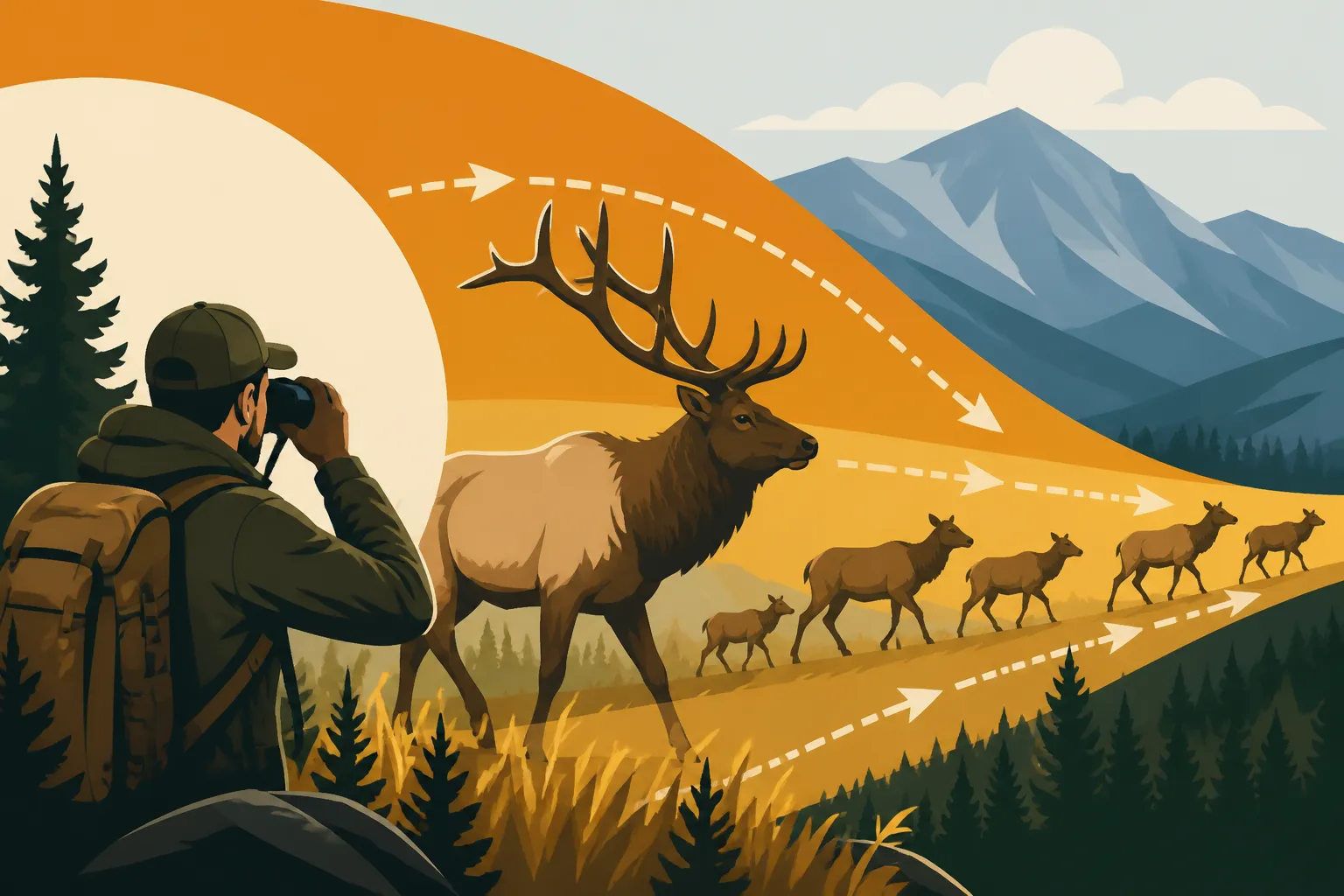
The true, dramatic migration often kicks in with the arrival of significant snowfall and sustained cold temperatures. When the snow really starts piling up in the high country, covering essential forage and making travel difficult, elk don't have a choice—they must move. This isn't just about finding food; it's also about energy conservation. Breaking through deep snow is incredibly taxing, and dropping to lower elevations where snow depths are less severe becomes a matter of survival. These movements can be rapid and dramatic, sometimes covering dozens of miles in a short period. Early season hunters might find elk still clinging to upper elevations, but a big October snowstorm can push them down into their traditional wintering grounds in a matter of days. Understanding how to find elk in Montana snow can make all the difference, as these conditions often concentrate animals into more predictable areas.
Returning to Summer Grounds in Spring
While hunters are often focused on the fall migration, the return trip in spring is equally vital to the elk's annual cycle. As winter loosens its grip, snow recedes, and green shoots emerge at lower elevations first, elk will begin their upward journey back to their summer ranges. This spring migration is typically more drawn out and less abrupt than the fall movement, with elk slowly "green-up chasing" the emerging vegetation as they climb in elevation. Cows, especially those pregnant, seek out secluded areas for calving, while bulls often remain in bachelor groups, taking advantage of the protein-rich new growth. Observing these patterns can provide valuable scouting insights for the following fall, helping you understand their full seasonal range.
Key Factors Shaping Montana's Elk Migration Routes
Montana is a massive state with incredibly diverse topography, meaning there isn't one universal elk migration pattern. Instead, local conditions and specific geographic features dictate where and when herds move. Hunters who learn to "read" these environmental cues will consistently have more success.
Topography and Habitat Connectivity
The lay of the land is arguably the most significant factor. Elk often follow natural drainages, ridge lines, and saddles, utilizing the easiest paths through challenging terrain. Mountains like the Greater Yellowstone Ecosystem, including parts of the Custer Gallatin National Forest, have well-defined migration corridors that herds have used for centuries, often connecting vast wilderness areas with lower-elevation winter ranges. These corridors aren't always straight lines; they might weave through timbered draws, skirt open slopes, or bottleneck through narrow passes. The presence of adequate security cover, such as dense timber, along these routes is also crucial. Elk are wary animals, and they prefer to move under the cover of trees or at least have quick access to it, especially when hunter pressure is high. This habitat connectivity is vital for the long-term health of the herds, allowing them to access different seasonal resources.
Snow Depth and Forage Availability
Beyond just temperature, the actual depth and type of snow are critical. A few inches of fluffy powder isn't the same as several feet of heavy, wet snow. When snow consistently reaches depths of 18-24 inches or more, elk start to struggle, especially calves. It covers their primary food sources like grasses, forbs, and shrubs, forcing them to burn precious calories simply to move or dig for food. This is when the migration becomes urgent. Winter ranges are chosen specifically because they typically receive less snow, or because strong winds blow snow off south-facing slopes, exposing vital forage. These exposed slopes, often found in areas like the Missouri Breaks or parts of the Rocky Mountain Front, become critical refuges. Hunters using tools like GoHunt can often track snow depth reports and connect them to historical elk movements, giving them an edge in predicting when and where animals will relocate.
Hunter Pressure and Human Disturbance
It’s not just Mother Nature pushing elk around; hunters play a significant role too. During archery season, elk might be found in more predictable patterns, but once Montana’s general rifle season hits, especially on heavily pressured public land, elk become incredibly sensitive. They will quickly learn to avoid areas with high human activity. This often means they'll drop out of popular spots and retreat into dense, dark timber, seek out steep, north-facing slopes, or move onto private land sanctuaries if available. This isn't strictly "migration" in the traditional sense, but a behavioral shift that can mirror migratory movements, pushing elk from accessible areas to less disturbed ones. Learning How to Hunt Montana Public Land Pressure is paramount to understanding these shifts. Many times, the "migration" you observe in early rifle season is simply elk seeking refuge from relentless pressure rather than a pure response to weather.
Mapping Montana's Key Migration Corridors and Winter Ranges
Understanding the general principles of elk migration is one thing, but knowing the specific pathways and wintering areas in Montana is another. These aren't always signposted, but through mapping, observation, and research, hunters can identify crucial areas.
Iconic Montana Elk Migration Routes
Montana is home to several well-documented, large-scale elk migrations. For example, the elk in and around Yellowstone National Park undertake some of the longest land mammal migrations in the Lower 48, moving between the high country of the park and surrounding national forests down to lower elevation winter ranges in Montana, particularly north of the park near Gardiner. Similarly, herds in the Bob Marshall Wilderness Complex or the Anaconda-Pintler Wilderness often have distinct movements, traveling from the deep wilderness to more accessible foothills or river bottoms as winter sets in. The Ruby Mountains and Tobacco Roots are other examples of ranges with significant elk populations that exhibit clear seasonal movements. These are broad, historical patterns that have been observed for generations, and they are critical pieces of information for anyone planning a serious elk hunt in these regions.
| Migration Phase | Typical Elevation | Primary Forage | Key Considerations for Hunters |
|---|---|---|---|
| Summer Range | High Elevation (7,000-10,000+ ft) | Lush grasses, forbs, browse | Dispersed, in dense timber or alpine basins. Spotting-and-stalking can be effective. |
| Early Fall/Transition | Mid-High Elevation (5,500-8,000 ft) | Remaining summer forage, early browse | Starting to consolidate, moving towards travel corridors. Can be found in open parks or timber edges. |
| Winter Range | Low Elevation (3,500-6,000 ft) | Browse, exposed grasses, agricultural fields (private land) | Concentrated in specific areas, often south-facing slopes. High hunter pressure can be an issue. |
| Spring Migration | Low to Mid Elevation (3,500-7,000 ft) | New green growth, early forbs | Gradual ascent, following green-up. Not typically a hunting season. |
Identifying Wintering Grounds and Bottlenecks
A crucial part of understanding migration is knowing where elk want to go for winter. These wintering grounds are often characterized by less snow, south-facing slopes that melt out quickly, and readily available browse (like bitterbrush, sagebrush, and serviceberry) or residual grasses. These areas might be in the foothills, along major river systems, or even on agricultural lands. Finding these wintering grounds before the season, through e-scouting tools like GoHunt or by physically exploring in the off-season, can reveal the final destination of migrating elk. The real gold for hunters often lies in identifying the "bottlenecks" – the narrow canyons, saddles, or timbered draws that elk must pass through to get from their summer range to their winter range. These natural funnels can be excellent ambush points, particularly during the peak of migration when weather forces animals to move. Understanding Montana Elk Habitat and Elevation is key to pinpointing these crucial zones.
Leveraging Migration Knowledge for Successful Elk Hunting
Knowing about elk migration isn't just interesting trivia; it's a powerful tool that can dramatically increase your hunting success in Montana. It transforms your approach from random wandering to a strategic pursuit.
E-Scouting and Pre-Season Planning
Before you ever set foot in the field, use digital mapping tools and resources to anticipate elk movements. Look for high-elevation summer ranges with dense timber and water sources. Then, identify lower-elevation winter ranges nearby. Connect these two points by tracing potential migration corridors – often along rivers, major drainages, or systems of saddles and ridges. Pay close attention to How to E-Scout Montana Hunting Units for snow data, elevation changes, and terrain features that could funnel elk. Study satellite imagery for south-facing slopes that might shed snow quickly, and north-facing timbered draws that offer security cover during transit. You can use platforms like GoHunt to layer public land boundaries, historical weather patterns, and even recent satellite imagery to visualize these movements long before the season begins. This type of detailed pre-season planning is indispensable for a productive hunt.
Timing Your Hunt with Weather and Migration Phases
The timing of your hunt in relation to local weather patterns is absolutely critical. If you hunt too early, before the snow has started to push elk, they might still be widely dispersed in their high summer ranges, making them hard to find. If you wait too long, they might have already completed their migration and be settled into inaccessible private land wintering grounds, or concentrated with heavy hunter pressure. The sweet spot is often when the first significant snowfalls hit the high country, triggering the initial push. This is when elk are actively migrating and can be intercepted along those identified corridors and bottlenecks. Keep a close eye on weather forecasts for specific hunting districts. A strong cold front or a foot of new snow can be your best friend, putting elk on the move right into your lap. For those tough late-season hunts, understanding Montana Elk Migration Patterns is especially important as you track animals to their final winter destinations.
Adapting Tactics to Migratory Behavior
Once you're in the field, don't be afraid to adjust your tactics based on what the elk are telling you through their movements. If you're hunting during the early stages of migration, you might still employ Montana Elk Hunting: Spot-and-Stalk Tactics in the higher country, knowing they are moving but not yet in a full rush. As the weather turns and elk are clearly on the move, switch to strategies that target those migration corridors. This could involve setting up ambushes along trails that connect high and low country, particularly at pinch points. Understanding How to Pattern Montana Elk Movement means paying attention to fresh tracks, rubs, and droppings that indicate recent travel direction, not just presence. If you're seeing heavy sign heading downhill, it’s a good bet the elk are migrating, and you should adjust your position accordingly. Flexibility and a willingness to adapt are key traits of a successful hunter during migration season.
Disclaimer
Hunting is an inherently dangerous activity. Always prioritize safety, understand and follow all Montana Fish, Wildlife & Parks regulations, and obtain appropriate licenses and tags. This guide provides general information and should not replace proper research, preparation, and adherence to all applicable laws. Conditions in the field can change rapidly, and hunters are responsible for their own safety and decisions.