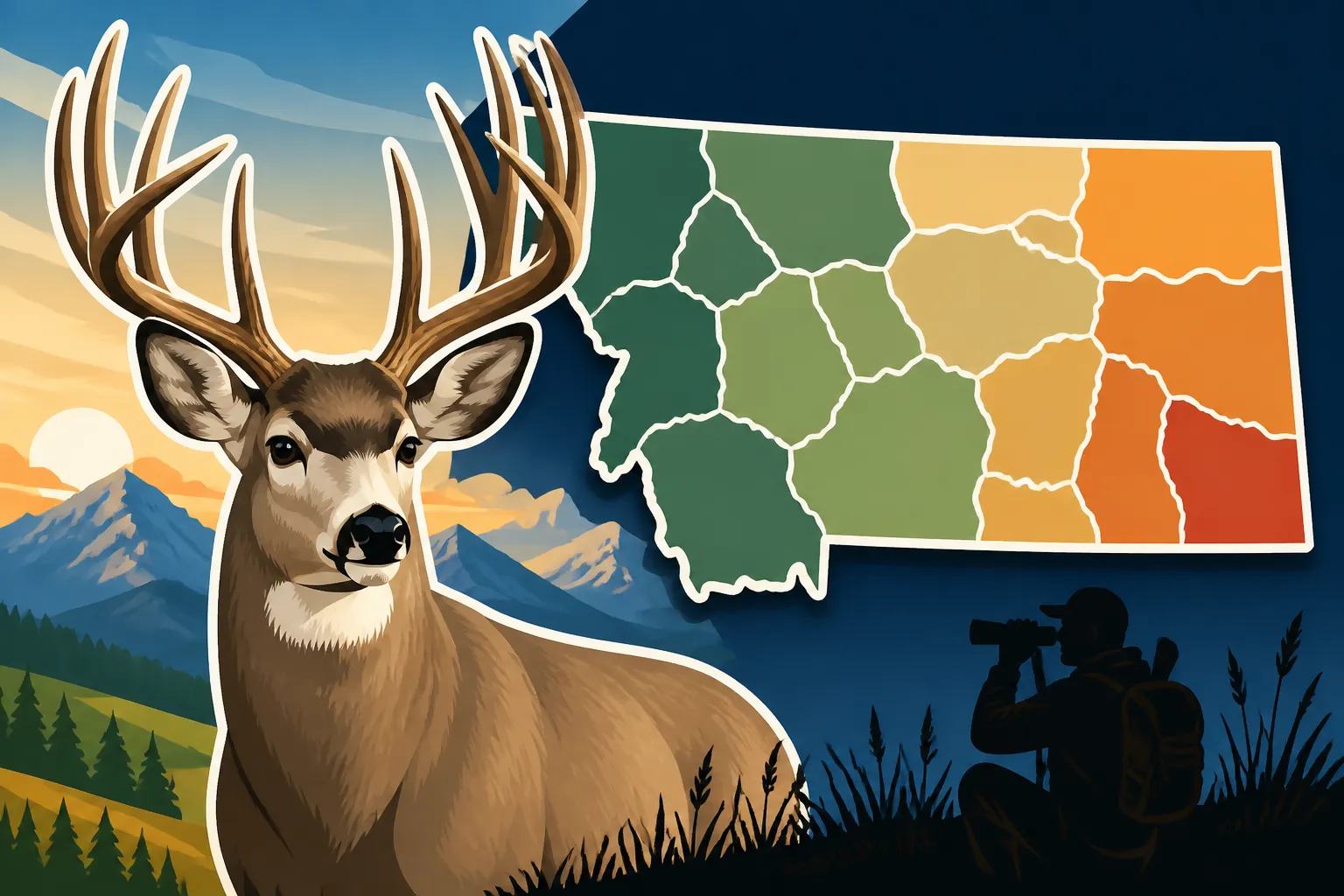
Montana Mule Deer Trophy Potential by District
Hunting for a trophy mule deer in Montana can feel like searching for a needle in a haystack, especially when you're trying to figure out which districts consistently produce those exceptional bucks. It's easy to get lost in maps and regulations, wondering if your effort will pay off in the form of a truly magnificent deer. This guide is designed to cut through that confusion, giving you a clear understanding of what contributes to a district's trophy potential and highlighting areas known for big muleys.
Understanding Montana's Mule Deer Habitat and Genetics
When you start dreaming of a big mule deer buck in Montana, it's not just about where the deer are, but where the big deer are. A district's trophy potential is heavily influenced by a combination of prime habitat, strong genetics, and conditions that allow bucks to reach maturity. These aren't always found together, which is what makes the pursuit so challenging and rewarding.
The Role of Rich Habitat in Antler Growth
Montana is a vast state, and its diverse landscapes offer a wide range of habitats for mule deer. However, not all habitats are created equal when it comes to growing impressive antlers. Trophy-class mule deer need consistent access to high-quality forage, which provides the essential nutrients for body growth and, subsequently, antler development. Think about areas with a good mix of browse (shrubs like bitterbrush, serviceberry, and sagebrush), forbs, and grasses, especially during spring and summer. These are the critical periods when antlers are actively growing.
Districts with reliable water sources are also paramount, particularly in drier regions of eastern Montana. Bucks that don't have to travel far for water can expend more energy on growth and less on simply surviving. Areas that offer diverse topography, like rugged breaks, coulees, and timbered draws, provide crucial cover from predators and harsh weather, allowing deer to conserve energy and mature. The Missouri Breaks, for instance, with its complex network of canyons and abundant browse, is renowned for supporting healthy deer populations, including those with substantial headgear. Understanding Montana Mule Deer Habitat Explained can give you a better sense of these critical factors across the state.
Genetic Factors and Deer Age Structure
While good food is vital, genetics play a significant role in a buck's ultimate antler size and conformation. Some regions just seem to produce bucks with wider spreads, more points, or heavier mass, a testament to the genetics passed down through generations. However, even with great genetics, a buck needs time to express its full potential. This brings us to the importance of the age structure within a district's deer population.
For a district to consistently produce trophy-class mule deer, it needs to have a healthy proportion of older-age-class bucks—typically 4.5 years old and up. These are the bucks that have survived multiple hunting seasons and natural challenges, allowing them to reach their peak antler growth. Hunting pressure, tag quotas, and management strategies all influence this age structure. Districts with limited entry permits or those that are harder to access often have a higher percentage of older bucks, simply because fewer deer are harvested prematurely. This is a critical consideration when trying to understand How to Hunt Mule Deer on Montana Public Land for trophy potential.
Key Factors Influencing Trophy Potential
Beyond habitat and genetics, several dynamic factors actively influence whether a district will yield a truly magnificent mule deer. These elements shift annually, making current research and flexible planning essential for any serious trophy hunter.
Hunter Pressure and Accessibility
One of the biggest adversaries to a buck reaching maturity is hunter pressure. Districts that are easily accessible, with good road systems or close to population centers, tend to see higher hunting pressure. More hunters often mean a higher harvest rate on younger bucks, reducing the number of deer that survive to grow truly impressive antlers. Conversely, remote districts, especially those requiring significant physical effort to access, often offer a better chance at finding older, larger deer. These backcountry areas naturally act as sanctuaries, allowing bucks to age without constant human disturbance.
Consider the challenge of navigating these areas; it's not just about finding a buck but physically getting to it and getting it out. Areas within designated wilderness or roadless zones, while physically demanding, are often worth the effort for those seeking a true trophy. Understanding Montana Backcountry Hunting Guide can provide valuable insights into preparing for these demanding hunts. You'll often find that the less accessible a district is, the more likely you are to encounter mature deer. This isn't to say accessible areas don't hold big bucks, but they are generally fewer and far between, requiring specific tactics like hunting pressure escape routes.
Draw Odds and Tag Availability
The reality of hunting trophy mule deer in Montana, especially in the most sought-after units, is inextricably linked to the draw system. Many of the districts known for producing truly giant bucks are classified as limited-entry permit units. This means you can't simply buy a general tag and hunt them. Instead, you must apply through Montana Fish, Wildlife & Parks' (FWP) lottery system, often building up preference or bonus points for years to have a realistic chance of drawing a tag.
The more points a unit typically requires, the more difficult it is to draw, and often, the higher its reputation for trophy quality. Hunters often spend years researching Montana Mule Deer Draw Odds Explained and strategically building points. While it can be frustrating to wait, these limited-entry units are managed specifically to maintain high trophy potential by controlling hunter numbers. Tools like GoHunt's Insider service can be incredibly valuable here, providing up-to-date draw odds, success rates, and unit breakdowns that help you strategize your applications. They aggregate data that would take a single hunter countless hours to compile, giving you a distinct advantage in navigating the complex draw system. Some hunters might even look into Montana Mule Deer B Private Land Restriction rules if they have access to private property to potentially circumvent some draw difficulties for antlerless tags, but true trophy buck hunting usually remains a competitive draw game on public lands.
Weather and Winter Severity
Mother Nature plays a significant, often unpredictable, role in a district's trophy potential. Harsh winters, especially those with deep snow and prolonged cold temperatures, can dramatically impact mule deer populations. Severe winters can lead to increased winterkill, particularly among fawns and older, weaker deer. This not only reduces overall deer numbers but can also set back the age structure of the herd, as fewer bucks survive to reach maturity.
Conversely, mild winters allow more deer to survive, enter the spring in better condition, and dedicate more energy to antler growth. A series of mild winters can lead to a boom in mature bucks in certain areas, increasing the trophy potential for a few seasons. Drought conditions can also negatively impact antler growth, as forage quality and quantity decline. Monitoring long-term weather patterns and current year conditions can provide clues about which districts might be on an "up cycle" for trophy deer. FWP often provides winter severity updates, which are worth watching if you're seriously targeting a trophy muley in a specific area.
Top Montana Districts Known for Trophy Mule Deer
While no district guarantees a trophy, some areas in Montana have a well-earned reputation for producing exceptional mule deer bucks. It's important to remember that "trophy" is subjective, but generally, we're talking about bucks scoring 170 inches or more Boone & Crockett. These districts often come with high demand and challenging draw odds, but for many, the potential reward is worth the dedicated effort.
Western Montana's Rugged Mountains
Western Montana, characterized by its dense timber and steep, rugged terrain, can surprise hunters with trophy mule deer, though they are often harder to find and hunt than their eastern counterparts. Units in regions like the Beaverhead-Deerlodge National Forest or sections of the Bitterroot and Sapphire Mountains occasionally yield very large bucks. These areas often benefit from lower hunter density due to the sheer physical challenge of hunting them, allowing some bucks to grow old.
Mule deer in these mountainous environments tend to be more reclusive and often require extensive glassing of distant ridges and basins. Techniques detailed in How to Glass Montana's Big Country become essential here. While overall deer density might be lower than in the plains, the bucks that do mature in these tough environments are often substantial. Drawing a general tag in many of these districts is feasible for non-residents with a combination license, but finding the trophy buck requires serious dedication, physical fitness, and exceptional woodsmanship. The occasional monster buck taken from these timbered mountains is a testament to perseverance.
Eastern Montana's Expansive Plains and Breaks
When most hunters think of trophy mule deer in Montana, their minds often turn to the vast, open landscapes and rugged breaks of Eastern Montana. This region is truly mule deer country, with areas like the famed Missouri Breaks and parts of the Custer Gallatin National Forest holding a well-deserved reputation. The combination of nutrient-rich sagebrush, draws, and secluded coulees provides ideal habitat for growing big antlers.
Districts in areas like Region 6 and Region 7, particularly those with significant amounts of broken badlands or river breaks, are frequently cited for their trophy potential. These units often require significant preference points to draw, sometimes upwards of 10-15 points for non-residents for the most sought-after permits. However, the consistent potential for 180"+ bucks makes them a prime target for dedicated trophy hunters. Even in general units in Eastern Montana, savvy hunters utilizing Montana Mule Deer Hunting: Spot-and-Stalk Tactics can find impressive bucks, though they will typically face more hunting pressure. The best strategy is often to focus on less accessible public land within these regions.
Key Districts and Their Trophy Reputations
It's tough to name specific districts without them becoming instantly overrun, but certain areas consistently pop up in trophy conversations. Regions in south-central Montana, for example, often have districts (e.g., within the 400-series or 500-series hunting districts) with specific limited-entry permits that are highly sought after due to their potential for mature bucks. Similarly, areas in the Missouri Breaks (e.g., 600-series districts) are legendary.
Let's look at a general breakdown. Remember, this is a snapshot, and conditions vary annually. Consulting the FWP hunting regulations and draw odds reports is paramount for the most current information. GoHunt is an excellent resource for detailed unit profiles and draw statistics, which can help you dive deeper into specific districts, offering insights into terrain, public land access, and historical success rates that go beyond just antler size.
| District Type (General Location) | Terrain Characteristics | Primary Forage | Public Land Access | Typical Trophy Potential (B&C) | Draw Difficulty (Non-resident) |
|---|---|---|---|---|---|
| Eastern Plains Breaks (e.g., Missouri Breaks) | Rugged coulees, badlands, deep draws | Sagebrush, bitterbrush, forbs | Moderate to high, often fragmented | Excellent (170"+) | Very High (Limited Entry) |
| Central Mountain Front (e.g., Rocky Mountain Front) | Steep mountains, foothills, timber | Grasses, shrubs, aspens | High, often roadless | Good (160-180") | Moderate to High (Mix of General/Permit) |
| Western Mountains (e.g., Bitterroot, Sapphire) | Dense timber, steep slopes, high basins | Forbs, conifers, mountain shrubs | Very High, often wilderness | Moderate to Good (150-170") | Low to Moderate (General) |
| Southeastern Prairie (e.g., Custer Gallatin plains) | Rolling hills, agricultural interfaces, breaks | Sagebrush, crops, riparian areas | Moderate, often Block Management | Good (160-170"+) | Moderate (General/Some Permits) |
Keep in mind that while some of these districts are general units, finding an unpressured trophy buck usually means going deeper or employing advanced scouting and hunting tactics. Utilizing resources like How to E-Scout Montana Hunting Units is non-negotiable for success, as it allows you to identify potential buck bedding areas and escape routes well before you ever set foot in the field.
Navigating Regulations and Draw Odds for Trophy Units
Hunting trophy mule deer in Montana isn't just about finding the right piece of ground; it's also about successfully navigating the complex world of licenses, permits, and draw systems. For non-residents especially, understanding this process is crucial.
Decoding Montana's License and Permit System
Montana has a two-tiered system for big game hunting: general licenses and limited-entry permits. For mule deer, you'll first need to apply for a base hunting license, a conservation license, and an Archery Bow and Arrow license if you plan to bowhunt. Non-residents typically apply for a Nonresident Combination License, which includes general deer and elk tags. However, if you're specifically targeting a trophy mule deer, you'll almost certainly be looking at limited-entry permits.
These permits are drawn separately from your general license and are unit-specific. For example, you might have a general deer tag for most of the state, but if you want to hunt a specific, high-potential unit known for trophy mule deer, you'll need to apply for and draw a special permit for that unit's hunt code. This is where Montana General vs Permit Tags Explained becomes a vital read. The draw for these permits is highly competitive, often requiring many years of accumulating preference and bonus points. Each year, FWP publishes the regulations, including hunt codes, application deadlines, and quota numbers for each district, which are essential to review before applying.
Maximizing Your Chances in the Draw
To improve your odds of drawing a coveted trophy mule deer permit, understanding and strategically building preference and bonus points is key. Montana uses a preference point system for its nonresident big game combo licenses (Deer/Elk Combo, Elk Combo, Deer Combo) and a bonus point system for limited-entry permits. While preference points give you priority in the combination license draw, bonus points increase your odds in the limited-entry permit draws.
For limited-entry mule deer permits, every year you apply and are unsuccessful, you accrue another bonus point (as long as you purchase one for that species). The more points you have, the better your odds in the randomized drawing. This means that targeting those top-tier trophy districts often requires a long-term strategy. You might spend several years simply applying for points while hunting general units, like those covered in the Montana Mule Deer Hunting Guide, before you have enough points to realistically draw a highly sought-after permit. Websites like GoHunt provide detailed draw odds calculators and statistics that can help you estimate how many points you'll likely need for various districts, allowing you to make informed decisions about where to apply and when. Don't waste your points on a long-shot unit when you could be building them for a better chance down the road.
Annual Regulation Changes and Research
It's critical to remember that Montana's hunting regulations and district boundaries can change year to year based on FWP's wildlife management objectives, population dynamics, and public input. A district that was great for trophy bucks one year might have its permit numbers reduced or rules altered the next, impacting draw odds and trophy potential.
Therefore, meticulous annual research is non-negotiable. Don't rely on outdated information. Always review the current year's Montana hunting regulations booklet as soon as it's released. Pay close attention to changes in harvest quotas, season dates (Montana Mule Deer Season Dates and Tags), and any new antler restrictions that might be implemented in your target districts. Beyond regulations, scour online forums, FWP hunter harvest reports, and mapping applications. Using tools like onX Hunt in conjunction with FWP data can help you visualize public land access, identify potential bottlenecks, and understand the terrain of your chosen district, greatly enhancing your chances of success. The more current your information, the better prepared you'll be to make those tough decisions on where to invest your time and points.
Disclaimer
Please be aware that hunting regulations, seasons, and draw odds in Montana are subject to change by Montana Fish, Wildlife & Parks (FWP). While we strive to provide accurate and up-to-date information, it is the individual hunter's responsibility to consult the most current FWP regulations and official sources before planning any hunt. This guide is for informational purposes only and should not be considered legal advice or a substitute for official FWP publications. Always hunt ethically and safely.