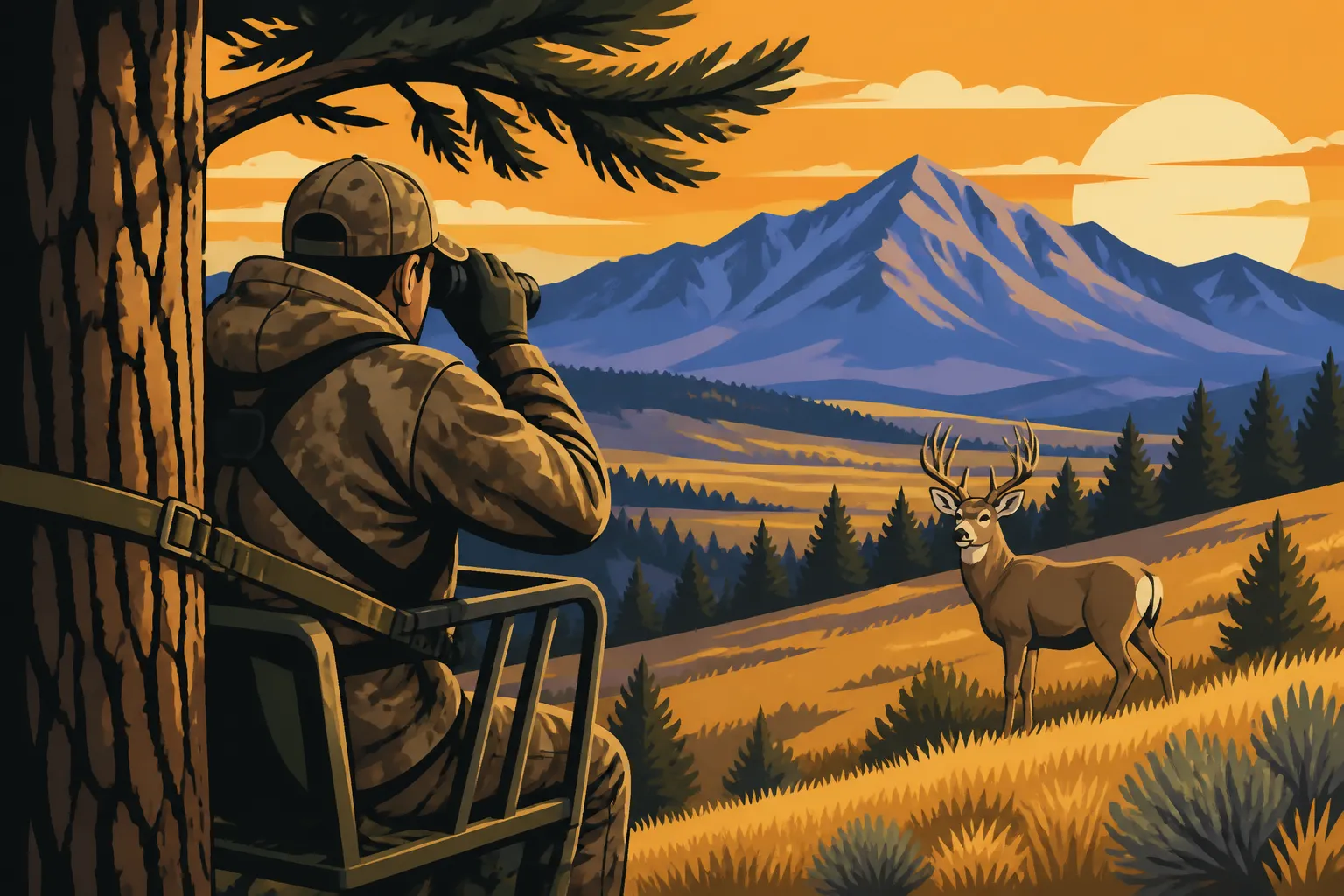
Montana Mule Deer Hunting: Tree Stand Tactics
Hunting mule deer in Montana presents a unique set of challenges, especially when you’re used to different hunting styles or terrain. While spot-and-stalk is often glorified, there are specific situations where deploying a tree stand can be an incredibly effective, and often overlooked, tactic for consistently putting mule deer meat in the freezer. This comprehensive guide will walk you through the nuances of using tree stands for Montana mule deer, from understanding their behavior to strategic setup and execution.
Why Tree Stands for Mule Deer in Montana?
It’s a common misconception that tree stands are only for whitetail deer. Sure, mule deer often prefer open country and their behavior isn't as predictable as a whitetail that might follow a strict trail. But that doesn't mean tree stands are out of the question. In fact, ignoring this tactic means you might be missing out on key opportunities, especially in certain types of Montana terrain where mule deer concentrate.
Understanding Mule Deer Behavior
Mule deer are creatures of habit, just like any other deer species, but their habits are often dictated by the landscape they inhabit. While they excel at navigating wide-open spaces and using topography to their advantage, they also utilize pockets of timber, creek bottoms, and dense brush for bedding, feeding, and escape. This is where a tree stand can shine. They’re masters of blending into sparse cover, but when they’re moving through thicker stuff, they often follow the path of least resistance.
You might think of mule deer as always out in the wide-open sagebrush, but in many parts of Montana, they frequent timbered coulees, river bottoms, and even mountainous areas with significant tree cover. Knowing when and where to find them in these specific habitats is key. They often use these areas as travel corridors between bedding and feeding areas, or as sanctuary when pressured. Understanding these patterns, even if they aren't as defined as whitetail trails, is crucial for successful hunting. You can learn more about their movements in our detailed guide on Montana Mule Deer Hunting Guide.
Situational Advantages of Tree Stands
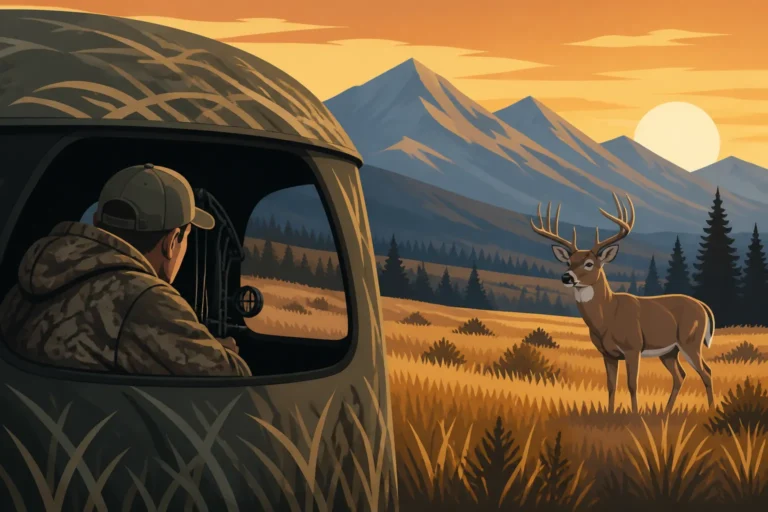
Tree stands offer several undeniable advantages for mule deer hunting, particularly in specific scenarios. First and foremost, they get you off the ground, effectively removing your human scent from the deer's primary detection zone. This is huge in areas with swirling winds or when deer are constantly crossing downwind of a potential ground blind. Second, the elevated position provides a much better vantage point, allowing you to see deer approaching through thicker cover that would obscure your view at ground level. This can be especially useful when you're targeting deer that are using natural funnels or pinch points.
Consider hunting a brushy coulee that winds through agricultural fields or open plains. Mule deer will often use these protected draws as travel routes. Setting a tree stand along such a corridor, especially where it narrows or crosses a fence line, can be incredibly productive. Similarly, in areas where pines or aspens line a steep ridge, a well-placed stand can intercept deer moving between different elevation ranges. While Montana Mule Deer Hunting: Spot-and-Stalk Tactics is often the go-to, a stand provides a stationary advantage where terrain or cover makes traditional stalking difficult. It’s about adapting your strategy to the specific micro-habitat the mule deer are using.
Choosing the Right Tree Stand and Setup
Selecting the right tree stand isn't just about comfort; it's about adaptability and stealth. Montana's diverse landscape means you might need different types of stands for different situations. Equally important is the meticulous scouting and placement that goes into setting it up.
Types of Tree Stands for Mule Deer
For mule deer, you'll generally be looking at three main types of tree stands:
- Climbing Stands: These are incredibly versatile, allowing you to ascend trees with relatively straight trunks quickly and quietly. They're excellent for mobile hunting, enabling you to move and adapt to changing deer patterns throughout the season. If you're hunting timbered river bottoms or aspens groves where you expect to move a few times, a lightweight climber like those from Summit or Lone Wolf can be invaluable.
- Hang-on Stands: These require a separate system (like climbing sticks or a ladder) to get into position, but they offer more flexibility in terms of tree choice, as they don't require a perfectly straight trunk. Once set, they can be left for the season if hunting private land or easily removed. Brands like X-Stand and Hawk offer durable, lightweight options. They are ideal for areas you've scouted thoroughly and know deer are consistently using.
- Ladder Stands: Less common for mule deer due to their bulk and fixed nature, ladder stands offer maximum comfort and stability. They're best suited for very specific, long-term setups on private land where you know deer patterns are extremely consistent and you don't need to move the stand often.
When considering a stand, prioritize lightweight, quiet models. Many mule deer areas in Montana are quite a hike in, and you don’t want to be lugging a heavy, noisy stand through the timber. Test it out at home, ensuring there are no squeaks or rattles. The difference between success and failure can be a single creak of metal at the wrong moment.
Strategic Placement and Scouting
This is where the rubber meets the road. Proper stand placement is a blend of art and science, requiring thorough scouting, understanding of deer habits, and careful consideration of prevailing winds. You can use tools like GoHunt to analyze aerial imagery and identify potential funnels, bedding areas, and feeding zones. Look for natural pinch points: a narrow strip of timber between two open fields, a saddle on a ridge line with sparse trees, or a bend in a creek bottom lined with cottonwoods.
Key considerations for placement:
- Travel Corridors: Identify where mule deer are moving between bedding and feeding areas. Look for subtle deer trails, rubbed trees (though less common than for whitetails, they do occur), and droppings.
- Food Sources: Place your stand overlooking preferred forage, whether it's an alfalfa field, winter wheat, or natural browse like serviceberry or bitterbrush in timbered areas.
- Water Sources: In arid regions, water holes can be absolute magnets, especially during early archery season. A stand overlooking a secluded pond or seeping spring can be incredibly effective.
- Prevailing Winds: This is non-negotiable. Always set up so your scent blows away from where you expect deer to approach. Consider thermals in mountainous terrain, which tend to rise in the morning and fall in the evening. Our guide on How to Use the Wind Hunting Montana Elk offers principles that are equally applicable to mule deer.
- Sun Position: Avoid having the sun in your eyes or silhouetting you against the sky during prime hunting hours.
- Cover: Ensure you have enough natural cover around your stand to break up your outline, both from behind and in front. Don’t just pick the tallest tree; pick the one with the best cover.
Table: Tree Stand Placement Considerations for Montana Mule Deer
| Factor | Key Considerations |
|---|---|
| Habitat Type | River Bottoms/Coulees: Look for dense cottonwoods, willows, or brushy draws as travel corridors. Deer often move parallel to water. Timber Pockets: Focus on edges of timber, saddles, or benches where deer transition between open and covered areas. Agricultural Edges: Identify strips of trees bordering fields, especially where deer enter/exit. |
| Deer Behavior | Identify subtle trails, droppings, and occasional rubs or scrapes. Observe feeding times (dawn/dusk) and bedding areas (dense cover). Understand how deer use topography for concealment. |
| Wind Direction | Crucial. Always position downwind of expected deer travel. Account for thermal drafts in hilly terrain (up in morning, down in evening). Have multiple stand locations for different wind directions. |
| Vantage Point | Aim for an elevation that gives you a clear shooting lane while remaining concealed. 15-20 feet is often a good starting point, but adapt to local cover. Clear minimal shooting lanes before the season. |
| Access Route | Plan a quiet entry and exit that won't spook deer. Use natural cover, walk against the wind, and avoid disturbing the hunting area. Park far enough away to minimize vehicle noise. |
| Sun & Background | Position yourself so the rising/setting sun doesn't silhouette you or glare into your eyes during key hunting times. Use a tree with dense foliage behind you to break up your outline. |
Using tools like the GoHunt Insider platform, you can overlay public and private land boundaries, topography, and even recent satellite imagery to pinpoint prime locations for your stand. When scouting on the ground, bring a rangefinder to determine distances to key landmarks and potential shooting lanes. Remember, your stand should be in place well before the season, giving the area time to cool down from your presence. For those who enjoy diving deep into pre-season planning, How to E-Scout Montana Hunting Units offers valuable insights.
Executing Your Tree Stand Hunt
Getting into the stand is only half the battle. Successful tree stand hunting for mule deer requires discipline, attention to detail, and often a hefty dose of patience.
Scent Control and Entry/Exit Strategies
Scent control isn't just a buzzword; it's absolutely critical for tree stand hunting, especially with the keen noses of mule deer. Start with scent-free laundry detergent for all your hunting clothes. Shower with scent-free soap and shampoo before heading out. Use scent-eliminating sprays on yourself and your gear. Store your hunting clothes in airtight bags or containers, away from everyday odors.
Your entry and exit routes are just as important as your stand placement. Plan a route that is as quiet and as scent-free as possible. Walk against the wind to your stand, avoiding areas where you expect deer to be bedded or actively feeding. Minimize noise by wearing soft clothing and taking deliberate, quiet steps. Avoid breaking branches or rustling leaves unnecessarily. If you’re hunting early morning, get in well before legal light, giving the woods time to settle before deer start moving. For evening hunts, stay until well after dark to allow deer to clear the area before you climb down and walk out. Many hunters overlook these details, but they make a huge difference in avoiding educated deer. Think about a farmer who always knows when a stranger has cut across their field; mule deer are even more attuned to their environment.
Patience and Shot Opportunity
Mule deer, particularly mature bucks, are notoriously cagey. They don't often rush in like a whitetail. You might have deer skirt your stand, or only offer a fleeting glimpse through the timber. Patience is paramount. Bring enough provisions (water, snacks) to stay in your stand for several hours, ideally from first light to late morning, and then again from mid-afternoon until dark. Movement in the stand is your enemy; minimize it as much as possible.
When a deer approaches, assess the situation carefully. Use your optics – a good pair of binoculars, like those you'd use for How to Use Optics for Montana Mule Deer, is essential – to confirm it's a legal animal and to find a clear shooting lane. Resist the urge to draw your bow or raise your rifle too early. Wait for the deer to be broadside and ideally distracted, perhaps feeding or looking away. For rifle hunters, remember that shooting from an elevated position changes your angle; aim slightly lower than you normally would for a flat-ground shot to hit the vitals properly. Practice these angles before the season. If you are bowhunting, consider a broadside shot at 20-30 yards from your stand to be the sweet spot for many setups, but practice out to your comfortable maximum.
Overcoming Montana's Challenges
Montana isn't always gentle, and tree stand hunting here comes with its own set of hurdles. From unpredictable weather to public land pressure, being prepared for these challenges will boost your success.
Wind, Weather, and Terrain Adaptations
Montana weather is legendary for its unpredictability. One day it's calm and sunny, the next you're fighting horizontal snow or gale-force winds. Tree stand hunting demands you pay close attention to forecasts and adjust accordingly.
- Wind: Wind is a double-edged sword. While it helps carry your scent away, high winds make tree stands dangerous and can make holding still for a shot nearly impossible. On extremely windy days (20+ mph gusts), consider ditching the stand for a ground blind or a more sheltered spot-and-stalk approach. Always check your stand’s stability in windy conditions.
- Cold: Early archery seasons can be warm, but rifle season often brings frigid temperatures. Dress in layers, using quality wool or synthetic base layers, insulating mid-layers, and a windproof/waterproof outer shell. Hand warmers and insulated boots (check out Best Boots for Montana Elk Hunting for ideas, many apply to deer) are non-negotiable. Sitting still for hours means you'll get colder much faster than if you were moving.
- Rain/Snow: A good rain suit is a must. If snow is falling, it can actually be a benefit, muffling your sounds and making deer movements easier to track. However, ensure your stand platform isn't slick with ice.
- Terrain: Not all trees are created equal, and not all terrain is suitable for stands. In steep, rocky areas, finding a safe, stable tree might be impossible. Focus on the transition zones and gentler slopes where deer are more likely to travel predictably through pockets of timber. Don’t force a stand setup where it's unsafe or impractical.
Public Land Considerations
Hunting on Montana's vast public lands adds another layer of complexity. You’re likely to encounter more pressure, and leaving a stand up indefinitely isn't always feasible or ethical, depending on regulations. Many national forests, like those often used in Montana Backcountry Hunting Guide, have rules regarding how long stands can be left unattended. Always check local regulations.
- Scouting for Pressure: On public land, deer quickly learn to avoid roads and easily accessible areas. Use aerial maps and apps like GoHunt to find pockets of timber or coulees that are further from roads or require a bit more effort to reach. These are often where less pressured deer will seek refuge.
- Portable Stands: For public land, mobile climbing or hang-on stands are often the best choice. You can pack them in, set them up for a few days, and then move them or take them down to comply with regulations. This also allows you to adapt to changing deer movements throughout the season.
- Respecting Other Hunters: Be aware of other hunters. If you arrive at your spot and see another hunter's vehicle or stand, give them space. Communication and respect are key to a positive public land experience. You can find more specific advice on How to Hunt Mule Deer on Montana Public Land.
- Security: If you do leave a stand on public land, even briefly, make sure it’s clearly marked with your name and hunting license number if required. Some hunters use security measures like chain locks, but ultimately, there's always a risk.
Final Thoughts on Tree Stand Tactics for Montana Mule Deer
While tree stand hunting for mule deer might not be the quintessential "Montana hunt" image of glassing vast plains, it's a highly effective and underutilized tactic in specific habitats across the state. From the timbered river bottoms of western Montana to the coulees and draws of the eastern plains, understanding mule deer behavior, carefully selecting and placing your stand, and executing your hunt with patience and precision can significantly increase your odds of success.
It's about expanding your toolkit as a hunter. Don't limit yourself to one method when conditions or terrain suggest another might be more advantageous. Embrace the strategic advantage of elevation, control your scent, and blend into your surroundings. With thoughtful planning and execution, your tree stand can become a secret weapon in your Montana mule deer hunting arsenal.
Disclaimer
Hunting is an inherently dangerous activity. Always prioritize safety, understand and adhere to all local, state, and federal hunting regulations, and ensure you have the proper training and equipment. The information provided in this guide is for informational purposes only and should not be taken as professional instruction or a substitute for common sense and responsible hunting practices.