Montana Mule Deer Hunting: Ground Blind Tactics
Chasing mule deer across the vast, often open landscapes of Montana can be an incredibly frustrating endeavor, especially when their keen eyesight and incredible sense of smell make traditional spot-and-stalk tactics feel like an impossible ballet. If you've ever felt like every movement gives you away or that the prairie wind is constantly betraying your position, you're not alone. This comprehensive guide is dedicated to exploring ground blind tactics for hunting Montana mule deer, offering a powerful, often overlooked advantage to put you closer to success.
The Unexpected Advantage of Ground Blinds for Montana Mule Deer
When many hunters think of mule deer, they often picture endless miles of open country, big optics, and lots of walking. And while that's certainly a part of the experience, it can also be the very thing that makes securing a mule deer tag so challenging. Mule deer are incredibly adapted to their open, often exposed habitats, making them masters of detecting movement and scent from a distance. This is precisely where a well-utilized ground blind can become your secret weapon.
Why Ground Blinds Shine in Open Country
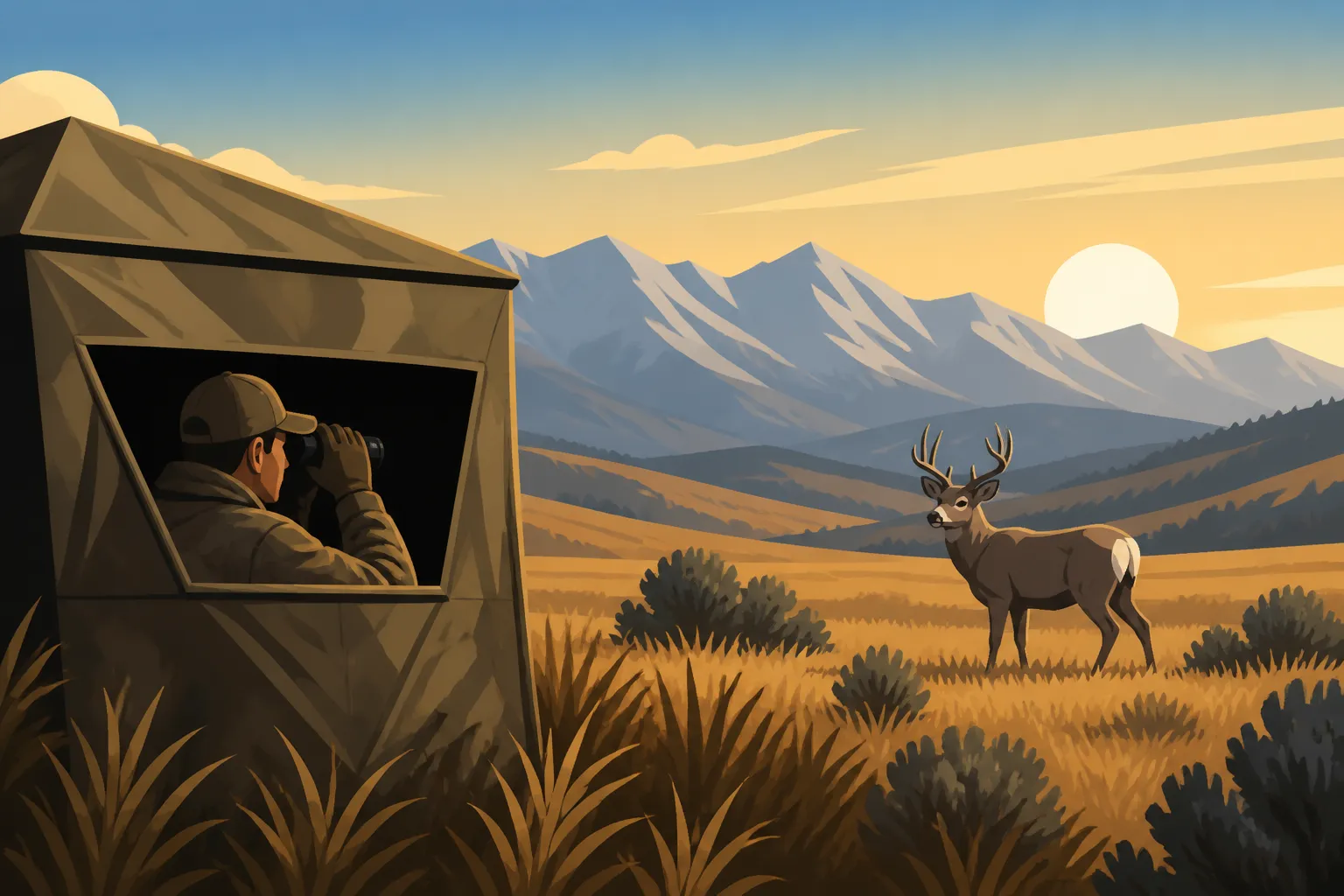
Let's be honest, trying to sneak up on a mature mule deer buck in a sagebrush flat or across rolling, sparsely timbered hills can feel like trying to hide an elephant in a bathtub. Every little rise and dip can offer temporary concealment, but eventually, you have to break cover, and that's when their radar goes up. Ground blinds, particularly the modern pop-up variety, offer a static, completely concealed position that eliminates your human silhouette and any accidental movements. You can stretch, grab a snack, or even subtly adjust your optics without alerting every deer within a mile.
Imagine you've located a bachelor group of bucks using a How to Glass Montana's Big Country approach, feeding their way toward a known water source in the afternoon. Instead of trying to close the distance across a wide-open expanse, a pre-set ground blind allows you to be in position, waiting patiently. This passive approach often works wonders on wary deer that are accustomed to seeing and smelling human presence. It negates much of the "cat and mouse" game in situations where the "cat" (you) is at a severe disadvantage in terms of cover. This is a stark contrast to more active strategies like Montana Mule Deer Hunting: Spot-and-Stalk Tactics, which, while effective in different scenarios, present unique challenges in wide-open terrain.
Overcoming Mule Deer's Keen Senses
Mule deer possess some of the most impressive senses in the animal kingdom, and a good ground blind helps you directly combat their strengths. Their eyesight, while not typically as acute as a whitetail's for detecting static forms, is incredibly sensitive to movement. A slight shift in your body or the glint of sun off your rifle barrel can send them bounding away before you even know what happened. A well-brushed-in ground blind completely breaks up your outline and hides any incidental movements, allowing you to react slowly and deliberately when a shot opportunity arises.
Then there's their nose, which is arguably their most powerful defense. The capricious winds of Montana can swirl and shift in an instant, turning a perfect stalk into a blown opportunity. While no blind can completely eliminate scent, a well-sealed ground blind significantly reduces your scent cone, especially when combined with diligent scent control practices. This can give you those precious extra moments, or even minutes, when a buck approaches from an unexpected direction, allowing you to remain undetected. Furthermore, blinds offer a buffer against external noise, dampening sounds that might otherwise spook a cautious deer, particularly when hunting during the often windy Montana General Rifle Season Dates.
Selecting and Strategically Placing Your Ground Blind
Choosing the right ground blind and, more importantly, finding the perfect place to put it, are critical steps that will dictate your success. It's not just about throwing a blind up; it's about making it disappear into the landscape and anticipating where those wise mule deer will travel.
Choosing the Right Blind for the Big Sky Country
When it comes to selecting a ground blind for Montana mule deer, durability and concealment are paramount. You'll want something that can withstand the sometimes brutal winds and weather conditions typical of the state. Pop-up blinds are widely popular due to their portability and ease of setup. Brands like Primos, Barronett Blinds, and Ameristep offer various models, from compact options for a solo hunter to larger blinds that accommodate multiple people. Look for models with a low-profile design and camo patterns that blend seamlessly with the local vegetation, whether it's sagebrush, dry grass, or darker timber.
Consider the window configurations. Some blinds have silent-slide windows, others magnetic, and some zippered. The ability to quietly adjust shooting lanes is crucial. For bowhunters, wider windows or mesh screens that allow for broadhead passage are essential. Rifle hunters might prefer smaller, more defined shooting ports. For those looking to go ultralight, simple panel blinds or even strategically placed natural blinds (using existing blowdowns, rock formations, or dense brush) can work, though they offer less scent control and full concealment. The key is to choose a blind that offers ample room for you and your gear to remain comfortable and still for extended periods, as patience is a virtue when you're hunting stationary from a blind.
Key Locales for Mule Deer Ground Blind Success
Location, location, location. This old adage holds particularly true for ground blind hunting. You can have the best blind in the world, but if it's in the wrong spot, it's just a fancy tent. Mule deer are creatures of habit, especially outside the chaos of the rut. Your goal is to identify and intercept these habitual movements. Start by focusing on their core needs: food, water, and cover.
- Water Sources: In arid parts of Montana, water holes, stock tanks, and even small, ephemeral creeks are absolute magnets for mule deer, especially during the warmer early seasons. Placing a blind near a well-used water source can be incredibly effective.
- Travel Corridors & Pinch Points: Look for natural funnels like saddles between ridges, narrow draws, fence lines, or timber edges that mule deer use to travel between bedding and feeding areas. Game trails are excellent indicators of these routes.
- Feeding Areas: Mule deer often feed in alfalfa fields, winter wheat, or browse on preferred forbs and shrubs in sagebrush flats. A blind overlooking an active feeding area, particularly one where deer emerge from cover, can be very productive.
- Bedding Transition Zones: Position a blind between dense cover (for bedding) and open areas (for feeding). Deer will often stage in these transition zones before heading out to feed in the evenings or retreating to bed in the mornings.
Before you even step foot in the field, use tools like GoHunt's mapping features for How to E-Scout Montana Hunting Units. These platforms allow you to analyze satellite imagery, topography, and public/private land boundaries from the comfort of your home. You can identify potential water sources, draw lines between suspected bedding and feeding areas, and mark contour lines that might serve as natural travel routes. Look for subtle changes in vegetation, sheltered pockets on leeward slopes, and any signs of human activity that deer might avoid. This initial digital scouting can save you countless hours of unproductive boots-on-the-ground scouting.
Mastering the Art of Hunting from a Ground Blind
Once your blind is chosen and its location scouted, the real work begins: setting it up correctly and then patiently executing your hunt. This involves more than just zipping yourself inside; it's about becoming part of the landscape.
Maximizing Concealment and Minimizing Disturbance
A ground blind, no matter how good its camouflage pattern, will still look like a foreign object if it's not properly brushed in. The goal is to make it disappear. Use local vegetation – sagebrush, branches, tall grasses – to break up its hard lines and help it blend in. Don't overdo it, but enough to make it look like a natural part of the environment. More importantly, try to set your blind up well in advance of your hunt, if possible. Deer are incredibly curious but also wary. Giving them a week or two to get used to the blind's presence can significantly increase your chances of success. They'll walk by it, smell it, and eventually largely ignore it.
When it's time to hunt, your approach and exit from the blind are just as crucial as the setup. Always approach and exit under the cover of darkness or during a time when deer are unlikely to be in the immediate area. Use topography, draws, or timber to shield your movement. If you're setting up for an evening hunt, arrive mid-afternoon, giving yourself time to settle in before deer begin their evening movements.
Scent control remains paramount, even within a blind. While the blind helps contain some scent, it's not a hermetically sealed bubble. Wear clean hunting clothes, use scent-eliminating sprays, and avoid bringing any strong-smelling items inside. Some hunters even use portable ozone generators inside their blinds to neutralize odors. Remember, the wind in Montana can be shifty, so maintaining vigilance on scent is always a good practice. Think about How to Use the Wind Hunting Montana Elk can apply to deer; understanding thermals and prevailing winds is just as critical.
Shot Opportunities and Patience
Hunting from a ground blind is often a game of patience and anticipation. Unlike stalking, where you're actively pursuing, from a blind, you're waiting for the deer to come to you. This requires immense discipline. Before deer appear, make sure your shooting lanes are clear. Trim any small branches or tall grasses that might deflect an arrow or bullet. Ensure you have clear lines of sight to all anticipated approach routes.
When a mule deer does appear, resist the urge to move quickly. Mule deer, especially mature bucks, will often pause, look, and listen. Take your time. Use your binoculars to assess the animal. If you're hunting during the general season, like the Montana General Rifle Season Dates, you might have different shot opportunities than during archery. For archers, quiet movements are absolutely vital. Practice drawing your bow in the blind to ensure you have enough clearance and can come to full draw smoothly without bumping the blind's walls.
Patience isn't just about waiting; it's about being ready when the moment finally arrives. Have your rifle or bow resting comfortably, ready to be raised with minimal movement. Know your yardages to key landmarks around your blind. Ethical shot placement is always the priority. From a blind, especially if seated, your shooting angle might be slightly different than standing, so be mindful of where your arrow or bullet will impact and what's behind the animal.
Tailoring Ground Blind Tactics to Montana's Diverse Landscapes
Montana's mule deer live in a vast array of habitats, from the open plains to rugged mountain fringes. Your ground blind strategy needs to adapt to these varied environments for optimal success.
Prairie and Agricultural Edge Strategies
Eastern Montana's expansive plains and agricultural lands are prime mule deer country, especially for Montana Mule Deer Hunting: Rifle Tactics. Here, ground blinds truly shine because natural cover is often sparse. Mule deer in these regions often feed in fields of alfalfa, winter wheat, or corn, moving between these food sources and sparse cover like creek bottoms, shelterbelts (rows of trees planted for wind protection), or even simple draws with taller grass.
A highly effective strategy involves placing blinds near these agricultural fields, especially where deer transition from thicker cover to feed. Look for pinch points created by treelines or natural depressions that concentrate deer movement. Water sources, whether natural potholes or man-made stock tanks, are also critical. In the dry plains, deer will often travel considerable distances for water, and a blind overlooking a known water hole can be incredibly productive, especially during the early archery or warm rifle seasons. Remember to secure your blind well, as these areas are often exposed to strong winds. This method can be incredibly similar to how you might approach How to Hunt Antelope on Montana's Plains, as both species often utilize similar terrain and water features.
Rolling Hill and Breaks Country Approaches
The rolling hills and "breaks" country, such as the famous Missouri Breaks, present a different challenge. This terrain, characterized by deep coulees, juniper patches, and steep, broken faces, offers more cover than the open plains but still makes stalking difficult due to its ruggedness and often short sightlines. Here, ground blinds work best when placed on saddles, bench systems, or overlooking the mouths of draws.
Deer in the breaks often travel along contour lines or use the bottoms of steep coulees for concealment. Positioning your blind on a saddle that connects two benches, or overlooking a natural "bottleneck" where deer are funneled, can be very successful. Scout for natural crossings in creeks or washes. Deer will almost always use the path of least resistance. You might also find success placing a blind on a bench system that overlooks a bedding area, waiting for deer to rise in the evening and begin their movements. Understanding How to Hunt Montana Mule Deer in the Breaks requires an intimate knowledge of the terrain, and a ground blind can give you a static advantage in these challenging environments.
Timber Fringe and Transition Zone Tactics
Even in more timbered areas, such as the fringes of National Forests like the Beaverhead-Deerlodge, ground blinds can be effective. Mule deer will often use dark timber for bedding and security, but they'll emerge to feed in adjacent clearcuts, open parks, or sagebrush flats. The transition zone between dense timber and open country is a prime location for a ground blind.
Look for areas where deer trails are heavily used, especially those showing signs of recent activity like fresh tracks or rubs. A blind placed near the edge of a timber patch, overlooking an established game trail or a natural opening, can intercept deer as they move from bed to feed. Focus on saddles, small clearings within the timber, or even old logging roads that deer utilize. You'll need to pay extra attention to brushing in your blind in these settings to make it blend with the varied vegetation of the forest edge. While How to Still-Hunt Montana Timber is a popular method, a ground blind can provide a concealed ambush point for less mobile hunters or those who prefer to let the deer come to them in these specific transition areas.
| Blind Type | Ideal Montana Terrain | Pros | Cons | Best Use Case |
|---|---|---|---|---|
| Pop-Up Blind | Plains, Agriculture, Timber Edges | Portable, quick setup, full concealment | Wind can be an issue, needs brushing in | Overlooking water holes, field edges, travel corridors |
| Panel Blind | Breaks, Rough Terrain | Lightweight, adaptable to terrain | Less scent containment, requires more natural cover | Concealing movement on ridges, in coulees |
| Natural Blind | Any | Free, blends perfectly, no transport | Time-consuming, no scent control, limited movement | Ambushing deer in unique, natural ambush spots |
Disclaimer
Hunting is an inherently dangerous activity. This guide provides information for educational purposes only. Always prioritize safety, adhere to all Montana Fish, Wildlife & Parks regulations, and obtain proper licenses and tags before hunting. Be aware of your surroundings, know your target and what is beyond it, and hunt ethically and responsibly.