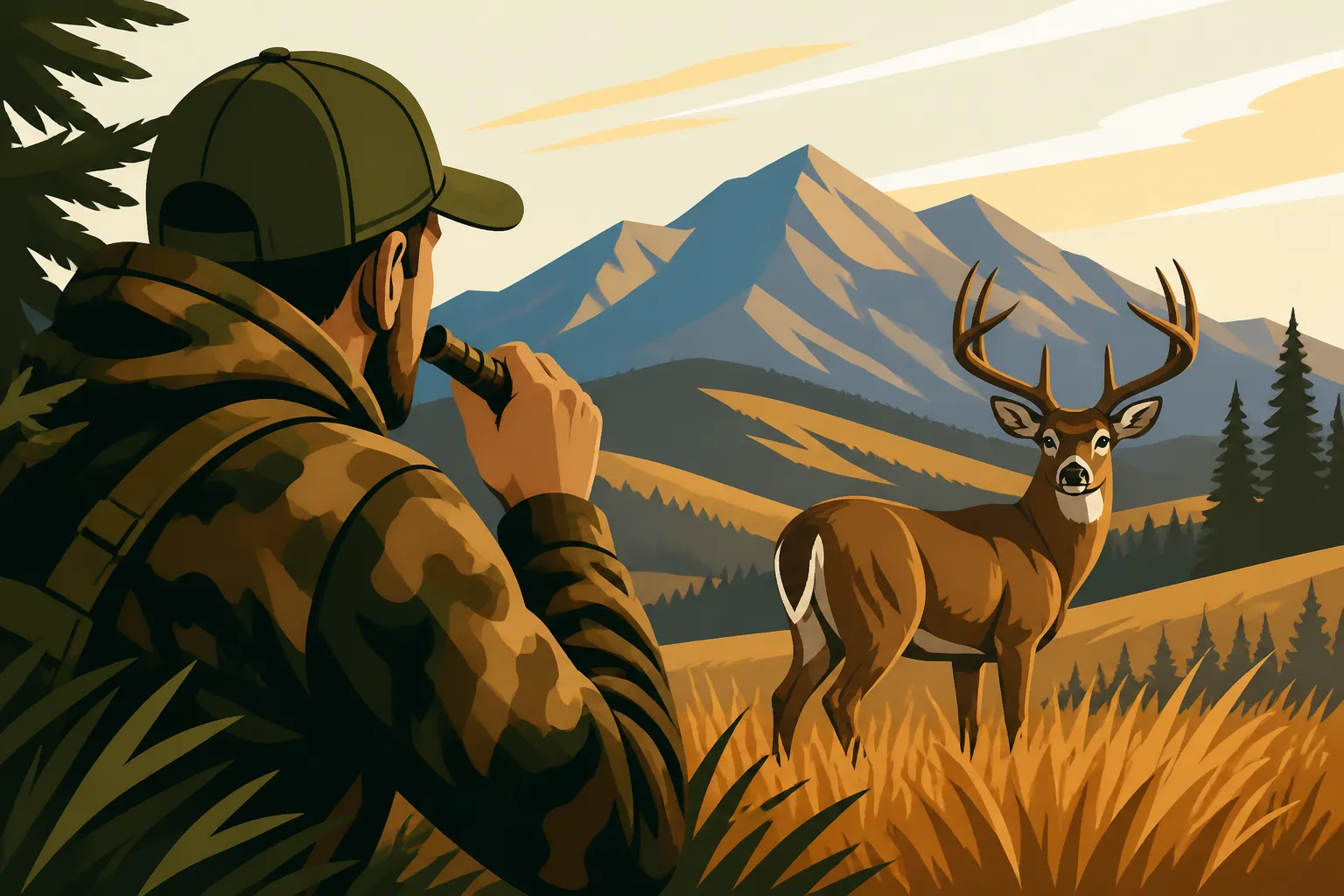
How to Rattle for Montana Whitetail
The quiet stillness of a crisp Montana autumn morning can be suddenly shattered by the clash of antlers, a sound designed to bring a dominant whitetail buck charging in. But let's be honest, trying to rattle in a savvy Montana whitetail often feels more like talking to a brick wall than calling in a territorial fighter. It's frustrating when you put in the effort, and all you hear is crickets. This comprehensive guide is here to demystify the art of rattling for Montana whitetail, providing you with practical strategies to increase your odds of success and finally put that aggressive buck in your sights.
Understanding Montana Whitetail Behavior and the Rut
Before you even think about clashing antlers together, it's absolutely crucial to understand the intricate world of Montana whitetail behavior, especially during the breeding season. Rattling is inherently a challenge to a buck's dominance, and if you don't time it right or understand what motivates them, your efforts will likely fall flat. These deer are incredibly intelligent and keenly aware of their surroundings, so a nuanced approach is key to enticing them into range.
The Whitetail Rut Cycle in Montana
The whitetail rut in Montana, like elsewhere, isn't a single event but a series of overlapping phases, each dictating a buck's susceptibility to rattling. You've got the pre-rut, the peak rut, and the post-rut, and knowing where you are in this cycle is paramount. During the early pre-rut, typically in late October, bucks are starting to feel the urge. They're laying down more rubs and scrapes, flexing their muscles, and beginning to seek out the first does coming into estrus. This is a great time for "curiosity" rattling, where a less aggressive sparring sound can pull in bucks that are just starting to get territorial.
As you move into the peak rut, usually in early to mid-November, the chase is on. Does are actively coming into estrus, and bucks are frantically searching for them. This is when aggressive, full-blown fighting sequences can be most effective. Bucks are pumped full of testosterone, competitive, and often willing to investigate a challenge to their breeding rights. The sheer volume of deer activity picks up dramatically, particularly in river bottom habitats where whitetails thrive, making these areas prime for rattling action. To maximize your chances, understanding the specific Montana Whitetail Rut Timing for your hunting district can be a game-changer.
However, once the peak begins to subside and you move into the post-rut, bucks are often exhausted and have bred many of the does in their area. They might still respond, but their aggression wanes, and they're more focused on feeding and recovering. Your rattling strategy will need to adapt significantly, becoming much softer and less frequent, often just a subtle invitation rather than a full-on brawl. For a deeper dive into hunting during this crucial period, check out our guide on How to Hunt Montana Whitetail During the Rut.
Interpreting Deer Body Language and Readiness
A buck’s body language is a window into his mind, telling you whether he’s curious, aggressive, or completely uninterested. When rattling, you're not just making noise; you're simulating a primal interaction, and deer will respond in kind. Pay close attention to subtle cues before, during, and after your rattling sequence. A buck might drop his head, lay his ears back, or stiffen his posture, all signs of aggression or an immediate interest in what's happening.
You'll also want to look for indirect signs like fresh rubs and scrapes. A scraped-up area with broken branches and pawed-out earth is a buck's billboard, advertising his presence and dominance. If you find an area riddled with these signs, you know you're in a zone where bucks are actively asserting themselves, which makes rattling a more potent tactic. Conversely, if there's little sign of recent buck activity, your rattling efforts might not generate much interest, regardless of how perfectly you execute the sound.
Sometimes, a buck will approach cautiously, often circling downwind to catch your scent before committing. He might hold up in thick cover, peering out, trying to size up the "fight." This "hanging up" behavior is incredibly common and frustrating. It indicates interest but also extreme caution. Recognizing this early allows you to adjust your strategy—perhaps a soft grunt to entice him the last few yards, or a prolonged period of silence to make him think the fight is over and he can move in safely. Every twitch of an ear, every flick of a tail, can tell you something about the deer's mood and his willingness to engage.
Essential Rattling Gear and Strategic Preparation
Successful rattling isn't just about technique; it's heavily reliant on having the right tools and meticulously preparing your setup. From the sound you make to how you conceal yourself, every detail contributes to whether a buck charges in or spooks away.
Choosing the Right Antlers or Calls
The most authentic rattling sound comes from real shed antlers. If you're fortunate enough to find a matching pair of whitetail sheds, they make fantastic rattling tools. The natural bone-on-bone sound is incredibly realistic and carries well. However, they can be bulky and noisy to carry in your pack. When selecting sheds, aim for antlers from a mature buck, ideally with some mass and tines, to create a sound that mimics two decent-sized bucks fighting, which is what often draws in the bigger, more dominant deer.
For those who prefer a more convenient option, synthetic rattling bags or calls are excellent alternatives. Brands like Rattlin' Bag, the Bone Collector Rattlin' Horns, or various Primos options offer compact and user-friendly designs that produce a surprisingly realistic clash. These are especially handy if you're hiking into your spot or trying to be discreet. The key is to experiment with different types to find one that you can manipulate effectively to create varied sounds, from light sparring to intense, aggressive clashes. While our focus here is on whitetail, it's interesting to note the different approaches and specialized tools used for Montana Elk Hunting: Calling Tactics compared to the distinct sounds of deer antlers.
When choosing, consider the specific hunting situation. If you're in really tight cover, a rattling bag might be less cumbersome than full antlers. If you're trying to project sound across a larger, more open area, real antlers or robust synthetic horns might be more effective. Regardless of your choice, practice at home. Get comfortable with the sounds you can make, from the subtle click of tines to a full-on bone-jarring crash. The more realistic and varied you can make your "fight" sound, the more convincing it will be to a passing buck.
Scent Control, Concealment, and Setting the Stage
This cannot be stressed enough: scent control is paramount when rattling for Montana whitetail. Whitetails, especially mature bucks, have an incredible sense of smell. They will almost always circle downwind of a perceived fight to try and catch a whiff of the combatants. If they smell you, your hunt is over before it even began. Start with scent-eliminating detergents for all your hunting clothes, use scent-free sprays, and store your gear in airtight containers. Avoid strong-smelling foods or colognes, and even consider showering with scent-free soap before heading out.
Once you’re in the field, playing the wind is your absolute top priority. Always try to set up with the wind in your favor, anticipating where a buck might approach from downwind. This often means finding a spot that forces the deer to approach from a direction where your scent isn't carried directly to them. Understanding thermal currents, particularly in Montana’s varied terrain like rolling hills or river bottom drainages, is also critical. Early mornings often see thermals dropping, carrying scent downhill, while afternoons see them rising. Factor this into your setup.
Concealment is equally vital, as rattling often brings deer in close, sometimes within bow range. Utilize thick cover, natural blinds like downed trees, or even pop-up ground blinds. For those who prefer elevated positions, setting up in a sturdy tree stand offers an excellent vantage point and helps disperse your scent above a deer's natural line of travel. Learning How to Hunt Montana Whitetail from a Tree Stand or mastering How to Hunt Montana Whitetail in a Ground Blind can give you the edge you need for successful rattling setups. Make sure you can move your arms to rattle without being seen, and have a shooting lane cleared in the direction you expect a buck to appear. A properly executed setup, blending into the environment with minimal scent signature, is the foundation of successful rattling.
Mastering Rattling Techniques for Montana Whitetail
Now for the fun part: making the noise! Rattling isn't just banging antlers together; it's an art form that requires understanding when to be subtle and when to be aggressive, how to build a realistic scenario, and when to pause and listen.
Light Sparring Versus Aggressive Fighting Sequences
The type of rattling you employ should match the rut phase and the perceived mood of the bucks in your area. During the early pre-rut or when targeting more cautious bucks, a "light sparring" sequence is often most effective. This mimics two younger bucks or a less intense encounter. To achieve this, gently tickle the tines together, maybe a light push and grind, followed by some subtle limb breaking or shuffling leaves. It's an invitation, not a challenge. This sound aims to pique curiosity, drawing in a buck that might be checking out the first does but isn't yet in a full-blown fighting frenzy. Keep these sequences shorter, perhaps 15-30 seconds of light action, followed by a longer silence.
Conversely, during the peak rut, when bucks are highly aggressive and fighting for breeding rights, you'll want to deploy "aggressive fighting" sequences. This means really getting into it: crashing the antlers together loudly, grinding them forcefully, and breaking branches to simulate a full-on brawl. Think of two big-bodied bucks smashing into each other, grunting, snort-wheezing, and trying to dominate. These sequences should be more prolonged, sometimes up to a minute of intense action, and should incorporate all the sounds of a real fight. The goal here is to challenge a dominant buck directly, making him believe another rival is in his territory with a receptive doe. Don't be shy; make it sound real and loud enough to carry through the timber.
Crafting Realistic Calling Sequences and Cadence
Beyond just the intensity, the realism of your rattling sequence—its cadence and duration—is what truly sells the illusion. A common mistake is to just rattle continuously or without any rhythm. Real buck fights aren't constant; they have bursts of energy, pauses, and shifts in intensity. A typical sequence might start with a burst of aggressive crashing for 20-30 seconds, then a period of grinding and scraping, followed by total silence. This silence is crucial; it’s when you listen for approaching deer.
After a few minutes of silence (maybe 3-5 minutes), you might restart with a shorter, less intense series of crashes and grinds, mimicking one of the bucks getting a second wind. Remember to incorporate the sounds of a real fight: breaking small branches with your foot, rustling leaves, even a realistic grunt or a snort-wheeze with a grunt tube can add layers of authenticity. Our guide on Montana Whitetail River Bottom Behavior can help you visualize how these fights might play out in natural settings, allowing you to better mimic the sounds. GoHunt's mapping tools, which allow you to identify key terrain features and vegetation density, can also help pinpoint locations where a buck fight would naturally occur and where your sounds will carry best.
A good rule of thumb for a full sequence might be:
- Initial Crash: 30 seconds of aggressive, loud rattling, grinding, and branch breaking.
- Silence and Listen: 3-5 minutes of absolute quiet, scanning for movement.
- Soft Sparring/Grinding: 15-20 seconds of lighter, intermittent antler contact.
- Silence and Listen: Another 3-5 minutes.
- Repeat: You can repeat this pattern for up to 20-30 minutes, or until a buck shows up.
The key is to make it sound like an actual, evolving fight, not just random noise. Vary your intensity, incorporate natural sounds, and always, always listen intently during the silent periods.
Situational Rattling Strategies
The effectiveness of rattling can also hinge on the specific situation you find yourself in. Different times of day and varying weather conditions can drastically impact a whitetail buck's willingness to respond. Generally, rattling tends to be most effective in the morning and late afternoon, aligning with peak deer movement patterns during the rut. The cool, crisp air of a Montana morning often means deer are on their feet, actively seeking does and more prone to investigate a challenge.
Weather also plays a significant role. Calm, overcast days with a light breeze are often ideal, as sound carries well, and deer feel less exposed. During cold fronts, bucks can be especially active, making these prime rattling opportunities. However, on windy days, your rattling sounds might not carry as far or as clearly, making it harder to attract deer from a distance. In these conditions, you might need to increase the volume and frequency of your crashes, or focus on smaller, tighter areas where deer are naturally confined. GoHunt's weather overlays can assist greatly in planning your hunt, providing insights into wind direction, temperature changes, and precipitation, all of which influence deer movement and your rattling approach.
Beyond time and weather, consider integrating rattling into a broader hunting strategy. Some hunters find success by still-hunting slowly through timber, pausing every 50-100 yards to perform a short, soft rattling sequence. This "rattle-and-move" tactic can surprise a buck that might be bedded nearby, convincing him the fight is moving away and prompting him to investigate. Another strategy is the "surprise" rattle, where you remain completely silent as you approach a promising area, then hit a very aggressive, loud rattling sequence to shock any nearby deer into immediate response. This can work particularly well in thick cover where deer can't see you approaching. Always be ready for a quick shot, because when it works, a buck can come charging in, hot and fast.
Reading the Response and Adapting Your Approach
Even with the best rattling technique, deer won't always play by the rules. Knowing how to read their responses and adjust your strategy on the fly is what separates a good caller from a great one.
Identifying Incoming Bucks and Hung-Up Deer
When you're rattling, every rustle, every snap of a twig, becomes amplified. You need to be hyper-aware of your surroundings. An incoming buck might not come crashing in like you see on TV. More often, they approach cautiously, circling downwind, trying to pick up scent. Look for subtle movements: a flick of an ear, a patch of brown hide appearing in the brush, or the tell-tale low profile of a buck sneaking through cover. Using high-quality binoculars or a spotting scope can be invaluable in these moments, allowing you to scan distant thickets or forest edges without giving away your position. Our guide on How to Use Optics for Montana Mule Deer provides excellent insights into effective glassing techniques that are easily transferable to whitetail hunting.
A common and often frustrating scenario is when a buck "hangs up." This means he's heard your rattling and is interested, but he's either too cautious to come closer, or he's circling wide to get downwind and catch your scent. He might stand just out of range, obscured by brush, peering intently in your direction. When this happens, resist the urge to rattle again immediately. Often, patience is your best weapon. Let him wonder why the fight stopped. Sometimes, a soft, subtle grunt or a doe bleat can be enough to pull him those last few yards, convincing him the "doe" is still there, perhaps with the dominant buck now preoccupied. If he's already downwind, he's likely busted you, and your best bet might be to let him pass and try a different location later.
Troubleshooting and Adapting to Different Scenarios
Rattling is rarely a one-size-fits-all solution. What works one day might not work the next, and what works in one hunting district might fail in another. If nothing shows up after a few sequences, don't be afraid to move. Relocating a few hundred yards to a new setup, perhaps one with a different wind advantage or better cover, can make all the difference. Sometimes, a change in tactics is needed entirely; if aggressive rattling isn't working, switch to lighter sparring or vice-versa.
You'll also encounter younger bucks or does that respond. While they might not be your target, their presence is a positive sign that deer are hearing and responding to your calls. Don't let them deter you; sometimes a larger buck will follow a curious younger deer. However, if all you're getting are does or yearlings, it might be a signal that the bigger, more dominant bucks are either not in the area, or they're locked down with a doe and less responsive to calling. This might mean adjusting your approach or moving to a different part of the Montana Hunting Districts Explained that are known for higher buck-to-doe ratios or different rut behavior. GoHunt's extensive scouting features, which include aerial imagery, public land boundaries, and historical animal activity data, can help you identify multiple promising spots for trial and error, allowing you to adapt quickly when a particular area isn't producing.
Ultimately, persistence and adaptability are key. Learn from every encounter, or lack thereof. Pay attention to how deer react to different calling styles, varying intensities, and different times of day. The more you practice and observe, the better you'll become at reading the situation and giving that Montana whitetail buck exactly what he wants to hear. If you're looking for broader strategies, consider exploring a Montana Big Game Species Guide to understand the interplay of various game animals in your hunting area. For those who prefer a more hands-on approach to finding prime hunting locations, our guide on How to E-Scout Montana Hunting Units offers excellent tips to identify areas that might respond well to rattling.
| Scenario | Rut Phase | Rattling Intensity | Additional Calls | Key Considerations |
|---|---|---|---|---|
| Early Pre-Rut | Seeking/Cruising | Light Sparring | Soft Grunts | Focus on curiosity, avoid over-aggressive calls. |
| Peak Rut (Seeking/Chasing) | Peak Activity | Aggressive Fighting | Grunts, Snort-Wheezes | Mimic dominance, be ready for fast approaches. |
| Peak Rut (Lockdown) | Breeding | Moderate Sparring | Intermittent Grunts | Bucks often "locked down," less responsive to rattling. |
| Post-Rut | Recovering/Dispersing | Very Light Sparring | Occasional Grunts | Primarily targets younger, less dominant bucks. |
| High Pressure Area | Any | Subtler, Shorter | Minimal | Don't overdo it, be aware of other hunters. |
Disclaimer
Hunting is an inherently risky activity. Always prioritize safety, understand and follow all Montana Fish, Wildlife & Parks regulations, and ensure you have the necessary licenses and permits before heading into the field. This guide provides general information and recommendations, but conditions and regulations can change, and individual results will vary. Consult official FWP resources for the most current and accurate information.