How to Get a Block Management Map
Finding reliable access to hunting land in Montana can feel like solving a complex puzzle, especially when navigating the intricate mix of public and private ownership. While the concept of Block Management Areas (BMAs) offers a fantastic opportunity for public hunting, knowing where these areas are and how to access them is often the biggest hurdle. This comprehensive guide will break down exactly how you can get your hands on Block Management maps, both traditional and digital, empowering you to confidently plan your next hunting adventure in Big Sky Country.
Understanding Montana's Block Management Program
Before we dive into getting the maps, let's briefly touch on why Block Management Areas (BMAs) are such a vital resource for anyone looking to go hunting in Montana. The Montana Fish, Wildlife & Parks (FWP) created the Block Management Program as a cooperative effort with private landowners. Essentially, these landowners agree to open up portions of their private property to public hunting for specific seasons, and in return, they receive administrative assistance and other incentives from FWP. It's a true win-win that significantly expands hunting opportunities on otherwise inaccessible private lands.
The Value of Block Management for Hunters
For many hunters, especially those traveling from out of state or on a tight budget, Block Management Areas are an absolute game-changer. Imagine spending countless hours e-scouting only to find vast tracts of prime habitat locked behind private gates. BMAs unlock many of these areas, providing millions of acres of additional access across the state each year. This is particularly crucial in regions dominated by agriculture or large private ranches where traditional public lands might be scarce or heavily pressured. If you're planning a Montana DIY Elk Hunting Guide or trying to figure out How to Hunt Mule Deer on Montana Public Land, integrating BMAs into your strategy is almost a necessity.
Types of Block Management Access
It's important to understand that not all Block Management Areas operate the same way. The FWP categorizes them into two main types, which will dictate how you access and use the land:
- Type 1 BMAs: These are typically areas where you can self-register at a sign-in box located at the access point. You just sign in, follow the rules, and head out. They often have specific rules regarding hunter numbers, specific hunting days, or what species can be pursued.
- Type 2 BMAs: These require a bit more planning as you often need to contact the landowner or a designated FWP representative in advance to get permission or a reservation. Hunter numbers are usually limited, making these areas feel more exclusive and often less pressured. This distinction is vital when you're reading the maps and planning your approach, so always pay close attention to the specific BMA rules. For a deeper dive, check out our guide on Montana Block Management Type 1 vs Type 2.
Official Sources for Acquiring Block Management Maps
When you're trying to figure out How to Find Block Management Areas, your first and most reliable stop should always be the Montana Fish, Wildlife & Parks (FWP). They are the administrators of the program, and their resources are the most up-to-date. Relying on outdated information can lead to frustration or, worse, trespassing, so always go straight to the source.
Montana FWP Website
The FWP website is your digital command center for all things Block Management. Each year, typically in mid to late August, the FWP releases the Block Management Program information, including maps and specific rules for each BMA.
- Navigating the Website: Head to the official Montana FWP website. Look for sections related to "Hunting" and then "Block Management." There, you'll find an interactive map and downloadable PDFs.
- Interactive Map: The interactive map allows you to zoom in on specific regions, click on individual BMAs, and pull up detailed information sheets. These sheets are goldmines, providing acreage, allowed species, access dates, specific hunter rules, contact information (for Type 2 areas), and often a downloadable PDF map specific to that BMA.
- Downloadable PDFs: The FWP also provides comprehensive PDF atlases, often broken down by FWP region. These are fantastic for getting a broad overview of BMAs in an entire region. You can download these and either print them out or save them to your tablet or phone for offline use. This is particularly useful if you anticipate being in an area without cell service, which is common when you're hunting in remote parts of Montana.
FWP Regional Offices and Field Staff
Sometimes, there's no substitute for talking to a real person and getting local intelligence. FWP's regional offices are scattered across the state, and they are invaluable resources.
- In-Person Assistance: Visit any FWP regional office during business hours. The staff there are incredibly knowledgeable and can often provide printed maps, answer specific questions about BMA rules, and even offer insights into local conditions or herd movements. They might also have a better understanding of recent changes or temporary closures that haven't yet made it to the digital platforms.
- Printed Maps: Many offices keep physical copies of the regional BMA atlases or individual BMA maps on hand. This is a great option if you prefer a tangible map to mark up with notes and hunting plans.
- Local Expertise: Wildlife biologists and game wardens in the field are often the best sources of information. While you might not be able to just walk in and pick their brain, sometimes a quick, polite call to a regional office can connect you with someone who has boots-on-the-ground knowledge that can be incredibly helpful for your hunt.
Mail Order
For those who prefer to have a physical map in hand well before their trip, or who don't have easy access to printing facilities, the FWP also offers a mail-order option for their Block Management Program atlases.
- Requesting by Mail: You can usually find a form or instructions on the FWP website to request a printed atlas to be mailed to you. There might be a small fee to cover printing and shipping costs, but it's a minor investment for peace of mind.
- Plan Ahead: Keep in mind that mail orders take time, so plan well in advance of your hunting season. Requesting your maps in early summer is a good idea to ensure you have them in time for your pre-season scouting.
Here's a quick comparison of these official map sources:
| Source | Pros | Cons | Best Use Case |
|---|---|---|---|
| FWP Website | Most current info, interactive map, downloadable PDFs, free | Requires internet access, printing large maps can be cumbersome | Initial research, e-scouting, on-the-go updates |
| FWP Regional Offices | Local expertise, printed maps available, specific rule clarification | Limited hours, travel may be required | Detailed questions, last-minute info, local insights |
| Mail Order | Convenient for physical maps, good for planning without internet | Takes time to arrive, potential small fee, might not be newest update | Early planning, physical map preference, no printer access |
Digital Mapping Tools and Apps for Block Management Access
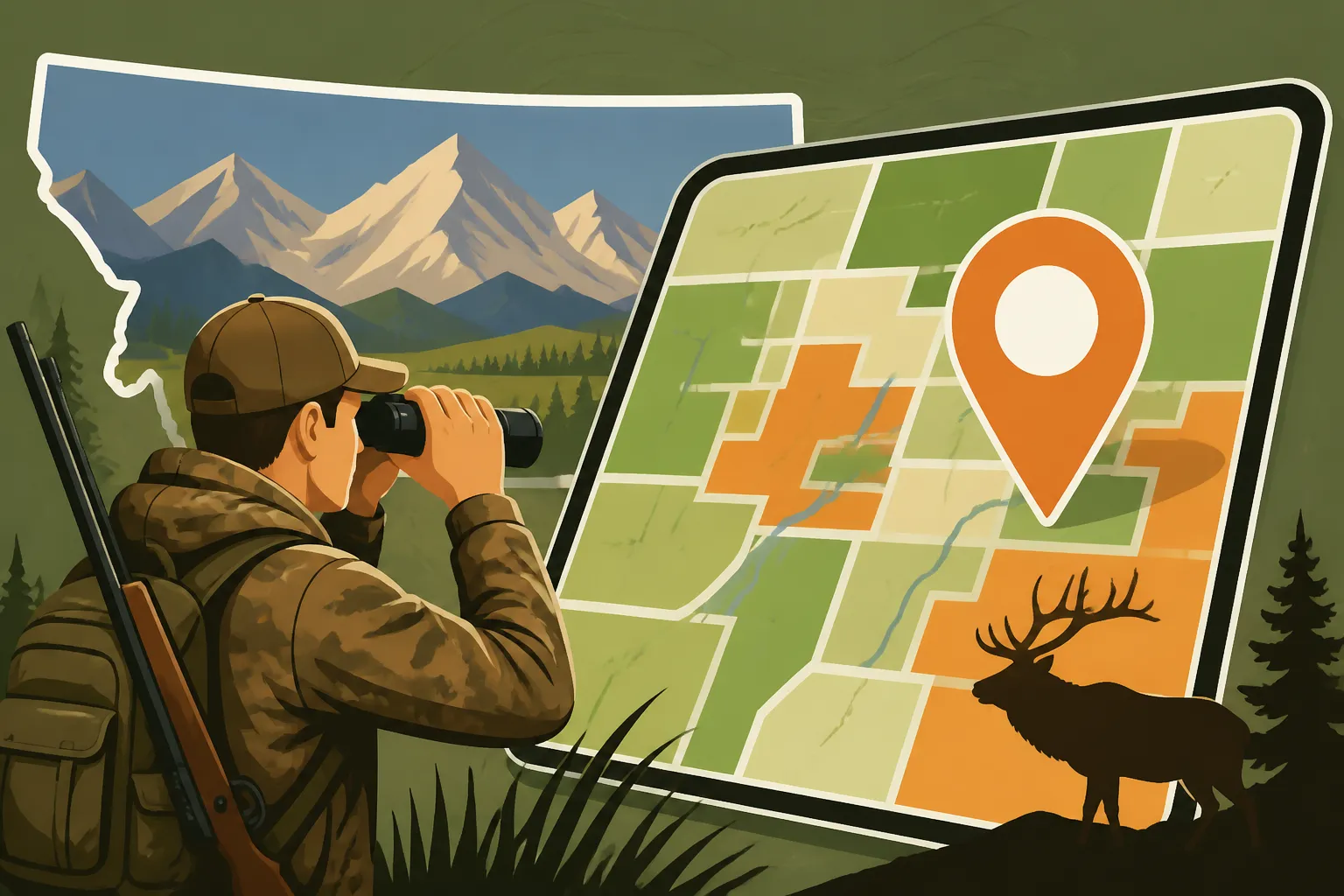
While official FWP maps are indispensable, integrating them with modern digital mapping tools can significantly enhance your hunting strategy. These apps offer real-time GPS tracking, satellite imagery, and the ability to layer different types of land ownership, making your Block Management navigation much more efficient.
onX Hunt: The Industry Standard
When it comes to digital hunting maps, onX Hunt is widely considered the gold standard. Its comprehensive features make it an incredibly powerful tool for navigating Block Management Areas, and really, for any public land hunting in Montana.
- BMA Layer Integration: One of onX Hunt's most valuable features is its direct integration of FWP Block Management data. You can turn on a specific layer that clearly outlines BMA boundaries, showing exactly where these access areas are located. This is critical for knowing precisely where you stand, literally, in relation to private and public land.
- Detailed Information: When you tap on a BMA within the onX app, it often pulls up the same detailed information you'd find on the FWP website—rules, access dates, species, and contact info. This saves you from constantly switching between apps or websites.
- Offline Maps: Montana's backcountry is notorious for spotty cell service. onX Hunt allows you to download maps for specific areas beforehand, ensuring you have access to all your crucial mapping data even when you're miles from the nearest signal. This is non-negotiable for safety and successful navigation. If you're wondering How to Use onX for Montana Hunting, this offline capability is a huge part of it.
- Satellite and Topo Imagery: Beyond BMA boundaries, onX overlays detailed satellite imagery and topographic maps, allowing you to identify potential bedding areas, travel corridors, water sources, and escape routes within the BMA itself. This is fantastic for How to E-Scout Montana Hunting Units before you even set foot in the field.
GoHunt: A Planning Powerhouse
While perhaps best known for its draw odds and application strategy tools, GoHunt also offers robust mapping capabilities that can be incredibly useful when planning hunts that involve Block Management.
- Comprehensive Data: GoHunt's map platform integrates a vast amount of data, including public/private land ownership, wilderness areas, and sometimes BMA overlays. It allows you to visualize your hunting unit with all relevant layers, helping you understand the access situation at a glance.
- Filter and Analyze: Hunters often use GoHunt to filter for specific unit characteristics, which can indirectly help with BMA planning. For instance, you might use it to look at elk populations or past harvest success rates in units that contain numerous BMAs, helping you narrow down your focus. This is particularly useful when you're trying to figure out How to Choose a Montana Hunting District that maximizes your odds.
Montana FWP Hunt Planner
Don't overlook the FWP's own digital mapping tool, the Montana FWP Hunt Planner. While it might not have all the bells and whistles of commercial apps, it's directly from the source and often includes the most current and accurate Block Management information.
- Official Source: Just like their website, the FWP Hunt Planner is the official digital representation of hunting opportunities. It clearly shows hunting district boundaries, land ownership, and, of course, Block Management Areas.
- Ease of Access: It's usually a web-based tool, making it accessible from any device with an internet connection. It’s perfect for cross-referencing information you find on other platforms. Many hunters find it useful to start here before diving into more detailed planning with commercial apps. You can learn more about it in our article on Montana Hunt Planner Maps Explained.
The biggest takeaway for digital tools is to use them in conjunction with your traditional FWP maps. They complement each other perfectly, providing both a bird's-eye view and detailed, on-the-ground navigation.
Maximizing Your Block Management Map Usage
Simply having a map isn't enough; knowing how to use it effectively is where the real value lies. Block Management Areas come with their own set of unique considerations, and a thoughtful approach to map usage can make all the difference between a successful hunt and a frustrating one.
Pre-Season E-Scouting and Planning
Your hunting success often begins long before you ever step foot in Montana. Effective pre-season scouting, especially for BMAs, is crucial.
- Identify Access Points: Use your maps (both FWP PDFs and digital apps like onX Hunt) to pinpoint designated parking areas and legal access points for each BMA. Don't assume you can just drive onto any part of the property. Knowing this ahead of time saves valuable hunting hours.
- Understand Boundaries: Spend time studying the boundaries of the BMA in relation to surrounding public and private lands. This helps you understand where animals might travel and where you can legally pursue them. For Type 2 areas, ensure you understand any internal "no-hunting" zones or specific travel corridors. This kind of detailed planning is key for Montana Public Land Hunting Strategy.
- Identify Key Features: Look for terrain features that might concentrate animals: water sources, timbered draws, north-facing slopes, saddles, and benches. Many BMAs are on agricultural lands, so identify crop fields, fence lines, and areas of cover. For instance, if you're targeting antelope, identifying water holes or natural funnels will be critical for Spot-and-Stalk Antelope Tactics.
- Plan Your Routes: Use topo and satellite imagery to plan your approach and potential egress routes. Consider prevailing winds and thermal currents, especially if you're trying How to Find Elk in Montana Dark Timber within a BMA. Have backup plans in case your primary spot is occupied or unproductive.
Understanding and Respecting Regulations
Each Block Management Area has its own unique set of rules and regulations. These are absolutely non-negotiable and are often detailed directly on the BMA maps or accompanying information sheets.
- Read the Fine Print: Never assume. Carefully read all the rules for the specific BMA you plan to hunt. This includes:
- Hunter Quotas: How many hunters are allowed in at one time? Is there a sign-in sheet, or do you need a reservation?
- Allowed Species: Are you allowed to hunt elk, deer, antelope, or only specific sexes or antler points?
- Weapon Restrictions: Are there archery-only sections or specific firearm limitations?
- Access Methods: Are vehicles allowed beyond the parking area? Can you use ATVs or horses? Often, foot access only is strictly enforced.
- Open Dates: Block Management seasons often differ from general seasons, or certain species may only be accessible on specific days of the week.
- Sign-In Procedures: For Type 1 BMAs, always sign in and out at the designated kiosks. This is not just a courtesy; it's a requirement that helps FWP manage hunter numbers and track usage. Failure to do so can result in citations or, worse, the BMA being closed to public access.
- Leave No Trace: Remember, these are private lands generously opened for public use. Treat them with the utmost respect. Pack out all your trash, avoid disturbing livestock, close gates, and stick to designated trails. Being a responsible hunter ensures the continued viability of the Block Management Program. When you're packing out an animal, think about How to Quarter an Elk in the Montana Backcountry and leave the area cleaner than you found it.
On-the-Ground Navigation
Even with the best digital tools, having a printed map or a keen sense of observation on the ground is critical.
- GPS and Physical Map Synergy: Use your phone or GPS device for real-time positioning, but always have a physical map as a backup. Batteries die, and screens break. Being able to navigate with a paper map if technology fails can be a lifesaver, especially in rugged terrain or when you’re attempting Montana Backcountry Hunting Guide.
- Look for Markers: Landowners and FWP often mark BMA boundaries with signage, flagging, or distinct fence lines. Pay attention to these visual cues to confirm your location and avoid accidentally crossing onto closed private land.
- Wind and Thermals: Beyond maps, constantly assess the wind direction and how thermals are shifting throughout the day. This is particularly important for species like elk, where knowing How to Use the Wind Hunting Montana Elk is paramount. Digital maps can show you elevation changes, which directly influence thermals.
- Adapt and Adjust: Hunting is rarely a straight line. If you encounter unexpected pressure, find signs of animals elsewhere, or simply need a change of scenery, your well-studied maps will allow you to quickly adapt and pivot to a new plan within or to an adjacent public access area. This strategic adaptability helps you How to Beat the Crowds on Montana Public Land by finding less obvious routes.
By combining the official information from FWP with powerful digital tools like onX Hunt and a strong understanding of BMA etiquette, you’ll be well-equipped to unlock the incredible hunting opportunities that Montana's Block Management Program provides. Good luck out there!
Disclaimer
Please remember that hunting regulations, seasons, and Block Management Area specifics in Montana can change annually. Always consult the official Montana Fish, Wildlife & Parks (FWP) regulations and BMA maps for the current year before planning and executing your hunt. This guide is for informational purposes only and should not be considered a substitute for official FWP resources.