Best Montana Districts for Public Land Mule Deer
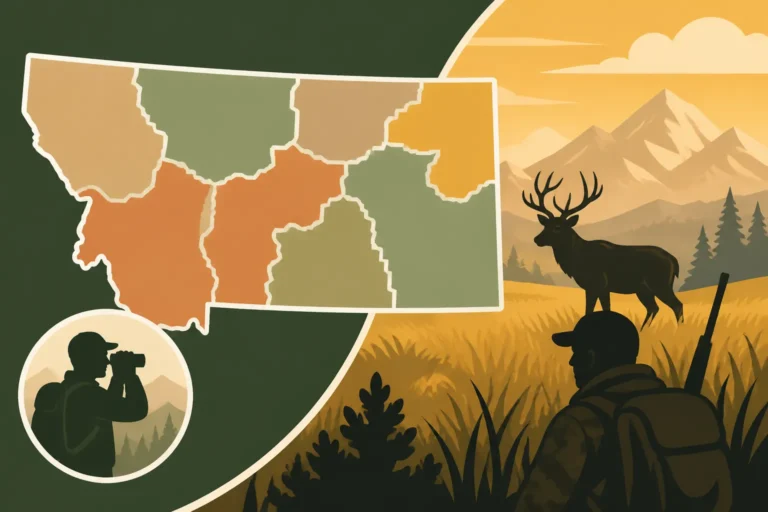
Trying to pinpoint the absolute best spots for public land mule deer hunting in Montana can feel like searching for a needle in a haystack, especially with so much incredible, vast country and so many factors to consider. The truth is, finding a good mule deer buck on public ground in Big Sky Country takes serious planning, dedicated scouting, and a solid understanding of both the landscape and deer behavior. This guide is here to cut through the noise, helping you identify promising districts and arming you with the strategies you need for a successful public land mule deer hunt.
Deciphering Montana's Public Land Mule Deer Landscape
Hunting mule deer in Montana is a unique challenge and a deeply rewarding experience. Unlike their whitetail cousins, mule deer are creatures of the open, often found in diverse, rugged terrain. But on public land, this gets complicated by access and hunting pressure.
The Ideal Mule Deer Habitat on Public Ground
Mule deer aren't just in the mountains; they thrive across a spectrum of habitats, from high-desert breaks to forested foothills and sagebrush plains. What they consistently look for are specific elements: ample browse, diverse cover for bedding and escape, and reliable water sources. On public land, these elements often dictate where deer will concentrate and, more importantly, where they'll stay once hunting season begins.
In Montana, you'll find mule deer scattered across various land designations, including Bureau of Land Management (BLM) lands, State Trust Lands, and extensive National Forests. Each offers different challenges and opportunities. BLM lands, particularly in central and eastern Montana, often feature rolling sagebrush hills, coulees, and badlands – classic mule deer country. National Forests in western and central Montana provide mountain and foothill habitat, where deer might be found on south-facing slopes in the early season or tucked into dark timber pockets as pressure mounts. The key is to look for areas with a mosaic of these features. Think about benches, finger ridges, and draws that offer both food and security cover, especially those less accessible by vehicle. Understanding the nuances of Montana Mule Deer Habitat Explained is crucial to narrowing down your search.
Understanding Mule Deer Behavior Under Pressure
Mule deer are incredibly adaptable, but they certainly don't appreciate being pursued relentlessly. As opening day approaches and hunters spread out, mule deer on public land quickly become more nocturnal, seeking out the thickest cover, steepest terrain, or most remote corners they can find. This is where your strategy truly comes into play. They'll often shift from open feeding areas to dense timber or incredibly broken badlands.
The biggest frustration for many public land hunters is finding sign, only to discover the deer have vanished once the season starts. This isn't because the deer are gone entirely; it's because they've changed their patterns. They'll learn exactly when and where people are likely to be, and they'll adjust. This means you need to be willing to go where others aren't, or to hunt smarter, focusing on those overlooked bedding areas or travel corridors between secure zones. Hunting during the middle of the day, when many hunters are back at camp, can also be surprisingly productive as deer might cautiously move between hiding spots.
Promising Montana Districts for Your Mule Deer Hunt
While "best" is always subjective and can change year to year based on weather, populations, and pressure, certain areas consistently offer solid public land mule deer hunting opportunities.
Eastern Montana's Expansive Plains and Breaks
When many hunters think of Montana mule deer, their minds often drift to the vast, rugged landscapes of Eastern Montana. This region, characterized by its sprawling prairies, deep coulees, and dramatic river breaks, is a mule deer mecca. The sheer amount of public land here, often a mix of BLM and State Trust Lands, provides incredible room to roam and pursue deer without constant human intrusion.
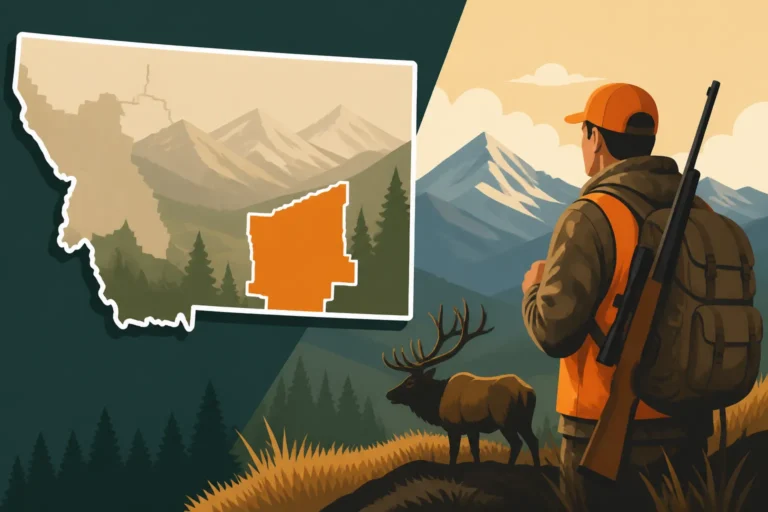
Districts in areas like the Missouri Breaks (e.g., portions of HD 410, 441, 621, 622, 630) are legendary for a reason. These districts offer a challenging but rewarding hunt, with steep, broken country providing excellent cover for mature bucks. The challenge often lies in accessing these remote areas and navigating the maze of public, private, and State Trust lands. Tools like onX Hunt are absolutely indispensable here, allowing you to instantly identify land boundaries and stay legal. Bucks in these areas will often bed on brushy north-facing slopes, only emerging to feed in the evenings and early mornings. Remember, the deeper you get into these breaks, the less pressure you'll encounter. You can learn more about Hunting the Missouri Breaks for Mule Deer. Another area to consider is the Powder River Country in southeastern Montana, which also boasts extensive public land, primarily BLM, with excellent mule deer populations that thrive in the rolling sagebrush and rimrock country.
Mountain Foothills and National Forest Opportunities
Moving west, the foothills leading into Montana's various mountain ranges also hold significant public land mule deer populations. These districts often combine open slopes with timbered draws and pockets, offering diverse habitat. National Forests, like sections of the Custer Gallatin National Forest or the Beaverhead-Deerlodge National Forest, provide vast tracts of public land.
Here, mule deer will often utilize a mix of open sagebrush flats for feeding and timbered areas for cover. Look for districts adjacent to private agricultural lands that provide forage, as deer will often migrate onto public land for security during hunting season. For instance, districts in the Tobacco Root Mountains or Elkhorn Mountains can offer good opportunities. While you might encounter more hunters in these easily accessible mountain-front areas, especially on forest service roads, the key is often to hike past the initial road hunters. Look for less-traveled drainages, north-facing timbered slopes where deer will bed, and small pockets of feed in secluded basins. Using a detailed map like onX Hunt or consulting resources like Montana National Forest Hunting Guide will help you identify remote trails and potential unpressured spots. These deer can be notoriously spooky, so moving slowly and glassing extensively are critical tactics.
Lesser-Known Districts and Backcountry Gems
Beyond the widely celebrated regions, Montana still holds plenty of "sleeper" districts where patient and persistent hunters can find public land mule deer. These often require more research, tougher access, and a willingness to explore. These might be smaller BLM parcels or isolated pockets within larger forest areas that are simply harder to get to, requiring a longer hike or specific navigation skills.
Think about areas that are a significant distance from major roads, or those surrounded by private land but accessible via easements or specific public land corridors. This is where services like GoHunt can provide an edge, as their advanced filtering tools and data might highlight units that are less drawn or have better success rates relative to pressure. For example, some districts in the Little Belt Mountains or Snowy Mountains might offer pockets of excellent mule deer habitat, though you'll need to do your homework to pinpoint public access points and deer concentrations. These "backcountry gems" often require a commitment to physical exertion and self-sufficiency, but they can pay off with a more solitary and higher-quality hunting experience. The rewards are often commensurate with the effort you put in to reach these less-trodden paths.
Essential Strategies for Public Land Mule Deer Success
Finding the right district is just the first step. To actually tag a public land mule deer in Montana, you need a solid strategy.
Mastering E-Scouting and Pre-Season Planning
In today's hunting world, effective e-scouting is non-negotiable, especially for public land hunts in vast states like Montana. Gone are the days of just showing up and hoping for the best. Modern mapping applications, like onX Hunt, are revolutionary for this. Before you even set foot in the field, you can spend hours virtually dissecting a hunting district.
Use onX Hunt to identify public land boundaries, critical for staying legal and maximizing your time. Look for potential bedding areas – often dense timber, brushy draws, or steep slopes that offer thermal advantages. Pinpoint water sources, escape routes, and natural funnels that deer might use. Pay close attention to terrain features like saddles, benches, and hidden pockets that could hold deer. You can even use historical satellite imagery to see changes in vegetation or past wildfire activity that might have created new browse. Beyond maps, consider using aerial photos and topographical maps in conjunction to understand elevation changes and line-of-sight. Many serious hunters also subscribe to services like GoHunt for their draw odds, filtering tools, and detailed unit analyses, which can help narrow down districts with better mule deer potential or less pressure based on harvest data and historical trends. The more you know before you go, the better your chances will be. It's also wise to read up on How to E-Scout Montana Hunting Units to refine your pre-season planning.
On-the-Ground Tactics for Elusive Bucks
Once you're in the field, your tactics need to match the terrain and the deer's pressured behavior. For mule deer, the spot-and-stalk method is king. This involves covering ground slowly, stopping frequently to glass extensively, and then carefully planning your approach once a buck is spotted. This isn't a race; it's a chess match.
Effective glassing is perhaps the single most important skill for public land mule deer hunters. Spend more time behind your binoculars and spotting scope than actually walking. Pick apart every hillside, every draw, every patch of timber, paying close attention to slight changes in color or shape that might betray a hidden deer. Learn How to Glass Montana's Big Country to really elevate your game. Once you spot a buck, resist the urge to immediately charge in. Observe its behavior, identify its escape routes, and plan a stalk that keeps the wind in your favor and utilizes terrain features for cover. Patience is paramount. Often, the best strategy is to put deer to bed and then make your move, waiting for optimal conditions. For a deeper dive into stalking, check out Montana Mule Deer Hunting: Spot-and-Stalk Tactics. Remember that deer will often move during low light, so being in position at first light and staying until last light can significantly increase your odds.
Beyond spot-and-stalk, consider still-hunting in timbered areas, especially where deer might be holed up during mid-day or in thick cover. Move slowly, literally taking a step or two, then pausing for several minutes to scan and listen. Mule deer are often heard before they're seen in dense woods. Also, pay close attention to the wind and thermals; How to Use the Wind Hunting Montana Elk offers principles that apply equally well to deer, especially in varied mountain and foothill terrain.
Navigating Licenses, Access, and Regulations
Montana's hunting regulations can be a bit of a labyrinth, especially for non-residents. Understanding the license structure and access programs is crucial for a legal and successful hunt.
General Tags, Permits, and Application Timelines
For mule deer, most hunters pursue them with a general deer license, which allows for either-sex deer hunting in many districts (often a mule deer buck or whitetail of either sex, depending on the district's specific regulations and antler point restrictions). Non-residents typically apply for the Non-resident Combination License, which includes either a deer-only or a deer/elk combo, alongside a conservation license and other necessary permits. These general tags allow you to hunt a vast amount of public land without needing to draw a specific permit in most units. However, some specific hunting districts for trophy mule deer or antlerless hunts might require a special permit, which means applying through the Montana Fish, Wildlife & Parks (FWP) draw system.
It's vital to stay on top of application deadlines, which are usually in March or April for big game combination licenses and specific permits. Montana uses a preference point system for its general deer and elk combo licenses, which is separate from the bonus point system for limited-entry permits. Understanding Montana General Deer License Explained is critical to ensuring you have the correct tag for your chosen area. Always double-check the current year's FWP regulations for the specific hunting district you plan to hunt, as rules regarding antler point restrictions, brow tines, and either-sex vs. antlerless tags can vary.
Leveraging Block Management and State Trust Lands
Montana is truly a leader in public access, and two programs that are a boon for public land hunters are Block Management Areas (BMAs) and State Trust Lands. Ignoring these is leaving opportunity on the table.
Block Management Areas are private lands that the FWP leases for public hunting access. These areas can be absolute goldmines for mule deer, especially in eastern and central Montana, where much of the land is privately owned. BMAs vary widely in size, access rules (some are sign-in, some require permission slips, some have hunter quotas), and game species available. The key is to obtain the BMA maps from FWP, either online or at regional offices, usually available in late August or early September. Using your onX Hunt app, you can often see the boundaries of BMAs and then cross-reference with FWP's detailed rules. Make sure to adhere strictly to all BMA regulations, as maintaining this access is vital for all hunters. You can learn more about how Montana Block Management Areas Explained can help your hunt.
State Trust Lands are parcels of land managed by the Montana Department of Natural Resources and Conservation (DNRC) to generate revenue for public schools. Most of these lands are open to public hunting, but you must purchase a State Lands Recreation Use License in addition to your regular hunting license. This small fee (typically around $10-20) gives you access to hundreds of thousands of acres. These parcels are often interspersed with private and BLM lands, creating a checkerboard pattern. Again, onX Hunt is invaluable for identifying these parcels and ensuring you're legally accessing them, as vehicle access might be restricted or require specific routes. Look for State Trust Lands that connect to larger blocks of BLM or National Forest, or those with rugged terrain that provides cover, as these can be less pressured than easily accessible public parcels.
| Hunting Region | Typical Districts | Primary Public Land Type | Terrain Characteristics | Mule Deer Potential | Hunter Pressure |
|---|---|---|---|---|---|
| Eastern Plains | HD 410, 441, 621, 630, 700 | BLM, State Trust | Rolling prairie, badlands, breaks, coulees | Good to Excellent (trophy potential) | Moderate to Low (remote areas) |
| Mountain Foothills | HD 380, 401, 390 | National Forest, BLM | Mixed timber, sagebrush, open slopes, draws | Good | Moderate to High (near roads) |
| Central Breaks | HD 500, 510, 530, 680 | BLM, State Trust | Rugged river breaks, isolated mountains, sagebrush | Good | Moderate |
Disclaimer
The information provided in this guide is for general educational purposes only and is not intended as legal advice. Hunting regulations in Montana are subject to change annually, and it is the hunter's sole responsibility to consult the most current Montana Fish, Wildlife & Parks (FWP) regulations and obtain all necessary licenses and permits before engaging in any hunting activities. Always ensure you are on legally accessible lands and understand all local restrictions and safety guidelines.