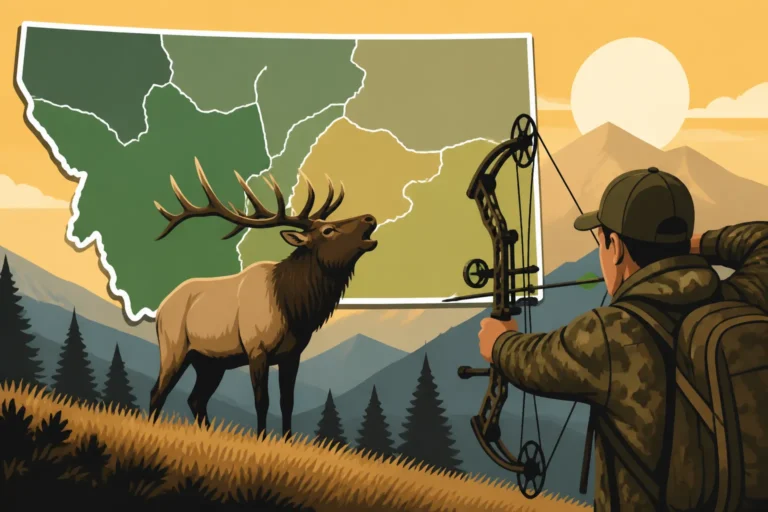
Little Belt Mountains Hunting Guide
Hunting in a place like Montana's Little Belt Mountains can feel like a daunting task, especially when you're staring at maps, trying to decipher regulations, and wondering where the big game truly hides. It's easy to get overwhelmed by the sheer size and ruggedness of the landscape, leaving many hunters frustrated before they even set foot in the field. This comprehensive guide will strip away that confusion, offering practical, actionable advice to help you confidently plan and execute a successful hunt in the Little Belts.
Understanding the Little Belt Mountains for Hunters
The Little Belt Mountains, nestled in central Montana, offer a truly unique hunting experience, different from the high, craggy peaks of western Montana or the vast, rolling plains to the east. It's a land of timbered slopes, open parks, and diverse wildlife, making it a fantastic destination, but also one that requires specific knowledge to navigate effectively.
Geographic Overview and Habitat
Imagine a sprawling island of mountains rising from the prairie, covered in a mosaic of dense conifer forests, aspen groves, and expansive meadows. That's a pretty good picture of the Little Belts. Geographically, they are part of the Lewis and Clark National Forest, characterized by rolling, forested ridges, steep canyons, and a surprising number of perennial streams and springs. Elevations typically range from 5,000 to over 8,500 feet, with peaks like Big Baldy Mountain standing tall.
This varied topography creates incredible habitat for a wide array of game. The dark timber provides crucial bedding and thermal cover, especially during colder weather, while the aspen stands offer browse and are often elk magnets during the rut. The numerous open parks and meadows, particularly those interspersed with timber, serve as prime feeding areas for both deer and elk, especially at dawn and dusk. The lower, eastern flanks of the range gradually transition into prairie ecosystems, providing vital winter range and additional habitat for species like mule deer and antelope, creating a diverse ecosystem unlike many other parts of the state. Understanding these microhabitats is key to successful scouting and hunting.
Key Game Species
While the Little Belt Mountains hold a variety of wildlife, the primary big game draws for hunters are elk and mule deer, with whitetail deer and black bear also present.
Elk: The Little Belts have a healthy and growing elk population, making them a consistent draw for both resident and nonresident hunters. Elk here are often found higher up in the timbered slopes during the early archery season, utilizing the cooler temperatures and abundant forage. As the general rifle season progresses, and hunter pressure increases, they'll often retreat into the thickest timber pockets and north-facing slopes. Later in the season, or with significant snow, they may move down to lower elevations, sometimes even spilling out onto private lands adjacent to the forest. Understanding their seasonal patterns and how they react to pressure is crucial, making it important to study the broader Montana Elk Hunting Guide.
Mule Deer: This region is also a strong contender for quality mule deer hunting. Mule deer often prefer more open, broken country compared to whitetails, and you'll find them in the sagebrush-steppe transitions on the fringes of the mountains, as well as in the more open, ponderosa-pine dominated ridges and south-facing slopes within the forest. They utilize the timber for cover but are often seen feeding in the smaller, hidden clearings and along old logging roads. Bucks can be quite elusive, and hunting them often involves extensive glassing of distant hillsides and careful still-hunting through timber patches.
Whitetail Deer: While not as prevalent as mule deer in the higher elevations, whitetails inhabit the riparian corridors and lower, brushier drainages throughout the Little Belts, especially where agricultural fields meet forest land. They are masters of cover, and often a different approach, perhaps focusing on pinch points or natural funnels, is needed compared to mule deer tactics. You might find success hunting How to Hunt Whitetail in Montana River Bottoms tactics here.
Black Bear: The Little Belts are home to a healthy black bear population. Both color phases (black and cinnamon/blonde) are common. Spring bear hunting is popular, as bears emerge from hibernation and feed on new growth on south-facing slopes. Fall bear hunting often coincides with deer and elk seasons, and bears can be found gorging on berries, acorns, or other mast crops in preparation for winter. Always be bear aware when hunting in this area, especially when packing out game.
Navigating Regulations and Access
Hunting in Montana, especially for nonresidents, involves a detailed understanding of licenses, permits, and access regulations. The Little Belt Mountains are no exception, and being prepared means doing your homework long before you hit the trail.
Licenses, Permits, and Seasons
Before anything else, you need the right paperwork. All hunters, resident and nonresident alike, must purchase a base hunting license, a conservation license, and an Automated Licensing System (ALS) number. For big game, you'll also need specific tags. Nonresidents typically apply for a General Big Game Combination License (covering deer and elk) or a Deer Combination License, which are limited in number and awarded through a drawing process. For residents, general tags are often over-the-counter for deer and elk, though specific hunting districts may require additional permits obtained through a draw.
The Little Belts fall into several hunting districts, primarily within Region 4, such as HD 410, 417, 441, and 454. It is absolutely critical to check the current Montana Fish, Wildlife & Parks (FWP) regulations for the specific hunting district you plan to target. Regulations change annually, and what was valid last year might not be this year. Pay close attention to season dates (archery vs. general rifle), weapon restrictions, and any antler point restrictions for bull elk or antlered deer. For example, some districts might be general for elk (meaning your general tag is valid), while others might require a special permit to hunt cows or specific antlered bulls. Tools like onX Hunt, which often integrates FWP data, can be incredibly helpful here, but always verify directly with the FWP regulations handbook. Understanding the nuances of Montana General vs Permit Tags Explained is paramount.
To illustrate, here's a simplified look at how some common tags and seasons generally function in this region:
| Species | Typical Season Type | Common Tag Requirement (Non-Resident) | Key Considerations |
|---|---|---|---|
| Elk | Archery, General Rifle | Deer/Elk Combo Tag (Draw) | Districts often have different rules (general vs. permit) |
| Mule Deer | Archery, General Rifle | Deer/Elk Combo or Deer Combo Tag (Draw) | Antlered status; private land restrictions on "B" tags |
| Whitetail | Archery, General Rifle | Deer/Elk Combo or Deer Combo Tag (Draw) | Usually General within appropriate H.D. |
| Black Bear | Spring, Fall | Black Bear License (Often Over-the-Counter) | Specific quota units, sex identification |
Remember, these are general guidelines. Always consult the official FWP regulations for the exact hunting district and current year. Missing a deadline for the Montana Big Game Draw Deadlines can mean missing a season entirely, so mark your calendar!
Public vs. Private Land and Block Management
A significant portion of the Little Belt Mountains is public land, primarily managed by the U.S. Forest Service as part of the Lewis and Clark National Forest. This means vast tracts of accessible hunting ground. However, these public lands are often interspersed with private ranchlands, especially at lower elevations and along access roads. It's imperative to know exactly where you are at all times. Trespassing, even accidentally, is a serious offense and can ruin a hunt and your reputation. This is where tools like onX Hunt maps become an indispensable part of your kit. With their public/private land overlays, property owner information, and GPS capabilities, you can confidently navigate boundaries, even in areas without cell service.
Montana also boasts the Block Management Program (BMP), which provides public hunting access to private lands. These areas are voluntary agreements between landowners and FWP, opening up millions of acres that would otherwise be inaccessible. While BMP areas are more common in eastern Montana, there are occasionally Block Management Areas (BMAs) accessible around the fringes of the Little Belts. Always check the FWP Block Management website or pick up a Block Management Atlas to see what's available for your target region. Access rules for BMAs can vary wildly, from simple sign-in boxes to mandatory permission from the landowner days in advance. Don't assume anything; always follow the posted rules to the letter. This program is a gift to hunters, and respecting the rules ensures its continuation. Learning Montana Block Management Areas Explained is crucial for maximizing your access.
Effective Hunting Strategies in the Little Belts
Hunting in the Little Belt Mountains isn't just about showing up; it's about understanding the terrain, predicting animal behavior, and having a solid strategy tailored to this unique environment.
E-Scouting and On-the-Ground Reconnaissance
Modern technology has revolutionized how we approach hunting, and nowhere is this more apparent than in E-Scouting. Before you ever leave home, dive deep into maps. onX Hunt is your best friend here. Look for:
- Public Land Access: Identify main access roads, trailheads, and areas of public land that might be landlocked or harder to reach, potentially reducing pressure.
- Habitat Diversity: Pinpoint areas where different habitat types meet – where dense timber transitions to open parks, or where aspen groves offer varied browse. These "edge" areas are often wildlife magnets.
- Water Sources: Locate springs, seeps, creeks, and wallows. Elk and deer are always thinking about water.
- Topographic Features: Look for north-facing slopes (cooler, denser cover for bedding), south-facing slopes (early spring green-up, winter forage), saddles, ridges, and benches. These are natural travel corridors and bedding areas.
- Roadless Areas/Wilderness Study Areas: These areas usually require more effort to reach but often hold less pressured animals. Identify long drainages or ridge systems you can use to get deep into the country.
Once you have potential areas identified, the next step is on-the-ground reconnaissance, if possible. Even a quick summer trip to hike some of the areas can provide invaluable insight. You'll gain a feel for the terrain, verify access, and look for sign – tracks, scat, rubs, and old beds. If you can't scout in person, use your E-scouting to identify areas that look promising for How to Find Elk in Montana Dark Timber or prime mule deer bedding. Don't forget that scouting extends to understanding recent wildfire activity or timber harvests, as these can drastically alter habitat and animal movement. Consulting resources like How to E-Scout Montana Hunting Units can give you a deeper dive into these techniques.
Tactics for Specific Terrain and Species
The Little Belts demand a versatile approach, adapting your tactics to the specific species and the terrain you're hunting.
For Elk:
- Archery Season (Early September-Mid October): This is a prime time to use calling strategies, especially during the peak rut. Find elk in or near the dark timber on north-facing slopes, often near wallows or springs. Focus on glassing open parks at first light, then move into the timber to locate bugling bulls. Be prepared to move quietly and aggressively. Learning How to Call Elk in Montana is crucial.
- General Rifle Season (Late October-Late November): As soon as rifle season opens, elk often become more nocturnal and move into thicker cover. Focus on still-hunting timbered slopes, especially dark timber, or setting up ambushes along known travel corridors between feeding and bedding areas. Ridge lines and saddles are key. In the mornings, move slowly through bedding areas. In the evenings, position yourself overlooking feeding areas. The How to Hunt Montana's General Rifle Season provides excellent detail.
For Mule Deer:
- Glassing: This is arguably the most effective tactic for mule deer in the Little Belts. Find a vantage point that overlooks a mosaic of open parks, timber patches, and sagebrush draws. Spend hours patiently glassing, especially during the early morning and late evening. A good pair of binoculars and a spotting scope are indispensable. Look for subtle movements, flicking ears, or patches of hide in the shadows.
- Spot and Stalk: Once you spot a deer, the challenge begins. Plan your stalk meticulously, using terrain features to stay out of sight and paying close attention to wind direction. Mule deer have incredible eyesight and can be surprisingly spooky.
- Still-Hunting: Move very slowly and deliberately through timbered areas, stopping often to scan ahead, listen, and glass. The idea is to move so slowly that you spot the deer before it spots you. Focus on areas with good cover and broken topography.
General Tactics for Both:
- Wind and Thermals: In mountain country, understanding wind and thermals is paramount. Thermals generally rise in the morning as the ground warms and fall in the evening as it cools. Always try to hunt with the wind in your face or quartering to you. Animals rely heavily on their noses, and a swirling wind can quickly give away your position.
- Patience and Persistence: The Little Belts are not a drive-up-and-shoot kind of place. It requires effort, miles on your boots, and the patience to sit and glass for long periods. Don't get discouraged if you don't find animals immediately. The reward is well worth the effort.
Essential Gear and Preparation
A successful hunt in the Little Belt Mountains hinges not just on strategy but also on being properly equipped and physically ready for the challenges of mountain hunting.
What to Pack
Your gear list will vary slightly depending on whether you're day hunting from a truck or doing a multi-day backcountry trip. However, some essentials are non-negotiable for hunting in Montana's mountains.
The Big Three (Optics, Weapon, Backpack):
- Optics: High-quality binoculars (10x or 12x) are essential for glassing. A spotting scope (15-45x or 20-60x) is highly recommended for identifying game at long distances, especially for mule deer. Rangefinders are also critical for ethical shooting. Brands like Vortex, Leupold, and Maven offer excellent performance for the money.
- Weapon: Whether it's a rifle, bow, or muzzleloader, ensure it's sighted in and you're proficient with it. For rifles, common calibers for elk and deer like .30-06, .300 Win Mag, or 7mm Rem Mag are excellent choices.
- Backpack: A comfortable, well-fitting backpack is perhaps your most important piece of gear. For day hunts, a 30-45 liter pack might suffice. For overnight or multi-day hunts, you'll need a larger pack (60-80+ liters) capable of carrying gear and potentially meat. Look for packs with good frames that can handle heavy loads. Check out the Best Backpack for a Montana Elk Hunt for specific recommendations.
Clothing and Footwear:
- Layering System: Montana weather is notoriously unpredictable. Dress in layers to adapt to changing conditions. Start with a moisture-wicking base layer, add insulating layers (fleece, puffy jacket), and top with waterproof/windproof outer shells. Avoid cotton!
- Boots: Invest in high-quality, waterproof, broken-in hunting boots with good ankle support. The terrain in the Little Belts is rugged, and comfortable feet are critical for covering miles. Consider options from Kenetrek or Crispi. The Best Boots for Montana Elk Hunting will offer more insights.
- Rain Gear: A lightweight, packable rain jacket and pants are non-negotiable.
Navigation and Safety:
- GPS/Mapping App: onX Hunt is highly recommended. Download offline maps for your hunting area before you lose cell service.
- Physical Map and Compass: Always carry a physical map and compass as a backup, and know how to use them.
- First-Aid Kit: A well-stocked kit for cuts, blisters, sprains, and other emergencies.
- Headlamp/Flashlight: With extra batteries.
- Fire Starter: Waterproof matches, lighter, or ferro rod.
- Water Filter/Purifier: Essential for multi-day trips.
- Shelter: A lightweight tarp or emergency blanket.
- Signaling Device: Whistle or satellite communication device (Garmin inReach, Zoleo). Check out Montana Backcountry Hunting Safety Tips for more.
Other Essentials:
- Knife, game bags, cordage, trekking poles, food, water, calls (if applicable), binoculars harness.
Physical Conditioning
Hunting in the Little Belt Mountains is a physically demanding endeavor. You'll be gaining and losing significant elevation, often navigating steep, uneven terrain, and potentially packing out hundreds of pounds of meat over long distances. Don't underestimate the physical toll.
Start Early: Begin your fitness regimen months before your hunt. Focus on cardiovascular endurance, strength, and stamina.
- Cardio: Hiking with a weighted pack, trail running, cycling, or stair climbing are excellent ways to build lung capacity and leg strength. Try to simulate hunt conditions as much as possible.
- Strength Training: Focus on compound movements like squats, deadlifts, lunges, and core exercises. Strong legs and a strong back are crucial for climbing and packing.
- Flexibility and Mobility: Don't neglect stretching and mobility work to prevent injuries.
Many hunters make the mistake of focusing solely on the "kill" and not enough on the "pack-out." Imagine harvesting a bull elk several miles deep in a steep canyon. You'll need to quarter it and make multiple trips, each with 50-70+ pounds of meat, uphill and downhill. This is where your fitness truly pays off. Resources like Montana Elk Hunt Fitness Plan can guide your preparation. Being in good shape not only increases your chances of success but also enhances your safety and enjoyment of the experience. The mountains don't care about your excuses, so make sure you're ready for them.
Disclaimer
Please note that hunting regulations, season dates, and access rules in Montana can change frequently. This guide provides general information and recommendations. It is the hunter's sole responsibility to consult the most current Montana Fish, Wildlife & Parks (FWP) regulations, verify land ownership, and obtain all necessary licenses and permits before engaging in any hunting activities. Always prioritize safety, ethical hunting practices, and respect for wildlife and private landowners.