Montana High-Country vs Prairie Hunting
Deciding where to chase big game in Montana can feel like choosing between two entirely different worlds: the rugged, towering peaks of the high country or the expansive, rolling plains of the prairie. Many hunters struggle with this fundamental choice, wondering which landscape offers the best opportunities, suits their physical capabilities, or aligns with their preferred hunting style. This guide will meticulously break down the unique characteristics, challenges, and rewards of high-country and prairie hunting in Montana, helping you navigate these diverse terrains and prepare for an unforgettable adventure.
Understanding Montana's Diverse Landscapes
Montana is famously known as "Big Sky Country," and for good reason. Its geography is incredibly varied, offering everything from glaciated peaks that scrape the clouds to seemingly endless grasslands that stretch to the horizon. This topographical diversity isn't just scenic; it dictates everything about hunting, from the species you'll encounter to the tactics you'll employ and the gear you'll need. Truly understanding these landscapes is the first step in planning a successful Montana hunt.
The Allure of the Mountains
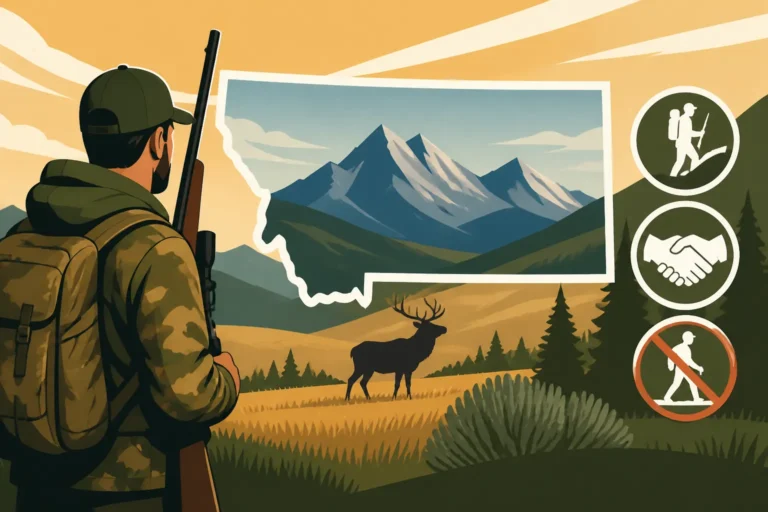
The high country of Montana is a magnet for many hunters, conjuring images of majestic elk bugling through crisp alpine air and massive mule deer bucks silhouetted against a setting sun. This region, encompassing much of Western and Southwestern Montana, is characterized by steep slopes, dense timber, rocky outcroppings, and high-elevation basins. Think of areas within the Beaverhead-Deerlodge National Forest or the Custer Gallatin National Forest. The air is thinner, the weather is more unpredictable, and the physical demands are significantly higher. Yet, for those willing to put in the work, the rewards—solitude, breathtaking views, and the pursuit of truly wild animals in their natural element—are unparalleled. It’s a place where every ridge gained feels like a victory and every track in the dirt tells a story.
The Vastness of the Plains
Venturing east from the mountains, Montana gradually transitions into its vast, open prairie lands. This "Big Sky" country is a different kind of wild, defined by rolling hills, coulees, scattered badlands, and enormous tracts of grass and sagebrush. Here, the scale is immense, often allowing you to see for miles in every direction. While it lacks the dramatic elevation changes of the mountains, the prairie presents its own set of challenges and opportunities. Eastern Montana, with its Block Management Areas and private ranchlands, is the quintessential prairie hunting ground. It's a landscape where stealth is found in subtle movements, and where the wind is a constant companion, either friend or foe. The hunting experience here is less about vertical endurance and more about patience, long-range observation, and understanding the nuances of cover in an open world.
High-Country Hunting: The Vertical Challenge
Hunting in Montana's high country is an exercise in endurance, mental fortitude, and precise execution. It's not a casual stroll; it's a demanding expedition into some of the continent's most challenging terrain. The vertical nature of the landscape dictates a completely different approach compared to hunting the plains, from how you move to how you find and pursue game.
Navigating Rugged Terrain
The mountains are relentless. You'll encounter steep inclines, boulder fields, dense timber thickets, and deep canyons. Every step requires attention and effort. Hunters often spend days packing deep into designated wilderness areas or remote national forest lands, establishing spike camps, or living out of a backpack. Understanding contour lines on a map and utilizing GPS systems like onX Hunt is critical for navigation, especially when elk push into the dark timber or bedding areas. It's not uncommon to gain and lose thousands of feet of elevation in a single day, traversing through heavy brush one moment and picking your way across a scree slope the next. Knowing How to Pack Into the Montana Backcountry effectively becomes paramount, as every ounce in your pack will feel exponentially heavier on a steep climb.
Spotting and Stalking in Elevation
Spotting game in the high country requires a keen eye and an understanding of how animals use terrain for cover, feed, and escape. While glassing is still important, especially for spotting animals on opposing slopes or in open pockets above timberline, much of the hunting occurs closer, in the timber, or in broken country. Stalking is often a slow, deliberate process, using terrain features like ridge lines, drainages, and timber patches to conceal your approach. Thermal currents play a huge role here; understanding how warm air rises in the morning and cool air descends in the evening can be the difference between busting a herd and getting within range. Patience is your best friend when attempting to close the distance on an animal that often has a significant advantage in elevation and cover.
Calling Strategies in Timber
One of the most exciting aspects of high-country elk hunting, especially during the rut, is the ability to use calling tactics. The broken topography and dense timber of the mountains allow elk vocalizations to carry, but also provide crucial cover for both hunter and hunted. Using bugles, cow calls, and even calf calls can effectively locate bulls, draw them closer, or stop them for a shot. However, it's not simply about making noise; it's about sounding realistic and understanding the elk's response. Often, bulls will hang up or circle downwind, forcing hunters to make quick, strategic decisions about their setup. Knowing How to Call Elk in Montana is a skill honed over many seasons, learning to adapt to the specific timber, wind, and elk behavior of the moment.
Prairie Hunting: The Big Sky Advantage
While the mountains challenge you vertically, the prairie challenges you horizontally. The sheer vastness of Eastern Montana's plains demands a different skill set, emphasizing long-range observation, intelligent use of subtle cover, and strategic patience. Don't let the lack of towering peaks fool you; the prairie offers its own unique and thrilling hunting experience.
The Art of Glassing Wide Open Spaces
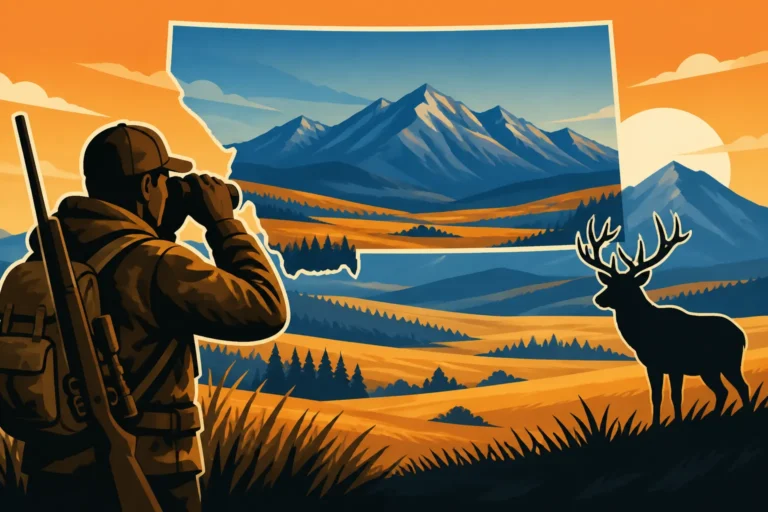
In contrast to the mountains, prairie hunting is often a game of optics. The ability to sit on a high point and systematically glass vast expanses for hours is fundamental. High-quality binoculars, spotting scopes, and tripods become your most important tools. From a single vantage point, you might pick apart miles of rolling hills, coulees, and distant sagebrush flats, searching for the tell-tale gleam of an antler, the distinct color of an antelope, or the dark patch of a bedded mule deer. Learning How to Glass Montana's Big Country effectively is a crucial skill, involving patient scanning techniques and understanding how light and shadows play across the landscape throughout the day. This is where a research platform like GoHunt can come in handy, providing data on herd movements or density to help you narrow down the best areas to focus your glassing efforts within a particular unit.
Utilizing Cover and Topography
Even though the prairie appears open, it's rich with subtle cover opportunities that savvy hunters learn to exploit. Coulees, river breaks, creek bottoms, and even small rises in topography become critical for concealing your approach. A successful prairie stalk often involves circuitous routes, sometimes covering significant distances, all to stay out of sight of an animal with an unparalleled vantage point. It might mean crawling on hands and knees for hundreds of yards to reach a small fold in the terrain, or waiting for hours for an animal to move into a position that allows a stalk. The wind, which can be brutal and incessant on the plains, is also a key factor in planning your approach, always ensuring you stay downwind of your quarry.
Waterhole and Decoy Tactics
For species like antelope and sometimes mule deer, waterholes can be absolute magnets, especially during dry periods. Setting up a ground blind near a crucial water source and patiently waiting for animals to come in can be a highly effective tactic on the prairie. This requires careful scouting to identify active water sources and understanding game movement patterns around them. Decoy strategies are also particularly effective for antelope in Montana, where their curious nature can be exploited. Setting up an antelope decoy in the open and hiding nearby can often draw a wary buck within shooting range, offering an exciting, up-close encounter. This is a specialized skill, and learning How to Decoy Antelope in Montana involves understanding the animal's natural curiosity and territorial instincts.
Key Differences in Game Species and Behavior
The shift in landscape from high-country to prairie brings with it a distinct change in the primary game species and their typical behavior. While there can be some overlap, certain animals are predominantly found in one environment over the other, and knowing this helps immensely in your preparation.
Elk and Mule Deer in the Mountains
The majestic elk is undoubtedly the king of the high country. They thrive in the rugged, timbered mountains, often preferring the solitude and security that steep terrain and dense cover provide. During the early archery season, you might find them in higher alpine basins, moving lower as hunting pressure mounts and snow begins to fall. Understanding Montana Elk Hunting Methods Explained is crucial for success here, as tactics range from calling during the rut to still-hunting dark timber in late season.
Mule deer also inhabit the mountainous regions, often using the same broken country as elk but with slightly different preferences. They are masters of using contour and cover, melting away into seemingly sparse terrain. In the high country, mule deer bucks often summer in high-elevation basins, moving down to more sheltered areas as winter approaches. Hunting them often involves extensive glassing of south-facing slopes and timber edges, especially during the general rifle season.
Antelope and Whitetail on the Plains
When you think of the open prairie, the first animal that often comes to mind is the swift and wary pronghorn antelope. These creatures are perfectly adapted to the vast, open expanses, possessing incredible eyesight and explosive speed. They are almost exclusively found on the plains, where they can utilize their natural advantages. Hunting Montana Antelope Hunting Guide primarily involves spot-and-stalk tactics across the open landscape, sometimes using decoys or sitting waterholes.
Whitetail deer, while present in some mountain river bottoms, are far more prevalent and often targeted in the prairie environment, especially along the numerous river systems and agricultural lands that crisscross Eastern and Central Montana. The Missouri Breaks, for example, is famous for its whitetail hunting. These deer stick to dense riparian corridors, creek bottoms, and thickets within the agricultural landscape, using the available cover for security. Hunting them often involves ambushing them near travel corridors or food sources, often from ground blinds or treestands.
Black Bear and Moose: Niche Habitats
Other species, like black bears and moose, also have specific habitat preferences that align more with one type of landscape. Black bears are primarily found in the timbered mountains, often in areas with thick brush, berry patches, and diverse vegetation. Spring bear hunting in Montana is popular, focusing on south-facing slopes where bears emerge to feed on fresh greens. Moose, while rarer to draw a tag for, are typically found in specific high-country drainage systems that offer willow bottoms, dense timber, and water sources, particularly in Southwestern Montana. Their specific habitat needs mean they are almost exclusively a high-country pursuit.
Essential Gear and Physical Demands
The significant differences between high-country and prairie hunting extend directly to your gear list and the physical conditioning required. Ignoring these distinctions can quickly lead to an uncomfortable, unproductive, or even dangerous hunt.
Mountain-Specific Pack and Footwear
High-country hunting is physically grueling. You'll be climbing steep grades, navigating rocky terrain, and potentially carrying heavy loads of meat out of remote areas. Therefore, your footwear is arguably the most critical piece of gear. You need sturdy, waterproof, high-ankled boots with excellent traction and support, designed for rugged mountain use. Brands like Kenetrek or Schnee's are popular choices among Montana hunters for their durability and performance. Similarly, a high-quality, comfortable backpack with a robust frame is essential, whether you're day hunting or doing an extended backcountry trip. A pack like those from Mystery Ranch, known for their load-hauling capabilities, becomes a partner in your hunt. For a deeper dive into preparation, consider reading our guide on Best Boots for Montana Elk Hunting and Best Backpack for a Montana Elk Hunt. Lightweight shelter, a reliable water filtration system, and durable, layered clothing are also non-negotiable for adapting to the unpredictable mountain weather, which can shift from sunny and warm to snowing in a matter of hours.
Optics and Long-Range Shooting for the Plains
While good optics are valuable everywhere, they are paramount on the prairie. You'll spend an immense amount of time behind glass, making high-quality binoculars (10×42 or 12×50) and a spotting scope (20-60x or 25-75x) essential investments. A sturdy tripod for both is also a must for steady, fatigue-free glassing. Brands like Swarovski, Zeiss, or Vortex offer excellent performance crucial for picking out game at extreme distances. Beyond optics, the open nature of the prairie often means longer shots. Practicing long-range shooting with your rifle and understanding external ballistics becomes incredibly important. You need to be proficient and confident with your chosen setup, often practicing out to 400-500 yards or more, depending on your ethical limits and equipment. You can find more detail on this in our guide to Best Optics for Montana Big Game.
Fitness Requirements for Each Terrain
The physical demands are starkly different. High-country hunting requires excellent cardiovascular fitness, strong legs, and a resilient mindset. You should train by hiking with a weighted pack, doing steep inclines, and focusing on leg and core strength. Being able to hike several miles daily with elevation gains, potentially with a heavy pack on the way out, is a minimum requirement. This level of fitness is key for a successful and safe Montana Backcountry Hunting Guide.
Prairie hunting, while less vertically demanding, still requires good stamina for walking long distances, often through uneven terrain. The physical toll comes from miles of walking, often in soft dirt or over rolling hills, combined with the mental endurance needed for hours of glassing and careful stalking. While you might not climb mountains, you'll still cover significant ground, and any stalk can turn into a quick sprint if an animal decides to move. Both require being in good shape, but the type of fitness differs significantly.
Strategic Planning and E-Scouting
Regardless of whether you choose the high country or the prairie, thorough preparation is the bedrock of a successful hunt. Modern technology has revolutionized the planning process, allowing hunters to virtually scout and strategize long before setting foot in the field.
Interpreting Maps and Public Land Data
Before you even leave your living room, you should be deep into maps. Digital mapping applications like onX Hunt are invaluable tools for both mountain and prairie hunters. They allow you to study terrain features, identify public versus private land boundaries, locate water sources, and mark potential bedding and feeding areas. In the mountains, you'll be looking for access points, timbered north-facing slopes where elk often bed, and the easiest (or sometimes hardest) routes between ridges. For prairie hunting, you'll meticulously analyze contour lines for subtle cover, identify potential travel corridors in river breaks, and pinpoint crucial water sources. Using these tools to understand Montana Public Land Hunting Guide is essential for avoiding trespass issues and maximizing your time in legal hunting areas. These platforms also help you to understand the various land designations, from BLM and National Forest to State Trust Lands and Block Management Areas.
Weather Considerations and Contingencies
Montana weather is notoriously unpredictable, especially in the mountains. A warm, sunny morning can quickly give way to a whiteout blizzard in the afternoon, even in September. Hunters must be prepared for extreme temperature swings, high winds, rain, and snow. Always carry emergency shelter, extra layers of clothing, and enough food and water for unexpected delays. On the prairie, high winds are a constant factor, impacting scent control, shooting accuracy, and animal behavior. Dust storms can reduce visibility, and sudden thunderstorms can turn dirt roads into impassable mud pits. Having a plan B, and even a plan C, for adverse weather conditions is not just smart; it's essential for safety and success. Checking long-range forecasts is a good start, but packing for all four seasons is often the best strategy in Montana.
Making the Final Decision
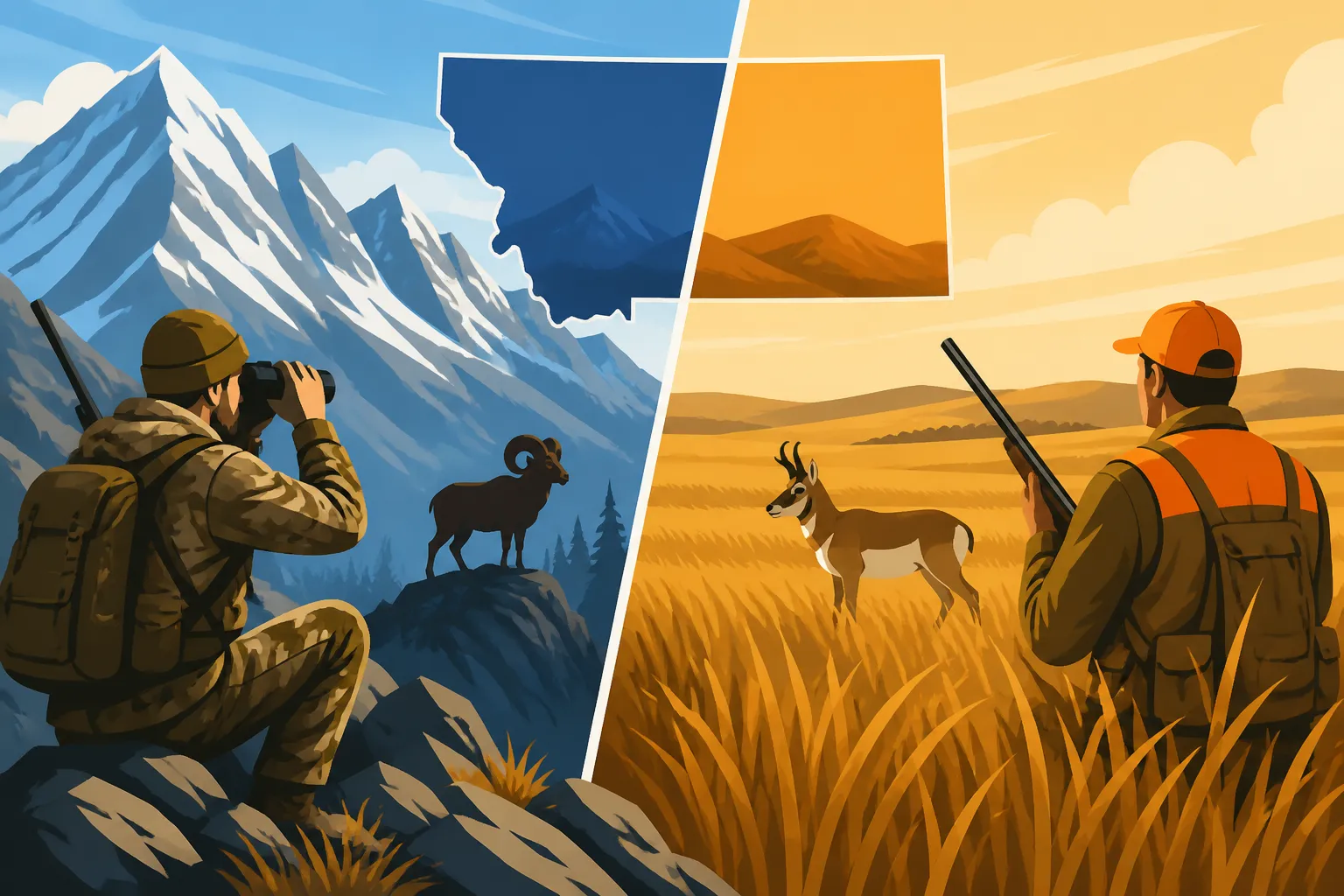
Choosing between high-country and prairie hunting ultimately comes down to a few personal factors: your physical conditioning, your preferred hunting style, and the species you're most keen to pursue. If you thrive on grueling climbs, solitude, and the potential for a bugling bull, the mountains might be your calling. If you prefer long-range glassing, strategic stalks across vast open spaces, and the chance to chase antelope or plains mule deer, the prairie might offer your ideal adventure. It's not about one being "better" than the other; it's about matching the terrain to your strengths and desires. Many hunters choose to experience both over their lifetime, finding unique rewards in each. To make an informed decision about where to go, extensively using resources to How to E-Scout Montana Hunting Units will be critical.
To help visualize the differences, here's a quick comparison:
| Feature | High-Country Hunting | Prairie Hunting |
|---|---|---|
| Terrain | Steep mountains, dense timber, rocky slopes, alpine basins | Rolling hills, vast grasslands, coulees, river breaks |
| Primary Game | Elk, mountain mule deer, black bear, moose | Antelope, whitetail deer, plains mule deer |
| Tactics | Spot-and-stalk, still-hunting, calling, thermals | Long-range glassing, spot-and-stalk, decoys, waterholes |
| Visibility | Limited by timber, broken country | Extensive, miles of open sightlines |
| Physical Demands | Very high: steep climbs, heavy packs, endurance | Moderate to high: long walks, crawling, stamina |
| Key Gear | Sturdy boots, framed backpack, layered clothing, GPS | High-power optics, tripod, long-range rifle, bipod |
| Challenges | Elevation, dense cover, unpredictable weather, pack-out | Vastness, wind, limited cover, long shots |
| Solitude | Generally high in remote areas | Can be high, but roads and fences more common |
Ultimately, Montana offers incredible hunting experiences across both its high country and its prairies. Whether you seek the vertical challenge of mountain elk or the wide-open expanse of an antelope stalk, understanding these distinct environments will help you plan a more effective, enjoyable, and safe hunt.
Disclaimer
Hunting is an inherently dangerous activity. This guide is for informational purposes only and does not constitute professional advice. Always prioritize safety, follow all local, state, and federal regulations, and be prepared for potential hazards. Consult official Montana Fish, Wildlife & Parks resources for the most current rules and requirements.