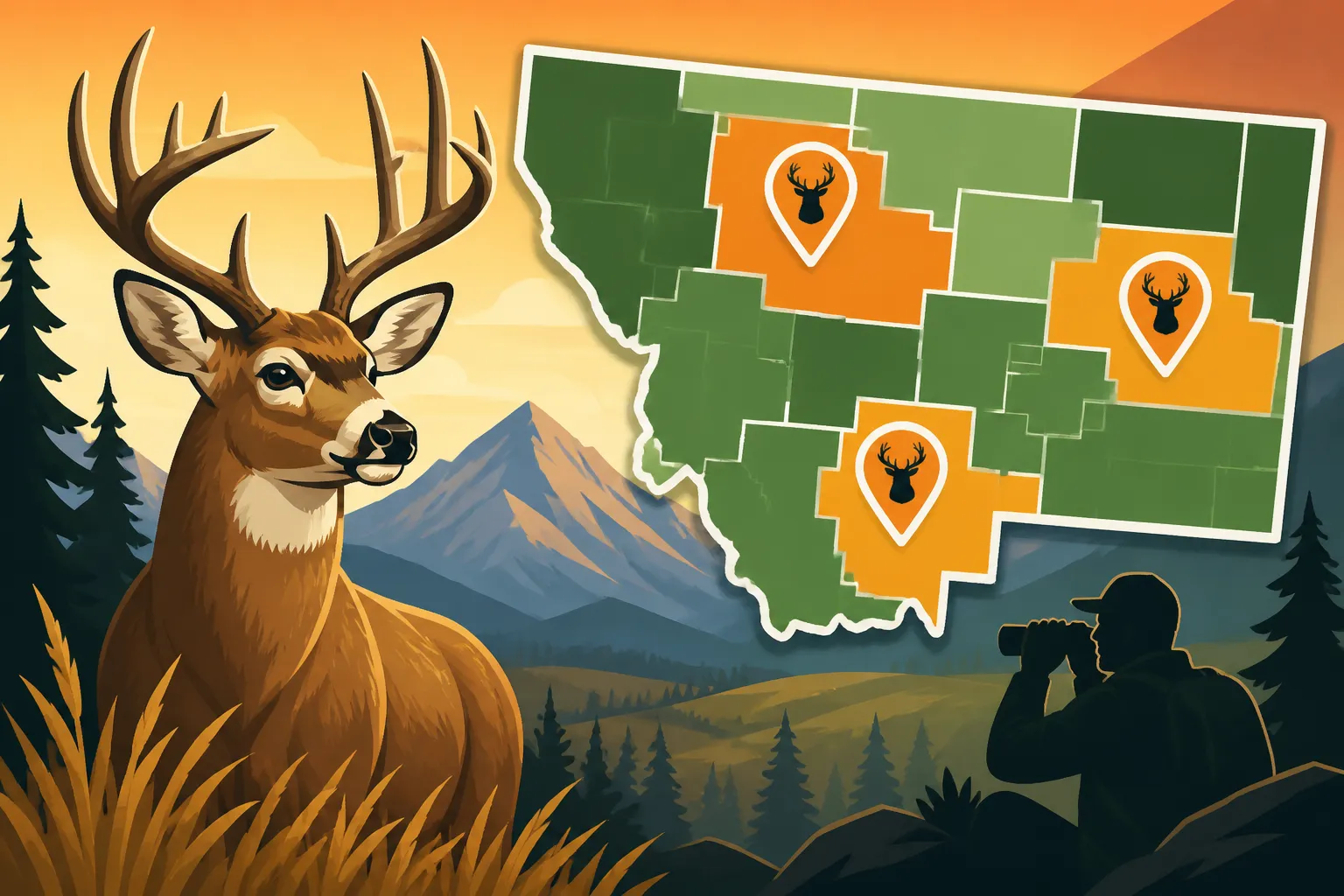
Best Block Management Areas for Deer
Finding great deer hunting spots in Montana can feel like a daunting task, especially with so much private land and the ever-present challenge of drawing tags. Many hunters, both resident and nonresident, struggle to locate accessible, productive areas that aren't already hammered by pressure. That's where Montana's Block Management Program (BMP) truly shines, opening up private lands to public hunting and offering some incredible opportunities for deer. This guide will dive deep into how to find and effectively hunt the best Block Management Areas for deer, helping you unlock more success in the field.
Understanding Montana's Block Management Program for Deer
The Block Management Program (BMP) is a cooperative effort between Montana Fish, Wildlife & Parks (FWP) and private landowners. It's designed to provide public hunting access to private lands, which makes it an absolute game-changer for deer hunters looking to expand their options beyond crowded public ground. These areas can vary wildly in size, habitat, and the rules governing access, but they consistently offer some of the most overlooked deer hunting opportunities in the state.
What Makes BMAs Ideal for Deer Hunters
BMAs are often a fantastic choice for deer hunters because they provide a unique blend of habitat types that deer absolutely thrive in. Unlike vast expanses of uniform public land, many BMAs consist of a mosaic of agricultural fields, river bottom corridors, pockets of timber, and rugged coulees. This diversity provides deer with abundant food sources, excellent cover, and crucial travel routes, making them magnets for both mule deer and whitetails.
Think about it: a typical BMA might feature a stubble field that deer hit hard in the evenings, transitioning into a thick river bottom with willows and cottonwoods where whitetails bed down during the day, then rising into sagebrush-covered hills with some scattered juniper for mule deer. This variety means deer are often present in good numbers and have everything they need to survive and grow. Plus, because access is managed, these areas often experience less concentrated hunter pressure than readily accessible public lands, which can make for a more natural and productive hunting experience. It's like finding a hidden gem where the deer haven't been pushed out of their normal patterns quite as much.
Navigating Block Management Rules and Regulations
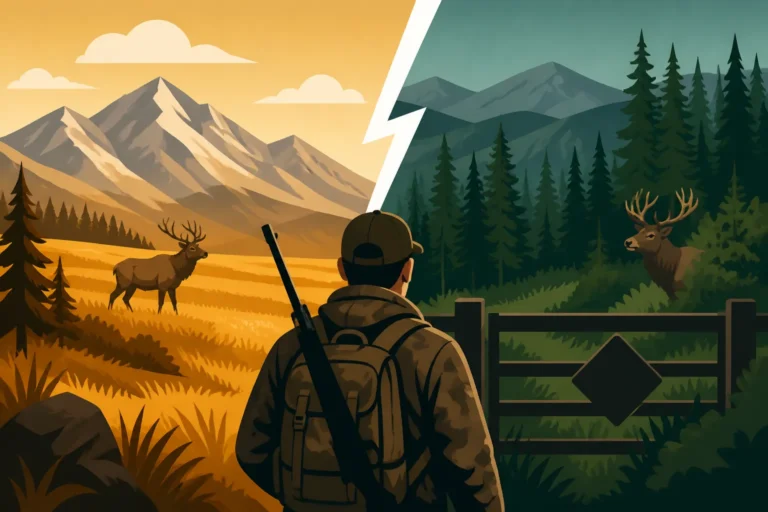
While the opportunity is immense, Block Management Areas come with specific rules, and understanding them is paramount to a successful and ethical hunt. These regulations are set by the individual landowner in cooperation with FWP, and they can vary significantly from one BMA to another. The rules are in place to manage hunter numbers, protect the landowner's property, and ensure a quality experience for everyone.
The most common rule you'll encounter is the sign-in procedure. Many BMAs require you to sign in at a designated box, usually at the entrance, before you begin your hunt. This might involve filling out a card with your name, license number, and the date, then returning it when you leave. Some BMAs use a reservation system, especially for popular areas or during peak seasons, where you might need to call ahead or apply online to secure a hunting slot. It's crucial to check the specific access rules for each BMA before you even leave your driveway. You can find this information on the FWP website, often through the "MyFWP" portal, or by contacting the local FWP office.
Other common regulations include:
- Specific Hunting Dates: Not all BMAs are open for the entire general season. Some might open later, close earlier, or have specific days of the week they are open.
- Species Allowed: While many BMAs are open for deer, some might be restricted to certain species or have antler point restrictions.
- Vehicle Restrictions: Many BMAs are walk-in only, or have specific parking areas. Respecting these boundaries is essential for maintaining landowner relations.
- Number of Hunters: Some BMAs limit the number of hunters allowed on the property at any given time to reduce pressure and enhance safety.
Failing to follow these rules can result in losing your hunting privileges for that BMA, or worse, jeopardize the entire program for future hunters. Always carry a copy of the BMA map and rules with you, which you can usually print from the FWP website, or better yet, download to your onX Hunt app for easy reference in the field. This diligent approach ensures you're hunting legally and respectfully, which helps keep these valuable private lands open for everyone. For a deeper dive into the program, you might want to check out our comprehensive guide on Montana Block Management Areas Explained.
Key Regions and Tactics for BMA Deer Hunting
Montana is a vast state with diverse landscapes, and the types of deer and BMAs you encounter will vary significantly depending on the region. Understanding these regional differences is key to identifying the best Block Management Areas for deer and tailoring your hunting strategy accordingly.
Eastern Montana's Whitetail and Mule Deer Hotbeds
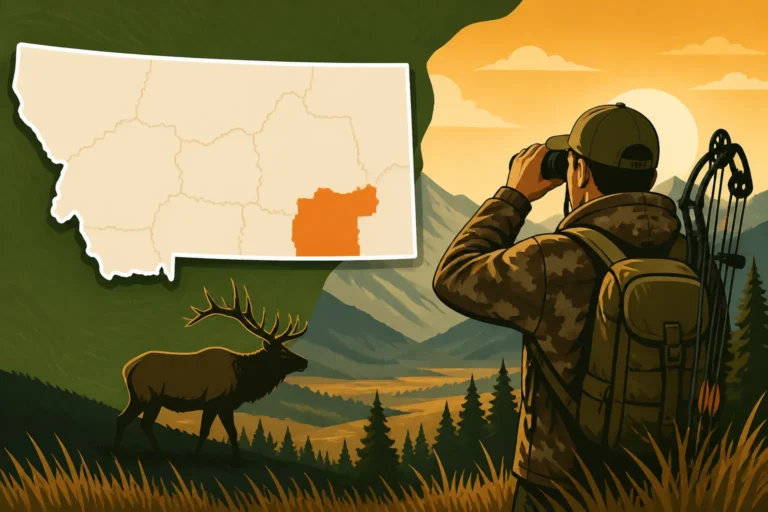
Eastern Montana is undoubtedly the heartland for many of the state's most productive deer BMAs. The sprawling plains, interspersed with breaks, badlands, and fertile river bottoms, create an ideal environment for both robust whitetail and mule deer populations. When you're looking for deer in Eastern Montana, think about areas near towns like Miles City, Glendive, Sidney, Lewistown, and throughout the Missouri Breaks region. These areas often have extensive agricultural operations that feed deer, coupled with the rugged cover they need to escape pressure.
For whitetail deer, focus on BMAs that encompass river bottoms, creek drainages, and irrigated fields. Whitetails are often found in the dense cover along the Yellowstone, Missouri, and Milk Rivers, as well as their countless tributaries. These riparian corridors provide food, water, and thick cover, allowing whitetails to thrive. Look for properties with heavy brush, cottonwood groves, and willow thickets. Your tactic here often involves still-hunting slowly through these dense areas, paying close attention to wind direction, or setting up on pinch points where deer travel between feeding and bedding areas. Our article on How to Hunt Whitetail in Montana River Bottoms offers more specific tactics for these habitats.
Mule deer, on the other hand, will typically be found in the more open, broken country: sagebrush flats, coulees, draws, and the badlands formations. These areas offer glassing opportunities where you can spend time scanning vast landscapes for deer. BMAs in the Custer Gallatin National Forest perimeter or along the vast expanses of BLM land often integrate private ranches that offer phenomenal mule deer habitat. Spot-and-stalk is a classic approach here. Use good optics to locate deer from a distance, then plan your approach to stay out of sight and get within shooting range. Using onX Hunt can be invaluable for identifying prime glassing knobs and planning your stalk routes to avoid exposing yourself. Our Montana Mule Deer Hunting Guide has more detailed strategies.
Many of these Eastern Montana BMAs will be "Type 1" areas, meaning you just sign in at the box. However, always double-check, as some popular areas might transition to a reservation system. You can often find a current list of BMAs and their specific rules on the FWP website or through resources like GoHunt when researching hunt units.
Central and Western Montana Opportunities
While Eastern Montana is a powerhouse for BMA deer hunting, don't overlook the opportunities in Central and Western Montana. These regions offer a different kind of challenge and often cater to hunters looking for a mountain experience with an added layer of private land access. Here, BMAs tend to be smaller and might be located on the fringes of larger mountain ranges, in valleys, or near agricultural pockets surrounded by national forests.
In Central Montana, areas around the Judith Basin, the Little Belt Mountains, or the Snowy Mountains might offer BMAs that blend timbered slopes with agricultural bottomlands. Here, you'll often find a mix of whitetail and mule deer, depending on the specific habitat. Whitetails might stick to the thicker draws and creek bottoms, while mule deer could be higher on the slopes or out in the open sage. These areas can be fantastic for early archery season or during the general rifle season when deer are moving between cover and food. Our guide on Montana General Rifle Season Dates can help you plan.
Western Montana BMAs, typically around cities like Missoula, Kalispell, or Helena, are less common for large-scale deer operations but can still offer hidden gems. These might be smaller parcels of private land within a predominantly public landscape, providing critical winter range or travel corridors for deer. Look for BMAs near river valleys like the Bitterroot or Flathead, where agricultural fields meet timbered mountainsides. Here, the hunting can be challenging but rewarding, often requiring more active scouting and understanding of local deer movement patterns. Hunting in these areas might feel more like traditional public land hunting, but with the added benefit of reduced pressure due to controlled access. Remember, onX Hunt will be your best friend here, showing you exactly where the BMA boundaries lie relative to the surrounding public land.
Scouting and Strategy for Success in Deer BMAs
Even with prime habitat and managed access, successful BMA deer hunting doesn't just happen by chance. It requires diligent scouting, smart planning, and the ability to adapt your strategy once you're in the field. The good news is that modern tools make much of the pre-season work incredibly efficient.
Pre-Season Digital Scouting with onX Hunt and GoHunt
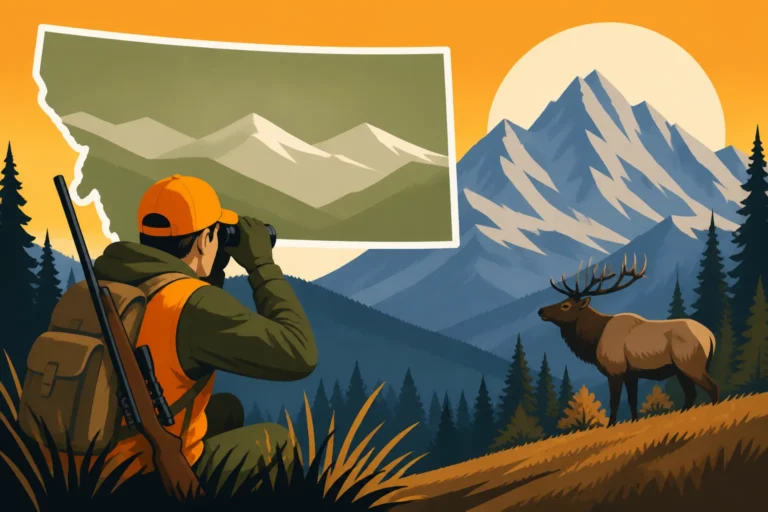
Before you ever set foot on a BMA, you should be doing extensive digital scouting. This is where tools like onX Hunt and GoHunt become absolutely indispensable. Forget guessing; these apps give you an almost unfair advantage by putting detailed topographic, satellite, and land ownership maps right in your pocket.
Here’s how to leverage them for deer BMAs:
- Identify BMAs: Start by using the FWP website or the
GoHuntplatform to pinpoint potential Block Management Areas in the regions you're interested in.GoHuntoften provides great information on draw odds and unit breakdowns, which can indirectly lead you to areas with healthy deer populations. - Analyze Habitat: Once you've found a BMA, switch to
onX Hunt. Zoom in on the property. Look for features that scream "deer habitat."- Water Sources: Rivers, creeks, ponds, or even irrigation ditches are crucial. Deer need water, and these areas are natural travel corridors.
- Cover: Identify timber patches, dense brush, willow thickets, and steep, broken terrain (coulees, badlands). These are bedding areas and escape routes.
- Food Sources: Locate agricultural fields (alfalfa, corn, wheat stubble), clear-cuts that might be regenerating with browse, or areas with abundant natural forage.
- Topography: Look for saddles, ridges, benches, and pinch points that funnel deer movement. These are natural ambush points.
- Identify Access Points & Boundaries:
onX Huntclearly delineates BMA boundaries and property lines. This is critical for staying legal and knowing exactly where you can and cannot hunt. Mark parking areas and official access points. Also, consider how to avoid common pressure points where other hunters might enter. - Create Waypoints and Routes: Mark potential glassing points, bedding areas, feeding zones, and travel corridors as waypoints. Use the route feature to plan your ingress and egress, especially for pre-dawn hikes. This detailed planning will save you valuable time and effort in the field.
By spending hours behind your screen with onX Hunt and doing your research with GoHunt, you can arrive at the BMA with a solid plan, understanding the terrain, and knowing where deer are most likely to be. This eliminates aimless wandering and allows you to hunt more efficiently. You can learn more about this in our guide on How to E-Scout Montana Districts.
On-the-Ground Scouting and Adaptability
Digital scouting is a powerful starting point, but nothing replaces boots-on-the-ground scouting, especially for deer. If you can, visit the BMA a few weeks or days before the season opens. This allows you to verify your e-scouting observations and discover fresh sign.
When you're actually walking the property:
- Look for Fresh Sign: Focus on rubs, scrapes, fresh tracks, and droppings. These tell you where deer are currently active. Distinguish between old and new sign.
- Identify Bedding Areas: Deer often bed on secluded benches, in thickets, or on south-facing slopes in cold weather. Look for depressions in the grass or under trees where deer have been lying.
- Find Natural Funnels: These are areas where the topography or cover forces deer to move through a narrow corridor. A saddle between two hills, a strip of timber between two fields, or a narrow crossing point on a creek can be excellent stand or ambush locations.
- Observe During Different Times: If possible, observe the area during early morning and late evening to see actual deer movement patterns. Where are they entering fields? Where are they exiting timber?
- Assess Hunter Pressure: While BMAs generally have less pressure, some can still be popular. Look for signs of other hunters (trucks, ATV tracks, old footprints). If an area seems heavily used, be prepared to adjust your strategy or go deeper than others are willing to. Our article on How to Beat the Crowds on Montana Public Land offers some transferable advice.
Adaptability is your secret weapon when hunting BMAs. Deer patterns can change overnight due to weather, crop harvest, or hunter pressure. Be willing to abandon your initial plan if the deer aren't there or if the sign is old. If a strong cold front moves in, deer might move to sunnier, south-facing slopes. If a crop field is suddenly harvested, their feeding patterns will shift. A deer hunter who can observe, learn, and adjust quickly will consistently find more success.
Maximizing Your Chances: Gear and Practical Tips
A successful deer hunt in a BMA isn't just about finding the right spot; it's also about being properly equipped and conducting yourself ethically. The right gear makes your hunt more comfortable and effective, while ethical conduct ensures the Block Management Program continues to thrive.
Essential Gear for BMA Deer Hunting
Montana weather can be notoriously unpredictable, and deer hunting often involves covering varied terrain. Having the right gear isn't a luxury; it's a necessity.
- Optics: A good pair of binoculars (10×42 is a versatile choice) is non-negotiable, especially for mule deer hunting in open country. A spotting scope can also be incredibly useful for long-range glassing. Quality optics allow you to pick apart distant hillsides and identify deer long before they know you're there. For Western Montana's dense timber, however, you might rely more on your ears and stealth. Learn more about Best Optics for Montana Big Game.
- Footwear: Invest in comfortable, supportive, and waterproof hiking boots. You'll be covering miles, potentially through wet grass, mud, or snow, and bad boots can ruin a hunt faster than anything.
- Clothing: Dress in layers. Montana mornings can be frigid, but midday can warm up considerably, especially if you're hiking. Choose moisture-wicking base layers, insulating mid-layers, and a waterproof/windproof outer shell. Camouflage isn't as critical as breaking up your outline and choosing earth-toned colors.
- Backpack: A comfortable daypack is essential for carrying water, snacks, extra layers, game processing tools, a first-aid kit, and your BMA map/rules. If you're hunting in a remote BMA, consider a larger pack capable of carrying out meat.
- Navigation Tools: Your
onX Huntapp on your phone, coupled with a backup battery bank, is your primary navigation tool. Consider carrying a physical map and compass as a failsafe, especially in areas with poor cell service. - Game Processing Tools: A sharp knife, bone saw, game bags, and latex gloves are crucial. You need to be prepared to field dress your deer quickly and efficiently, especially in warmer early season conditions.
- Sign-In Supplies: Always carry a pen and a small notepad for signing in at BMA boxes.
Ethical Considerations and Respecting Landowners
The Block Management Program exists because private landowners are willing to open their gates. It's a privilege, not a right, and maintaining this access depends entirely on hunters demonstrating respect and ethical conduct.
- Follow All Rules, No Exceptions: This means signing in and out, adhering to all access dates, species limitations, and vehicle rules. Don't push boundaries or assume flexibility.
- Respect Property: Stay within the marked BMA boundaries. Do not trespass on adjacent private land. Close all gates you open. Do not litter—pack out everything you pack in, and then some. Avoid driving off-road unless explicitly permitted.
- Be a Good Neighbor: If you encounter a landowner or ranch hand, be courteous and thank them for the opportunity. Their willingness to participate in the program is invaluable.
- Leave No Trace: Practice Leave No Trace principles. Avoid damaging fences, crops, or infrastructure.
- Report Violations: If you witness unethical behavior or rule violations by other hunters, report it to FWP. This helps protect the integrity of the program for everyone.
- Public Perception: Every hunter's actions reflect on the hunting community as a whole. By being a responsible and ethical hunter in a BMA, you contribute to a positive public image and help ensure these opportunities remain available for future generations.
By adhering to these principles, you not only improve your chances of a successful and fulfilling hunt but also play a vital role in preserving and expanding public hunting access on private lands in Montana. This collaborative spirit is what makes the Block Management Program such a unique and valuable asset for deer hunters. For more general advice on utilizing these opportunities, read our guide on How to Use Block Management for DIY Hunts.
Here's a quick overview of some hypothetical BMA characteristics for deer:
| Region | Primary Deer Species | Key Habitat Features | Typical Access Method | Hunting Style |
|---|---|---|---|---|
| Eastern Plains | Mule Deer, Whitetail | Agricultural Fields, Coulees, Breaks | Sign-in (Type 1) | Spot-and-stalk, Still-hunting |
| River Bottoms | Whitetail | Thick Willows, Cottonwoods, Cropland | Sign-in (Type 1) | Still-hunting, Ambush points |
| Central Foothills | Mule Deer, Whitetail | Timber Pockets, Sagebrush, Pastures | Sign-in or Reservation | Glassing, Short stalks, Ground blinds |
| Western Valleys | Whitetail | Riverine Habitat, Forest Edges | Sign-in or Reservation | Stealthy still-hunting, Stand hunting |
Disclaimer
Hunting is an inherently risky activity. Always prioritize safety, follow all Montana Fish, Wildlife & Parks regulations, and ensure you have the appropriate licenses and tags. This guide is for informational purposes only and should not replace official FWP resources or professional guidance. Rules and conditions for Block Management Areas can change annually, so always verify current regulations before planning your hunt.