Eastern Montana Plains Hunting Access
Hunting the vast, open expanses of Eastern Montana's plains can feel like staring at a blank canvas with a thousand possibilities and just as many dead ends. It’s a completely different beast than chasing elk in the mountains, and many hunters, especially those new to the region or state, find themselves scratching their heads trying to figure out where they can actually put boots on the ground. The sheer amount of ground, coupled with the checkerboard of public and private ownership, can be incredibly daunting. This guide is here to break down the complexities, offering clear, actionable strategies to help you navigate and unlock the incredible hunting access available across the Eastern Montana plains.
Understanding the Landscape of Eastern Montana's Plains Hunting
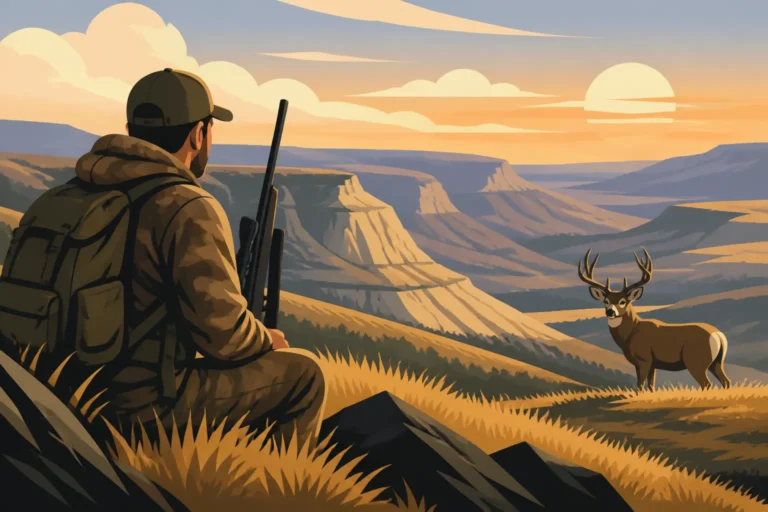
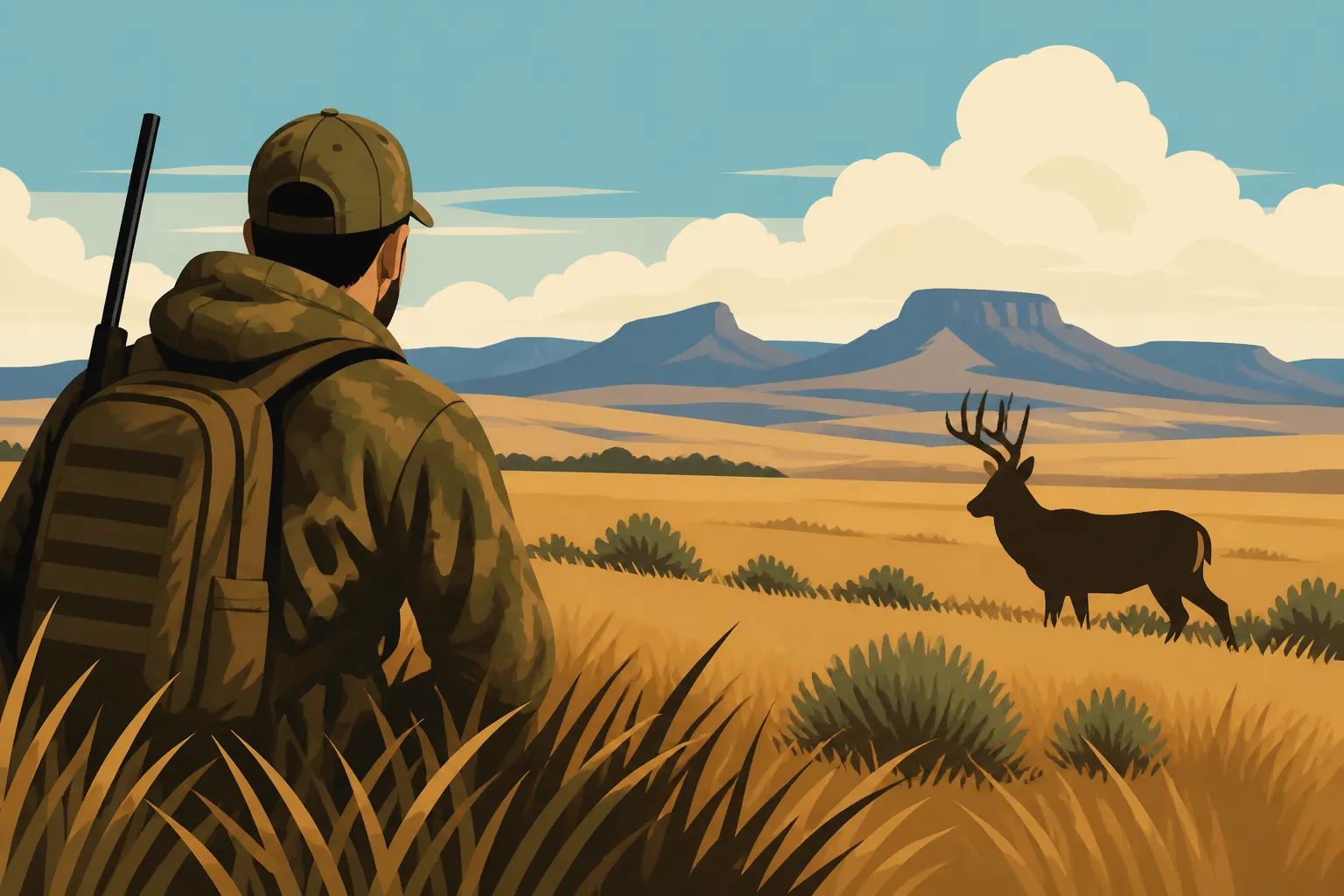
When you picture hunting in Montana, most folks immediately think of towering peaks, dense timber, and vast wilderness. While that's certainly a huge part of the state's hunting identity, Eastern Montana offers a completely different, equally rewarding, and often overlooked experience. It’s a land of rolling grasslands, badlands, coulees, and river bottoms, presenting its own unique set of challenges and opportunities for hunters.
The Unique Challenges of Plains Hunting
The plains aren't just flat, empty spaces. They are incredibly dynamic, shaped by wind, water, and vast distances. One of the biggest hurdles for hunters is the sheer scale. You can literally see for miles, which sounds great for spotting game, but it also means game can see you for miles. Cover is often sparse, making traditional stalking difficult and demanding a different kind of stealth. You're less likely to be navigating dense forests and more likely to be crawling through low sagebrush or using subtle changes in topography to approach an animal.
Another major challenge is the land ownership mosaic. Eastern Montana, especially, is a patchwork of private ranches, Bureau of Land Management (BLM) ground, State Trust Lands, and a smattering of smaller public parcels. Without proper planning and mapping, it's incredibly easy to inadvertently trespass, which is a sure-fire way to ruin a hunt and sour landowner relations. The remoteness of many areas also means services are few and far between, requiring meticulous preparation for everything from vehicle maintenance to emergency supplies. The weather, too, can be extreme, with scorching summer days, brutal winter winds, and sudden, intense storms.
Primary Game Species in Eastern Montana
While the mountains draw hunters for elk and mule deer, the Eastern Montana plains are truly the kingdom of the pronghorn antelope, alongside thriving populations of mule deer and whitetail deer.
Antelope are undoubtedly the iconic big game species of the plains. They are built for speed and survival in this open country, offering incredibly exciting spot-and-stalk opportunities. You'll find them scattered across the vast grasslands, often in herds, and their keen eyesight and ability to cover ground quickly make them a challenging and rewarding pursuit. If you're looking for a thrilling chase, hunting antelope in Montana is a quintessential plains experience.
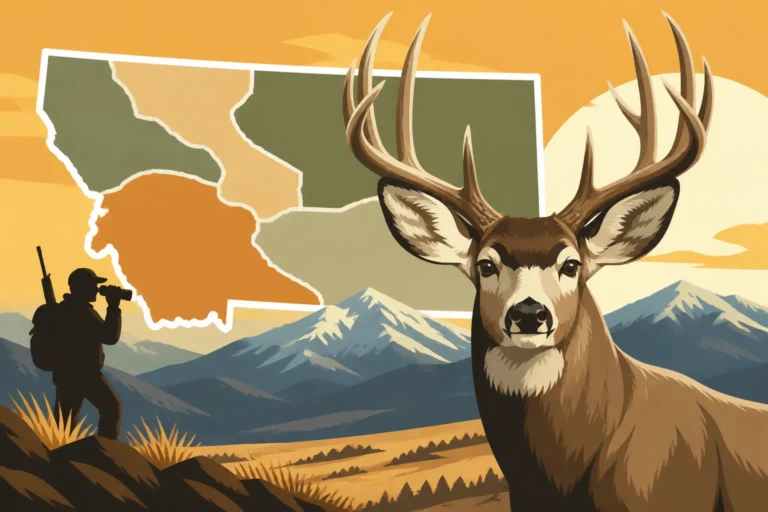
Mule deer are also abundant, particularly in areas with more broken terrain, coulees, and river breaks. These deer thrive where there's a mix of cover and feed, using the varied landscape to their advantage. Spotting a big plains mule deer buck silhouetted against a sunrise is a memory that sticks with you. They often blend seamlessly into the sagebrush and dry washes, requiring sharp optics and patience.
Whitetail deer, while often associated with timbered river bottoms and agricultural areas, are also present throughout the eastern plains, especially near water sources like the Yellowstone or Missouri Rivers and their tributaries. They tend to stick to the brushy draws and riparian zones, offering a different hunting challenge than their mule deer cousins. A well-placed treestand or ground blind near a known travel corridor can be deadly for whitetails here. Beyond big game, these plains also offer fantastic opportunities for upland birds like pheasants, sharp-tailed grouse, and Hungarian partridge, as well as waterfowl along the major river systems.
Navigating Public Land Opportunities
Public land is the lifeblood of many hunting seasons in Montana, especially for those who cherish the do-it-yourself spirit. Eastern Montana offers significant public acreage, but it’s often fragmented and requires diligence to identify and access. Understanding the different types of public land is crucial for a successful hunt. For a broader overview, check out our guide on Montana Public Land Hunting Guide.
Bureau of Land Management BLM and State Trust Lands
The Bureau of Land Management (BLM) manages vast tracts of land across Eastern Montana, characterized by rolling hills, coulees, and rangeland. This land is generally open to public hunting unless specifically signed otherwise, making it a prime target for those looking to explore. The challenge with BLM land is that it often doesn't come in neat, contiguous blocks. It can be interspersed with private property, creating a checkerboard pattern that demands careful navigation. You might drive for miles along a county road, seeing nothing but private pastures, only to have a small block of BLM land suddenly appear, offering a hidden gem.
Similarly, Montana's State Trust Lands are also open to public access for hunting, provided you have a valid state hunting license and a Conservation License. These lands were granted to the state to generate revenue for public institutions, primarily schools, through various uses including grazing, timber, and recreation. Like BLM, State Trust Lands can be found in scattered parcels, sometimes completely surrounded by private ground (landlocked). Accessing these landlocked parcels legally requires permission from the surrounding private landowners, or finding a public easement. Mapping tools are absolutely indispensable for identifying these parcels and understanding their access points. For a deeper dive into these specific types of access, you can read our guide on Montana State Trust Land Hunting.
National Grasslands and Wildlife Refuges
Beyond BLM and State Trust Lands, Eastern Montana is home to significant portions of National Grasslands, managed by the U.S. Forest Service, primarily the Custer Gallatin National Forest. These grasslands, like the Charles M. Russell National Wildlife Refuge within the Fort Peck area, offer vast, open spaces that are often less fragmented than typical BLM land. They provide crucial habitat for a variety of game, including large herds of mule deer and antelope, and are popular destinations for hunters seeking a true plains experience.
Hunting regulations on National Grasslands generally align with state regulations, but it’s always wise to double-check for specific closures or restrictions that might apply to certain units or areas. Wildlife Refuges, however, often have their own specific regulations and seasons that can differ significantly from statewide rules. For example, some refuges might have limited entry draws, specific hunting dates, or even specific weapon restrictions. Always consult the individual refuge's website or contact their office directly before planning a hunt. These areas often receive less pressure than popular mountain districts, but they still require careful planning to access and hunt effectively.
Unlocking Access Through Montana's Block Management Program
Montana's Block Management Program (BMA) is a true gem for public land hunters, especially in the eastern plains where private land dominates the landscape. It's a cooperative program between Montana Fish, Wildlife & Parks (FWP) and private landowners, opening up thousands of acres of private and sometimes previously inaccessible public land for hunting. This program is a game-changer for anyone trying to figure out Eastern Montana Plains Hunting Access.
How Block Management Areas BMAs Work
In simple terms, FWP enters into agreements with private landowners to allow public hunting on their property for designated periods during hunting season. In exchange, landowners receive compensation, assistance with weed control, fencing, and signs, and often help managing hunter access to reduce conflicts or over-harvest. These areas are called Block Management Areas (BMAs).
The beauty of BMAs is that they provide legal access to land that would otherwise be off-limits, often for species like antelope, mule deer, and upland birds that thrive in these private agricultural and rangeland settings. Access rules vary greatly from one BMA to another. Some are "Type 1" areas, where you can simply sign in at a designated box at the property boundary and begin hunting. Others are "Type 2" areas, which might require you to contact the landowner or an FWP office in advance to reserve a hunting spot or get a permission slip. It’s absolutely critical to understand the specific rules for each BMA you plan to hunt, as violating these rules can jeopardize the entire program. Each BMA will have a map and a list of rules detailing what species can be hunted, allowed methods, parking locations, and contact information. For a full breakdown, check out Montana Block Management Program Explained.
Tips for Utilizing Block Management Effectively
Making the most of Block Management requires a bit of homework and flexibility. First and foremost, you need to get your hands on the BMA maps and regulations. FWP releases these annually, typically in late summer, and they are available online or at FWP offices. Don’t wait until the last minute! Print them out, study them, and upload them to your mapping app. Pay close attention to the open dates, available species, and especially the access rules (Type 1 vs. Type 2).
Secondly, be prepared to adapt. Some of the most popular BMAs, especially for trophy antelope or mule deer, can fill up quickly, particularly on opening weekends. If you’re dealing with a Type 2 BMA requiring reservations, call well in advance. If it’s a sign-in area, consider hunting midweek or later in the season to avoid crowds. I've often found success by looking for smaller, less-known BMAs that might be a bit more off the beaten path. These often hold just as much game but see significantly less pressure. Always respect the landowner's property and their rules. Close gates, don't litter, and drive only on designated roads. A good relationship with landowners is key to the program's longevity. Remember that these are private citizens opening their land, and treating their property with respect ensures that access continues for all hunters.
| BMA Type | Access Method | Typical Hunter Pressure | Planning Required | Pros | Cons |
|---|---|---|---|---|---|
| Type 1 | Sign-in box at site | Moderate to High | Minimal (just get the map) | Easy access, no pre-planning with landowner | Can be crowded, first-come, first-served |
| Type 2 | Pre-arranged via phone or online reservation | Low to Moderate | Significant (contact landowner/FWP) | Less crowded, potentially better quality animals | Requires advance planning, limited daily spots |
Strategies for Gaining Private Land Access
While public lands and Block Management Areas are fantastic resources, the reality of Eastern Montana is that a significant portion of prime hunting ground is privately owned. Gaining access to these lands can unlock incredible opportunities, but it requires a respectful and thoughtful approach. It’s not just about knocking on doors; it’s about building relationships.
Respectful Approaches to Landowner Permission
The most effective way to gain access to private land is simply to ask. However, how you ask makes all the difference. Many landowners in Montana are bombarded with requests, especially during hunting season. Approaching them with respect, courtesy, and a clear understanding of their needs can set you apart.
First, identify the landowner. Tools like onX Hunt are invaluable here, as they clearly show property boundaries and landowner names. Don't just show up on their doorstep unannounced during peak season. A better approach is to make contact well in advance of the season, perhaps in late summer or early fall. If you can, go in person. Dress neatly, introduce yourself politely, and state your purpose clearly. Explain what you're hoping to hunt, how many people are in your party, and for how long. Emphasize that you will respect their property, close gates, avoid driving off-road, and be mindful of livestock. Offer to share some meat if you're successful. Sometimes, a "no" simply means "not now" or "not this season," or they might have already granted permission to others. If they say no, thank them for their time and move on gracefully. You never know when circumstances might change, or if they might remember your polite demeanor later. Building trust often takes more than one conversation. For a comprehensive guide on this topic, consider reading How to Get Landowner Permission in Montana.
Leveraging Outfitters and Leases
For those who prioritize certainty of access and perhaps a higher chance of success, especially for specific trophy animals, engaging with an outfitter or seeking a private land lease can be a viable option. In Eastern Montana, many large ranches work directly with outfitters to manage hunting on their properties. These outfitters typically have exclusive access agreements with landowners, providing hunters with opportunities that would be impossible to secure otherwise. This often comes at a higher price point, but it guarantees access to specific parcels, often with established game populations, and includes guiding services, lodging, and other amenities.
Leasing land directly from a landowner is another option, though it's typically more common for long-term agreements or for groups of hunters. Leasing ensures exclusive hunting rights for a defined period, offering more control over your hunting experience. However, leases can be expensive, especially for prime ground, and require a formal agreement. When considering an outfitter, always do your homework. Ask for references, check their licensing with the Montana Board of Outfitters, and understand exactly what's included in the package. Be wary of any promises that sound too good to be true. For more information on navigating guided hunts, check out our Montana Elk Hunting Outfitters Guide. These options provide guaranteed access but represent a significant financial investment compared to DIY public land hunting.
Essential Tools and Tactics for Plains Hunters
Hunting the Eastern Montana plains is a strategic game that requires preparation, patience, and the right tools. Unlike hunting dense timber where you might bump into an animal, the open country demands a different kind of planning and execution.
Mapping and E-Scouting for Success
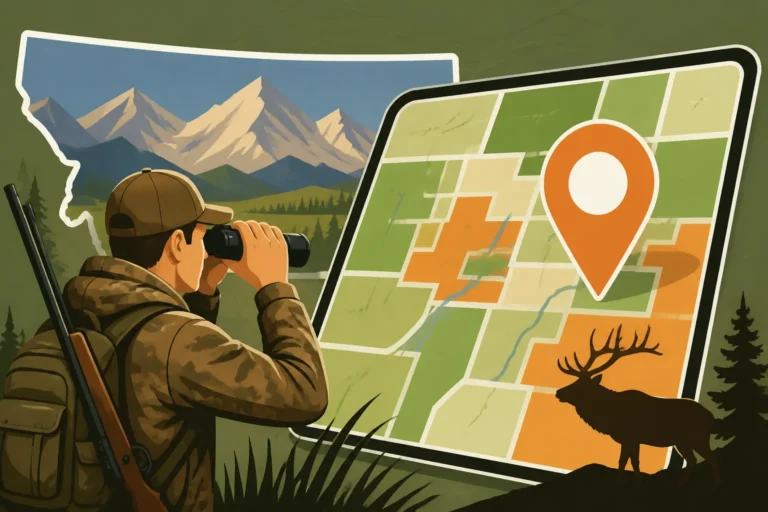
In the vastness of Eastern Montana, a detailed map is your best friend, and modern e-scouting tools are absolute game-changers. I can't stress this enough: do your homework before you ever leave home. Apps like onX Hunt are indispensable. They layer public and private land boundaries, landowner names, topographical lines, and satellite imagery, making it incredibly easy to identify public access points, isolated public parcels, and potential ambush sites. Before a hunt, I spend hours poring over these maps, identifying every piece of accessible public land – BLM, State Trust Land, National Grassland, and especially Block Management Areas – within a reasonable driving distance of my intended hunting zone.
Look for features that funnel game, like fingers of public land extending into private agricultural fields, water sources, subtle draws, or brushy coulees that offer cover. Use the hybrid satellite view to scout for natural travel corridors, bedding areas, and feeding grounds. You can drop waypoints on potential parking spots, glassing knobs, or areas of interest. Another fantastic resource is GoHunt, which provides detailed draw odds, unit profiles, and even filtering tools to find units based on public land percentage and species presence. This helps narrow down where to focus your efforts. For a detailed walkthrough of this process, our guide on How to E-Scout Montana Hunting Units is a must-read. Don't forget to download offline maps, as cell service is often nonexistent in the more remote areas of the plains.
Physical Preparation and Gear Considerations
While plains hunting might not involve the extreme elevation gains of a mountain hunt, it certainly isn't a walk in the park. You'll often cover vast distances on foot, sometimes in challenging terrain like steep coulees or across uneven, rocky ground. Physical fitness is still incredibly important, especially for successful spot-and-stalk tactics that require long crawls or quick bursts of movement. Being able to hike comfortably for miles carrying your gear will make your hunt far more enjoyable and increase your odds of success.
Your gear selection also needs to be tailored to the open country. High-quality optics are non-negotiable. A good pair of 10x or 12x binoculars on a tripod, and a powerful spotting scope (20-60x or higher) are essential for finding game at extreme distances and evaluating them before making a move. Rangefinders are also critical, as the open plains can play tricks on your depth perception. Dress in layers, as temperatures can fluctuate wildly between morning and midday. Wear sturdy, comfortable hiking boots that can handle rough terrain. Bring plenty of water – more than you think you’ll need – as water sources are scarce. A reliable GPS device or a fully charged phone with offline maps is vital for navigation. And finally, bring a quality pack for carrying your gear and, hopefully, packing out meat. The plains may look flat, but a quarter of an antelope or a mule deer buck can feel heavy after a long stalk back to the truck.
Planning Your Eastern Montana Plains Hunt
A successful hunt on the plains isn't just about finding public land; it's about meticulous planning, adapting to the environment, and respecting the land and its inhabitants.
Timing Your Plains Hunt for Optimal Success
The timing of your Eastern Montana plains hunt can significantly impact your success, largely depending on the species you're pursuing. For antelope, the archery season, usually in early September, offers a unique challenge. While the rut might not be in full swing, animals are less pressured, and decoy tactics can be highly effective. The general rifle season for antelope often starts later in September or early October, coinciding with the peak of the antelope rut, which means bucks are actively chasing does and can be more vocal and visible. This is often the most popular time for rifle hunters targeting antelope. To dive deeper into timing, check out Montana Antelope Season Dates.
For mule deer and whitetail, the general rifle season typically runs from late October through November. The colder weather can push deer to lower elevations and make them more visible, especially as the rut approaches in November. This is often when those big plains bucks become more active during daylight hours. Early season archery for deer, usually starting in early September, can also be productive, particularly if you focus on water sources or agricultural edges. Late-season hunts, if available for specific permits, can be fantastic for targeting animals pushed by snow or looking for winter range. Always consult the current year's Montana FWP regulations for precise season dates and unit-specific rules, as they can change annually.
Overcoming Hunter Pressure in Open Country
Eastern Montana might feel vast, but certain accessible public areas, especially popular Block Management Areas or easily reached BLM parcels, can still see significant hunter pressure. To increase your chances of success and find solitude, you'll need strategies to mitigate this.
One of the best approaches is to hunt during weekdays rather than weekends. Many hunters are limited to Saturday and Sunday, so a mid-week hunt can dramatically reduce competition. Another tactic is to hunt away from easy road access. Most hunters won't venture more than a mile or two from their vehicle. If you're willing to put in the effort and hike deeper into public land, especially those larger, less-accessed tracts of BLM or State Trust Land, you'll often find less pressured animals. Using mapping tools like onX Hunt, identify large blocks of public land that don't have roads running directly through them and plan a long walk. Even a few miles can make a world of difference.
Consider hunting during less popular times of the day. While most hunters are out at dawn and dusk, a mid-day still-hunt or careful glassing session can often turn up bedded animals that have been bumped by early morning pressure. Finally, think about hunting smaller, overlooked parcels. A 40-acre piece of State Trust Land might not seem like much, but if it offers crucial bedding cover or a water source, it could hold an animal that's avoiding bigger, more obvious areas. The more specific information you have on game species, the better, so looking at resources like Montana Antelope Hunting Guide can provide additional edge.
Disclaimer
Please note that hunting regulations, season dates, and access rules in Montana can change frequently. It is the responsibility of every hunter to consult the most current Montana Fish, Wildlife & Parks (FWP) regulations and landowner agreements before planning or undertaking any hunt. This guide is for informational purposes only and does not constitute legal advice or guarantee hunting success. Always prioritize safety, ethical hunting practices, and respect for private property.