How Many Points for a Montana Moose Tag
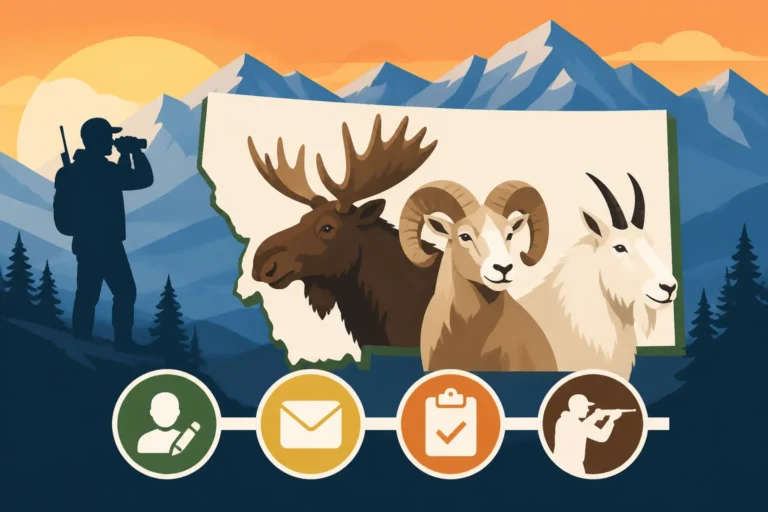
Drawing a Montana moose tag feels like winning the lottery, and for many, it’s a lifelong dream that often comes with the frustrating reality of low odds and a complex application system. It’s easy to get discouraged when you see the sheer number of applicants, but understanding the system and strategizing your approach can significantly improve your chances, even if it means playing the long game. This guide will walk you through Montana’s unique bonus point system, delve into what it truly takes to draw one of these coveted tags, and help you strategize your application for a realistic shot at a once-in-a-lifetime hunt.
Understanding Montana's Moose Draw System
Montana's approach to distributing limited-entry tags, like those for moose, can feel like a labyrinth, especially for new applicants or those coming from states with different systems. Unlike the general deer and elk combo licenses, which use a preference point system, moose tags fall under a bonus point system. This distinction is crucial to grasp if you're serious about hunting these magnificent animals in Big Sky Country.
The Rarity of a Montana Moose Tag
Let's not sugarcoat it: a Montana moose tag is incredibly difficult to draw. The number of moose permits available each year is exceptionally small, often in the single or low double digits for non-residents across the entire state. Montana manages its moose populations very conservatively, and with stable but not booming numbers, the opportunity to hunt them is truly limited. This scarcity creates immense competition, driving draw odds very low and making the bonus point system a critical component of your application strategy.
Imagine pouring over maps, scouting remote areas, and then realizing that for every tag available in a specific district, there might be hundreds, if not thousands, of applicants. This isn't an exaggeration. For non-residents, some of the most sought-after units might see success rates well under 1%, even for those with a substantial number of bonus points. It's a testament to the quality of the hunt and the draw of Montana's vast wilderness, but it also means setting realistic expectations is paramount. When considering a Montana Moose Hunting Guide, you’ll quickly realize how precious these tags are to both outfitters and hunters alike.
Montana's Bonus Point System for Moose
So, how does this "bonus point" system work? It’s important to distinguish it from a "preference point" system. With preference points, the more points you have, the higher you are in line for a tag. It's essentially a linear queue. Montana's bonus point system, however, functions more like a lottery with added entries. For every bonus point you accumulate, you get an additional entry into the drawing for that specific limited-entry permit.
Here’s a practical example: If you have 5 bonus points, and you apply for a moose tag, you will have 6 entries in the draw (your current application acts as one entry, plus one entry for each of your 5 bonus points). If another applicant has 10 bonus points, they will have 11 entries. While having more points definitely increases your chances, it doesn't guarantee a tag, even with a substantial accumulation. The element of pure luck, due to the random draw component, always remains. This system encourages consistent application year after year, as those who faithfully apply steadily build their bonus point tally, thereby increasing their number of "tickets" in the annual lottery. You can dive deeper into How Montana Bonus Points Work for a more granular understanding.
Analyzing Moose Draw Odds and Point Requirements
Deciphering the draw odds for a Montana moose tag can feel like trying to predict the weather in the mountains – complex and ever-changing. However, by looking at historical data and understanding the factors at play, you can make more informed decisions when it comes time to apply.
Historical Draw Data and Trends
The Montana Fish, Wildlife & Parks (FWP) releases draw results annually, which include the number of applicants, the number of tags issued, and the point levels of successful applicants. This data is your best friend when trying to gauge your odds. You’ll often see a range of points for successful applicants, indicating that while high points certainly help, it’s still possible for lower-point applicants to draw due to the random nature of the bonus point system.
For example, a unit might show successful applicants with 20+ non-resident bonus points, but also one lucky hunter with 5 points. This highlights that while the overall odds might be very low (e.g., less than 1%), every point you have increases your individual chance. Tools from reputable sources like GoHunt provide incredibly detailed historical draw data, allowing you to filter by species, residency, and hunting district. Their Insider platform crunches the FWP data, presenting it in an easily digestible format that shows the minimum, maximum, and average points of successful applicants over several years. This kind of detailed analysis is crucial for understanding Montana Moose Draw Point Requirements.
One notable trend is point creep, where the average number of points required to draw a tag slowly increases over time. This is a direct result of more people applying and consistently building points. What might have been a 10-point tag five years ago could now require 15-20 points for a reasonable chance. This phenomenon makes a long-term strategy even more vital.
Factors Influencing Draw Success
Several critical factors influence your chances of drawing a Montana moose tag:
- Residency: This is, by far, the most significant factor. Montana allocates a very small percentage of its total moose tags to non-residents, often capping it at 10% of the total permits. This means non-resident odds are dramatically lower than resident odds, regardless of points.
- Hunting District Choice: Not all moose districts are created equal in terms of tag availability, moose population density, or hunting pressure. Some districts are highly coveted, either for their trophy potential or their accessible terrain, leading to intense competition and very high point requirements. Others might be less popular, have fewer moose, or present more challenging access, potentially offering slightly better odds at lower point levels.
- Applicant Pool Size: The sheer number of people applying each year directly impacts draw odds. As more hunters become interested in moose or accumulate points, the pool grows, and individual odds decrease.
- Regulation Changes: FWP sometimes adjusts tag quotas or unit boundaries based on biological surveys and management objectives. While rare for moose, these changes can subtly shift draw odds for specific districts. Staying informed about Montana 2026 Hunting Regulation Changes is key.
Consider this scenario: you're a non-resident with 10 bonus points. Applying for a unit known for producing large bulls and drawing dozens of applications will yield abysmal odds. However, applying for a unit with fewer moose, more difficult access (like a wilderness area), or simply less publicity, might give you a slightly more favorable (though still low) chance. This strategic selection is where your research truly pays off. Remember, platforms like GoHunt provide real-time updates and analysis of these factors, helping you navigate the complexities.
Here's a simplified look at potential bonus point ranges for drawing a non-resident Montana moose tag:
| Difficulty Level | Estimated Bonus Points Needed (Non-Resident) | Typical Odds at Max Points (Approx.) | Notes |
|---|---|---|---|
| Extremely Difficult | 20+ | <1% | Highly sought-after units, trophy potential. |
| Very Difficult | 15-20 | 1-2% | Good units, consistent moose presence. |
| Difficult | 10-15 | 2-5% | Less popular units, may have access challenges. |
| Long Shot (Low Points) | 0-9 | <0.5% | Pure lottery luck, very low probability. |
Note: These are approximations and highly subject to change based on yearly quotas, applicant numbers, and unit-specific demand. Always consult current FWP regulations and draw statistics.
Strategic Planning for Your Montana Moose Application
Drawing a moose tag in Montana is less about a single application and more about a long-term strategy. It requires patience, consistent effort, and smart research.
Building Bonus Points Consistently
The most straightforward way to improve your odds is to build bonus points year after year. For residents and non-residents alike, you can purchase a bonus point for a moose permit without applying for a tag itself. This is often the recommended strategy for those just starting out or for hunters who know it will take many years to accumulate enough points for a reasonable chance. The cost for a bonus point is relatively low compared to the overall tag fee, making it an affordable annual investment in your future hunt.
If you don't apply for a moose tag, you must actively purchase a bonus point during the application period to keep accumulating. If you miss a year, you don't lose your accumulated points, but you also don't gain one for that year, effectively putting you further behind the curve of point creep. So, marking your calendar for the Montana Big Game Draw Deadlines is crucial, even if it's just to buy that point. For those looking to understand the mechanics, our guide on How to Apply for a Montana Bonus Point offers step-by-step instructions. Remember, consistent action, even small annual steps, builds towards that ultimate goal.
Researching Moose Hunting Districts
Choosing which district to apply for is just as important as building points. This isn't a decision to be made lightly, especially given the rarity of the tag. You need to consider several factors:
- Historical Draw Odds: As discussed, looking at past FWP data, especially on platforms like GoHunt, will show you which units typically require the most points and which might be slightly more accessible.
- Moose Population and Habitat: Research the health and density of moose populations in various districts. FWP publishes reports and survey data that can give you insights. Are you looking for a trophy bull or simply a moose hunting experience? Different districts might offer different potentials.
- Access and Terrain: Montana moose often inhabit dense timber, high elevation basins, or remote wilderness areas. Consider the physical demands of hunting a particular unit. Will you need horses? Is it a true backcountry hunt requiring you to How to Pack Into the Montana Backcountry? These factors can affect hunter pressure and success rates.
- Permit Quotas: Pay close attention to the number of permits offered in each district for both residents and non-residents. A unit offering only one non-resident tag will have astronomically higher odds than one offering five. Our article, Which Montana Districts Need a Permit, can help clarify this.
It's tempting to always apply for the "trophy" units, but sometimes a slightly less glamorous unit with marginally better odds can provide a more realistic path to drawing a tag, especially if your primary goal is the experience of a Montana moose hunt. Utilizing E-scouting techniques to analyze terrain, public land access, and potential moose habitat can also refine your district choices.
Beyond the Draw: Preparing for a Montana Moose Hunt
Let's say the unthinkable happens, and you actually draw a Montana moose tag. The feeling is exhilarating, but then the reality sets in: you have a monumental hunt ahead of you. This is where the real work begins.
Physical and Logistical Preparations
Montana moose hunts are often physically demanding. Moose are huge animals, inhabiting rugged, timbered, and often remote country. Once you draw, your immediate focus should shift to physical conditioning. This isn't just about being able to walk; it's about being able to hike significant distances with a heavy pack, possibly in adverse weather, and then having the stamina to pack out hundreds of pounds of meat from difficult terrain. Many hunters specifically train with weight vests or hiking poles on steep inclines to mimic the conditions of a backcountry hunt. Our guide on How to Physically Prepare for a Montana Elk Hunt offers excellent advice that applies directly to moose hunting as well.
Logistically, you'll need to consider:
- Gear: You'll need durable, reliable gear suited for backcountry conditions. This includes quality optics for spotting, a robust pack for hauling meat, appropriate clothing layers, and navigation tools. Check out our Montana Backcountry Hunting Gear List for comprehensive suggestions.
- Weapon Choice: Ensure your rifle or archery setup is capable of humanely taking such a large animal, and practice extensively at various ranges.
- Meat Care: Knowing how to field dress, quarter, and pack out a moose efficiently is critical, especially if you're hunting in warm early-season conditions. The sheer volume of meat from a bull moose can be overwhelming if you're not prepared.
Considering Guided vs. DIY Hunts for Moose
Once you have that coveted tag in hand, you have a crucial decision to make: undertake a do-it-yourself (DIY) hunt or hire an outfitter.
DIY Moose Hunt:
A DIY moose hunt offers immense satisfaction and a deep connection to the land. It allows you to tailor the hunt exactly to your preferences and schedule. However, it demands significant research, scouting (often E-scouting combined with boots-on-the-ground if possible), and a high level of self-reliance. You’re responsible for all logistics: finding the moose, navigating, packing camp, field dressing, and hauling meat. This can be an incredible adventure, but it requires experience and a solid hunting partner or two. For a deeper dive into self-guided adventures, consider our Montana DIY Elk Hunting Guide, which shares many transferable principles.
Guided Moose Hunt:
Hiring a reputable Montana outfitter, while a significant financial investment, can drastically increase your chances of success and alleviate much of the logistical burden. Outfitters often have extensive knowledge of their hunting areas, know moose patterns, provide horses or mules for access and packing, and handle camp setup and meat retrieval. For a once-in-a-lifetime tag like a moose, many hunters opt for a guided experience to maximize their opportunity. It’s important to research outfitters thoroughly, ask for references, and understand exactly what their packages include. Our Montana Elk Hunting Outfitters Guide can provide a framework for choosing a good outfitter, as many also guide for moose.
The choice often comes down to budget, experience, and your desired level of adventure. Both options can lead to an unforgettable Montana moose hunting experience, but they require different levels of preparation and commitment.
Disclaimer
Please note: Hunting regulations, season dates, and draw odds are subject to change annually by Montana Fish, Wildlife & Parks (FWP). This guide provides general information based on current understanding and historical data. Always consult the most recent Montana FWP regulations and official draw statistics before planning your hunt or submitting your application.