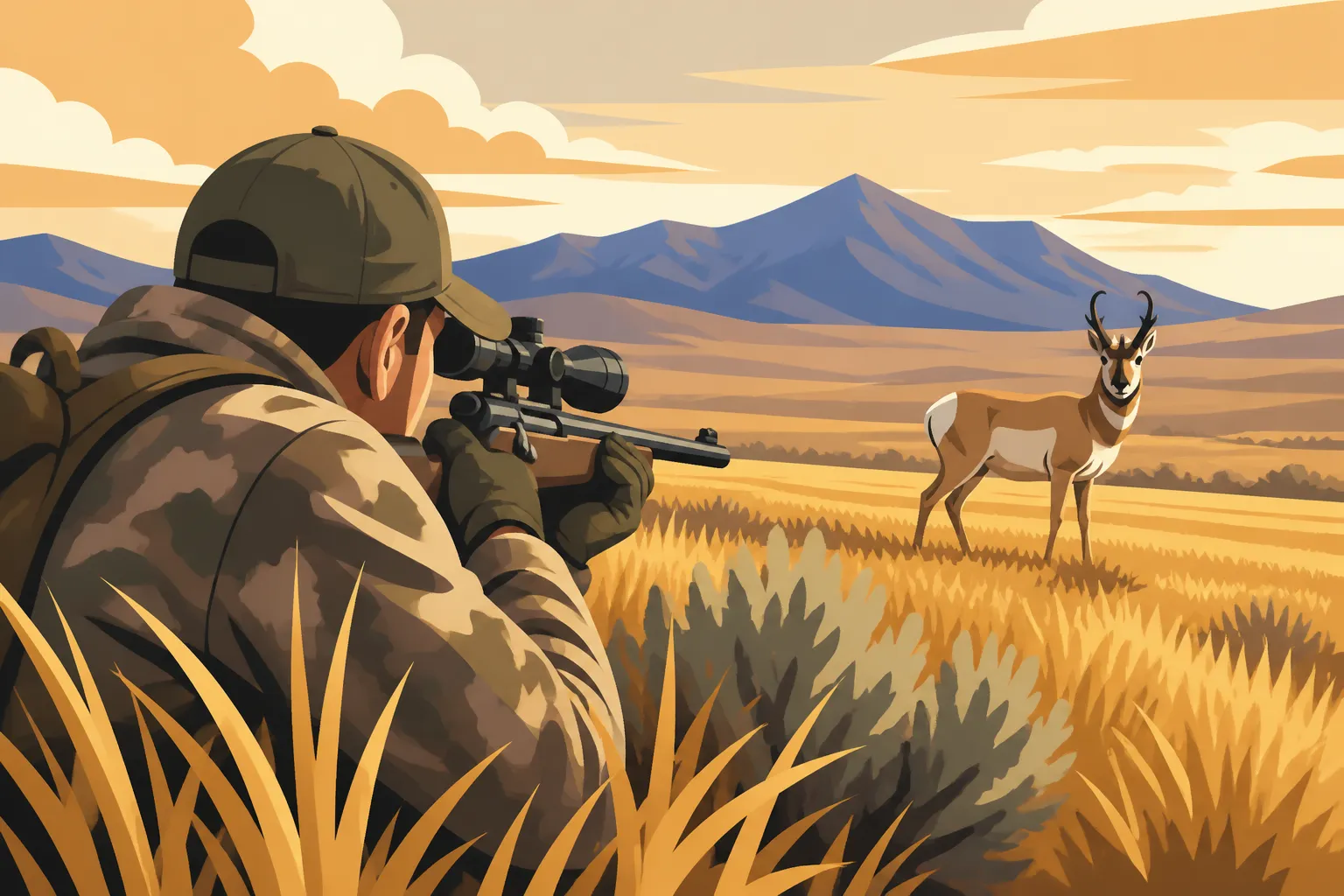
Montana Antelope on the Eastern Plains
Hunting antelope on Montana's vast Eastern Plains can feel like trying to find a needle in a haystack, especially when those "speed goats" seem to materialize out of nowhere and then vanish just as quickly. The sheer scale of the landscape combined with their incredible eyesight and blistering speed often leaves hunters frustrated, wondering where to even begin. This comprehensive guide will peel back the layers of hunting antelope in this unique region, providing you with the strategies, gear insights, and access information you need to confidently pursue these magnificent animals and fill your freezer.
Understanding the Eastern Plains Antelope Habitat
The Eastern Plains of Montana are a world unto themselves, a sprawling expanse that dictates how antelope live and, by extension, how we hunt them. It's a land of big skies, endless horizons, and subtle nuances that are key to success.
The Vast, Open Landscape
Imagine rolling grasslands stretching for miles, broken only by coulees, dry creek beds, and occasional rimrock outcroppings. This isn't dense timber hunting; it's a game of long distances and even longer views. Antelope thrive here precisely because of this openness. Their incredible eyesight – often cited as being equivalent to 8x binoculars – allows them to detect threats from miles away. They don't rely on thick cover for escape; they rely on distance and speed. As a hunter, this means you're almost always exposed, and every stalk becomes a chess match against an animal that sees everything. The short, sparse grasses and sagebrush provide both forage and minimal concealment, but never enough to truly hide. Learning to read these subtle shifts in elevation, understanding how a small fold in the land can offer just enough cover, is paramount. This vastness also means that "finding" antelope often involves covering immense amounts of ground, either physically or with your eyes through quality optics. It's not about busting them out of a thicket; it's about spotting a flicker of white on a distant hillside and figuring out how to get within range.
Water Sources and Their Importance
In the arid or semi-arid environment of the Eastern Plains, water is life, and for antelope, it's a critical resource that often dictates their daily movements. While antelope are known for their ability to survive in dry conditions and can extract moisture from plants, consistent access to water sources such as stock tanks, windmills, small reservoirs, or even temporary puddles after a rain event, is invaluable, especially during the hot early seasons. During the scorching days of late August and early September when archery season often begins, antelope will gravitate towards these water holes, particularly in the mornings and evenings. Recognizing this pattern is a huge advantage. They might not drink every day, but they certainly know where to find it. Smart hunters will scout these areas beforehand, looking for tracks, droppings, and the animals themselves. Knowing the location of these critical watering points allows you to predict movement patterns and set up ambushes, rather than just endlessly wandering. Often, if you can find one or two reliable water sources in a large tract of public land, you've found the key to unlocking antelope movement in that area.
Antelope Behavior and Biology on the Plains
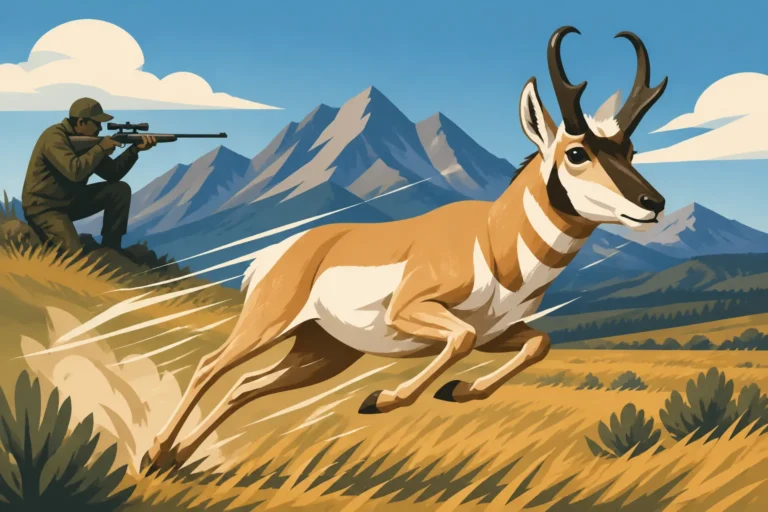
Antelope are truly unique creatures, perfectly adapted to their prairie home. Their famous speed, capable of sustaining 40-50 mph bursts for extended periods, is their primary defense mechanism. But it's not just speed; it's their highly developed senses. Their eyesight, as mentioned, is legendary, giving them a 300-degree field of vision. Their hearing is also sharp, and while their sense of smell isn't as acute as a deer's, it's still good enough to detect human scent on a swirling prairie wind. Typically, antelope live in herds, especially outside of the rut. Bucks will form bachelor groups, and does and fawns will group together. During the rut, which usually peaks in late September and early October, mature bucks become territorial, gathering harems of does and aggressively defending them. This rutting behavior can offer unique hunting opportunities, as bucks can become momentarily distracted, though their vigilance remains high. Understanding these social structures and behavioral patterns is crucial. For example, a lone buck might be easier to stalk than a large herd with many sets of eyes, but a rutting buck defending his does might present a shot opportunity if you can effectively draw him away or approach under the cover of a subtle distraction.
Key Strategies for Hunting Eastern Montana Antelope
Hunting antelope on the Eastern Plains is a game of patience, stealth, and often, sheer grit. Unlike hunting elk in dark timber, every move you make feels exposed, making strategy all the more vital.
Effective Glassing and Locating Techniques
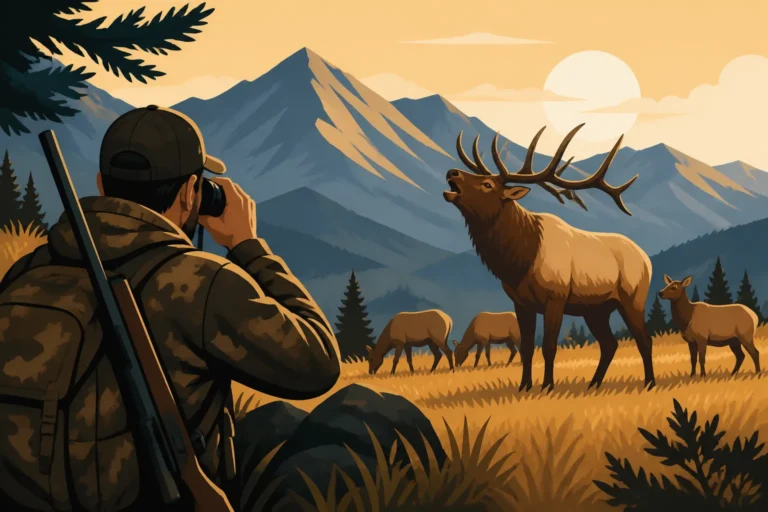
In a landscape where you can see for miles, your optics are your most important tool, hands down. Forget walking blindly; you'll spook more antelope than you see. The key is to find a vantage point – any subtle rise in terrain will do – and methodically glass. Start by scanning the entire landscape with your naked eye to identify any obvious movement or a large group. Then, switch to high-quality binoculars, like 10x42s or 12x50s, mounted on a tripod for stability. A tripod is absolutely critical for eliminating shake and reducing eye fatigue when spending hours behind glass. Look for subtle flashes of white, the dark shapes of bodies against the lighter ground, or even just the distinctive horizontal line of an antelope's back. Don't just scan; grid the landscape. Pick a starting point, move your optics horizontally across a section, then drop down slightly and move back the other way.
Once you've identified a potential target, especially at a long distance, switch to a spotting scope (15-45x or 20-60x) to confirm it's an antelope, assess its size, and determine if it's a buck worth pursuing. Pay attention to how the animals are behaving, which direction they're moving, and what terrain they seem to prefer. Often, you'll spot them bedded down in a slight depression, barely visible, making a systematic grid search even more important. A powerful e-scouting tool like GoHunt's map layers can be incredibly useful before you even leave home, allowing you to identify potential vantage points and areas where antelope might concentrate due to water or specific forage. This pre-hunt scouting significantly reduces wasted time in the field.
The Spot-and-Stalk Challenge
Once you've located a buck, the real challenge begins: the spot-and-stalk. This is where most antelope hunts are won or lost. Unlike deer or elk that might hold tight in cover, antelope are almost always alert and positioned for a quick escape. Your goal is to use every single fold, every dip, every bit of sagebrush as cover to close the distance. This often means crawling on your hands and knees, or even belly-crawling, for hundreds of yards. The wind is your friend, but thermals on the plains can be tricky, shifting throughout the day. Always approach with the wind in your favor.
Before you start your stalk, meticulously plan your route using your optics. Identify landmarks, note the antelope's behavior, and visualize how you'll move. Sometimes, a full circle around a hill might be necessary, adding miles to your walk but keeping you out of sight. Patience is paramount. If the antelope stand up or change position, freeze. Wait for them to resettle or look away. A common mistake is trying to rush the stalk; a slow, deliberate approach, punctuated by long periods of observation, is much more effective. Remember, they have incredible depth perception and will pick up on unnatural movement very quickly. Success often comes down to who out-patients whom.
Utilizing Decoys and Blinds
While spot-and-stalk is the classic method, sometimes the terrain simply doesn't offer enough cover, or the antelope are in a position that makes a traditional stalk impossible. This is where decoys and ground blinds can become invaluable tactics, particularly on the more open, featureless plains.
Decoys are most effective during the rut, usually late September to early October. A full-body buck decoy, or even a simple silhouette, can provoke a territorial buck into investigating. He might see it as a challenger to his harem or territory and come trotting in, offering a shot. This works best when you set up the decoy, then hide a short distance behind it, or have a partner hide with the decoy while you position yourself for a shot. The key is presenting a realistic, non-threatening challenge. For archers, a well-executed decoy setup can be one of the most exciting ways to hunt antelope, bringing them into bow range. You'll need to learn How to Decoy Antelope in Montana effectively to make this work.
Ground blinds, on the other hand, are typically used near water sources or travel corridors. If you've scouted a water hole and confirmed it's being used by antelope, setting up a blind well in advance (allowing animals to get accustomed to it) can be a highly effective way to intercept them. This is especially useful during the hot early season when antelope are most reliant on water. Just be mindful of legal distances from water sources if using a blind on public land and always check the regulations. Both decoys and blinds require specific planning and execution, but they offer excellent alternatives to the sometimes-impossible spot-and-stalk on the Eastern Plains.
Essential Gear and Preparation for Plains Hunting
Hunting antelope on the Eastern Plains means embracing the elements. The sun can be relentless, the wind unforgiving, and water scarce. Your gear isn't just about comfort; it's about success and safety.
Optics: The Non-Negotiable Tool
I cannot stress this enough: invest in the best optics you can possibly afford. Good glass is the most critical piece of equipment for hunting antelope in Montana's wide-open spaces. You're not looking for movement in thick timber; you're looking for an animal that might be two miles away, often bedded down and camouflaged against the landscape.
- Binoculars (10x-12x): These will be your primary scanning tool. Look for objective lenses in the 42mm-50mm range for good light gathering. Brands like Vortex, Maven, or even higher-end options from Swarovski or Zeiss will make a huge difference in clarity and eye relief during long glassing sessions. Mounting them on a sturdy tripod is non-negotiable for stability and reducing eye strain. You can spend hours behind your binos if they're on a tripod, finding antelope you'd never spot freehand.
- Spotting Scope (15-45x or 20-60x): Once you've spotted a potential animal with your binoculars, the spotting scope allows you to magnify it, field-judge its size, and determine your stalk route. This saves you countless miles of wasted walking on "ground shrinkage" animals. Again, a sturdy, lightweight tripod is essential.
- Rangefinder: Critical for confirming distances before a shot, especially in the deceptive vastness of the plains where everything looks closer than it is. A model with angle compensation is a bonus for those rare times you're shooting up or down a steep incline. For more details on choosing the right glass, check out our guide on Best Optics for Montana Big Game.
Rifles, Ammunition, and Shooting Skills
Antelope hunting on the plains is often a long-range game, whether you want it to be or not. While you always strive for a closer shot, circumstances often dictate a longer ethical range.
- Rifle Caliber: Popular choices for antelope include flat-shooting cartridges like the .243 Winchester, 6.5 Creedmoor, .270 Winchester, .25-06 Remington, and .30-06 Springfield. The key is accuracy and trajectory. These calibers offer a good balance of minimal recoil and excellent ballistics for open-country hunting. While a .223 Remington can be sufficient, many hunters prefer something with a bit more punch and wind resistance at extended ranges.
- Ammunition: Choose high-quality, boat-tail bullets with good ballistic coefficients (BC) that are designed for reliable expansion on thin-skinned game. Hornady ELD-X, Federal Terminal Ascent, or Barnes LRX are excellent examples. Practice with the exact ammunition you plan to hunt with.
- Shooting Skills: This is arguably more important than your caliber choice. You absolutely must practice shooting from realistic field positions. Don't just shoot from a bench. Practice prone shooting, using a bipod or your backpack as a rest. Practice shooting from kneeling and sitting positions. The wind on the Eastern Plains is a constant factor; learn to read it and adjust for it. Set up targets at 200, 300, and even 400 yards, and practice holding steady and compensating for crosswinds. Knowing your rifle's capabilities and, more importantly, your capabilities at different ranges is paramount for an ethical shot.
Clothing, Hydration, and Field Essentials
Being prepared for the environment means more than just a rifle and good glass. The Eastern Plains can be brutally hot, surprisingly cold, and always exposed.
- Clothing: Layering is key. Even in early September, mornings can be cool, but midday temperatures can soar into the 80s or 90s. Lightweight, breathable, moisture-wicking fabrics are your friend. Think merino wool or synthetic base layers, light shirts, and a windproof outer layer. Camouflage patterns that blend with the sparse prairie grasses (like tan, sage green, or open-country patterns) are effective. Don't forget a wide-brimmed hat for sun protection and sunglasses.
- Footwear: Comfortable, broken-in hiking boots are essential. You'll be covering many miles, often on uneven terrain, walking through sagebrush and cactus. Ensure they offer good ankle support and are breathable.
- Hydration: Always carry more water than you think you'll need. A hydration bladder in your pack is excellent, supplemented by water bottles. Dehydration can quickly become a serious issue. Electrolyte packets are also a good idea.
- Navigation: A reliable GPS unit (or a smartphone with mapping apps like onX Hunt) is crucial. The landscape can look very similar for miles, and it's easy to get disoriented. Pre-download maps, mark water sources, public land boundaries, and potential stalks. GoHunt also offers excellent mapping capabilities that can be integrated into your hunt planning.
- Other Essentials: Sunscreen, lip balm, a good knife, game bags for quartering, rope, a headlamp, a basic first-aid kit, and an emergency shelter (even just a lightweight tarp) should always be in your pack. A small shovel can be useful for digging a prone shooting position or for burying gut piles.
Navigating Public and Private Land Access
Montana's Eastern Plains offer a mixed bag of land ownership, from vast stretches of public land to checkerboarded private ranches. Understanding the lay of the land and how to access it legally is critical for a successful and ethical hunt.
Cracking the Block Management Code
The Block Management Program (BMP) in Montana is an absolute game-changer for public land access, especially on the Eastern Plains. It's a cooperative program between landowners and Montana Fish, Wildlife & Parks (FWP) that provides public hunting access to private land and often state land that would otherwise be inaccessible. Think of it as hundreds of thousands of acres of private property temporarily opened to hunters each season, often specifically for deer and antelope.
The key to using Block Management Areas (BMAs) is understanding their individual rules, which can vary wildly. Some BMAs are "Type 1" which means sign-in boxes at the property boundary, first-come, first-served access. Others are "Type 2" which require advanced permission, sometimes even a reservation through an online system or a phone call to the landowner or regional FWP office. It’s crucial to check the specific regulations for each BMA you're interested in; these are published annually by FWP, often available online as district-specific maps and rules, or even through apps like GoHunt that integrate FWP data. You can find more information in our guide on Montana Block Management Areas Explained. Failing to follow the rules, no matter how minor, can jeopardize the program for everyone. Always be respectful, drive only on designated routes, close gates, and pack out all your trash. Many successful antelope hunts on the Eastern Plains happen within the confines of these amazing programs.
Understanding State Trust Lands and BLM
Beyond Block Management, Montana's Eastern Plains also feature significant amounts of public land managed by the Bureau of Land Management (BLM) and State Trust Lands. Both offer excellent hunting opportunities, but they come with their own set of rules and nuances.
- Bureau of Land Management (BLM) Lands: These are generally open for public access and hunting. However, BLM lands on the plains are often interspersed with private property, creating a "checkerboard" pattern. It is absolutely crucial to use detailed land ownership maps (like those found on onX Hunt, GoHunt, or paper FWP maps) to distinguish between public and private parcels. Trespassing onto private land, even inadvertently, is a serious offense. BLM lands often feature more rugged terrain, badlands, or river breaks, which can provide excellent habitat and some much-needed cover for stalking.
- State Trust Lands: These lands are managed by the Department of Natural Resources and Conservation (DNRC) to generate revenue for specific state institutions (like schools). While largely open to public access for hunting, they require hunters to purchase a separate "State Land Use License" or Conservation License (which you likely already have with your general hunting license). Similar to BLM, they are frequently intermingled with private property, so boundary awareness is paramount. Sometimes, specific State Trust Lands might have additional rules or restrictions, so always check the FWP regulations for the hunting district you're in. These lands are often grazed by livestock, so be mindful of gates and cattle. Identifying these accessible public lands is a core part of Montana Public Land Hunting Strategy.
Respectful Private Land Access
While Block Management offers organized access, sometimes the best antelope hunting can be found by directly asking for permission on private land. This requires a different approach, one rooted in courtesy, respect, and a willingness to be a good neighbor.
Start by identifying landholdings that look promising and are not enrolled in Block Management. Websites like onX Hunt or GoHunt provide landowner names and boundaries, which can be a starting point. Then, make a direct, polite approach. Knock on doors, or send a respectful letter of introduction. Do this well in advance of the season, ideally in summer, when landowners are less busy and not inundated with requests.
When you speak to a landowner:
- Be polite and respectful: Introduce yourself clearly and state your purpose.
- Offer to help: Offer to help with chores, fix fences, or even just check on their cattle while you're out.
- Leave a positive impression: Dress neatly, speak clearly, and don't make demands.
- Be specific: Ask about specific areas, types of game, and dates.
- Understand their concerns: Landowners often worry about gates being left open, cattle being spooked, or property damage. Reassure them you understand these concerns and will be careful.
- Offer a token of appreciation: A small gift (like a gift card or homemade goods) after a successful hunt, or just a simple thank you, goes a long way.
Never take private land access for granted. If permission is granted, follow all instructions precisely, stick to agreed-upon areas, and always close gates. Building a relationship with a landowner over time can open up incredible hunting opportunities for years to come.
Timing Your Hunt: Seasons and Conditions
The timing of your antelope hunt on the Eastern Plains can dramatically affect the strategies you employ, the conditions you face, and ultimately, your success. Montana offers both archery and general rifle seasons for antelope, each with its unique flavor.
Early Archery Season Advantages and Challenges
Montana's archery season for antelope typically opens in early September, often overlapping with the tail end of summer's heat. This period offers both distinct advantages and significant challenges for the bowhunter.
- Advantages:
- Less Hunter Pressure: Generally, there are fewer archery hunters in the field compared to rifle season, especially on public lands. This can lead to less disturbed animals and a more peaceful hunting experience.
- Predictable Water Sources: During early September, temperatures are still often high, making water sources extremely attractive to antelope. This predictability can be a huge asset for setting up ground blinds or ambushing animals as they come to drink. Learning How to Hunt Antelope Water Holes can be highly effective.
- Rutting Action Begins: While the peak rut is usually later in the month or early October, you might start to see early rutting behavior by late September, with bucks beginning to gather does. This can make decoying more effective, as bucks become more territorial and willing to investigate a rival.
- Challenges:
- Heat: Early September can still bring scorching temperatures on the plains. This means hunting during the cooler hours of dawn and dusk, carrying ample water, and being prepared for rapid meat spoilage if you're successful.
- Antelope Vigilance: Antelope are incredibly sharp-eyed. Bowhunting them requires exceptionally stealthy spot-and-stalk tactics or well-hidden blinds. Their long-range vision and speed mean closing the distance to bow range (typically under 60 yards) is a monumental task.
- Sparse Cover: The minimal cover on the plains makes getting close with a bow incredibly difficult. Even a slight rise in terrain might not be enough to hide your movements. You might spend hours crawling on your belly.
General Rifle Season Dynamics
The general rifle season for antelope in Montana typically runs through October and sometimes into early November, depending on the unit. This period brings different dynamics compared to the archery season.
- Hunter Pressure: Expect significantly more hunters in the field during rifle season. This increased pressure can push antelope into more remote or difficult-to-access areas, or make them more skittish and prone to running at the first sign of a vehicle. Being familiar with How to Beat the Crowds on Montana Public Land becomes very important.
- Rutting Peak: The rifle season often coincides with the peak of the antelope rut. Bucks are actively chasing does, herding them, and fighting off rivals. This intense activity can make them slightly more preoccupied and less wary, potentially offering shot opportunities. Decoying can still be effective, though perhaps less so than in archery season if bucks are constantly moving.
- Weather Variability: October and November on the plains can bring a wide range of weather. You might encounter mild, sunny days, but you could also face cold fronts, strong winds, rain, or even early snow. This can affect antelope movement, often pushing them to seek shelter in coulees or breaks during severe weather. Being prepared for anything is key.
- Longer-Range Shots: With a rifle, your effective range is much greater than with a bow. This is often necessary on the plains, where antelope may not allow you to close within close distances. However, longer shots demand absolute proficiency with your rifle, knowledge of bullet trajectory, and precise wind compensation. Knowing your ethical limits is crucial.
Impact of Weather on Antelope Movement
Weather conditions play a crucial role in antelope behavior and, consequently, your hunting success on the Eastern Plains. Ignoring the weather is a recipe for frustration.
- Wind: Wind is a near-constant companion on the plains. It can be a double-edged sword. A strong, steady wind can actually aid your stalk by muffling your sound and perhaps making antelope slightly less attentive to distant movement. However, extreme winds can make shooting accurately very difficult, especially at long range. Antelope will often try to bed with the wind at their back or seek the lee side of a hill to escape the direct force of the wind.
- Temperature: As mentioned, extreme heat in early season drives antelope to water. During colder periods, they might feed more actively during the day to build energy reserves. If temperatures drop significantly, they may seek thermal cover in coulees or dense sage patches.
- Precipitation (Rain/Snow): While less common during the early season, rain or snow can alter antelope behavior. During light rain, they might continue to feed, sometimes making them easier to approach due to reduced visibility or sound. Heavy rain or snow can push them to seek shelter and can also make travel on dirt roads extremely challenging or impossible, as many plain roads turn to impassable mud.
- Barometric Pressure: While less obvious, changes in barometric pressure can influence animal activity. A falling barometer often precedes a weather front and can spur increased feeding activity. A stable, high-pressure system might lead to more predictable patterns.
Always check the forecast, but be prepared for sudden changes. The Eastern Plains are notorious for unpredictable weather. Adaptability to changing conditions is a hallmark of a successful plains antelope hunter.
| Hunting Method | Pros | Cons | Ideal Conditions |
|---|---|---|---|
| Spot-and-Stalk | Highly rewarding, active, allows for selective harvesting. | Extremely physically demanding, requires exceptional stealth and patience, often involves long crawls, difficult in flat or wide-open terrain, high chance of being spotted, wind can be a major factor. | Rolling hills, coulees, and subtle terrain features that offer concealment; calm to moderate wind for stealth; good visibility for glassing. |
| Decoying | Can bring antelope into close range (especially for archers), exciting. | Only truly effective during the rut when bucks are territorial; requires a specific setup and understanding of antelope behavior; can be challenging to hide yourself while operating the decoy; not always successful if bucks are wary or not in the mood. | Peak rut (late Sept – early Oct); mature, territorial bucks; open terrain where the decoy is visible; light to moderate wind for scent control and decoy movement. |
| Ground Blind | Relatively comfortable, can be effective for bowhunters, good for hot weather. | Requires pre-scouting to identify active water sources or travel corridors; takes time to set up and allow animals to acclimate; limited shooting lanes; requires long waits, and animals may still shy away if the blind isn't well-camouflaged or they've seen pressure. May be less active during cooler weather. | Hot weather during early season; active water holes or well-used travel corridors; areas with limited natural cover for stalking. |
| "Still" Hunting | More active than a blind, allows for covering ground slowly. | Very difficult on the open plains due to antelope's eyesight; requires extremely slow, deliberate movement and constant glassing; limited success unless using terrain features very effectively. | Extremely broken terrain (e.g., badlands, river breaks) with good cover; windy conditions to muffle sound; very patient and experienced hunters. |
Successfully hunting antelope on Montana's Eastern Plains is an unforgettable experience, combining vast landscapes with intense, strategic hunting. By understanding the unique behaviors of these speed goats, mastering your optics, and wisely navigating the complex land access, you'll be well on your way to a memorable hunt. Remember, preparation is key, from your gear to your physical conditioning, to your understanding of the FWP regulations. And most importantly, enjoy the incredible solitude and beauty of Big Sky Country. For those looking to dive deeper into specific tactics, be sure to explore resources like our guide on How to Spot-and-Stalk Antelope in Montana or understanding Montana Antelope Draw Odds Explained. If you're planning your trip, consider checking out the Montana Antelope Season Dates and Tags to ensure you're squared away with your application. Another valuable read is Montana Antelope Hunting Guide to broaden your overall knowledge. Don't forget to study up on Montana Public Land Hunting Guide to make sure you're legally accessing prime spots. Finally, for detailed electronic scouting, our article on How to E-Scout Montana Hunting Units will prove invaluable in identifying key areas before you even set foot on the plains.
Disclaimer
Please note that hunting regulations, season dates, and land access rules in Montana can change annually. It is your sole responsibility to consult the most current Montana Fish, Wildlife & Parks (FWP) regulations and maps for the specific hunting district you plan to hunt before heading into the field. This guide provides general information and should not be considered a substitute for official FWP resources. Always prioritize safety, ethical hunting practices, and respect for landowners and wildlife.