How to Hunt Montana Antelope from a Blind
Hunting antelope in Montana can be an incredibly rewarding experience, but let's be honest, those wide-open plains and the keen eyesight of a pronghorn can lead to a lot of frustration. Spot-and-stalk often feels like an impossible feat against an animal that seems to see you coming from miles away. This comprehensive guide is here to walk you through an often-underestimated, yet highly effective, strategy: hunting Montana antelope from a blind, offering a more controlled and often successful approach.
Understanding Antelope Behavior and Habitat in Montana
Before you even think about setting up a blind, you need a solid grasp of what makes an antelope tick and where they hang out in Big Sky Country. These incredible animals are built for survival in wide-open spaces, and understanding their adaptations is key to outsmarting them.
Why Antelope are Challenging to Hunt
Anyone who's tried to put a stalk on an antelope knows the struggle. Their reputation for being notoriously difficult to approach isn't just campfire talk; it's a testament to their incredible senses and physical prowess. The first thing you'll notice is their eyesight – it's legendary. Antelope have eyes that are proportionally larger than any other hoofed animal in North America, giving them nearly 360-degree vision. They can detect movement at astonishing distances, often spotting a hunter long before the hunter even knows they're there.
Couple that vision with their blistering speed—they are the fastest land animal in North America, capable of sustaining speeds over 50 miles per hour for extended periods—and you've got a formidable opponent. On the vast, treeless plains and rolling sagebrush hills of Montana, there's often precious little cover to conceal a hunter attempting a traditional spot-and-stalk. This combination of hyper-alertness and raw speed means that most stalks end in a white-rumped blur disappearing over the horizon, leaving you feeling defeated and exhausted. It’s this very frustration that makes the blind a compelling alternative.
Prime Antelope Habitat in Montana
If you’re hunting antelope in Montana, you’re likely headed to the eastern half of the state. This expansive region is characterized by vast, undulating grasslands, sagebrush-dotted coulees, and dry creek beds, making it ideal antelope country. While they can be found in various environments, their true stronghold lies in these open, arid to semi-arid plains, where they can utilize their eyesight to full advantage.
The importance of water sources in these environments cannot be overstated, especially during the hot, dry summer and early fall periods when antelope seasons often begin. Stock ponds, natural springs, windmills, and even temporary puddles become vital congregation points. Antelope need to drink regularly, often multiple times a day when temperatures soar, and these water sources act as natural magnets. Understanding these patterns and identifying consistent water sources is paramount when planning your blind placement strategy, providing predictable movement patterns you can exploit.
Types of Blinds and Their Strategic Placement
Choosing the right blind and putting it in the perfect spot is where the art of antelope hunting truly begins. It's not just about hiding; it's about becoming an invisible part of the landscape.
Ground Blinds for Antelope
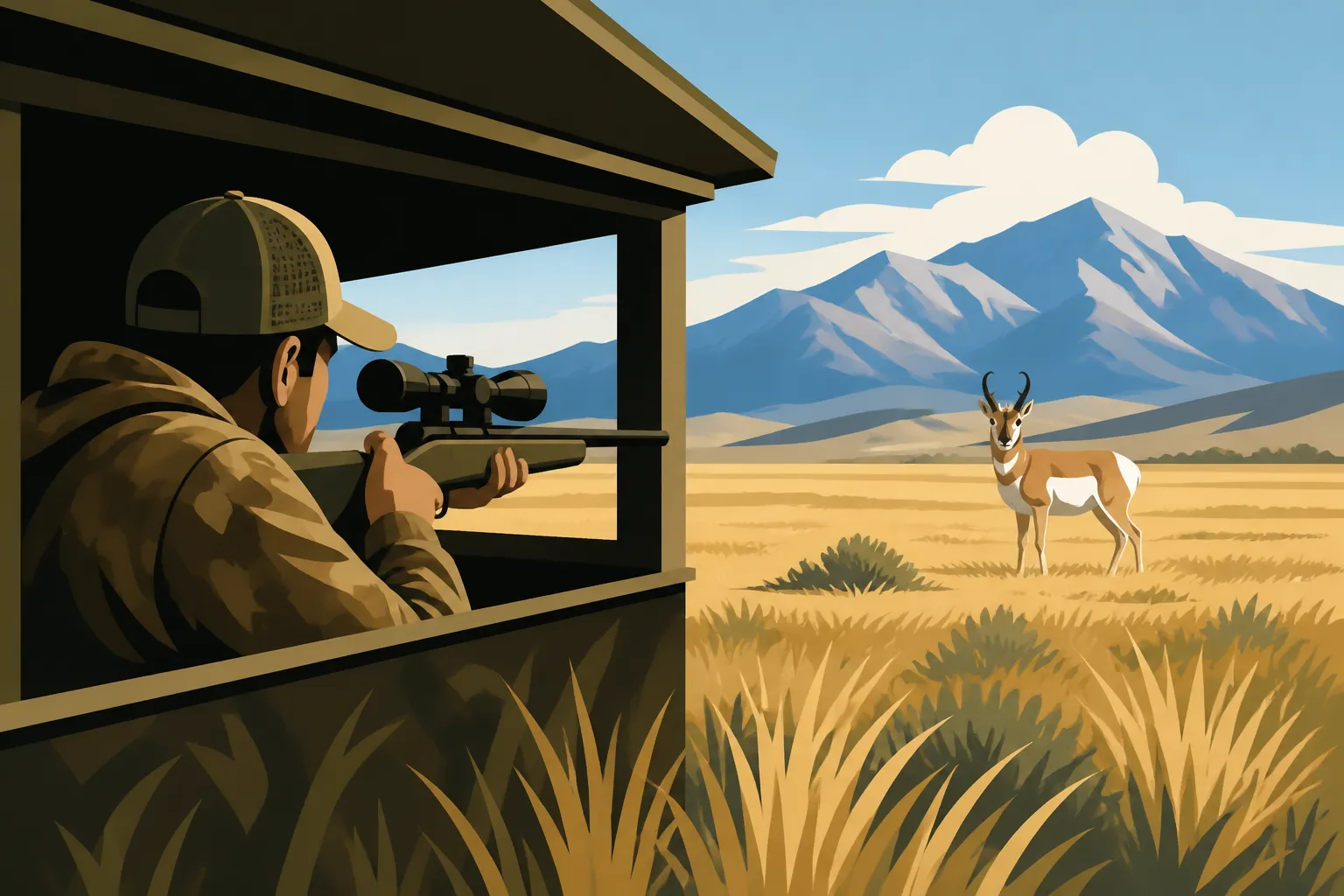
When most hunters think of blind hunting, they picture a pop-up ground blind, and for good reason. These portable, camouflaged structures offer a fantastic solution for the open country of Montana. Brands like Barronett Blinds and Primos offer robust models that are quick to set up and provide excellent concealment. The key is their ability to break up your human outline entirely and offer a dark interior, making it incredibly difficult for keen antelope eyes to detect movement inside.
When deploying a pop-up blind, concealment and scent control are crucial. While the blind breaks up your silhouette, a shiny blind in a treeless landscape can still stick out. Try to position it against a natural backdrop, like a patch of taller sagebrush, a small rise, or even a fence line. Anchor it securely—the winds on the Montana plains can be ferocious! Scent control is also paramount; even though you're enclosed, scent can escape, and antelope have a decent sense of smell. Consider using carbon-lined clothing or scent elimination sprays.
Beyond pop-ups, natural ground blinds can be incredibly effective and often less alarming to wildlife. These might involve meticulously constructed brush blinds, built into existing vegetation, or simply utilizing the natural topography. A deep coulee, a substantial rock outcropping, or a dense stand of greasewood can provide excellent cover. The goal is to blend in so seamlessly that you become part of the natural environment, allowing the antelope to move freely and confidently into shooting range. Remember, the earlier you can set up any blind, especially a pop-up, the more time the local antelope have to become accustomed to its presence.
Elevated and Natural Blinds
While not as common for antelope as they might be for deer in timbered areas, elevated blinds do have their place in very specific Montana antelope hunting scenarios. An elevated blind might be a permanent structure on private land or a small tripod blind. Their primary advantage is giving you a wider field of view and potentially getting your scent above the primary travel lanes of game. However, setting them up covertly in the wide-open expanse where antelope reside can be a significant challenge, and they are often less portable for public land hunters.
More often, hunters will rely on natural cover to create an impromptu blind on the fly. This requires an intimate knowledge of the terrain, often gained through extensive pre-season scouting or using detailed mapping tools. Deep draws, eroded creek beds, and natural depressions can hide a hunter completely, allowing them to remain undetected as antelope graze or travel nearby. Imagine belly-crawling into a dry wash bottom and slowly building a small screen of sagebrush or tumbleweeds around you. These temporary hides allow for greater flexibility and adaptation to changing antelope movements or wind directions.
One excellent strategy is to use the terrain itself as your blind. A small rise that creates a "dead spot" where animals cannot see you from a certain direction can be invaluable. This approach is fundamental to "How to Hunt Antelope on Montana's Plains" and often involves reading the landscape to predict animal movement. Combining this with a ghillie suit or excellent camouflage can make you virtually invisible.
Strategies for Successful Blind Hunting
Once your blind is set up, the real waiting game begins. But it's not just about sitting still; it's about anticipating antelope movements and being ready to act.
Water Hole Ambush Tactics
There's arguably no more effective way to hunt antelope from a blind than ambushing them at a water hole. During the often hot and dry early seasons, antelope must drink, and they will consistently visit reliable water sources. Identifying these active water holes is crucial and can often be done by looking for tracks, droppings, and well-worn trails leading to the water's edge. Using satellite imagery or apps like GoHunt can help you locate potential water sources across large areas of public and private land.
When placing your blind, several factors come into play. First and foremost, consider the prevailing wind. You want your scent to blow away from the approach lanes to the water hole. Antelope often approach water cautiously, circling downwind before committing. Position your blind far enough away from the water to allow for clean shooting lanes, but close enough for an ethical shot, usually within 20-50 yards for archery and 100-200 yards for rifle. You'll also want to consider the sun's position throughout the day to avoid being silhouetted or having glare in your eyes. Patience is the name of the game here; you might sit for hours, even all day, without seeing an animal, only to have a group suddenly appear. This strategy is also heavily featured in guides like "How to Hunt Antelope Water Holes in Montana".
Decoying and Calling from a Blind
While a blind provides excellent concealment, sometimes you need a little something extra to seal the deal. This is where combining your blind with a decoy or calling can become incredibly powerful. Antelope are naturally curious, and bucks can be territorial, especially during the rut. A full-body antelope buck decoy, or even a silhouette, can draw in cautious animals that might otherwise shy away from a water hole or a new object (your blind). Position the decoy so it appears to be heading towards your blind or the water source, ideally with the wind carrying your scent away from the decoy.
When using a decoy, place it far enough away from your blind that an approaching antelope focuses on the decoy first, giving you time to prepare for your shot. Many hunters find success placing the decoy 50-100 yards out, depending on the terrain and weapon. If you are bowhunting, you will want the antelope to engage the decoy closer to allow for a close-range shot, typically within 20-30 yards. Additionally, subtle calls can pique an antelope's interest. Fawn bleats or soft antelope contact calls can make them pause or look your way, but avoid over-calling, as antelope are sensitive to unnatural sounds. For more in-depth strategies on luring in these animals, check out "How to Decoy Antelope in Montana".
Pre-Season Scouting and Preparation
Successful blind hunting for antelope doesn't just happen; it's the culmination of meticulous pre-season work. This includes both E-scouting and boots-on-the-ground reconnaissance. Start with detailed E-scouting using mapping software like the tools available from GoHunt. This allows you to identify potential public lands, analyze terrain features, locate water sources, and pinpoint potential travel corridors from the comfort of your home. You can look for subtle changes in elevation, pinch points, and areas with thicker cover that antelope might use for bedding or travel.
Once you have some areas identified, it's time for physical scouting. This is where you verify your E-scouting findings, look for fresh tracks and droppings, and confirm active water sources. If you're planning on using a pop-up blind, set it up well in advance of the season, if possible and permitted. This allows the antelope to become accustomed to its presence, reducing their suspicion when you're actually inside. Ideally, blinds should be set up a minimum of two weeks before you plan to hunt, blending into the environment and becoming just another feature on the landscape. This applies whether you're hunting general land or exploring options with "How to Use Block Management for DIY Hunts". Always double-check regulations for blind placement on public lands and ensure you have permission for any private land setups.
Gear and Logistics for Blind Hunting Antelope
Being prepared for a long sit in a blind means having the right gear and understanding how to manage your presence in the field. Every detail, from your chair to your optics, contributes to success.
Essential Blind Setup Gear
Sitting in a blind for hours on end, especially in the variable Montana weather, demands careful gear selection. Comfort is paramount because fidgeting or pain will lead to unnecessary movement and potentially spooking game. A comfortable, quiet chair is at the top of the list. Look for options with a backrest and padded seat. A solid tripod or shooting sticks are also critical for stability, ensuring an accurate shot when the moment arrives.
Beyond comfort, you'll need all your hunting essentials readily accessible. This includes your weapon (bow or rifle), rangefinder, binoculars, and calls. For optics, consider high-quality binoculars like those from Vortex or Swarovski, as they will help you spot distant antelope approaching. A good rangefinder is non-negotiable for quickly acquiring target distance, especially if you're bowhunting from a static position. Keep snacks, plenty of water, and a book or e-reader to pass the time quietly. A small, soft cooler can keep drinks and food fresh, and a pee bottle or portable urinal is a must to avoid leaving the blind. You might also want to review "Best Optics for Montana Big Game" to ensure you have the best possible glass for discerning those distant pronghorns.
Managing Scent and Movement
Antelope have incredibly sensitive noses, and while a blind offers some containment, scent control remains vitally important. Wear clean hunting clothes that have been washed in scent-free detergent and stored in scent-proof bags. Utilize scent-eliminating sprays on your clothes and gear before heading into the blind. Pay close attention to wind direction, always trying to place your blind so your scent is carried away from known antelope travel routes or water sources. Even a slight shift in wind can carry your scent further than you'd expect, putting wary antelope on high alert. For general wind considerations, reading about "How to Use the Wind Hunting Montana Elk" can offer valuable insights transferable to antelope.
Movement is the other major giveaway. Inside the blind, every motion should be slow, deliberate, and minimized. Antelope can pick up the slightest twitch through mesh windows or gaps. Position your chair and gear so you can comfortably turn and acquire a target without large, sudden movements. If you're using a bow, practice drawing your bow from a seated position within the confines of your blind. For rifle hunters, ensure you have clear shooting lanes through the blind's windows or openings. The goal is to blend into the blind's darkness, becoming completely invisible until you're ready to make your move.
| Item | Purpose | Notes |
|---|---|---|
| Comfortable Chair | Long sits require comfort | Quiet, sturdy, with back support. |
| Weapon (Bow/Rifle) | Primary hunting tool | Practice drawing/aiming from inside the blind. |
| Rangefinder | Accurate distance measurement | Crucial for ethical shots, especially at varying ranges. |
| Binoculars | Spotting distant antelope | High-quality glass for clarity in open country. |
| Scent Control Spray | Minimize human odor | Apply to clothing and gear before entering the blind. |
| Snacks & Water | Maintain energy and hydration | Quiet wrappers, plenty of fluids for long waits. |
| Pee Bottle/Urinal | Avoid leaving the blind | Essential for extended sits without disturbing the area. |
| Quiet Clothing | Reduce rustling noises | Avoid stiff or noisy fabrics. |
| Book/E-reader | Pass time during lulls | Keep distraction silent and contained. |
| Sunscreen/Hat | Protection from elements | Even in a blind, sun exposure can be an issue. |
| Small Cooler | Keep drinks/food cool | Especially important during early season hunts. |
| Tripod/Shooting Sticks | Steady rest for accurate shots | Helps stabilize your weapon from a seated position. |
Hunting Montana antelope from a blind can transform a frustrating endeavor into a consistently successful strategy. By understanding antelope behavior, strategically placing your blind, and meticulously preparing your gear and mindset, you'll be well on your way to punching your tag on a magnificent pronghorn. It might not be the romanticized spot-and-stalk, but it's a smart, effective method that countless hunters swear by in the Big Sky State.
Disclaimer
Please remember that hunting regulations, season dates, and license requirements in Montana can change. Always consult the most current Montana Fish, Wildlife & Parks (FWP) regulations before planning and embarking on any hunt. This guide is for informational purposes only and does not replace official FWP documentation.