Montana Mule Deer Hunting: Archery Tactics
Hunting mule deer in Montana with a bow is one of the most challenging yet rewarding pursuits a hunter can undertake. It's not just about drawing a tag; it's about mastering the landscape, understanding a mule deer's unpredictable nature, and executing a flawless stalk in country that often feels like it's designed to expose you. Many hunters feel frustrated when they spend days glassing only to have a stalk blow up because of a swirling thermal or an unseen doe. This guide is here to unravel the complexities of archery mule deer hunting in Montana, giving you the tactics and mindset needed to increase your chances of success against these magnificent deer.
Understanding Mule Deer Behavior for Archery Success
Before you even nock an arrow, truly understanding the mule deer you're pursuing is paramount. Montana's mule deer are creatures of habit but also masters of adaptation, especially when facing hunting pressure. Their behavior changes significantly with the seasons, the available forage, and the presence of hunters. For an archery hunter, this knowledge isn't just helpful; it's absolutely critical for getting within bow range.
Seasonal Movement and Rut Dynamics
The archery season in Montana typically kicks off in early September, often before the mule deer rut is in full swing. During this early period, bucks are usually in their summer bachelor groups, focused on feeding and putting on weight after antler growth. They’re often found in higher elevations, alpine basins, or secluded timber pockets, enjoying lush forage. As September progresses into October, these groups start to break up, and bucks become more independent. This pre-rut phase sees an increase in scraping and rubbing activity, and bucks will start checking does, though serious breeding might still be weeks away. Knowing this, you should prioritize areas with good forage and escape cover in the early season.
As you get closer to the end of October and into November, the mule deer rut really heats up, coinciding with Montana's general rifle season, but the tail end can still offer archery opportunities in specific areas or if you've drawn a late-season archery-only tag. During the peak rut, bucks become far less cautious, driven by the urge to breed. They will actively seek out does, often covering significant ground and exposing themselves in areas they might avoid earlier in the season. This period can present exceptional opportunities for patient archers, as a preoccupied buck might be more forgiving of a less-than-perfect stalk. Understanding the timing of the rut in your specific hunting district can make or break your hunt, so pay close attention to local conditions and reports. You can learn a lot about this by studying the Montana Mule Deer Rut Explained for a deeper dive.
Reading the Landscape: Feeding and Bedding
Mule deer are highly influenced by the terrain and available resources. Their feeding patterns often dictate their daily movements. In mountainous regions, they’ll typically feed in open parks, avalanche chutes, or clearcuts during the cooler parts of the day, moving towards thicker timber or north-facing slopes to bed down as temperatures rise or hunter pressure mounts. On the plains and breaks, they might feed in coulees, draws, or agricultural fields, bedding on benches or in brushy pockets that offer thermal cover and good visibility. Identifying these feeding and bedding areas from a distance is a core component of How to Glass for Montana Mule Deer.
North-facing slopes, especially those with dark timber, are often goldmines for bedding deer, as they offer shade from the sun and shelter from the wind. Conversely, south-facing slopes, which warm up faster, can be critical feeding areas, particularly in the spring and late fall. When e-scouting, look for transitions in habitat—where timber meets open country, or where a deep coulee cuts through rolling hills. These transition zones are natural travel corridors and often host both feeding and bedding activity. Understanding these patterns is key to predicting where a buck will be and how to approach him. For more detailed habitat information, you might check out our guide on Montana Mule Deer Habitat Explained.
Essential Archery Tactics for Montana Mule Deer
Montana's diverse landscape—from towering peaks to vast plains and rugged breaks—demands a versatile approach to archery mule deer hunting. No single tactic will work everywhere, and being adaptable is a hallmark of a successful bowhunter. While the principle of getting close remains the same, the execution differs dramatically depending on the terrain.
Mastering the Spot-and-Stalk Approach
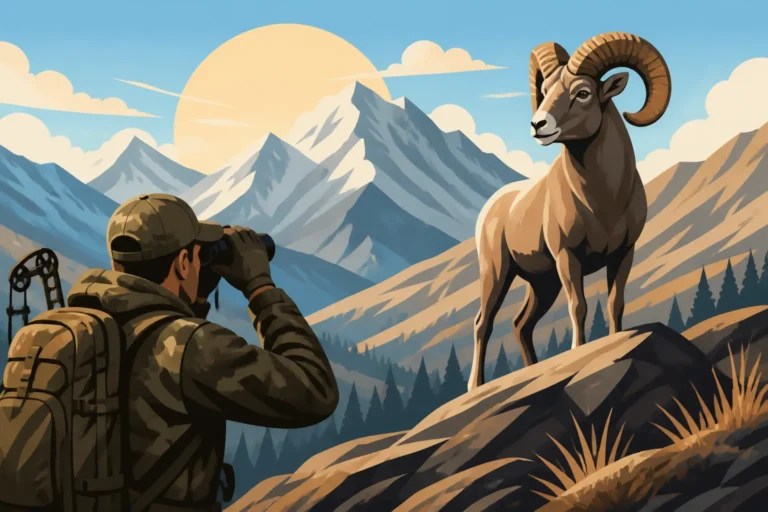
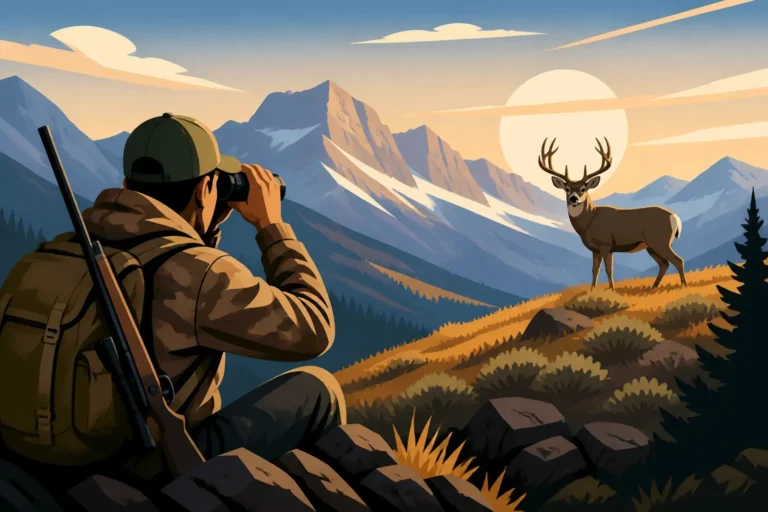
The spot-and-stalk method is arguably the most iconic and effective tactic for archery mule deer in Montana. It involves covering ground with your optics, locating a target animal, and then meticulously planning and executing a stalk to get within bow range. This isn't a casual stroll; it's a chess match against one of nature's most vigilant creatures. Your day will likely begin before first light, hiking to a vantage point where you can effectively glass. Use high-quality binoculars and a spotting scope to systematically pick apart distant hillsides, looking for subtle movements, a flick of an ear, or the tell-tale gleam of an antler. GoHunt's mapping tools, for instance, can be invaluable for identifying potential glassing points and escape routes before you even step foot in the field.
Once a buck is spotted and assessed, the real challenge begins. First, you need to understand the wind and thermals. In mountainous terrain, thermals typically rise in the morning as the sun warms the ground and fall in the evening as the air cools. The wind, however, can be unpredictable, swirling through canyons and over ridges. A single mistake in judging the wind can send a buck bounding away. Next, analyze the terrain between you and the deer. Look for natural cover like drainages, rock outcroppings, timber patches, or even subtle changes in elevation that can conceal your approach. Plan your route meticulously, always considering escape routes for the deer and potential hazards for your stalk. Often, the best route isn't the most direct, but the one that keeps you hidden and allows you to approach from a favorable wind direction. Remember, you're not just moving to the deer; you're moving with the wind and through the cover. For comprehensive guidance on this method, refer to Montana Mule Deer Hunting: Spot-and-Stalk Tactics.
Still-Hunting Timber and Breaks
While wide-open country often lends itself to spot-and-stalk, Montana also offers significant opportunities for still-hunting in thicker timber, brushy coulees, and the rugged, broken country known as the "breaks." This tactic is about moving extremely slowly and deliberately through cover, trying to intercept deer that are feeding, bedding, or moving between areas. It requires immense patience and keen observation skills. Instead of trying to find the deer from afar, you're actively searching for them up close. Each step should be calculated, checking for fallen branches or loose rocks that might betray your presence. Pause frequently, often for several minutes at a time, to glass ahead and around you, letting your eyes adjust to the subtle patterns of the forest or brush.
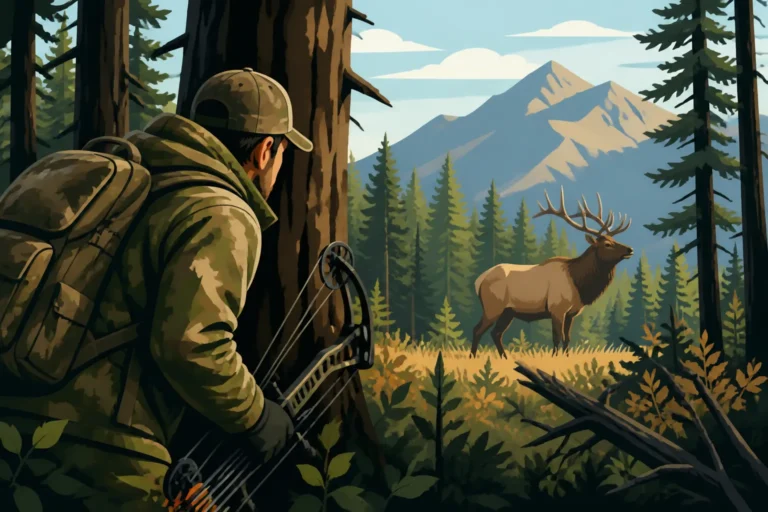
In timber, focus on areas with good forage, fresh sign like rubs and scrapes, or transition zones between different types of cover. Mule deer will often use dark timber for security, especially during hunting season, making it a prime location for still-hunting. In the breaks, target the bottoms of coulees, brushy side hills, and shaded benches where deer might be bedded. The wind is still your guiding principle; always hunt into or across the wind to prevent your scent from reaching deer ahead of you. Pay attention to the sun's position, too, ensuring it doesn't silhouette you against the skyline or blind you to approaching animals. When you spot a deer, freeze immediately and assess the situation. Often, a slow, deliberate draw is the only shot you'll get, so practice it regularly. For those seeking deer in heavily timbered areas, learning How to Still-Hunt Montana Timber can significantly enhance your approach.
Gear and Preparation for Archery Mule Deer Hunting
Archery hunting for mule deer in Montana isn't just a physical challenge; it's a gear-intensive endeavor. Having the right tools and being prepared for the demanding environment can make a substantial difference in your comfort, safety, and ultimately, your success.
Optics and Archery Setup
Montana's vast, open landscapes necessitate top-tier optics. A good pair of 10x binoculars is essential for general glassing, but a high-quality spotting scope (20-60x or higher) on a sturdy tripod is non-negotiable for effectively picking apart distant hillsides and evaluating bucks. You’ll be spending hours, sometimes entire days, behind glass, so investing in clear, bright optics from reputable brands like Swarovski, Zeiss, or Vortex will pay dividends. A rangefinder is also critical for archery hunting, helping you precisely gauge distances in varied terrain, which is vital for ethical shots. Our guide on Best Optics for Montana Big Game offers more insights into choosing the right glass.
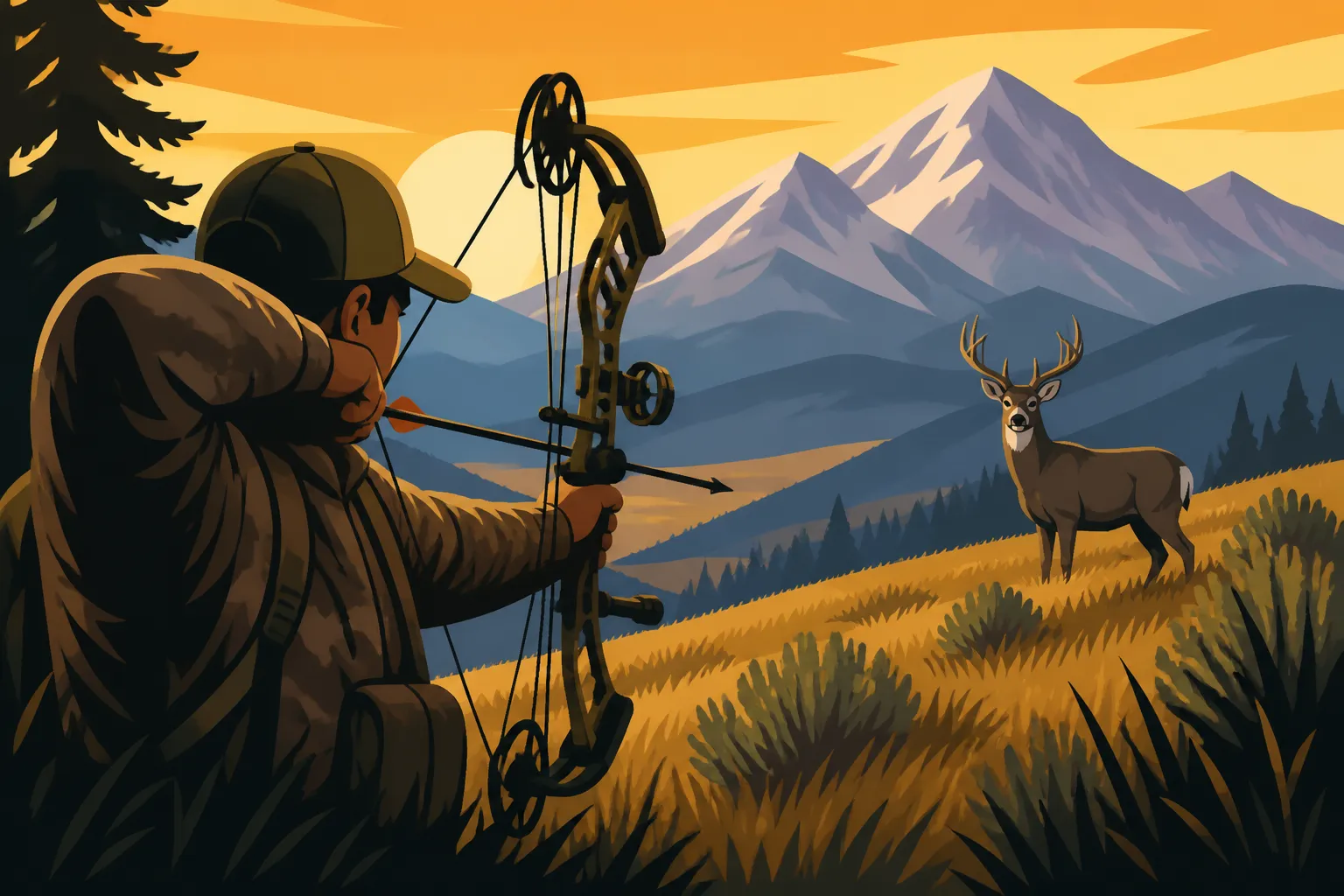
Your archery setup needs to be dialed in for the conditions you'll encounter. A reliable, well-tuned bow that you can comfortably shoot accurately under pressure is paramount. This means practicing shots from various positions – kneeling, sitting, and standing – and at different angles, simulating mountain shots. Broadhead selection is also crucial; choose a sturdy, sharp broadhead that flies true with your setup and is capable of deep penetration on a tough mule deer. Many hunters opt for fixed-blade broadheads for their reliability, though modern mechanicals can also be effective if you're confident in their performance. Consider your arrow weight, too; a slightly heavier arrow can improve penetration, especially on quartering shots. Don't forget a sturdy pack to carry all your gear, including layers of clothing, food, water, and eventually, meat. Having your setup perfectly calibrated, and knowing its limitations, is key to confidence in the field.
Physical and Mental Conditioning
Montana mule deer hunting is physically demanding. You'll likely be covering many miles each day, often at high elevations and over rugged terrain. This isn't a hunt where you can afford to be out of shape. Start your physical preparation well in advance of the season, focusing on cardiovascular endurance, strength training, and hiking with a weighted pack. Incorporate uneven terrain and elevation changes into your routine to mimic the mountain environment. If you're planning a multi-day backcountry hunt, our guide on How to Pack for a Montana Backcountry Hunt will be invaluable.
Beyond the physical, mental toughness is equally important. Archery hunting often involves long periods of boredom interspersed with moments of intense excitement and pressure. You'll face disappointment—blown stalks, missed opportunities, or simply not finding the deer you're after. Perseverance, patience, and the ability to stay positive when things get tough are critical. Mentally rehearse your shot process repeatedly, visualize success, and develop strategies for handling frustration. An effective tool like GoHunt's Insider platform can help keep your motivation high by providing detailed draw odds and unit breakdowns, helping you plan for future hunts even when the current one is challenging. Remember, success often comes down to the hunter who stays in the field one more hour, climbs one more ridge, or maintains focus one more minute.
Overcoming Common Archery Mule Deer Challenges
Even with perfect preparation and execution, archery mule deer hunting in Montana throws curveballs. These animals are incredibly resilient and have an uncanny ability to evade hunters. Learning to anticipate and adapt to these challenges is part of the growth process for any serious bowhunter.
Dealing with Pressure and Educated Deer
Montana's public lands, while vast, can experience significant hunter pressure, especially during the general rifle season. Even during archery season, popular areas can see a steady stream of orange-clad hunters. This pressure quickly educates mule deer, making them more nocturnal, more prone to seeking dense cover, and incredibly wary. They learn to associate human presence with danger and will often move into the thickest timber or nastiest canyons to escape. To combat this, you'll need to think outside the box and be willing to work harder than the average hunter.
One effective strategy is to target remote, hard-to-access areas. This might mean packing into a wilderness area for several days, or focusing on public lands that require significant hiking to get away from roads. Deer that rarely see humans are often less wary. Another tactic is to hunt during adverse weather conditions. A heavy snowstorm or strong winds can keep fair-weather hunters at home, creating opportunities for those willing to brave the elements. You might also find success by focusing on the fringes of private land that receive less pressure, or by hunting during the middle of the week when many hunters are back at work. Understanding How to Hunt Montana Public Land Pressure is vital for adapting your strategy. These educated deer often move just at first and last light, so being in position early and staying late is critical.
The Wind and Thermals
The wind, and its often-tricky cousin, thermals, are perhaps the most influential and frustrating factors in western hunting, especially for archers. A mule deer's nose is its primary defense, and if your scent reaches them, the game is over. In the mountains, thermals add another layer of complexity. As mentioned, warm air rises and cool air falls, meaning morning thermals will generally carry your scent uphill, while evening thermals will carry it downhill. However, this is a generalization, and local topography, sun exposure, and cloud cover can create unpredictable swirls.
Learning to read the wind and understand thermals is a skill developed over many hunts. Always carry a wind checker and use it constantly, even when you think you know what the wind is doing. When planning a stalk, visualize how your scent will travel. Can you approach from below the deer with a rising thermal in the morning? Or from above with a falling thermal in the evening? Often, it means taking a much longer, more circuitous route to maintain a favorable wind. If the wind is swirling badly, or if it's dead calm, sometimes the best tactic is to back out and try again later, or shift your focus to still-hunting very slowly into the wind through thick cover where a deer might not detect you visually before you get a shot. Patience is paramount here; rushing a stalk because of a tricky wind will almost always lead to failure.
| Archery Mule Deer Tactic | Best Terrain Type | Key Considerations | Ideal Wind/Thermal Strategy |
|---|---|---|---|
| Spot-and-Stalk | Open, broken country, foothills | Requires excellent optics, patience, physical fitness | Approach into or across the wind; utilize thermals (rising in AM, falling in PM) |
| Still-Hunting | Timber, brushy coulees, breaks | Slow, deliberate movement, acute observation, quiet gear | Always hunt into the wind; minimal scent disturbance |
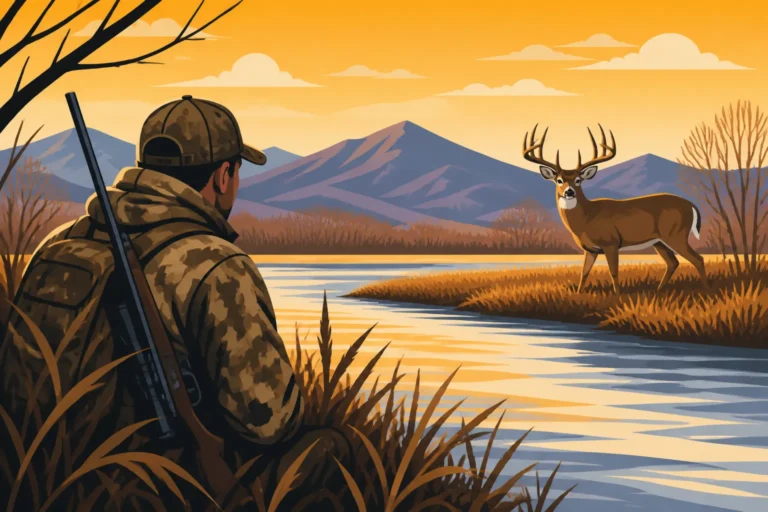
| Ambush (near water/feed) | Waterholes, pinch points, food sources | Requires E-scouting, patience, knowledge of deer patterns | Set up downwind of expected deer travel/approach |
| Calling | Rutting bucks in open country | Limited effectiveness, use sparingly, combine with stalk | Use when downwind and concealed; mimic doe bleats or subtle grunts |
The table above gives a quick overview, but each tactic demands dedication and adaptability to Montana’s unique and ever-changing conditions.
Disclaimer
Hunting involves inherent risks, including injury and death. This guide provides information for educational purposes only and is not a substitute for professional advice, local regulations, or proper safety training. Always prioritize safety, adhere to all Montana Fish, Wildlife & Parks regulations, and hunt ethically and responsibly. Ensure you have the necessary licenses and tags before heading into the field.