How to Field Judge a Montana Mule Deer Buck
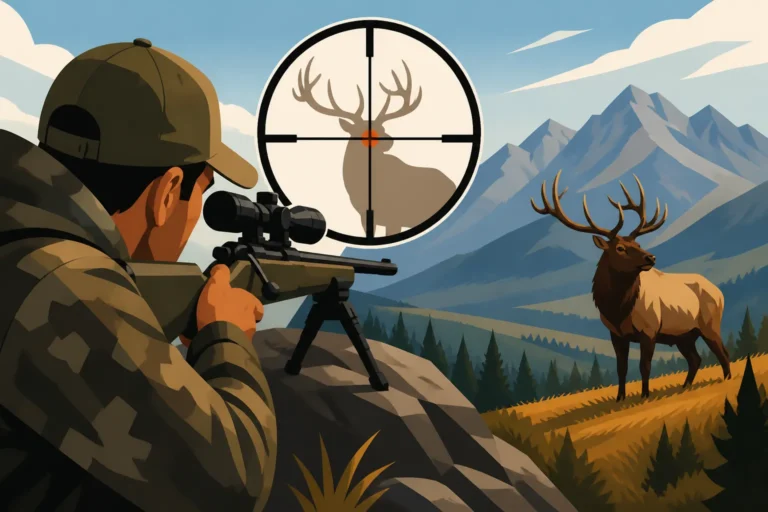
One of the most thrilling moments in a Montana mule deer hunt is spotting that buck of a lifetime, but the real challenge often begins right then: how do you accurately assess its antlers in a split second? Many hunters, myself included, have felt that gut-wrenching "ground shrinkage" after packing out what looked like a giant only to realize it was smaller than anticipated. This guide will walk you through the nuances of field judging a Montana mule deer buck, helping you make confident decisions when it matters most.
Why Field Judging Mule Deer is So Challenging
Let's be honest, staring through a spotting scope at a buck a mile away, or catching a glimpse of antlers through dense timber, isn't exactly like having it standing next to a measuring tape. The vast, rugged landscapes of Montana, combined with the sheer excitement and adrenaline of a hunting encounter, conspire to make accurate field judging a genuine skill that takes years to hone. It's not just about seeing the antlers; it's about interpreting what you see, often under less-than-ideal conditions.
The Illusion of Distance and Size
Montana's sprawling vistas are breathtaking, but they play tricks on your eyes. A mule deer buck that looks massive through your binoculars at 800 yards might be perfectly average when you finally get a closer look. The lack of familiar objects for scale, the curvature of the earth, and even atmospheric conditions like haze can all contribute to this optical illusion. It's not uncommon to over-estimate a buck's size simply because it's the only object of interest in a vast, empty landscape. This phenomenon is often compounded by the excitement of the moment, making an objective assessment incredibly difficult.
Moreover, the angle at which you view a buck significantly impacts its apparent size and width. A buck walking directly away or towards you will appear much narrower than one broadside. A buck standing on a distant ridge, silhouetted against the sky, might seem to have incredible height to its antlers, while a buck in a deep coulee might have its mass and length underestimated. Learning to mentally adjust for these angles is a critical part of developing reliable field judging skills. It requires patience and a conscious effort to avoid jumping to conclusions based on an initial, fleeting impression.
Rapid Decision-Making Under Pressure
Unlike many other forms of hunting where you might have ample time to observe and evaluate, hunting mule deer, particularly mature bucks, often means making a quick call. These animals are masters of their environment, rarely standing still for long, and are acutely aware of their surroundings. You might have a 30-second window before a buck disappears behind a ridge or into thick cover. The pressure to decide if it's "the one" – or even just a legal buck – can be immense. This emotional element can cloud judgment, leading to hasty decisions that you might regret later.
This quick assessment isn't just about antler size for a trophy. It's also about making sure you're pursuing a legal animal based on antler point restrictions, which can vary by hunting district in Montana. Imagine you’ve been patiently How to Spot-and-Stalk Montana Mule Deer for hours, finally getting within range, only for the buck to offer a brief, obstructed view. Do you pull the trigger, or do you let it walk, risking not seeing another buck that day? This internal struggle is a common experience, highlighting why having a clear, mental checklist for judging is so important before you ever step foot in the field.
Key Components of a Montana Mule Deer Buck for Scoring
Understanding how mule deer antlers are officially scored by organizations like Boone and Crockett is crucial for accurate field judging. While you won't be carrying a tape measure into the field, knowing the scoreable components helps you prioritize what to look for. Mule deer antlers are unique, characterized by their deep forking, and recognizing these key features is the foundation of good judgment.
Main Beams and Overall Width
The main beams are the foundation of a buck's rack, curving outwards, then generally inwards and forwards. Their length, circumference, and overall spread are significant contributors to the final score. When you're glassing a buck, pay close attention to how far the main beams extend beyond its ears. The typical ear-tip-to-ear-tip measurement on a mature mule deer is roughly 20-22 inches. This serves as an excellent, readily available benchmark. A buck whose main beams extend significantly outside its ear tips will likely have a wider spread, adding valuable inches to its score.
However, don't let width be your only focus. Many hunters make the mistake of prioritizing width above all else. A buck can have impressive width but lack mass, tine length, or overall beam length, which can significantly reduce its final score. While a wide buck is undeniably impressive to look at, it's just one piece of the puzzle. Consider the symmetry and balance of the main beams; well-matched beams contribute to a higher typical score. For deeper analysis of antler growth and what makes a trophy, exploring topics like Montana Mule Deer Antler Growth can be very insightful.
Tines and Points
Mule deer antlers are known for their distinctive bifurcated points, meaning each main point typically forks. A "typical" mule deer rack will have symmetrical forks and points. You're looking for clean, long, and well-defined tines. The length of the tines, particularly the G2s (the second point up from the base), can dramatically increase a buck's score. Count the points on each side, ensuring they match for a typical score. Non-typical points, or abnormal points, also add to the score but in a different category.
When judging, quickly count the points on each side. Does it look like a "4×4" (four points on each main beam, excluding the brow tines) or a "3×4"? Are there any extra "kickers" or small points coming off the main beams or other tines? These non-typical points add to a non-typical score, but for a typical score, they are deductions. Often, an impressive non-typical buck might not score as high in the typical category due to deductions, but it can still be a truly magnificent animal to harvest.
Mass and Length
Mass, or circumference, is a critical but often overlooked component of antler scoring. The thickness of the main beams, measured at various points, adds significant inches to a buck's score. A buck with thick, heavy beams will always score better than a buck with pencil-thin antlers, even if the latter has impressive width or tine length. Look for beams that appear "ropy" or "heavy" all the way out, not just at the bases.
Beam length is another crucial factor. Visualize the main beam curving from the base around to its tip. A long, sweeping main beam indicates a mature buck with good genetics. Often, bucks with long main beams will also have good tine length. While difficult to eyeball precisely, comparing the perceived length of the beams to the buck's head or body can give you a rough estimate. A buck with main beams that seem to curl forward past its nose when it's looking straight ahead is a good indicator of substantial length.
Practical Field Judging Techniques and Tips
Learning to field judge effectively is a skill built on observation, practice, and the strategic use of your hunting gear. It's not about being a human tape measure, but rather about rapidly assessing key features relative to established benchmarks and making an informed decision. The more you practice, the more intuitive these techniques will become.
Using the Ears as a Benchmark
This is perhaps the most universally accepted and practical field judging technique. A mature mule deer buck's ears are roughly 20-22 inches from tip to tip when alert and forward. This provides an immediate, constant reference point. When a buck is broadside to you, mentally compare the width of its antlers to its ear spread.
- Outside the Ears: If the main beams extend significantly outside the ear tips, you're likely looking at a buck with a 24-inch or greater spread, which is a great starting point for a respectable buck.
- Inside the Ears: If the antlers barely reach the ear tips, or are inside them, it's probably a narrower buck, perhaps in the 18-20 inch range.
- Height Above the Ears: While the ear tips primarily help with width, you can also use them to gauge antler height. Do the tines stand significantly taller than the ear length? This suggests good tine length and overall height, contributing to mass and score.
Practicing this technique on any deer you see, even small bucks or does, will help you calibrate your eye. The more you apply this mental measurement, the more accurate you'll become.
Body Size and Age as Indicators
Antlers grow with age, and a mature buck typically has a more developed body to support a larger rack. While not a direct antler measurement, looking at the buck's overall body condition can give you clues about its age and, by extension, its antler potential.
- Younger Bucks (2.5-3.5 years old): These bucks might have decent width or some length, but their bodies will appear more athletic and less "filled out" than older bucks. Their neck might still blend smoothly into their shoulders, and their legs will look long. Their antlers often have less mass.
- Mature Bucks (4.5+ years old): These animals often have a blockier, more robust build. Their neck will be thick and muscular, especially during the rut, creating a distinct "chest" appearance. Their belly might sag slightly, and their legs might appear shorter relative to their deep chest. These older bucks generally carry more mass and longer main beams.
Understanding Montana Mule Deer Population Trends and the typical age structure in your hunting area, perhaps through resources like GoHunt, can further refine your understanding of what a mature buck looks like.
Optical Aids and Their Role
In Montana's expansive terrain, quality optics are not a luxury; they're an absolute necessity for field judging.
- Binoculars (10×42, 12×50): Your primary tool for initial spotting and quick assessment. Use them constantly to scan for deer and get a general idea of antler size. Good binoculars, like those from Zeiss or Swarovski, will offer clarity that makes distinguishing points and mass easier even at long distances. You can learn more about specific recommendations in Best Optics for Montana Big Game.
- Spotting Scopes (20-60x or 20-70x): These are essential for detailed evaluations of distant bucks. Set up your spotting scope on a stable tripod and take your time. Zoom in and out to get different perspectives, and adjust the focus meticulously. A good spotting scope will allow you to count points, estimate mass, and get a better sense of beam length and overall symmetry. This is where you can truly scrutinize the smaller details that add up to a significant score. When you're How to Glass for Montana Mule Deer, a good spotting scope is invaluable.
- Rangefinders: While not directly for judging antler size, knowing the exact distance to a buck is crucial because it helps to correct for the illusion of distance. A buck at 400 yards will always appear smaller than one at 200 yards, even if they have identical racks. Ranging multiple points around the buck can also give you an idea of the terrain it's in, helping you visualize it better.
Using these tools effectively means setting them up quickly and ensuring they are clear and stable. Don't be afraid to take a few extra moments to get a steady image; that clarity can prevent a major mistake.
Common Field Judging Mistakes to Avoid
Even with the best intentions and techniques, field judging mule deer can lead to misjudgments. Understanding these common pitfalls can help you consciously avoid them and improve your accuracy over time. It's often the subtle psychological or environmental factors that trip up even experienced hunters.
Ground Shrinkage and Excitement
Ah, the infamous "ground shrinkage." This isn't a magical phenomenon where antlers physically shrink; it's a psychological one. The buck always looks bigger through binoculars or a scope, or when it's alive and moving. Once it's on the ground, the reality sets in, and often the rack appears smaller than you remember. This is due to a combination of factors:
- Adrenaline: The rush of adrenaline during the hunt can amplify your perception, making everything seem more dramatic and grand.
- Lack of Scale: Once the buck is down, you no longer have the vast landscape or the animal's body to provide scale.
- Confirmation Bias: You want it to be a big buck, so your brain might subconsciously exaggerate its size.
To combat ground shrinkage, try to maintain a calm, analytical mindset during the judging process. Use your benchmarks, verbalize what you see, and if possible, get a second opinion from a hunting partner. Trust your initial, calm assessment over the excited one.
Not Accounting for Terrain and Angles
We touched on this briefly, but it's worth re-emphasizing. A buck standing on a steep slope can appear to have much longer tines or main beams than it actually does, simply because of the vertical angle. Similarly, a buck in a deep draw or shadowed timber can have its rack's mass or width severely underestimated.
- Uphill vs. Downhill: A buck viewed from below on an uphill slope will seem to have taller antlers. Viewed from above on a downhill slope, they might appear shorter.
- Background: Antlers silhouetted against a clear sky can look larger and more distinct than those against a cluttered background of trees or rocks.
- Head Angle: A buck slightly turning its head can appear wider or narrower. Wait for a broadside view if possible, or try to visualize what it would look like from different angles.
Always try to visualize the buck on flat ground. Imagine removing the terrain and simply focusing on the antler structure itself. This mental exercise can help normalize your perception.
Focusing Only on Width
While a wide mule deer buck is indeed a sight to behold, it's a common mistake to fixate solely on this dimension. Many hunters pass up bucks with incredible mass, tine length, or overall beam length simply because they aren't "ear-tip wide." Boone and Crockett scores are a cumulative measure of all these factors. A buck with a 24-inch spread might score lower than a 20-inch spread buck if the latter has significantly more mass and tine length.
To avoid this pitfall, practice looking at the whole picture. Train your eye to quickly scan all the components:
- Width: Use the ears as a benchmark.
- Tine Length: How tall are the forks? Are the G2s long and sweeping?
- Mass: How thick are the main beams from base to tip? Do they hold their mass well?
- Main Beam Length: Do the beams extend well beyond the last tine, or do they stop short?
A balanced buck with good measurements in all categories will often score higher than a buck that excels in only one. Resources like GoHunt often provide detailed harvest data and examples of scored bucks, which can be invaluable for training your eye on what truly contributes to a high score. Knowing how to assess these various features is essential for Best Method to Hunt Montana Mule Deer.
Here's a quick reference table to help visualize these components:
| Antler Characteristic | What to Look For (Field Judging) | Impact on Score | Common Pitfalls |
|---|---|---|---|
| Main Beam Width | Extends outside ears (20-22") | High | Over-prioritizing |
| Main Beam Length | Sweeping, extends past nose | High | Hard to estimate |
| Tine Length | Long, clean G2s and forks | High | Obscured by cover |
| Mass (Circumference) | Ropy, heavy throughout beams | High | Often underestimated |
| Points | Symmetrical 4×4 or 5×5 | High (typical) | Non-typicals deduct |
| Symmetry | Matching sides | High (typical) | Can be hard to see |
| Overall Impression | Balanced, mature, heavy rack | Cumulative | Ground shrinkage |
Developing a keen eye for field judging a Montana mule deer buck is a journey, not a destination. It requires countless hours behind glass, patience, and the ability to learn from every encounter, whether you pull the trigger or not. By focusing on the key components of antlers, using reliable benchmarks like the ears, and actively avoiding common judging errors, you'll gain confidence in making those crucial decisions in the field. Remember, every buck is a trophy in its own right, but knowing what you're looking at will enhance your hunting experience. Whether you're planning a trip focused on Montana Mule Deer Hunting Guide or a specific tactic like Montana Rifle Mule Deer Hunting: Rifle Tactics, honing your field judging skills is a key part of becoming a more successful and discerning hunter.
Disclaimer
The information provided in this guide is for general informational purposes only and is not intended as legal advice. Hunting regulations, seasons, and licensing requirements in Montana are subject to change. Always consult the official Montana Fish, Wildlife & Parks (FWP) regulations for the current year before planning or engaging in any hunting activities. It is your responsibility to understand and comply with all applicable laws and regulations.