How to Spot-and-Stalk Montana Mule Deer
Hunting mule deer in Montana can be an incredibly rewarding challenge, but for many, the vast, open landscapes and the deer's inherent elusiveness make consistently finding and approaching them a real head-scratcher. It's not like still-hunting dense timber for whitetails; mule deer demand a different approach. This guide is all about mastering the spot-and-stalk method, breaking down how to effectively locate these magnificent animals and then execute a successful stalk in Montana's diverse terrain.
Understanding Montana Mule Deer and Their Habitat
Before you even think about throwing on a pack and heading out, truly understanding the animal you're pursuing is paramount. Montana's mule deer are creatures of habit, yet incredibly adaptable, and their behavior shifts significantly with the seasons and the specific region you're hunting.
Seasonal Movement and Rut Behavior
Mule deer in Montana, like most big game, have distinct seasonal patterns. In the early archery seasons, often through September, you'll find bucks typically in smaller bachelor groups, focused on feeding in higher elevations or more secluded pockets where they've spent their summer building antler mass. They're trying to stay cool and pack on calories. As you move into October and the general rifle season opens, there's a transition. The deer start to move down from the highest summer ranges, often congregating in areas with good forage and cover as winter approaches.
The magic truly begins in November with the rut. This is when bucks become far less cautious, driven by the urge to breed. You'll see them actively chasing does, making them more visible and, in some ways, more predictable in their movements, albeit often erratic due to their single-minded focus. This period offers some of the best opportunities for spot-and-stalk, as bucks might expose themselves in open country more readily. Understanding when and where to expect these behavioral shifts is key to your strategy. A great resource for anticipating these movements is to dive into how to interpret Montana Mule Deer Season Dates and Tags.
Preferred Terrain and Cover
Montana's landscape is incredibly varied, and so is mule deer habitat. You'll find them anywhere from the eastern plains and the Missouri Breaks, characterized by vast expanses, coulees, and badlands, to the western mountains with their timbered slopes, open parks, and rocky outcrops.
- Open Country and Breaks: In areas like eastern Montana, mule deer often use the rolling hills, sagebrush flats, and especially the deep, winding coulees and badlands for cover. These natural depressions offer thermal regulation, protection from the wind, and a means to move undetected. They'll bed on north-facing slopes in the summer to stay cool, and often south-facing slopes in winter to catch the sun.
- Mountainous Regions: In the more rugged western parts of the state, mule deer will utilize timbered draws, clear-cuts, and rocky slopes. They often favor the edges where timber meets open feeding areas. Ponderosa pine stands, often with open understories, provide excellent cover and browse. Look for steep, broken terrain that offers escape routes and vantage points. The key is to think like a deer: where would I feel safe, have good visibility, and easy access to food and water?
Knowing Montana Mule Deer Habitat Explained is crucial for effective e-scouting and on-the-ground glassing. Using tools like the GoHunt Insider platform can be a game-changer for identifying potential habitat before you even leave your living room, helping you pinpoint those crucial transition zones and likely bedding areas based on historical data and satellite imagery.
Essential Gear for the Spot-and-Stalk Hunter
Spot-and-stalk mule deer hunting isn't about covering endless miles blindly. It's about efficiency, observation, and precision. Your gear setup needs to support this methodology, emphasizing optics, navigation, and quiet movement.
High-Quality Optics are Non-Negotiable
This is perhaps the most critical component of a successful spot-and-stalk hunt for mule deer. You'll spend 90% of your time glassing, not walking. Skimping here is a mistake many hunters make.
- Binoculars (Binos): A good pair of 10×42 or 12×50 binoculars are your primary scouting tool. They should be clear, bright, and comfortable to hold for extended periods. Brands like Vortex, Swarovski, and Leica are top-tier, but even mid-range options from Maven or Leupold can be excellent performers. You'll use these for wide-area scanning, picking apart distant hillsides, and confirming what you see through your spotting scope. Mount them on a tripod for stability, especially when glassing at longer distances; even the steadiest hands can't replicate tripod stability over hours.
- Spotting Scope: A quality spotting scope (e.g., 65mm or 80mm objective with 20-60x magnification) is essential for evaluating distant animals without putting a stalk on a doe or a small buck. This is where you confirm antler size, assess the approach, and decide if an animal is worth pursuing. Again, a sturdy tripod is absolutely non-negotiable for a spotting scope. Without it, you're just looking at a shaky blur. When you're trying to How to Glass for Montana Mule Deer across vast canyons, every bit of stability counts.
- Rangefinder: Critical for ethical shooting, especially in open country where judging distance can be deceiving. A rangefinder with angle compensation is ideal for mountainous terrain.
- Tripod: As mentioned, a solid, lightweight tripod is fundamental for both your binoculars and spotting scope. It allows for hours of strain-free glassing and the ability to pick out the smallest details. Don't underestimate its importance.
Navigation and Communication Tools
Modern technology has revolutionized how we navigate and plan our hunts, and for good reason. Relying solely on a paper map in Montana's expansive landscapes is a recipe for getting turned around.
- GPS/Smartphone Apps: A dedicated GPS unit or a reliable smartphone app like onX Hunt or GoHunt maps is vital. These tools provide detailed topographic maps, land ownership boundaries, and the ability to mark waypoints for bedding areas, water sources, or a buck you've spotted. Make sure you download offline maps, as cell service is often nonexistent in prime mule deer country. Learning How to E-Scout Montana Hunting Units effectively can save you countless hours of unproductive walking.
- Satellite Communicator: For safety in remote areas, a satellite communicator (like a Garmin inReach or Zoleo) allows you to send text messages, share your location, and trigger an SOS in an emergency, even without cell service. This provides immense peace of mind, especially if you're hunting solo or venturing deep into the backcountry.
- Headlamp: Always carry a reliable headlamp with extra batteries. You never know when a stalk will take longer than expected, or when you'll be packing out meat after dark.
Clothing and Backpack Considerations
Your clothing needs to allow for quiet movement, blend with the environment, and adapt to Montana's notoriously unpredictable weather.
- Layered Clothing: Montana weather can change on a dime. Dress in layers: a moisture-wicking base, insulating mid-layers (fleece or puffy), and a waterproof/windproof outer shell. Merino wool is an excellent choice for its warmth, breathability, and odor-fighting properties.
- Quiet Fabrics: Avoid noisy materials that rustle with every step. Softshell fabrics, fleece, or wool are ideal for stalking. Camouflage patterns should match the terrain – open country sage patterns for the plains, more timber-oriented camo for mountainous regions.
- Comfortable Boots: You'll be covering varied terrain. Invest in comfortable, broken-in hunting boots with good ankle support. Waterproofing is a must.
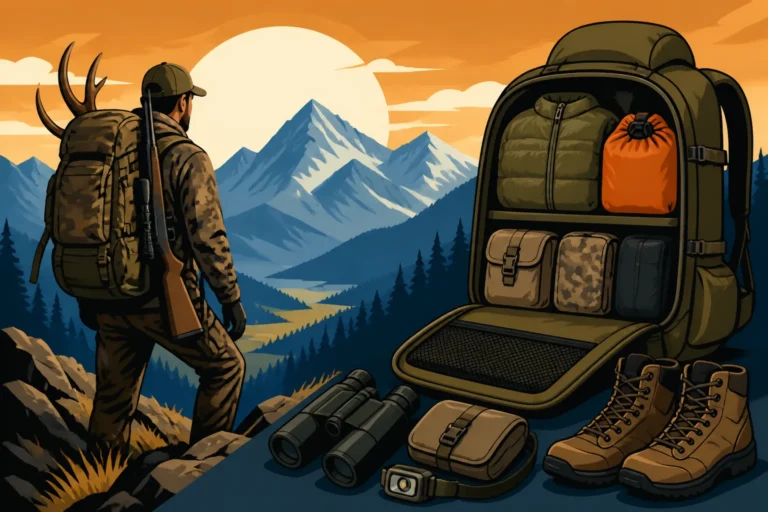
- Backpack: A well-fitting backpack (30-50 liters for a day hunt) is essential to carry your optics, water, food, extra layers, first-aid kit, and enough space for de-boned meat if you're successful. A sturdy frame pack might be needed if you anticipate packing out a whole animal over long distances.
The Spot-and-Stalk Methodology Step-by-Step
This is where the rubber meets the road. Spot-and-stalk isn't just one action; it's a sequence of deliberate steps, each requiring patience, discipline, and careful execution.
The Art of Glassing
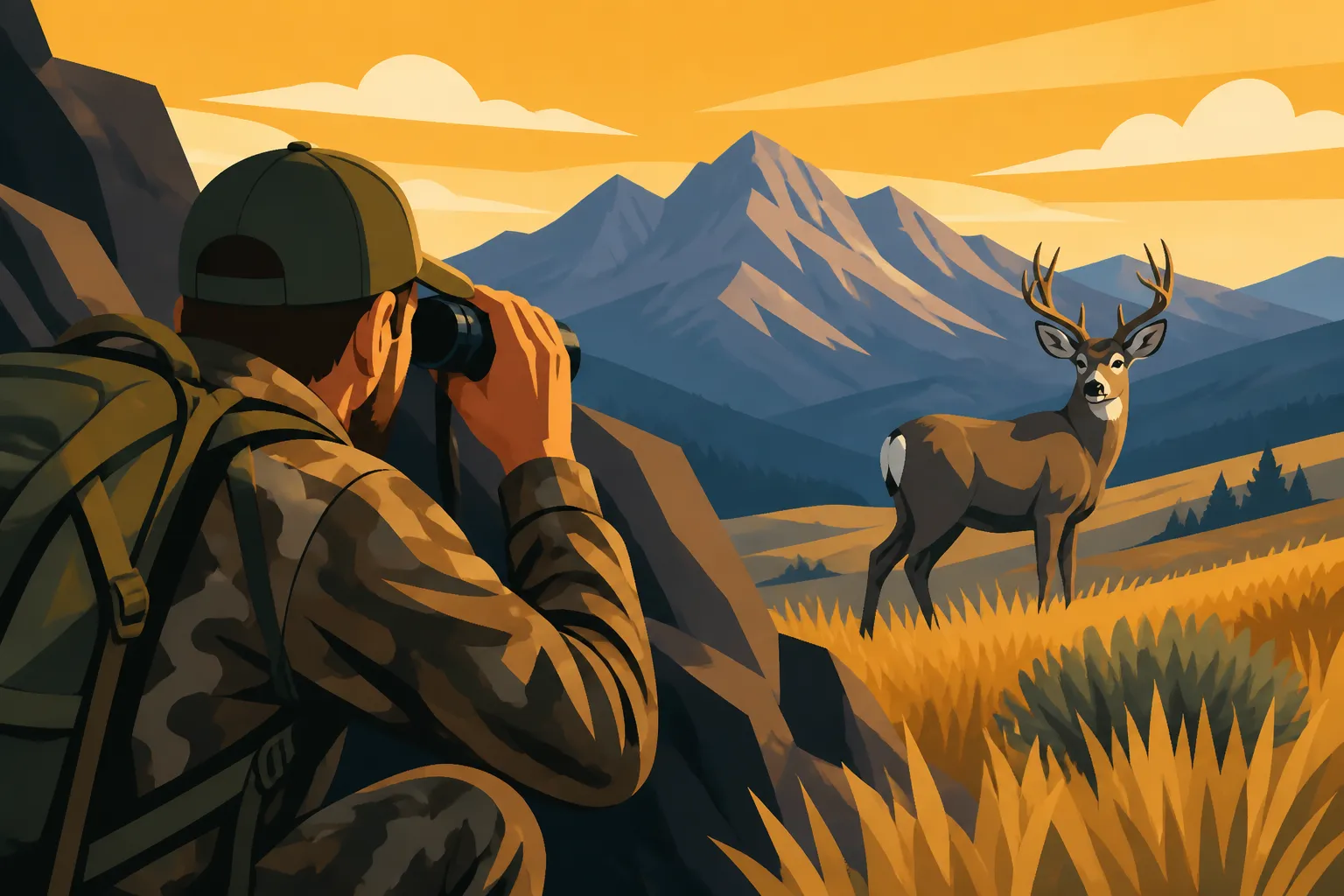
This is where most of your hunting time will be spent. Forget walking miles hoping to jump a buck; instead, find a high vantage point that overlooks a vast amount of suitable mule deer habitat.
- Set Up Smart: Find a spot that allows you to see without being seen, ideally with the sun at your back or to the side, not in your eyes. Use natural cover to break up your outline. Get comfortable; you'll be there for hours.
- Grid Systematically: Don't just scan randomly. Start at the closest terrain and work your way out, section by section, like reading a book. Pay close attention to edges where different types of cover meet, shadowed areas, and anywhere deer might seek thermal protection or feed. Look for pieces of a deer – an ear, an antler tip, a horizontal line in a vertical world.
- Utilize Your Optics: Start with your 10x or 12x binoculars on a tripod for broad scanning. Once you identify anything suspicious—a patch of different color, an unusual shape—switch to your spotting scope for a closer inspection. This is where you determine if that "rock" is actually a bedded buck. Remember, deer often blend incredibly well with their surroundings; patience is your best friend. Take your time.
- Early Morning and Late Evening: These are prime glassing times when deer are often most active, moving between bedding and feeding areas. However, don't discount midday; deer still move, especially if pushed, and they are often bedded in visible spots, just harder to pick out.
Planning the Stalk
Once you've spotted a buck worth pursuing, the work truly begins. This phase is critical and often determines the success or failure of the hunt.
- Observe and Analyze: Before moving an inch, watch the deer. What is it doing? Is it feeding, bedding, moving? What direction is it headed? Are there other deer nearby? How much time do you have before it moves out of sight or into less favorable terrain? Critically, assess the wind. The wind is your most important ally or your worst enemy.
- Consult Your Map: Use your GPS or mapping app to study the terrain between you and the deer. Identify natural features you can use for cover – ridges, draws, timber pockets. Look for potential obstacles like open areas, cliffs, or dense brush. Plan a route that keeps you out of sight and ensures the wind remains in your favor. A good rule of thumb is to take a longer, concealed route over a shorter, exposed one. GoHunt's mapping overlays, showing public/private land and various terrain features, are invaluable here.
- Contingency Planning: What if the deer moves? What if the wind shifts? Have a backup plan. Identify potential ambush points along the deer's likely travel route or alternative approaches. Sometimes, a full circle might be necessary to stay downwind and out of sight, even if it adds significant time and effort. This is often where a How to Hunt Elk in Montana's Wilderness strategy applies to deer, too, requiring extensive planning.
Executing the Stalk
This is the most adrenaline-fueled part of the hunt. Every step counts.
- Wind is King: Maintain the wind in your face or quartering into you. Mule deer have incredible noses. A single gust in the wrong direction can end your hunt instantly.
- Move Slow and Quietly: Take short, deliberate steps. Watch where you place your feet to avoid snapping twigs or dislodging rocks. If the terrain is steep and rocky, try to move when the wind is blowing harder, as the noise might mask your approach. Stop frequently to glass ahead and confirm the deer's position.
- Utilize Cover: Stick to the lowest points, the densest timber, or behind ridges. Use every piece of topography to your advantage. If you have to cross an open area, do it quickly and with extreme caution, often crawling or taking advantage of any small depression.
- Stay Low: As you get closer, drop to your hands and knees, or even belly crawl if necessary. Your silhouette is easily spotted against the skyline.
- Patience is Paramount: A good stalk can take hours. Don't rush. If the deer beds down, use that opportunity to gain ground, but be prepared to wait it out if it’s in a position where you can't advance undetected. Sometimes, waiting for an hour for the deer to stand up and stretch, or to shift its position, is the difference between success and failure. You might even want to consult How to Move Quietly Through Montana Timber for specific tips.
The Shot Opportunity
All that effort culminates in this moment.
- Get Stable: When you get within shooting range, the first priority is to get a solid rest. Use your backpack, shooting sticks, a tree, or go prone. A steady rest is crucial for an accurate shot, especially in the mountains where distances can be deceiving and adrenaline is high.
- Confirm Range: Use your rangefinder one last time, even if you think you know the distance. Small errors can lead to big misses.
- Wait for the Right Shot: Don't rush the shot. Wait for the deer to present a broadside or quartering-away shot. Clear any obstructions, ensure no other deer are directly behind your target, and breathe. If the shot isn't there, be prepared to wait or even back out and try again later.
- Follow Through: After the shot, maintain your sight picture, cycle another round (if using a rifle), and be ready for a follow-up shot. Watch the deer's reaction and mark its last known location.
Common Spot-and-Stalk Challenges and Solutions
Even with the best planning, Montana's mule deer country will throw curveballs. Anticipating these and having strategies to overcome them is part of becoming a seasoned spot-and-stalk hunter.
Dealing with Multiple Deer
It's common to find mule deer in groups, especially does and fawns. A lone buck might be with a group of does, or a bachelor group might be together.
- The Extra Set of Eyes Problem: More eyes mean more chances of getting busted. When stalking a group, always focus on the deer that is most likely to spot you – typically the oldest doe or the deer in the most exposed position. Move only when that deer's head is down, or its view is obstructed.
- Using the Herd: Sometimes, you can use other deer in the group as a "shield." If the buck you're after is feeding behind a couple of does, use them to mask your movements. Be aware that if those does get spooked, they will take the buck with them.
- Splitting the Difference: If the group is too large and spread out, it might be better to observe their movement patterns. Often, even a large group will funnel through a certain pinch point or move towards a specific water source. You might need to back out and reposition to intercept them rather than trying a direct stalk.
Wind Shifts and Thermals
Montana's weather is famously unpredictable. A calm morning can turn into a blustery afternoon, and mountain thermals play their own game.
- Thermals in the Mountains: In mountainous terrain, thermals typically rise in the morning as the sun warms the ground, carrying your scent uphill. In the evening, as the air cools, thermals drop, carrying your scent downhill. Plan your stalks accordingly: morning stalks often mean approaching from above, evening stalks from below.
- Sudden Wind Changes: Keep a wind checker (a small bottle of unscented powder or thread) handy and check the wind frequently. If the wind shifts unfavorably mid-stalk, you have two options:
- Adjust your route: Can you quickly alter your approach to regain a favorable wind direction? This might mean backtracking or making a wider loop.
- Hold tight: If adjusting isn't possible, you might have to freeze in place, wait for the wind to settle, or for the deer to move. Sometimes, an abrupt shift might mean the stalk is busted, and you need to retreat silently and try another day. There's no shame in preserving a good hunting spot.
Overcoming Open Country Challenges
Vast, treeless plains and rolling hills offer incredible visibility, which is a double-edged sword.
- Minimal Cover: In areas like the eastern Montana plains, natural cover is scarce. You'll rely heavily on draws, creek beds, and subtle changes in topography for concealment. Learn to "read" the ground, identifying small folds or depressions that aren't obvious from a distance.
- Crawl and Creep: Be prepared to crawl long distances. A good set of knee pads can be a lifesaver. This slow, low-profile movement minimizes your silhouette and keeps you out of the deer's line of sight.
- Decoys: While not strictly a spot-and-stalk tactic in the traditional sense, a mule deer decoy can sometimes be used as a last resort in wide-open country to draw a buck closer or distract it during a final approach. This is more of an advanced tactic and requires specific conditions.
- Patience and Persistence: Open country stalks often take the longest. You might spend hours covering a seemingly short distance. The key is never to rush.
Advanced Tips for Spot-and-Stalk Success
Beyond the fundamentals, a few nuanced approaches can significantly improve your odds when targeting Montana mule deer.
The Role of Patience and Persistence
This isn't just a virtue; it's a hunting strategy. Mule deer, especially mature bucks, are survivors. They didn't get big by being careless.
- The Waiting Game: Sometimes, the best move is no move at all. If a buck is bedded in a seemingly unapproachable spot, sitting and observing for hours might be your best bet. Deer will eventually stand, stretch, feed, or shift positions. That brief window of movement can be your opportunity to close the distance or get into a shooting lane. I've personally seen bucks bedded for 4-5 hours before standing up to feed, offering a perfect, quick stalk.
- Multiple Attempts: Don't be discouraged if your first stalk, or even your third, fails. Mule deer are often creatures of habit, and if you bump a buck, it might not run for miles. It might just reposition a ridge over. Give it time, perhaps a few hours or even a full day, and re-approach from a different angle. Using your GoHunt maps to mark where you saw the deer and where it went can help you plan your next move.
- Embrace the Process: The beauty of spot-and-stalk isn't just the kill; it's the chess match, the intimate observation, and the physical and mental challenge. Learning from each attempt makes you a better hunter.
Using Terrain Features Creatively
Montana's landscape is your canvas. Learn to paint with it, using every bump and dip to your advantage.
- Contour Hunting: Instead of walking over the tops of ridges, which exposes your silhouette, learn to walk just below the crest, using the ridge itself as concealment. This allows you to peek over quickly to check for deer without being seen.
- Shadow Play: In sunny conditions, use shadows to break up your outline, especially in open country. Early morning and late evening often provide long shadows that can be your best friend.
- Vegetation as Moving Blinds: Slow-growing sagebrush or small juniper trees, while not offering complete concealment, can be used as mini-blinds. Move from one to the next, pausing to glass, allowing your movements to be broken up. This is especially true when hunting Montana Mule Deer in the Breaks.
- Using Draws and Swales: These are natural highways for deer and fantastic concealment for hunters. If you can stay in the bottom of a draw and travel parallel to your target, you can often close significant distance unseen.
Here's a quick comparison of key spot-and-stalk equipment:
| Gear Item | Primary Use | Key Features | Why it's Critical |
|---|---|---|---|
| Binoculars | Wide-area scanning, initial spotting | 10×42 or 12×50 magnification, good glass clarity | Finds deer at a distance, reduces unnecessary walking |
| Spotting Scope | Detailed identification, antler judging | 65mm-80mm objective, 20-60x zoom, clear optics | Confirms target animal, assesses stalk feasibility |
| Tripod | Stability for optics | Lightweight, sturdy, quick-adjust legs | Essential for strain-free, detailed, long-range glassing |
| Rangefinder | Distance measurement | Angle compensation, accurate to 1000+ yards | Ethical shot placement, avoids misjudging distance in open terrain |
| GPS/App | Navigation, land ownership, waypoint marking | Offline maps, topo lines, public/private land overlay (e.g., GoHunt maps) | Stays oriented, plans routes, avoids trespassing, marks locations |
| Wind Checker | Wind direction indicator | Unscented powder or fine thread | Prevents scenting deer, crucial for a successful approach |
Staying Physically and Mentally Prepared
Spot-and-stalk hunting for mule deer in Montana demands a lot from you, both physically and mentally.
- Physical Fitness: Montana's terrain is challenging, whether it's steep mountain ascents or long traverses across rolling plains. Good cardiovascular fitness and leg strength are vital for long days of glassing, hiking, and potentially packing out an animal. Consider a specific Montana Elk Hunt Fitness Plan—the principles apply equally to tough mule deer hunts.
- Mental Toughness: The grind of long hours glassing, failed stalks, and unpredictable weather can be disheartening. Develop patience, perseverance, and a positive attitude. Celebrate the small victories—spotting a distant deer, executing a perfect segment of a stalk—and learn from every setback. The mental game is just as important as the physical one.
- Hydration and Nutrition: Carry enough water and calorie-dense snacks to sustain you through long days. Dehydration and low blood sugar can lead to poor decision-making and fatigue.
Spot-and-stalk hunting Montana mule deer is an immersive, exciting, and ultimately, one of the most rewarding ways to pursue big game. It demands attention to detail, a deep understanding of the animal and its environment, and unwavering patience. While success is never guaranteed, mastering these techniques will undoubtedly increase your odds and enrich your hunting experience in the Big Sky Country.
Disclaimer
Hunting is an inherently dangerous activity. This guide is for informational purposes only and should not replace proper hunter education, safety training, or adherence to all local, state, and federal hunting regulations. Always prioritize safety, respect wildlife, and practice ethical hunting principles. Conditions in the field can change rapidly, and hunters should always be prepared for emergencies.