Best Public Land Antelope Country in Montana
Dreaming of wide-open spaces and chasing speed goats across Montana's vast plains, only to get bogged down trying to figure out where you can actually hunt them on public land? It's a common headache for many hunters, both resident and nonresident alike. The thought of all that accessible ground can be overwhelming, but pinpointing the prime spots is key. This guide is going to cut through the confusion and pinpoint some of the best public land antelope country Montana has to offer, helping you plan your next high-plains adventure with confidence.
Understanding Montana Antelope Habitat on Public Land
Montana's antelope population is robust, but they aren't just everywhere. They thrive in specific environments, and understanding these preferences is the first step to finding them on public land. It’s not just about looking for flat ground; it’s about recognizing the subtle features that attract and hold these incredibly fast animals.
The Lay of the Land: What Antelope Love
Antelope are creatures of open country, built for speed and long-distance vision. They prefer shortgrass prairies, sagebrush flats, and rolling hills where they can see for miles. This allows them to spot predators long before danger gets too close. You'll often find them grazing on forbs, grasses, and sagebrush, which make up the bulk of their diet. When scouting, look for landscapes dominated by these vegetation types, usually devoid of heavy timber or dense brush. Think broad valleys, expansive plains, and areas with gentle slopes that offer both feed and visibility. These areas are typically what Montana offers in its eastern and central regions.
Water Sources and Antelope Movement
Like all wildlife, antelope need water, especially during the warmer months of early archery season or even during the Montana Antelope Season Dates. While they can extract a surprising amount of moisture from their forage, reliable water sources like stock ponds, windmills, natural springs, and even ephemeral puddles become magnets, particularly in dry periods. Public land areas that offer scattered water holes can concentrate antelope, making them predictable in their movements. Pay close attention to these features when you're e-scouting or on the ground. Antelope will often make daily or every-other-day treks to water, sometimes traveling several miles, and knowing where these critical resources are located can be a game-changer for ambush points or glassing locations.
Key Regions for Public Land Antelope Hunting
Montana boasts extensive public lands, and fortunately, a good chunk of it aligns perfectly with prime antelope habitat. While antelope are scattered throughout the state, a few regions truly shine for those seeking public land opportunities. These areas are characterized by vast stretches of accessible ground and healthy antelope populations.
Eastern Montana's Expansive Prairies
When most hunters think of public land antelope in Montana, their minds immediately go to the eastern part of the state. This is classic "speed goat" country, defined by vast, open shortgrass prairies, sagebrush steppe, and countless rolling hills that extend to the horizon. Counties like Garfield, McCone, Prairie, Fallon, and Carter are often touted for their substantial Block Management Areas (BMAs) and large tracts of Bureau of Land Management (BLM) land. Here, the landscape is often a mosaic of private and public ground, making careful navigation with tools like onX Hunt absolutely essential. The sheer scale of the public land in Eastern Montana means that even during the general season, you can often find unpressured pockets of antelope if you’re willing to hike or drive a bit further off the beaten path. This region is truly the heart of Montana Antelope on the Eastern Plains.
Central Montana's Hidden Gems
While Eastern Montana gets a lot of the spotlight, Central Montana shouldn't be overlooked for public land antelope. Areas south of Lewistown and east of Great Falls, extending towards the Missouri Breaks, can offer fantastic opportunities. These regions often feature a mix of rolling foothills, agricultural land interspersed with prairie, and significant portions of state land and BLM. You might find more broken terrain here compared to the wide-open plains of the east, which can sometimes make antelope hunting a bit more challenging but also more rewarding. Districts in this area might require a few more preference points to draw limited entry tags, but general units can still offer excellent chances. The key here is often identifying large contiguous blocks of public land, as the patchwork ownership can be even more pronounced than in the east. Some of the Best Montana Districts for Antelope Bucks can be found by digging into the maps and draw odds for this less-talked-about region.
Strategies for Locating Antelope on Public Ground
Finding antelope on public land isn't just about driving around and hoping for the best. It requires methodical planning, keen observation skills, and a willingness to cover ground. These strategies will help you narrow down vast landscapes and zero in on where the antelope are likely holding.
E-Scouting Your Way to Success
Before you even leave your driveway, dedicated e-scouting is your most powerful tool. Utilize mapping software like onX Hunt to identify large blocks of public land – BLM, State Trust Land, and particularly those valuable Block Management Areas. Look for terrain features that provide both forage and visibility, such as expansive sagebrush flats, coulees for bedding, and most importantly, water sources like stock ponds, reservoirs, or creeks. Pay attention to how public lands connect to private lands, noting any potential pinch points or travel corridors. You can often overlay historical fire data to see areas that might have regenerating forage, which is an antelope attractant. Cross-referencing this with draw odds data from services like GoHunt can give you an edge in selecting units with higher success rates and less competition for How Many Points for a Montana Antelope Tag. Identify potential access points, parking areas, and plan out walking routes that take advantage of terrain features for cover.
Glassing Techniques for Open Country
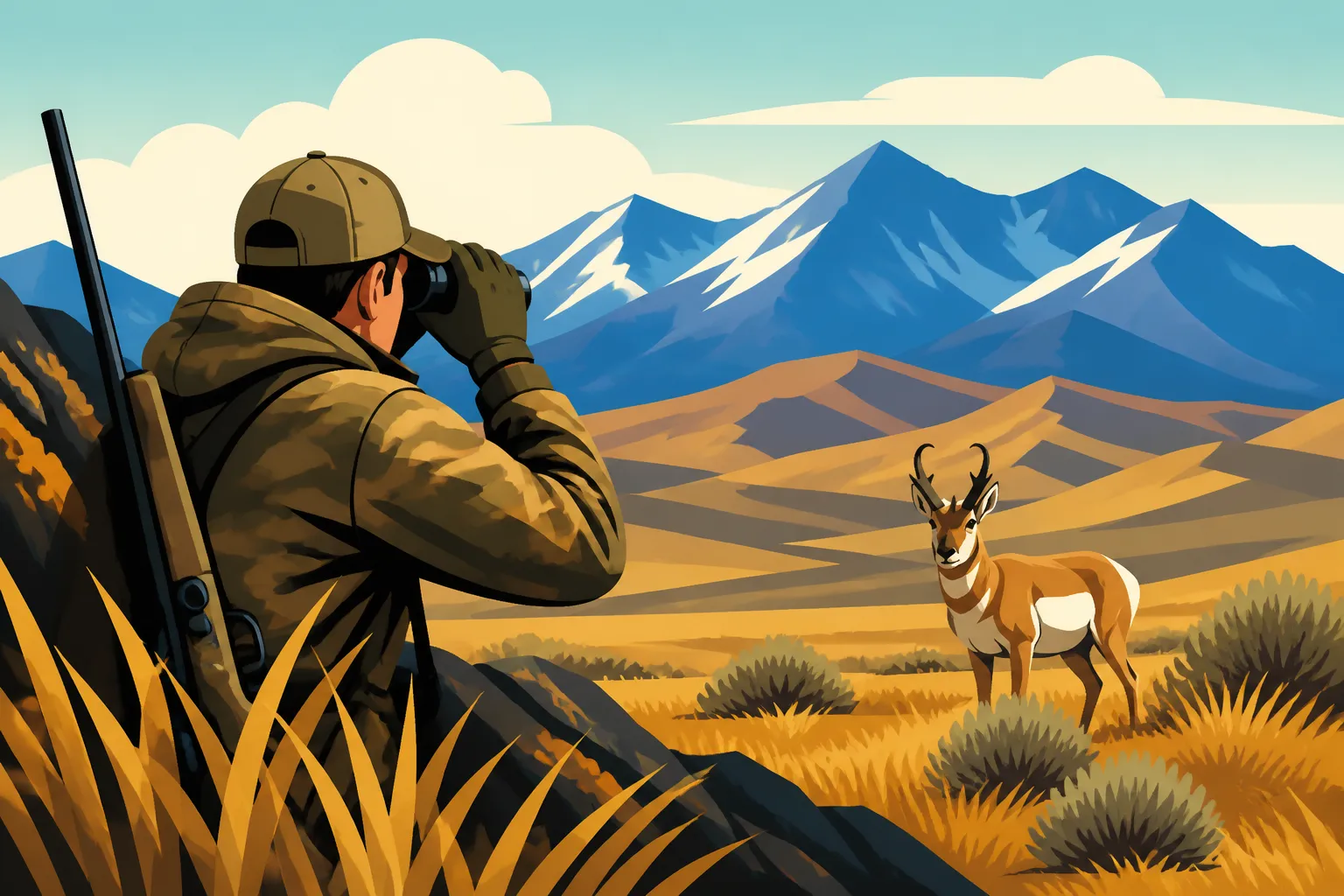
Once you’re on the ground, glassing is the primary method for locating antelope in Montana’s expansive public lands. Your binoculars and spotting scope are your best friends. Find a high vantage point that allows you to survey as much territory as possible, then systematically break down the landscape into grids. Start with your binoculars (10x is ideal), scanning for movement, patches of white, or the distinct silhouettes of antelope. Once you spot something, transition to your spotting scope for a closer look to confirm species, sex, and potential trophy quality. Spend significant time behind your optics, being patient and thorough. The best times to glass are early mornings and late evenings when antelope are often most active, feeding in the open. Remember, even a small white patch under a distant juniper could be a bedded buck. For more detailed tips, check out How to Glass Montana's Big Country.
Reading Antelope Behavior and Movements
Antelope are creatures of habit, and learning to read their behavior is critical for success. They typically feed in the mornings and evenings, often bedding down in shallow depressions or behind low ridges during the heat of the day. They have incredibly keen eyesight, which means stalking them in open country requires extreme patience and the clever use of topography. Watch for their typical travel routes between feeding grounds, bedding areas, and water sources. If you see a herd moving across a flat, try to get ahead of them using a dip in the terrain or a distant ridge to cut them off. Their curiosity can sometimes be exploited; using a decoy (if legal in your chosen district) or a hat on a stick can sometimes draw a curious buck within range. Understanding their daily patterns and how they react to pressure will drastically improve your chances, especially when considering How to Spot-and-Stalk Antelope in Montana.
Navigating Public Access and Regulations
Montana has a reputation for being public-land friendly, but it's not always straightforward. Understanding the different types of public land and the specific regulations that apply to antelope hunting in various districts is paramount to a successful and legal hunt. Don't assume anything; verify everything.
Decoding Public Land Maps and Ownership
Montana's landscape is often a patchwork quilt of private, state, BLM, and Forest Service lands. Knowing exactly where you stand, or where the antelope are, is critical. This is where digital mapping applications like onX Hunt become absolutely indispensable. They clearly delineate public and private boundaries, often showing land ownership down to the parcel level. Before your hunt, spend hours on your computer or tablet, identifying large contiguous blocks of public land. Pay special attention to "landlocked" public parcels that might require navigating private property to access. While it's legal to cross corner-locked public lands in Montana, it's always best practice to seek landowner permission if you plan to access it through their property. Don't rely on paper maps alone; the dynamic nature of land ownership and temporary closures means digital maps are constantly updated. This thorough map study is part of How to E-Scout Montana Hunting Units effectively.
Leveraging Block Management Areas
Montana's Block Management Program (BMA) is a fantastic resource for public land hunters, especially for antelope. BMAs are private lands enrolled by landowners to allow public hunting access, often providing thousands of acres of prime habitat. Each BMA has specific rules and access methods, ranging from sign-in boxes to online reservations. Some are open to all species, while others might be restricted. Before heading out, always check the Montana Fish, Wildlife & Parks (FWP) website for an updated list of BMAs in your target hunting district. Print out the maps and read the specific rules for each BMA you intend to hunt. Some popular BMAs fill up quickly, especially for rifle season, so plan accordingly. Understanding Montana Block Management Areas Explained is a key to unlocking some of the best antelope opportunities.
Here's a quick look at common public land types in Montana and their general characteristics for antelope hunting:
| Land Type | Description | Antelope Potential | Access Notes |
|---|---|---|---|
| Bureau of Land Management (BLM) | Vast, open rangelands primarily in Eastern and Central Montana, managed for multiple uses. | High | Generally open access, but watch for landlocked parcels. Roads can be rough; high-clearance 4×4 often needed. |
| State Trust Land | Parcels managed by the state, often scattered throughout, generating revenue for schools. | Medium-High | Requires a valid Montana hunting license. Access can be tricky if surrounded by private land. |
| Block Management Areas (BMA) | Private lands enrolled in an FWP program to allow public hunting access. | High | Rules vary by BMA (sign-in, reservation, species-specific). Check FWP website yearly for current info. |
| National Grasslands | Federally managed lands (e.g., Custer Gallatin National Forest) offering large contiguous blocks. | High | Similar to BLM in character and access. |
| National Forest | Primarily mountainous, timbered areas. While vast, not ideal antelope habitat, though some fringes may hold them. | Low-Medium | Generally open, but antelope typically prefer lower, more open elevations away from dense timber. |
Understanding Antelope-Specific Regulations
Finally, always be thoroughly familiar with the current Montana FWP hunting regulations. Antelope hunting often involves specific hunt codes, draw units, and sometimes unique regulations for specific areas. Many public land antelope opportunities in Montana are tied to limited-entry draws, especially for coveted buck tags in certain districts. You’ll need to understand Montana 900 Series Antelope Tags Explained, which are often archery-only or have specific antlerless opportunities. Pay attention to weapon restrictions (archery-only periods, muzzleloader seasons), landowner permission requirements for certain tags, and any specific harvest limitations. Regulations can change annually, so never rely on last year’s knowledge. A quick phone call to the local FWP office for your target hunting district can clarify any uncertainties and save you a lot of headache in the field.
Disclaimer
Please remember that hunting regulations and access can change frequently. Always consult the most current Montana Fish, Wildlife & Parks regulations and land management agency rules before planning any hunt. This guide is for informational purposes only and does not constitute legal advice or guarantee hunting success.