How to Handle Cold-Weather Gear for Montana
Oh boy, if there's one thing that can make or break a hunting trip in Montana, it's the weather. One minute you're enjoying crisp, cool air, and the next, a blizzard rolls in, dropping temperatures dramatically and coating everything in a fresh layer of snow. It’s a reality that many hunters, especially those new to the Big Sky Country, often underestimate until they're shivering in a poorly chosen rain shell. This guide is all about equipping you with the knowledge to handle Montana's notoriously fickle cold weather, ensuring you stay warm, safe, and focused on the hunt, no matter what Mother Nature throws your way.
Understanding Montana's Winter Weather Realities
Montana's weather isn't just cold; it's dynamic. What starts as a mild fall morning can quickly devolve into a full-blown winter storm, sometimes within hours. Ignoring this reality is one of the biggest mistakes a hunter can make, leading to discomfort at best and dangerous situations at worst.
The Extremes You'll Encounter
From the high-alpine peaks to the sprawling eastern plains, Montana presents a wide array of temperature extremes and conditions. Early archery season in September might see pleasant 50-degree days, but once you get into the later parts of the general rifle season in November, single-digit temperatures and heavy snow are not just possible, but probable. Overnight lows can easily plummet below zero, especially in the high country, and wind chill factors can make even 20 degrees feel like -20.
Imagine you're hunting elk in the Gravelly Range Hunting Guide in late October. You start your day with frost on the tent and a clear sky, but by midday, a storm front blows in. Suddenly, you're not just dealing with snow, but driving winds that penetrate thin layers and soak cotton clothing almost instantly. The same can happen on the eastern plains chasing antelope; a sunny, brisk morning can turn into a whiteout blizzard that makes navigation treacherous and exposes you to extreme cold on flat, open terrain. This variability demands a gear strategy that prioritizes adaptability and robust protection against the full spectrum of winter elements.
How Quickly Conditions Can Change
One of the most challenging aspects of Montana weather is its sudden shifts. A bluebird day can turn into a raging snowstorm with surprising speed, especially in mountainous regions like the Rocky Mountain Front Hunting Guide. It's not uncommon for hunters to start their morning hike under clear skies, only to be caught hours later in heavy snowfall and strong winds, with temperatures dropping 20 or 30 degrees in a single afternoon. These rapid changes are often due to high-pressure systems giving way to low-pressure fronts pushing in from the Pacific Northwest, bringing moisture and colder air.
This rapid onset of severe weather means that relying on a weather forecast from the previous evening isn't enough. You need to be prepared for anything, at any moment. Hunters frequently find themselves miles from their vehicle, deep in a drainage, when these changes occur. Having the right cold-weather gear isn't just about comfort; it's about survival. You can't just throw on an extra sweatshirt and expect to be fine when you're facing sustained winds and freezing precipitation with diminishing daylight. This is why having a system that allows you to adjust quickly and efficiently to worsening conditions is paramount for any successful and safe hunt in Montana.
The Art of Layering: Your Cold-Weather Defense
The single most effective strategy for managing cold weather in Montana is mastering the art of layering. Instead of one heavy, bulky garment, you wear multiple thinner layers that can be added or removed as your activity level and the ambient temperature change. This creates versatile insulation, traps warm air, and allows you to vent heat before you sweat excessively, which can lead to dangerous chilling when you stop moving.
Base Layers: The Foundation
Your base layer is the first line of defense against the cold, and arguably the most important. Its primary job is to wick moisture (sweat) away from your skin, keeping you dry. Wet skin loses heat much faster than dry skin, making a good base layer critical for preventing hypothermia in cold conditions. You want something that fits snugly against your body without restricting movement.
Merino wool is a popular choice for base layers, and for good reason. Brands like Smartwool and Icebreaker offer excellent options that are naturally breathable, regulate temperature, and remarkably, retain much of their insulating properties even when damp. Merino also boasts natural odor-resistant qualities, which is a huge plus on multi-day backcountry hunts where showers are a distant dream. Synthetic options, such as those made from polyester or polypropylene (like some Capilene lines), are also fantastic. They excel at wicking moisture and drying quickly, often outperforming wool in sheer drying speed. While they might not be as odor-resistant as merino, their durability and performance make them a solid choice, especially if you anticipate high levels of exertion. Avoid cotton at all costs; it absorbs moisture, dries slowly, and will quickly make you cold, clammy, and miserable.
Mid-Layers: Insulation and Warmth
Once you've got your base layer handled, the mid-layer is where you build your primary insulation. These layers are designed to trap warm air close to your body, providing the bulk of your warmth. The key here is versatility – you might carry multiple mid-layers, choosing which ones to wear based on the activity level and temperature.
Fleece jackets, vests, and pants are classic mid-layer choices. Polartec fleece, for instance, comes in various weights (100, 200, 300) allowing you to fine-tune your warmth. They're breathable, relatively lightweight, and dry reasonably fast. For more serious warmth, especially when stationary, a "puffy" jacket or vest filled with down or synthetic insulation (like Primaloft or Coreloft) is indispensable. Down offers superior warmth-to-weight ratio and compressibility, making it ideal for packing into a small space. However, it loses its insulating power when wet. Synthetic insulation, while slightly heavier and bulkier for the same warmth, performs much better in damp conditions, a definite consideration given Montana's potential for wet snow or sleet. Many hunters carry a lightweight puffy as an active layer and a heavier one to throw on during glassing sessions or when stopping for lunch.
Outer Layers: Shielding from the Elements
Your outer layer, often called a shell, is your ultimate protection against wind, rain, and snow. Its job is to keep external moisture and wind out while ideally allowing internal moisture (sweat vapor) to escape, preventing you from getting wet from the inside. This is a critical component, especially when you consider How to Hunt Elk in Montana Snow.
Hardshell jackets and pants, typically made with waterproof-breathable membranes like GORE-TEX, eVent, or Ascent's proprietary materials, are the top choice for extreme conditions. They are completely waterproof and windproof, offering maximum protection. The downside can be their stiffness and noise, which can be a concern for stealthy hunting. Softshell garments offer a good balance of weather resistance, breathability, and flexibility. They are usually highly water-resistant and windproof, but not fully waterproof in a prolonged downpour. The fabric is often quieter and stretches more, making them excellent for active hunting in less severe but still cold and windy conditions. For archery hunters, the quietness of a good softshell can be a huge advantage. Regardless of whether you choose a hardshell or softshell, ensure it has a durable water repellent (DWR) finish to shed moisture effectively. When you’re planning your gear, considering your specific hunt style – say, a Montana Archery Elk Hunting Guide versus a Montana Rifle Elk Hunting Guide – will influence your choice between ultimate weather protection and silent movement.
Here’s a quick overview of layering components:
| Layer Type | Purpose | Material Examples | Key Considerations |
|---|---|---|---|
| Base Layer | Wicks moisture, provides initial warmth | Merino wool, Synthetic Polyester/Polypropylene | Snug fit, no cotton, quick-drying |
| Mid-Layer | Insulates, traps warm air | Fleece (Polartec), Down/Synthetic Puffy (Primaloft) | Breathability, compressibility, wet weather performance |
| Outer Layer | Protects from wind, rain, snow | GORE-TEX, eVent, Softshell fabrics | Waterproofing, windproofing, durability, quietness |
Crucial Gear Beyond Clothing for Extreme Cold
While layering is foundational, specific pieces of gear are absolutely non-negotiable for comfort and safety when the mercury truly drops in Montana. These items often mean the difference between cutting your hunt short and enduring those challenging conditions.
Hands, Feet, and Head: The First to Freeze
Your extremities are the first parts of your body to lose heat, and protecting them is paramount. Losing dexterity in your fingers or feeling in your toes isn't just uncomfortable; it can be dangerous when you need to handle firearms, optics, or navigate tricky terrain.
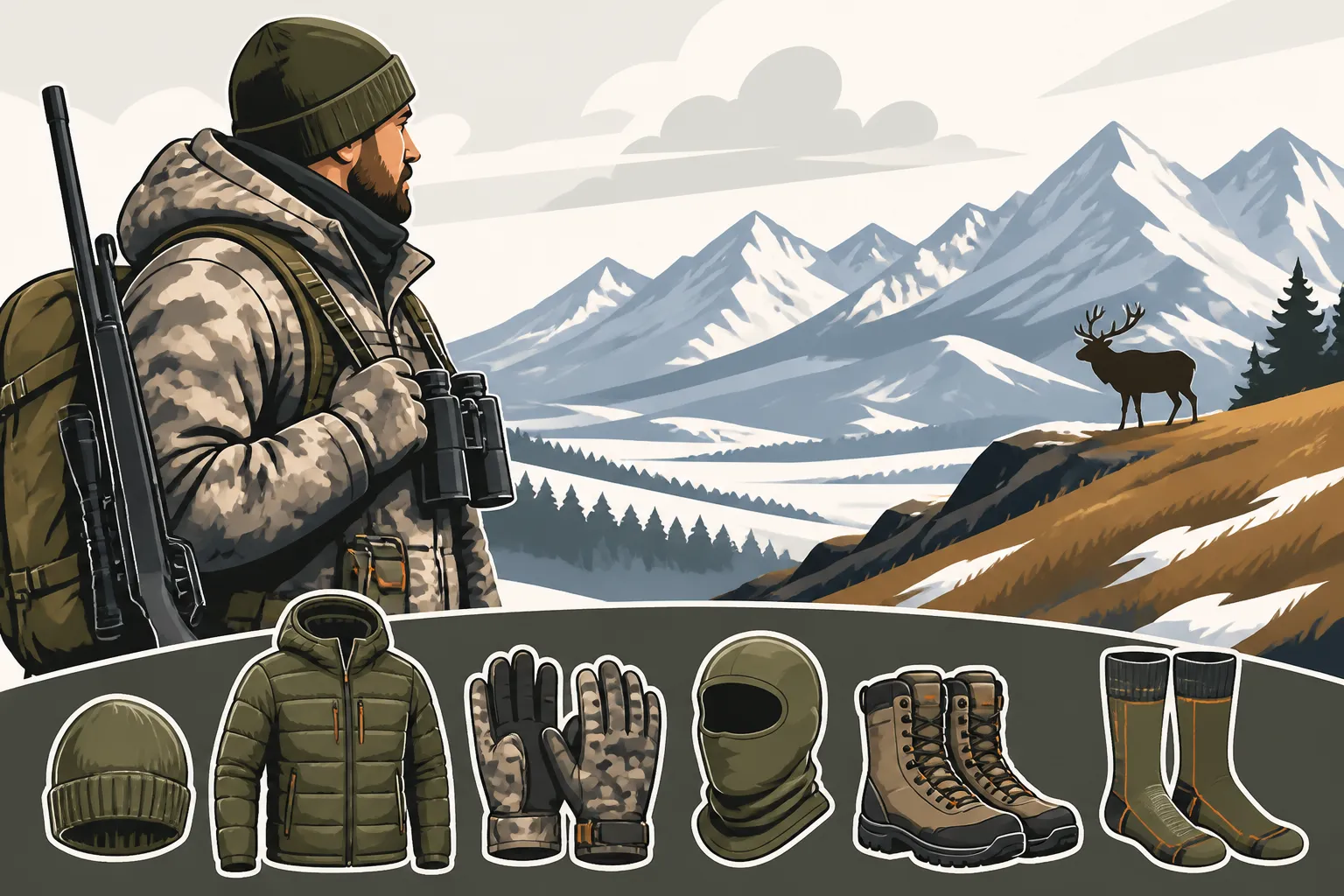
For your feet, a combination of high-quality, moisture-wicking socks and insulated, waterproof boots is essential. Merino wool socks, like those from Darn Tough or Smartwool, come in various weights and provide cushioning, warmth, and moisture management. Bring multiple pairs so you can swap them out daily, allowing wet pairs to dry. As for boots, look for options with ample insulation (400-800 grams Thinsulate equivalent is common for cold weather) and a waterproof membrane. Brands like Kenetrek and Schnee's are popular in Montana for their durability and performance in rugged, cold conditions. When choosing Best Boots for Montana Elk Hunting, prioritize fit and support as much as insulation. For your hands, a system of thin liner gloves (for dexterity), medium-weight gloves (for active hunting), and heavy, insulated mittens (for stationary periods) is ideal. Mittens are generally warmer than gloves because your fingers share warmth, and a good pair of "trigger finger" mittens can give you the best of both worlds. For your head, a warm beanie or insulated hat is critical since a significant amount of body heat can be lost through the scalp. Pair it with a neck gaiter or a full balaclava to protect your face and neck from biting winds.
Essential Accessories for Comfort and Safety
Beyond your core clothing, several small but mighty accessories can significantly enhance your cold-weather hunting experience and safety. These are items that often get overlooked but prove invaluable in the field.
A quality pair of hand warmers and toe warmers can be a lifesaver. Slip them into your gloves or boots, and they can provide hours of supplemental heat, keeping your digits from becoming painfully cold. A small, insulated seat pad or a compact sit-pad is fantastic for glassing sessions or waiting out an animal; sitting directly on frozen ground or snow will rapidly pull heat from your body. Carrying a thermos with hot coffee, tea, or broth can provide a significant psychological and physical boost on a frigid day. For longer ventures, especially in the backcountry, an emergency bivy sack or a space blanket should always be in your pack. These lightweight items can literally save your life if you become stranded or need to spend an unplanned night out. Finally, ensure your headlamp has fresh, cold-rated batteries (lithium batteries perform better in the cold) and maybe carry a spare. Cold temperatures can quickly drain battery life, and being without light in Montana's dark timber after sunset is a serious problem. For folks using modern navigation tools, having a robust power bank like those offered by Goal Zero can also keep your devices charged, which is crucial if you rely on apps like GoHunt for mapping and navigation in remote areas.
Gear Management and Maintenance in the Field
Having the right gear is only half the battle; knowing how to manage and maintain it in cold, often damp, conditions is the other. This means making conscious choices about what you carry, how you pack it, and how you deal with moisture in the field.
Keeping Gear Dry and Functional
The enemy of warmth in cold weather is moisture. Whether it's sweat from exertion, snowmelt, or rain, wet gear loses its insulating properties and can lead to dangerous hypothermia. One of the most important habits is to avoid sweating. If you feel yourself getting warm while hiking, shed a layer before you start to sweat heavily. It's much easier to put a dry layer back on than to dry out a wet one in the field.
When you're back at camp, make every effort to dry out damp gear. This means hanging socks and base layers inside a tent, ideally near a stove if you have one, or even putting them inside your sleeping bag to dry with your body heat overnight. Wet boot liners can be removed and stuffed with newspaper or absorbent cloth to wick moisture. For outer layers, ensuring the Durable Water Repellent (DWR) coating is functional is key. If water isn't beading up on your shell, it's time to re-treat it with a wash-in or spray-on DWR product. Carry a small dry bag for spare layers, keeping them completely isolated from wet clothes or melting snow. If you're planning a multi-day trip, especially a Montana Backcountry Hunting Guide, packing extra socks and base layers is non-negotiable.
Packing Strategies for Cold Weather
Effective packing is crucial for cold-weather hunting. It’s not just about fitting everything in your pack, but about organizing it so essential items are accessible, and vulnerable items are protected. This is part of the broader strategy covered in How to Pack for a Montana Backcountry Hunt.
Utilize dry bags or heavy-duty trash bags inside your backpack to compartmentalize and waterproof your gear. Keep your puffy jacket, extra base layers, and spare socks in a separate dry sack that you can easily grab without exposing everything else to the elements. Headlamps, fire-starting materials, and first-aid kits should always be in an easily accessible pocket. Consider how quickly you might need to don an extra layer or put on rain gear; these items shouldn't be buried at the bottom of your pack. Furthermore, think about what you don't need. Carrying unnecessary weight can lead to more sweating, which, as we've discussed, is counterproductive in cold environments. When researching your hunt area, resources like GoHunt often provide detailed weather data and terrain analysis, which can help you fine-tune your packing list for specific elevations and microclimates you expect to encounter. Being strategic about what you carry, based on anticipated conditions and the flexibility to adapt, is a hallmark of an experienced cold-weather hunter.
Disclaimer
The information provided in this guide is for general informational purposes only and should not be considered professional advice. Hunting in Montana involves inherent risks, and conditions can change rapidly. Always consult official Montana Fish, Wildlife & Parks regulations, secure necessary licenses and permits, and prioritize your safety by being prepared, checking weather forecasts, and informing others of your hunting plans.