How to Hunt Montana Mule Deer High Country
Hunting Montana's high country mule deer is a completely different beast than chasing whitetails in river bottoms or antelope on the plains. It's physically demanding, often unforgiving, and requires a distinct set of skills and preparation to find success. This guide will walk you through the unique challenges and rewarding strategies for pursuing these magnificent animals in Montana's rugged alpine and subalpine landscapes.
The Allure and Challenges of Montana's High Country Mule Deer
There’s something truly special about hunting mule deer in Montana's high country. It's a pursuit that often promises solitude, breathtaking vistas, and the chance to encounter mature bucks that have grown wise in remote, less-pressured environments. But let's be realistic: it's not a walk in the park. The mountains demand respect, and these deer are masters of their domain.
Why Hunters Seek the High Ground
For many, the draw of high country mule deer hunting isn't just about punching a tag; it's about the experience itself. Imagine crisp autumn air, towering peaks painted with golden larches, and the silence broken only by the wind or the distant call of a hawk. It’s an immersion in true wilderness. These remote areas often hold older, larger bucks that have learned to evade hunters in more accessible zones. The sheer challenge of locating, stalking, and successfully harvesting one of these resilient animals in their natural, rugged habitat is incredibly rewarding. There’s a profound sense of accomplishment that comes with earning a high country buck, knowing you pushed your physical and mental limits to achieve it.
However, this allure comes with significant hurdles. Deer densities in these areas are often lower, meaning you'll spend more time glassing and covering ground. The terrain is brutal—steep ascents, rocky scree fields, thick timber, and unpredictable weather are the norm. It’s not uncommon to spend days without seeing a single mule deer, only to stumble upon a trophy buck when you least expect it. Success here isn't just about hunting skill; it's about endurance, meticulous planning, and an unwavering spirit.
Understanding the Mountain Environment
Montana's high country is a dynamic and often unforgiving environment. Elevations can range from 7,000 feet to over 10,000 feet, where oxygen is thinner, and weather can change drastically in a matter of minutes. A warm, sunny morning can quickly turn into a freezing blizzard or a torrential rainstorm, even in late summer or early fall. Understanding these environmental factors is crucial for both safety and hunting success. You need to be prepared for anything, from scorching sun to biting winds and heavy snow. The rugged landscape, with its steep slopes, dense timber patches, and expansive basins, dictates how mule deer live and how hunters must adapt their strategies.
Thermals play a huge role in the mountains. As the sun rises, warm air begins to move uphill, carrying scent with it. In the evenings, as the air cools, it reverses, flowing downhill. Ignoring these natural air currents can quickly bust a stalk. Recognizing how the topography influences wind and thermals is paramount. Learning How to Use Thermals in Montana Elk Country is an invaluable skill that applies directly to mule deer hunting in similar mountainous regions. This environment requires hunters to be self-sufficient and capable of handling emergencies far from any immediate help.
Key Behaviors and Habitat of High Country Mule Deer
Mule deer in Montana's high country are creatures of habit, but those habits are dictated by their survival needs in a harsh environment. Understanding their movements, preferred bedding areas, and feeding patterns is the foundation for a successful hunt. These deer are often found at higher elevations from late summer through the early part of the hunting season, before heavy snows push them down to lower winter ranges.
Seasonal Movements and Preferred Terrain
During the summer months, and extending into the early archery and general rifle seasons, high country mule deer bucks seek out the cooler temperatures and abundant forage found in alpine and subalpine basins. They'll often be found above tree line, in pockets of sparse timber, or amongst rocky outcroppings and scree fields. As the season progresses and the first significant snowfalls hit the high country, these deer will begin their migration to lower elevations. This movement isn't always a dramatic, one-time event; it can be a gradual descent, often dictated by feed availability and snow depth.
When scouting for these animals, focus your efforts on north-facing slopes, especially those with good timber cover, as these areas tend to hold moisture longer and provide critical shade and security. Glassing expansive basins, particularly those with a mix of open meadows and scattered timber pockets, can reveal bedding bucks. They love steep, broken terrain where they can quickly disappear or gain an advantage by looking down on potential threats. Learning Montana Mule Deer Habitat Explained will give you a deeper understanding of their preferred stomping grounds across the state.
Mule Deer Senses and Habits
High country mule deer possess incredible senses, particularly their eyesight and hearing, which are honed by living in open, exposed environments. Their large ears are constantly swiveling, picking up the slightest sounds. They rely heavily on these senses to detect danger, making a stealthy approach absolutely critical. Unlike whitetails, mule deer tend to bed in more open, elevated positions where they can observe their surroundings, often with the wind at their backs to detect anything approaching from behind.
They are crepuscular, meaning they are most active during dawn and dusk, when they move from bedding areas to feeding grounds. During the middle of the day, especially when the sun is high, they'll typically bed down in shaded areas or within dense timber for security and to chew their cud. Identifying these bedding areas, often found on small benches or ridges that offer good visibility and a clear escape route, is a key component of a successful high country stalk. Pay attention to how they use topography and vegetation to their advantage – a subtle fold in the landscape or a patch of thick pines can completely conceal a bedded buck.
Essential Gear for High Country Mule Deer Hunting
Hunting high country mule deer demands more than just your average hunting setup. The remote, rugged nature of these hunts means your gear needs to be reliable, lightweight, and capable of performing in extreme conditions. Skimping on quality here can mean the difference between a successful, safe hunt and a miserable, potentially dangerous experience.
Optics: Your Eyes in the Mountains
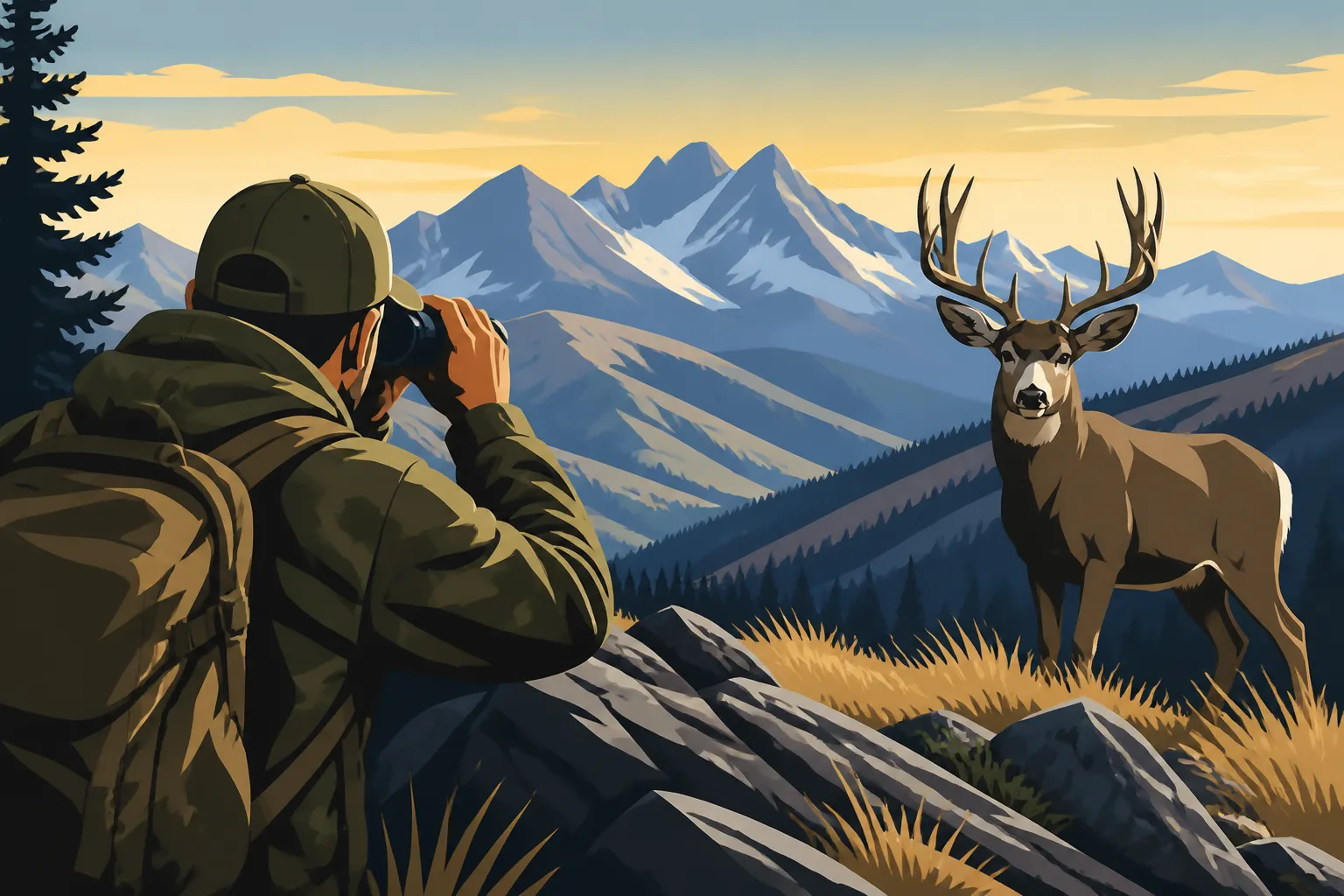
In the vastness of Montana's high country, your optics are arguably your most important tool. You simply cannot effectively cover ground on foot to find deer; you have to let your glass do the walking. A quality pair of binoculars, usually 10×42 or 12×50, is non-negotiable for general scanning. Many experienced hunters prefer a higher magnification like 15x, often mounted on a tripod, for picking apart distant hillsides. This allows you to differentiate between rocks, shadows, and the tell-tale glint of an antler or the distinct shape of a deer.
A good spotting scope (20-60x or even 27-60x) is equally vital for evaluating bucks once you've spotted them from afar. It allows you to judge antler size, body condition, and even determine if it's a legal animal without having to spend hours on a stalk only to find out it's a spike. Pairing these with a sturdy, lightweight tripod is essential for steady viewing, especially when glassing for extended periods or in windy conditions. Brands like Vortex, Swarovski, and Kowa are popular among serious mountain hunters for their clarity and durability. The clarity of your glass, especially in low light conditions, can be the difference between seeing a buck before it moves or missing it entirely. Check out a detailed guide on Best Optics for Montana Big Game to help you make informed decisions on what glass to carry.
Backpacks, Boots, and Clothing
Your pack is more than just something to carry your lunch; it's your lifeline and eventually, your meat hauler. A high-quality hunting backpack, typically in the 4,000-7,000 cubic inch range, with an integrated or removable meat shelf, is crucial. It needs to fit comfortably, distribute weight efficiently, and be rugged enough to withstand abuse. Expect to carry everything from water and food to emergency gear and a spotting scope. Then, if successful, you'll be packing out hundreds of pounds of meat and antlers. For a deep dive, consider reading about the Best Backpack for a Montana Elk Hunt, as many of the principles apply directly to mule deer.
Your boots are your foundation. Invest in well-fitting, waterproof, and supportive mountain hunting boots. Break them in thoroughly before your hunt to avoid debilitating blisters. Think stiff soles for side-hilling and ankle support for uneven terrain. Layered clothing is the key to comfort and safety in the mountains. Start with a moisture-wicking base layer, add insulating layers (fleece or puffy jackets), and top it off with a waterproof and windproof outer shell. Conditions can swing wildly, and being able to adjust your clothing quickly will keep you comfortable and focused.
Navigation and Safety Tools
Getting lost or injured miles deep in the backcountry can be catastrophic. Modern GPS units or smartphone apps like onX Hunt are indispensable for navigating unfamiliar terrain, marking waypoints, and staying on track. However, always carry a physical map and compass and know how to use them as a backup. Battery life is finite, and electronics can fail.
A satellite communication device, such as a Garmin inReach or Zoleo, is highly recommended for emergency communication outside of cell service range. These devices allow you to send texts, track your location, and, most importantly, send an SOS signal if something goes wrong. Beyond navigation, always pack a comprehensive first-aid kit, fire-starting supplies, a headlamp, and sufficient water filtration. Remember, you are your own rescue crew in the remote high country, so preparation is paramount.
Proven Strategies for High Country Mule Deer Hunting
Successfully hunting high country mule deer is less about luck and more about a methodical approach that leverages skill, patience, and an understanding of the terrain. The most effective strategy almost always involves extensive glassing and careful spot-and-stalk tactics.
The Art of Glassing and Spot-and-Stalk
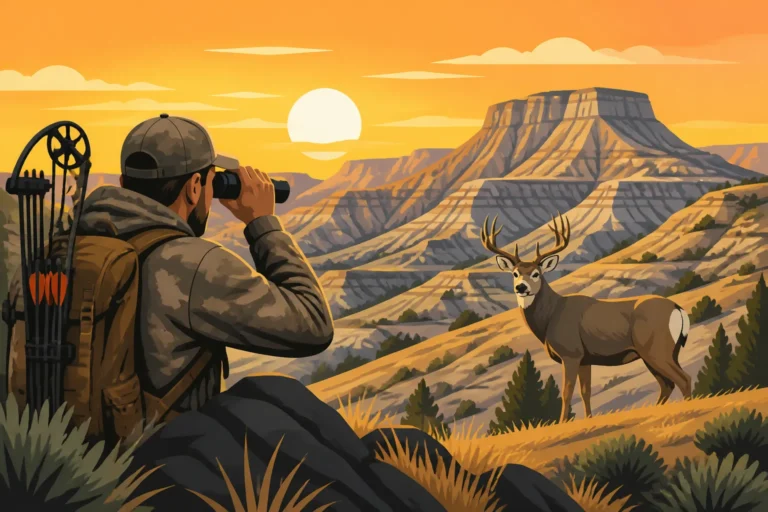
The vastness of Montana's high country makes traditional still-hunting incredibly inefficient for mule deer. Instead, your primary tool will be your optics. Find a high vantage point that offers expansive views of basins, ridgelines, and timber patches. Set up your spotting scope on a tripod and systematically pick apart the landscape, grid by grid. Don't just glance; scrutinize every shadow, rock, and patch of timber. Look for ears, antler tips, or the horizontal line of a deer's back contrasting with vertical trees. Early mornings and late evenings are prime times, but high country bucks will often bed in visible spots, so mid-day glassing can be very productive.
Once you've spotted a buck, the real work begins: the stalk. This is where patience, cunning, and physical fitness converge. Plan your approach meticulously, using terrain features (ridges, ravines, timber) to stay out of sight. Pay constant attention to wind direction and thermals. A single gust of wind in the wrong direction can blow your entire stalk. Move slowly, deliberately, and quietly. Sometimes, a stalk can take hours, requiring you to navigate treacherous terrain for what might seem like only a few hundred yards. This demanding yet rewarding method is detailed further in How to Spot-and-Stalk Montana Mule Deer.
Mastering Mountain Navigation and Stalking
Successful stalking in the mountains is an art form. It requires not just being quiet but being invisible. Use contour lines on your map or GPS to plan a route that keeps you concealed, out of their line of sight. Always aim to approach from a direction that gives you the wind advantage, ensuring your scent isn't carried to the deer. This means understanding how thermals work, especially throughout the day; they often rise in the morning and fall in the evening. Learning How to Use the Wind Hunting Montana Elk offers principles directly applicable to deer.
Movement should be excruciatingly slow. One step at a time, checking for loose rocks or snapping branches. Often, you'll need to crawl, especially as you get closer. Use your binoculars to constantly scan ahead for obstacles, other animals, or changes in the deer's position. Be prepared to wait, sometimes for hours, for the deer to move into a more favorable position or for the wind to shift. Mental fortitude is as important as physical strength in these situations.
Tactics for Different High Country Scenarios
Not all high country looks the same, and your tactics need to adapt. In areas with extensive, open basins above timberline, glassing from a distance and planning a long, strategic stalk is your best bet. Look for isolated timber pockets or rocky alcoves where bucks might bed. In denser timbered regions, it becomes a mix of slow still-hunting through cover and glassing into any natural openings or clearings. Bucks in dark timber often feel very secure, and you might jump them at close range.
For both scenarios, using a resource like GoHunt's "Insider" research platform can be incredibly beneficial during your e-scouting phase. You can analyze terrain features, identify potential bedding and feeding areas, and understand historical animal movements within specific hunting districts well before you ever set foot on the mountain. This pre-hunt research, often part of How to E-Scout Montana Hunting Units, can save you days of aimless wandering once you're on the ground. When you're dealing with heavily pressured deer, remember they'll often retreat to the nastiest, steepest, most inaccessible spots—the places most hunters avoid. Don't be afraid to go "one more ridge" or into the thickest timber, as that's often where the mature bucks are hiding.
Wrapping Up Your High Country Adventure
Hunting high country mule deer in Montana is an experience unlike any other. It challenges you physically and mentally, pushes your limits, and rewards you with incredible memories, stunning views, and hopefully, a prized buck. The preparation, from physical conditioning (think How to Physically Prepare for a Montana Elk Hunt which also applies here) to meticulous gear choices and extensive scouting, is all part of the journey. Once you're successful, knowing How to Pack Out an Elk in Montana will be a very relevant skill, even for a mule deer, as the principles of quartering and managing meat in the backcountry are identical. This type of hunting isn't for everyone, but for those who answer the call of the mountains, it's an addiction that keeps you coming back year after year.
Disclaimer
Please remember that hunting regulations and seasons can change. Always consult the latest Montana Fish, Wildlife & Parks regulations before planning any hunt. Safety in the backcountry is paramount, and proper preparation for weather, terrain, and potential emergencies is your responsibility.