How to Hunt Montana Whitetail in Farm Country
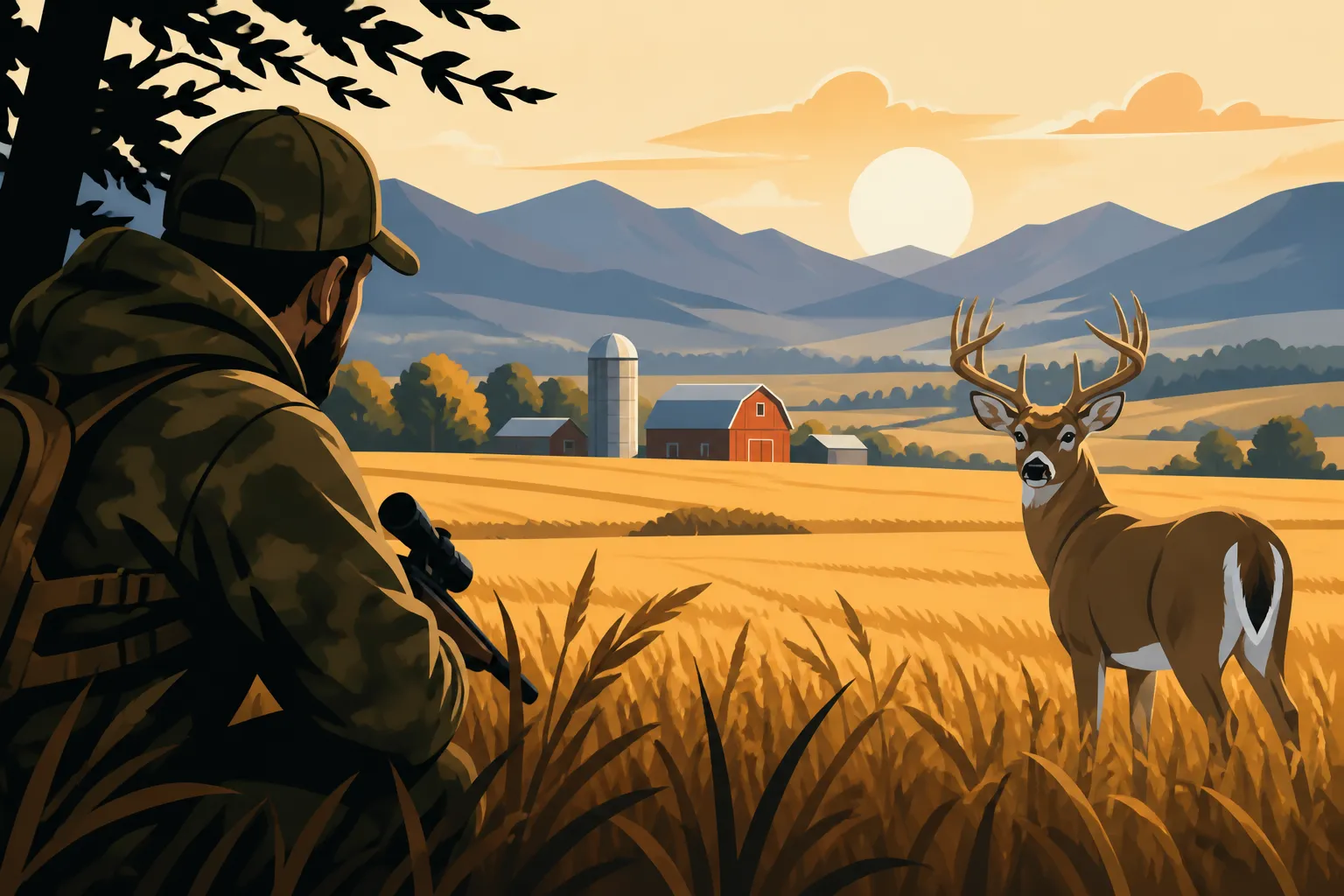
Hunting whitetail deer in Montana's vast farm country can feel like a riddle wrapped in an enigma. Unlike the deep timber or mountainous terrain, these deer live in a fragmented world of crops, shelterbelts, and coulees, often making traditional tactics feel inadequate. This guide is dedicated to unraveling the secrets of finding and successfully hunting those elusive farm country whitetails, focusing on their unique behaviors and the specific strategies that put hunters in position for success.
Understanding Whitetail Behavior in Montana's Farm Country
Montana's farm country presents a unique challenge for whitetail hunters. These deer aren't just surviving; they're thriving by expertly leveraging agricultural resources, often becoming almost invisible in landscapes that appear wide open to the casual observer. Understanding their seasonal movements and preferred hideouts is the first step toward filling your tag.
Adapting to Agricultural Landscapes
Whitetails in farm country are masters of adaptation. Instead of vast forests, they utilize small, isolated pockets of cover—think overgrown fencelines, drainage ditches, creek bottoms, and even standing cornfields—as their primary sanctuaries. These "islands" of cover provide security during daylight hours, allowing them to remain close to abundant food sources without exposing themselves unnecessarily. They'll bed down in dense brush, cattail sloughs, or the thickest parts of shelterbelts, often within earshot of human activity but completely out of sight.
Their movements between these bedding areas and feeding grounds are calculated. They often travel along the edges of fields, in low draws, or through any strip of cover that offers concealment. Hunters need to shift their perspective from looking for deer in expansive timber to pinpointing these linear or fragmented cover types, understanding that even a narrow strip of willows can hold a significant number of deer, especially during hunting pressure.
The Role of Cover and Water Sources
In an agricultural setting, cover isn't just about hiding; it's about survival. Dense stands of hawthorn, caragana, or even dense weeds along a non-tilled field edge offer thermal protection from harsh Montana winters and spring winds, as well as crucial security cover. Whitetails will instinctively seek out the thickest vegetation they can find, especially when feeling pressured. River and creek bottoms, even dry ones, are particularly important as they often provide a natural corridor of dense brush, trees, and tall grasses, forming a highway for deer travel and prime bedding locations. These riparian zones also frequently connect larger blocks of habitat, making them strategic areas for ambush.
Water sources, while less of a concern in general in Montana thanks to numerous streams and ponds, still play a role. Deer might congregate around specific water sources during dry spells or late in the season when other water bodies freeze over. Look for areas where dense cover converges on a reliable water source; these are often high-traffic zones.
Seasonal Patterns and Food Sources
The whitetail's diet in farm country is heavily dictated by the agricultural calendar. In spring and summer, they might browse on alfalfa, clover, and young forbs, benefiting from the protein-rich growth. As crops mature, deer shift to consuming corn, soybeans, peas, and wheat, which provide crucial energy for the rut and winter survival. A standing cornfield, for instance, is not just a food source but a fortress, offering both concealment and sustenance for days or even weeks. Understanding these seasonal shifts is paramount.
During the early archery season, deer might be predictable, feeding heavily in bean fields or alfalfa. As the rifle season approaches and crops are harvested, their patterns change dramatically. They'll focus on remaining stubble fields, grain spills, or transition to browsing on woody vegetation and natural forage. The rut, typically in late October and November, introduces another layer of complexity, as bucks become less predictable, following does into and out of bedding and feeding areas, often throwing caution to the wind. Understanding Montana Whitetail Rut Timing is crucial for planning your hunt.
Effective Scouting Strategies for Farm Country Whitetails
Hunting farm country whitetails successfully starts long before you ever step foot in the field with your weapon. Effective scouting means combining modern technology with traditional boots-on-the-ground methods to piece together the puzzle of deer movement in these unique landscapes.
E-Scouting and Map Analysis
Your scouting journey should always begin from your computer or tablet, utilizing powerful tools like GoHunt or other digital mapping platforms. Start by identifying core features:
- Crop Fields: Pinpoint what types of crops are planted where. Wheat, corn, and alfalfa fields are obvious food magnets. Note field edges, especially those bordering heavy cover.
- Cover Blocks: Look for irregular patches of timber, shelterbelts, dense draws, creek bottoms, and cattail sloughs. These are your primary bedding and security cover. Pay attention to how these cover blocks connect or are fragmented.
- Water: Identify ponds, creeks, and river systems. Even small dugouts can be important.
- Topography: Gentle rolling hills, subtle draws, and changes in elevation can create thermal hubs and natural travel corridors. Even a 10-foot change in elevation can be enough to block the wind or create a thermal funnel.
- Access Points: Determine how you can legally access these areas. Are there public roads, easements, or private land boundaries you need to respect? This is where understanding Montana Hunting Districts Explained and how they relate to land ownership becomes vital.
Platforms like GoHunt allow you to overlay private and public land boundaries, landowner names, and even historical aerial imagery to see how land use has changed over time. This can help you identify potential access issues or prime areas that might require permission. For non-residents, using such tools to understand the lay of the land is an invaluable part of planning your Montana DIY Elk Hunting Guide or any deer hunt.
Boots-on-the-Ground Reconnaissance
Once you've narrowed down potential areas with e-scouting, it's time to put boots on the ground, ideally outside of hunting season to minimize disturbance. This is where you verify your e-scouting assumptions and discover the subtle details maps can't show.
- Walk the Edges: Systematically walk the edges of fields, fencelines, and any suspected travel corridors. Look for fresh tracks, rub lines, and scrapes. Pay particular attention to where deer enter and exit fields, as these often reveal preferred paths.
- Examine Cover: Delve into the suspected bedding areas—creek bottoms, shelterbelts, thickets. Look for well-used trails, fresh beds, and buck rubs on larger trees. The denser the cover, the more likely deer are using it for daytime sanctuary.
- Find Pinch Points and Funnels: These are critical. A pinch point might be a narrow strip of timber connecting two larger blocks of cover, a fence gap, or a subtle saddle between two hills. A funnel could be a natural draw that forces deer into a specific travel route. These are prime locations for setting up ambushes.
- Observe from a Distance: Use good optics to glass fields at dawn and dusk from a discreet vantage point. Watch for deer emerging from cover to feed, noting where they come from and where they go. This passive observation is incredibly revealing. You might not see the monster buck, but you'll understand patterns.
Utilizing Trail Cameras and Sign Interpretation
Trail cameras are indispensable tools in farm country. Place them strategically on well-used trails, at pinch points, or overlooking scrape lines you find during your ground scouting.
- Placement is Key: Don't just stick them anywhere. Think like a deer: where would you feel safe traversing? Where would you naturally funnel? Cameras on field edges, near water sources, or along fence lines are often productive.
- Monitor Food Sources: If a specific crop field (like a standing corn or soybean field) is known to hold deer, consider placing cameras on entry/exit points to pattern their movement into and out of the field.
- Interpret the Data: Don't just look for big bucks. Pay attention to movement patterns, time of day, and deer density. Are most deer moving at night? Are they using a particular trail only when the wind is from a certain direction? This data is crucial for deciding when and where to hunt.
When interpreting deer sign, consider its freshness. Fresh rubs, scrapes, and tracks tell you deer are currently in the area. Older sign means they were there, but might have moved on or changed patterns. The size of rubs and tracks can also indicate the presence of mature bucks. A good resource for understanding deer movement in these specific conditions is How to Pattern Montana Elk Movement, as many of the principles apply to whitetails as well, albeit on a smaller scale.
Hunting Tactics for Montana Farm Country Whitetails
Once you've done your homework and understand the deer's behavior, it's time to translate that knowledge into effective hunting tactics. The key in farm country is often patience, stealth, and a keen understanding of how to use the limited cover to your advantage.
Stand and Blind Placement
Strategic placement of stands and blinds is paramount. In open farm country, deer often have a commanding view, making close-range encounters challenging.
- Elevated Stands for Visibility and Scent Control: Tree stands are excellent when suitable trees are available, particularly along creek bottoms, shelterbelts, or timbered draws. They offer a higher vantage point, increasing your shooting lanes over stubble fields or low brush, and, crucially, help with scent dispersal. Your scent cone will be higher and spread out more broadly, making it less likely to directly hit a deer's nose at ground level. Consider areas where a creek bottom might meet a cut field, or where two fingers of timber come together. For How to Hunt Montana Whitetail from a Tree Stand, remember to factor in prevailing winds.
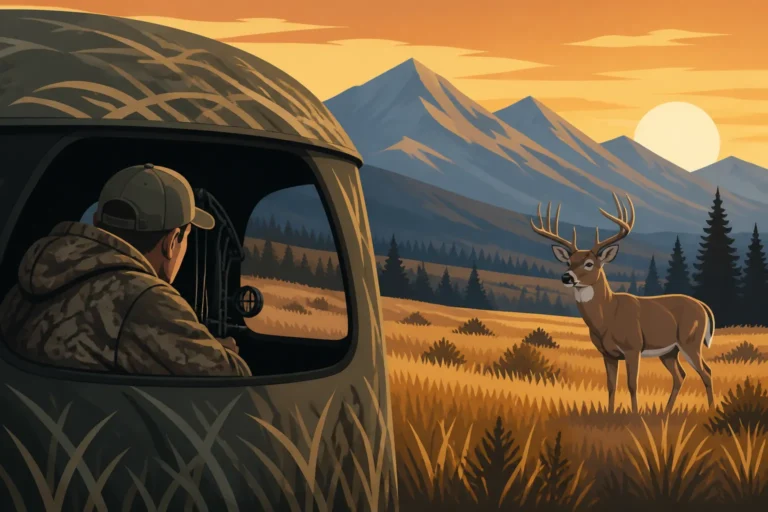
- Ground Blinds for Concealment: If mature trees are scarce, ground blinds are your best friend. They offer complete concealment and protection from the elements. Set them up well in advance of the season, if possible, to allow deer to get accustomed to their presence. Place them in dense cover such as cattail sloughs, brush piles, or the thickest parts of a shelterbelt, overlooking a trail, field edge, or pinch point. Ensure you have clear shooting lanes from various angles within the blind. Brands like Ameristep or Primos offer excellent portable ground blinds suitable for the conditions you'll face.
- Consider the Wind: No matter the setup, always hunt with the wind in your favor. A whitetail's nose is its primary defense. Check the forecast and have multiple stand/blind locations scouted for different wind directions. Your choice of hunting method, be it a stand or blind, should always align with the expected wind and How to Use the Wind Hunting Montana Elk principles.
Still-Hunting and Driving Strategies
While stand hunting is often productive, still-hunting and small drives can be highly effective in farm country, especially for pushing deer out of dense cover.
- Still-Hunting the Thickets: Still-hunting involves moving very slowly and deliberately through dense cover, stopping frequently to observe and listen. This tactic works best in larger blocks of cover like extensive river bottoms, large shelterbelts, or dense draws where deer are likely bedding during the day. Focus on areas that offer marginal visibility but ample deer sign. Move into the wind or with a slight crosswind, using the natural terrain and vegetation to break up your silhouette. The goal isn't to walk up on a deer but to detect it before it detects you, allowing for a strategic shot opportunity.
- Small Drives for Flushing Deer: In areas with isolated pockets of cover, small drives can be incredibly effective, particularly later in the season when deer are pressured. This typically involves one or two "drivers" who slowly and methodically walk through the cover, while "standers" are positioned at likely escape routes (pinch points, field crossings, ends of cover). The key is to keep the drive small and controlled, avoiding pushing deer so hard they blow out wildly. This works well in smaller patches of timber, creek bottoms, or cattail sloughs. Communication among the hunting party is paramount for safety and success.
Wind, Thermals, and Scent Control
Mastering the elements is non-negotiable for whitetail hunting.
- Wind Direction: Always, always, always hunt with the wind in your favor. This means setting up downwind of where you expect deer to approach or bed. A slight crosswind can also be effective, carrying your scent away from the deer's primary travel paths.
- Thermals in Subtle Terrain: Even in relatively flat farm country, thermals play a role. As the sun rises, warm air pushes up, and as it sets, cool air descends into drainages and low areas. Deer often use these subtle thermal currents to their advantage, bedding on leeward slopes during the day or using draws for travel. Understanding How to Use Thermals in Montana Elk Country can provide valuable insights, even for deer in flatter terrain.
- Rigorous Scent Control: Whitetails are incredibly sensitive to human odor. Implement a strict scent control regimen:
- Scent-Free Clothing: Wash all hunting clothes in scent-free detergent and store them in airtight containers or bags.
- Personal Hygiene: Use scent-free soap, shampoo, and deodorant.
- Field Sprays: Use scent-eliminating sprays on your clothes and gear before heading into the field.
- Play the Wind: Ultimately, no amount of scent control will completely fool a whitetail's nose if the wind carries your concentrated odor directly to it. It's a combination of good hygiene and smart positioning.
Navigating Access and Regulations in Agricultural Areas
Hunting Montana whitetails in farm country often involves a mix of public and private land, requiring a diligent approach to scouting, access, and regulatory compliance.
Public Land Pockets and Block Management
While much of Montana's farm country is private, there are often critical public land parcels interspersed throughout, including State Trust Lands, BLM (Bureau of Land Management) parcels, and sometimes National Grasslands. These pieces can be small but vital, acting as sanctuaries or travel corridors for deer.
- Identifying Public Lands: Digital mapping tools like GoHunt are invaluable for identifying these public tracts. They clearly show land ownership boundaries, allowing you to pinpoint accessible hunting grounds. Always double-check boundaries on the ground, as mapping errors can occur.
- Montana's Block Management Program: This program is a lifesaver for public land hunters in agricultural zones. Landowners voluntarily enroll their property, opening it up to public hunting, often for specific species or during certain seasons. Each Block Management Area (BMA) has unique rules—some allow unlimited access, others require sign-in at a kiosk, and some have limited access permits that must be obtained in advance. You can find detailed information on Montana Block Management Areas Explained and how to obtain maps and permission slips. These areas can vary greatly from year to year, so always check the most current FWP Block Management Program details.
- Respecting Boundaries: Even on public land, be acutely aware of private land boundaries. Trespassing, even accidentally, can jeopardize future hunting opportunities and carries legal consequences.
Gaining Private Land Access
The vast majority of Montana's prime farm country whitetail habitat is on private land. Gaining access is often the biggest hurdle but can be incredibly rewarding.
- Start Early: Begin seeking permission months before the season. Farmers are busy, and a polite, early request shows respect.
- In-Person Requests: While a phone call is a start, a face-to-face meeting is often most effective. Dress respectfully, be articulate, and be prepared to show your hunting license and insurance.
- Be Polite and Respectful: Always ask, "Do you allow hunting?" rather than assume. Respect their decision, even if it's a "no." If they say yes, clarify specific rules:
- Where can you park?
- Which areas are off-limits (e.g., near homes, livestock)?
- Are there specific times you can hunt?
- Can you drive on their fields? (Usually no, unless specified).
- What type of game are you allowed to pursue?
- Offer to Help: Many landowners appreciate a hand with chores. Offering to fix a fence, help with haying, or assist with other tasks can go a long way in building goodwill.
- Leave No Trace: Pack out everything you pack in. Close all gates. Don't damage fences or crops. If you harvest a deer, offer the landowner some fresh meat. Send a thank-you note after your hunt. Being a respectful hunter is the best way to secure future access. More tips can be found in How to Get Landowner Permission in Montana.
Key Regulations for Whitetail in Farm Zones
Montana has specific regulations that hunters must understand, and these can change annually.
- License and Tags: You'll need a valid Montana Base Hunting License, a Conservation License, an AIS Prevention Pass, and the appropriate Deer A Tag (typically a general deer license, which allows for one antlered deer statewide) or potentially a Deer B Tag (antlerless or either-sex tags for specific districts, often with private land restrictions). Check the Montana Whitetail Deer Season Dates and Tags for current year details.
- Antler Restrictions: Some districts may have antler point restrictions for mule deer, but for whitetails, it's generally an "antlered deer" tag, meaning any buck with an antler at least 3 inches long. Always verify specific district regulations.
- Weapon Restrictions: Know the rules for archery, rifle, and muzzleloader seasons. Some areas may have archery-only restrictions or special regulations for certain firearms.
- Hunter Orange: During the general firearms season, hunters are typically required to wear at least 400 square inches of hunter orange above the waist.
- Carcass Transportation: Be aware of CWD (Chronic Wasting Disease) regulations, particularly regarding the transportation of deer carcasses. Certain parts may need to be left at the kill site or processed before leaving the hunting district. Always check the Montana Fish, Wildlife & Parks (FWP) regulations for the current year. Their website is the definitive source for all regulations.
By combining thorough e-scouting with on-the-ground reconnaissance, implementing smart hunting tactics, and diligently navigating access and regulations, you'll significantly increase your odds of success on Montana's wily farm country whitetails.
Disclaimer
All hunting regulations, season dates, and access programs mentioned are subject to change by Montana Fish, Wildlife & Parks (FWP). It is the hunter's sole responsibility to consult the most current FWP regulations and obtain all necessary licenses and permits before hunting. This guide provides general information and does not replace official FWP documentation.