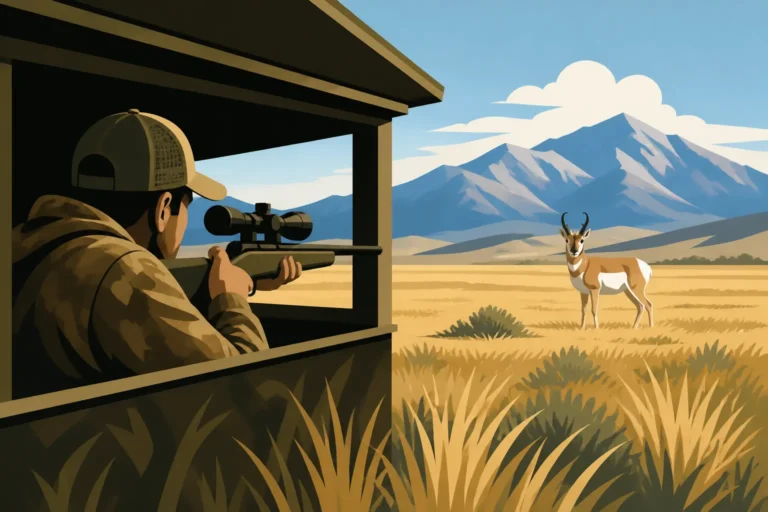
How to Hunt Montana Antelope in the 900 Units
Hunting antelope in Montana can be an incredible experience, but when you start looking at the regulations, those "900 series" units can feel like a secret handshake you're not in on. It's frustrating to decipher which tags apply where and how to even approach these often more specialized districts. This guide is here to unravel the mystery of Montana's 900 unit antelope hunts, helping you understand the rules, strategize your application, and develop effective hunting tactics.
Understanding Montana's 900 Series Antelope Units
For many hunters, the mention of "900 units" immediately sparks questions and sometimes confusion. These aren't just arbitrary numbers; Montana Fish, Wildlife & Parks (FWP) designates these specific hunt codes and units to manage hunter pressure, harvest quotas, and unique opportunities, often with archery-only stipulations. They are distinct from the general antelope tags and typically require a deeper understanding of the draw system and unit characteristics.
The Specifics of 900 Units
Montana's 900 series antelope units are primarily structured as archery-only districts or carry special conditions that differentiate them from standard rifle antelope seasons. This means that if you're holding a 900 series tag, you're committed to bowhunting, which naturally changes your approach to the hunt significantly. These units are often smaller, more localized, or designed to provide a specific type of hunting experience – sometimes in areas closer to human populations or with higher private land percentages where archery provides a safer and more controlled harvest method. For example, some units designated as 900 series tags might be small pockets of public land or Block Management Areas that would be overwhelmed if open to general rifle season. The regulations are designed to spread out hunting pressure, offer more niche opportunities, and manage populations in areas that wouldn't sustain conventional hunting methods. Always refer to the latest Montana Antelope Season Dates in the FWP regulations to confirm the current unit designations and dates for these specialized tags.
Draw Odds and Point Requirements
Securing a 900 series antelope tag often means navigating Montana's competitive draw system. Unlike general deer or elk tags where preference points can almost guarantee success after a few years, antelope tags, especially the more coveted 900 units, can be trickier. Montana uses a bonus point system for species like antelope, where every point gives you an additional "chance" in the draw, but it doesn't guarantee a tag, unlike a true preference point system. This means that even with a handful of points, you're still in a lottery with everyone else who has applied, albeit with better odds. Tools like GoHunt's INSIDER platform can be incredibly helpful here, as they provide detailed draw odds analysis for specific units, including those 900 series tags. You can see how many points successful applicants typically had and gauge your chances. Understanding how many points for a Montana Antelope Tag you might need for these more specialized units is crucial before you commit your application and bonus points.
| Feature | General Antelope Units | 900 Series Antelope Units |
|---|---|---|
| Weapon Type | Primarily Rifle (Archery also allowed) | Primarily Archery-Only |
| Season Length | Often shorter, rifle season dates | Often longer, archery season dates |
| Hunter Pressure | Can be higher, especially on public land | Generally lower per square mile, but specific access points can see pressure |
| Access Challenges | Varies, but more general public land | Can be more challenging due to smaller tracts or private land |
| Draw Difficulty | Variable, some easier to draw | Often more difficult or requires specific planning due to uniqueness |
| Hunt Style | Spot-and-stalk, still-hunting, blinds | Predominantly spot-and-stalk, decoying, water hole sits |
| Typical Terrain | Expansive plains, rolling hills | More diverse, smaller pockets, often near agricultural areas |
Scouting Strategies for 900 Unit Antelope
Success in the 900 units, just like any other Montana hunting endeavor, hinges significantly on thorough scouting. Because these units can be unique in their geography, access, and often see different types of pressure, your scouting needs to be highly focused. Rushing into these hunts without proper research is a recipe for frustration.
E-Scouting with Modern Tools
Before you even think about putting boots on the ground, modern e-scouting tools are your best friend, especially for units that might be far from home. Platforms like OnX Hunt, BaseMap, and even the FWP Hunt Planner maps offer invaluable data. Start by identifying public land boundaries, looking for state trust lands, BLM parcels, and Block Management Areas within your chosen 900 unit. Pay close attention to water sources—ponds, creeks, irrigation ditches—as antelope are highly dependent on water, especially during early archery seasons. Look for natural funnels, pinch points, and cover, which can be surprisingly limited in antelope country but are critical for an archery stalk. Use satellite imagery to identify subtle terrain changes, dry creek beds, or brush lines that could offer concealment. Programs like GoHunt's mapping features can also help you overlay different land types and pinpoint potential bedding and feeding areas, allowing you to effectively How to E-Scout Montana Hunting Units before you even leave your couch.
Boots-on-the-Ground Scouting Considerations
Once you've narrowed down some promising areas through e-scouting, nothing beats actually getting out there. This is where you confirm what the maps show and discover the nuances only visible in person. Drive or hike the perimeter of public land parcels, looking for fence crossings, obvious game trails, and sign. Pay attention to how antelope react to roads and human presence; this will give you clues about how much pressure they're used to. Identify specific cover features like coulees, draws, and tall sage that will allow you to get within bow range. If possible, scout during the early summer months to see where antelope are frequenting before the season starts. Note historical water sources, as drought conditions can significantly alter antelope distribution. If you're hunting in a Block Management Area, it’s even more critical to understand the specific rules for entry and access before the season.
Effective Hunting Tactics in 900 Units
Hunting antelope in Montana, especially with a bow in those 900 units, demands patience, precision, and a willingness to adapt. These animals have incredible eyesight and are built for speed across open terrain, making a successful archery stalk one of the most challenging and rewarding experiences.
Spot-and-Stalk Approaches
Spot-and-stalk is the quintessential method for hunting antelope, and it's particularly vital in archery-only 900 units. It starts with quality optics – good binoculars and a spotting scope are non-negotiable for finding antelope from a distance. Get to a high vantage point early in the morning and glass thoroughly, scanning for movement, distinctive white patches, or the glint of horns. Once you've spotted a buck you want to pursue, the real chess match begins. Plan your stalk carefully, using terrain features like coulees, rolling hills, and even isolated clumps of sagebrush for concealment. Always keep the wind in your face or quartering, as antelope have an excellent sense of smell. Move slowly, deliberately, and be prepared to crawl on your hands and knees for hundreds of yards. It's a physically demanding tactic, but mastering Spot-and-Stalk Antelope Tactics is key to success in these open environments.
Using Decoys and Water Holes
While spot-and-stalk is primary, don't overlook other effective tactics, especially for bowhunting. Antelope are naturally curious and territorial, making decoys a potent tool. A full-body buck decoy or even a simple silhouette can often lure in a territorial buck looking to challenge an intruder. The trick is timing: present the decoy when you're sure the buck has seen it, and be ready to shoot as he approaches. Sometimes, a "fanning" tactic with a decoy from a prone position can work wonders. Another excellent strategy, particularly during the warmer early archery seasons, is hunting water holes. Antelope need to drink frequently, especially in arid eastern Montana or during hot weather. Identify heavily used water sources during your scouting and set up a ground blind well in advance to allow the antelope to get used to its presence. This can offer a high-odds shot opportunity, but patience is absolutely paramount. Knowing How to Hunt Antelope Water Holes in Montana effectively means understanding their travel patterns and setting up downwind. Similarly, learning How to Decoy Antelope in Montana can turn a stale spot-and-stalk into an exciting close encounter.
Navigating Access and Regulations in 900 Units
One of the biggest hurdles, especially for nonresident hunters, is understanding and securing access to quality hunting grounds in Montana. This becomes even more critical in specialized 900 units, which might have unique land ownership patterns or access rules.
Public Land Access and Block Management
Montana is famous for its abundant public land, from vast BLM tracts to state trust lands. However, many 900 units might include significant amounts of private land, or have public land that is landlocked without a legal access point. This is where researching Montana Public Land Hunting Guide strategies and the Block Management Program becomes absolutely vital. Block Management Areas (BMAs) are private lands enrolled by landowners with FWP to allow public hunting access under specific rules. These can be goldmines for antelope hunters, offering access to prime habitat that might otherwise be off-limits. Each BMA has its own set of regulations—some are sign-in only, others require reservations, and some are "hunt by permission" units. You absolutely need to consult the BMA program details on the FWP website and obtain BMA maps (available digitally or at regional FWP offices) to understand the access protocols. Don't assume anything; always confirm the rules for the specific BMA you plan to hunt. Learning Montana Block Management Areas Explained can unlock incredible opportunities.
Understanding Unit-Specific Regulations
Beyond the general hunting regulations, 900 units often come with their own distinct rules. These can include restrictions on weapon types (almost exclusively archery for the 900 series), season dates, and sometimes even specific land use rules within the unit. It's not uncommon for an archery-only 900 unit to have a significantly longer season than the general rifle season, providing more opportunities to hunt if you are successful in drawing the tag. You must meticulously read the FWP hunting regulations specific to your drawn 900 unit. Look for details on antler point restrictions, specific harvest quotas (though these are typically managed through the draw itself), and any unique land access rules that might be tied to that particular unit. Neglecting these details could lead to violations or, at best, a wasted hunting trip. Double-check everything, as regulations can sometimes change year to year. The FWP website is your most reliable source, or a call to the regional FWP office can often clarify specific questions.
Essential Gear and Preparation for 900 Unit Hunts
A successful 900 unit antelope hunt isn't just about finding the animals; it's also about being properly equipped and physically ready for the unique demands of hunting pronghorn in Montana.
Optics and Long-Range Equipment
When hunting Montana antelope, especially in vast, open landscapes characteristic of many 900 units, your optics are arguably your most important piece of gear. You'll spend countless hours behind glass, searching for the tell-tale signs of antelope in the distance. A high-quality pair of 10x or 12x binoculars is essential, preferably with a wide field of view and excellent low-light performance. Complementing this, a powerful spotting scope (20-60x or higher) on a sturdy tripod will allow you to confidently identify and judge bucks from miles away, saving you countless miles of wasted walking. For archery hunters, a reliable rangefinder is non-negotiable; understanding precise yardage is crucial for ethical shots on fast-moving animals. Ensure your bow setup is tuned and you've practiced shooting at varying distances, especially in windy conditions, as Montana's plains are rarely still. Getting the Best Optics for Montana Big Game can make or break your hunt.
Physical Fitness and Field Dressing
While hunting antelope might not involve the grueling climbs of an elk hunt, don't underestimate the physical demands. Spot-and-stalk tactics often involve long miles of walking, sometimes crawling, across uneven terrain under the hot sun. Staying hydrated is critical, as many 900 units are in drier, more exposed areas. You'll need good quality, broken-in hiking boots and durable clothing that can withstand crawling through sagebrush and cactus. Being physically prepared means you can push harder, stalk longer, and recover an animal more efficiently. Once you've harvested an antelope, prompt field dressing is vital, especially in warm weather. Knowing How to Quarter an Elk in the Montana Backcountry might be overkill, but understanding basic field butchering techniques for smaller game like antelope is crucial. Have a sharp knife, game bags, and a plan for cooling the meat quickly. Even though antelope are smaller than elk, their meat is delicious and deserves proper care to prevent spoilage.
Disclaimer
Please remember that hunting regulations in Montana can change. Always consult the most current Montana Fish, Wildlife & Parks (FWP) regulations and official resources before planning and executing any hunt. This guide provides general information and should not be considered a substitute for official FWP documentation.