Montana Long-Range Shooting Considerations
The rugged, expansive landscapes of Montana offer some of the most challenging yet rewarding hunting opportunities in North America. Many hunters dream of making that perfect, ethical long-range shot, but the reality of high winds, varied terrain, and changing atmospheric conditions can make it daunting. This guide will walk you through the critical factors and considerations necessary to prepare for and execute long-range shooting effectively and ethically in Montana's diverse environments.
Understanding Montana's Unique Terrain and Its Impact on Long-Range Shots
Montana's diverse topography, from the soaring peaks of the Rockies to the vast, open plains, presents a unique set of challenges and variables for long-range shooting. It's not just about distance; it's about how the environment manipulates your bullet's trajectory. Ignoring these factors can lead to missed opportunities or, worse, unethical shots.
Elevation and Ballistics
One of the most significant yet often underestimated factors in Montana is elevation. Hunting at 3,000 feet in the eastern plains is a vastly different ballistic problem than hunting at 8,000 feet or higher in the Bob Marshall Wilderness. The air density changes dramatically with elevation, and this directly impacts bullet drag. Thinner air offers less resistance, meaning your bullet will typically fly flatter and retain more energy at higher altitudes than it would at sea level.
Consider a scenario where you've zeroed your rifle at 500 yards at an elevation near Billings, around 3,100 feet. If you then take that same setup to hunt elk in a high-country basin near Bozeman, at say 7,500 feet, your bullet will likely hit higher than anticipated if you don't adjust for the reduced air density. Ballistic calculators are indispensable tools here, but they must be fed accurate data, including the precise elevation of your shooting position relative to your target. Neglecting these environmental nuances is a common pitfall that can lead to frustrating misses on trophy animals. This is especially crucial when planning a Montana Backcountry Hunting Guide adventure where elevations can shift rapidly.
Wind – The Hunter's Arch Nemesis
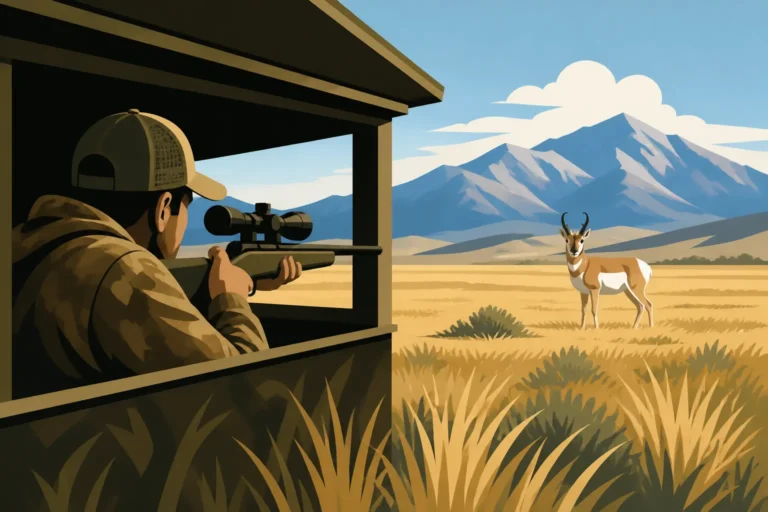
If elevation is a challenge, wind in Montana is often the hunter's arch nemesis, particularly when attempting long-range shots. The state is renowned for its unpredictable and often ferocious winds. In mountainous regions, you'll contend with thermals that push air up and down canyons, swirling gusts that change direction with astonishing speed, and crosswinds that can push a bullet several feet off target at extended ranges. Out on the open plains of eastern Montana, where you might be hunting antelope, the wind can be a constant, unyielding force, sweeping across vast distances without a single obstruction to break its path.
Reading the wind accurately requires constant vigilance and practice. You need to observe every available indicator: the sway of distant trees, the ripple on grass, the dust kicked up by a vehicle miles away, or even the mirage shimmering off the ground. Pay close attention to how the wind affects your bullet's flight path; even a gentle breeze can have a significant impact beyond 300 yards. Many experienced hunters use methods like tossing small pieces of milkweed or strips of flagging tape to get a localized wind reading, but remember that the wind at your position might be entirely different halfway to your target. Mastering wind compensation is arguably the most challenging aspect of Montana Long-Range Shooting Considerations and demands respect and meticulous attention.
Essential Gear and Setup for Montana Long-Range Success
Achieving consistent long-range accuracy in Montana demands more than just a good rifle; it requires a meticulously chosen and carefully tuned system where every component works in harmony. Cutting corners on gear is a surefire way to introduce inconsistencies that will be magnified at distance.
Rifles, Calibers, and Ammunition
When it comes to rifles, precision and reliability are paramount. A quality rifle with a consistent trigger, a free-floated barrel, and a solid action is the foundation of any long-range setup. For calibers suitable for Montana's diverse big game, you'll find a range of excellent options. The .300 Winchester Magnum has long been a workhorse, offering plenty of power and decent ballistics for elk. The 7mm Remington Magnum is another classic, known for its flat trajectory and excellent performance on deer and elk. Newer cartridges like the 6.5 PRC or the .30 Nosler are gaining immense popularity for their exceptional ballistic coefficients and reduced recoil, making them easier to shoot accurately at extended ranges. For specific recommendations, check out our guide on Best Rifle Calibers for Montana Elk.
Ammunition choice is equally critical. You need consistent, high-quality factory loads or precisely hand-loaded cartridges. Look for bullets with high ballistic coefficients (BCs) that are designed to minimize wind drift and retain energy downrange. Match your bullet construction to the game you're pursuing; a bonded or monolithic bullet is essential for reliable expansion and penetration on tough animals like elk, even at lower impact velocities experienced at longer distances. When researching potential calibers and ammunition, resources like GoHunt can provide valuable data and user reviews, helping you make informed decisions based on real-world hunting scenarios and ballistic performance.
Optics and Ranging Devices
Your optics are your eyes at a distance, and there's no substitute for high-quality glass when making long-range shots in Montana's varied light conditions. A rifle scope designed for long-range hunting will feature clear, crisp glass, reliable and repeatable turrets for dialing elevation and windage adjustments, and a robust construction to withstand the rigors of a backcountry hunt. Many hunters opt for scopes with exposed, tactical-style turrets that allow for quick, precise adjustments in the field, often paired with a zero stop feature. Brands like Leupold, Vortex, and Nightforce offer excellent options for discerning hunters. This is a topic we delve deeper into in our Best Optics for Montana Big Game article.
A precision rangefinder with angle compensation is non-negotiable. Many of Montana's shots are taken across canyons or up steep hillsides, where line-of-sight distance differs significantly from horizontal distance. An angle-compensating rangefinder (like those from Sig Sauer or Leica) will provide the "shoot-to" distance, telling you how much drop to account for as if the shot were perfectly flat. Additionally, a quality spotting scope can be invaluable, not just for initially locating game but also for reading wind conditions downrange and, crucially, for spotting your bullet's impact so your hunting partner can call corrections if necessary. Utilizing scouting tools, such as those offered by GoHunt, can help you pre-plan potential shooting lanes and ranges, ensuring you're familiar with the distances before you even step foot in the field.
Mastering the Art of the Long-Range Shot in Montana
Making an ethical long-range shot is a culmination of meticulous preparation, precise calculations, and unwavering practice. It's about minimizing variables and maximizing confidence when that fleeting opportunity arises.
Ballistic Data and Field Doping
Before you even leave your driveway, you should have a solid understanding of your rifle and ammunition's ballistic performance. This means creating a custom ballistic chart or using a reliable ballistic app on your smartphone or Kestrel device. This data needs to be precise, accounting for your bullet's specific ballistic coefficient, muzzle velocity, and the atmospheric conditions you expect to encounter. Factors like temperature, barometric pressure (which affects air density, similar to elevation), and even humidity can subtly alter your bullet's flight path.
"Doping the shot" in the field refers to making real-time adjustments based on current conditions. Once you range your target, your ballistic calculator will give you an initial elevation adjustment. However, you then need to assess the wind, estimate its speed and direction across the entire bullet's flight path, and apply the appropriate windage correction. This is where experience truly pays off. Remember, the wind isn't static; it often changes from minute to minute, even second to second. A resource like GoHunt can help you analyze terrain and wind patterns for specific areas, aiding in better field doping decisions. For further reading on anticipating animal movement, consider our piece on How to Pattern Montana Elk Movement.
| Caliber | Typical Bullet Weight (grains) | Recoil Considerations | Effective Range (Hunting) | Notes |
|---|---|---|---|---|
| .300 Win Mag | 180-200 | Moderate to Heavy | 600-800+ yards | Powerful, widely available, good for large game. |
| 7mm Rem Mag | 150-175 | Moderate | 600-800+ yards | Flat trajectory, excellent all-around elk/deer cartridge. |
| 6.5 PRC | 140-156 | Moderate | 700-900+ yards | High BC bullets, low recoil, increasingly popular for long range. |
| .30 Nosler | 180-210 | Moderate to Heavy | 700-900+ yards | Excellent velocity and energy, newer cartridge. |
| .28 Nosler | 160-175 | Moderate | 700-900+ yards | Very fast, flat shooting, can be hard on barrels. |
Ethical Considerations and Practice
The pursuit of long-range shooting in hunting is not about reaching extreme distances just because you can. It's about extending your ethical killing range, which means ensuring a clean, humane harvest every single time. This is a deeply personal and ethical decision, and every hunter's maximum effective range will be different. It’s critical to know your own limitations and stay within them. An animal's life is not a practice target for your long-range skills.
Extensive practice is the only way to genuinely become proficient. Don't just practice at 100 or 200 yards; push yourself to shoot at varying distances, angles, and in different wind conditions, mimicking real-world hunting scenarios as closely as possible. Practice from field positions—prone with a bipod, off a backpack, using shooting sticks—not just from a bench rest. Practice rapid target acquisition and making quick, accurate adjustments. The goal is to build muscle memory and confidence so that when a legal animal presents itself, your focus can be entirely on the shot, not on fumbling with gear or calculations. For improving your ability to determine distances in the field, learning How to Judge Distance in Montana's Mountains is invaluable.
Practical Strategies for Montana Long-Range Hunting Scenarios
Successfully integrating long-range shooting into your Montana hunt is about more than just equipment; it's about strategic planning and adaptability to the wild landscape.
Spot-and-Stalk Integration
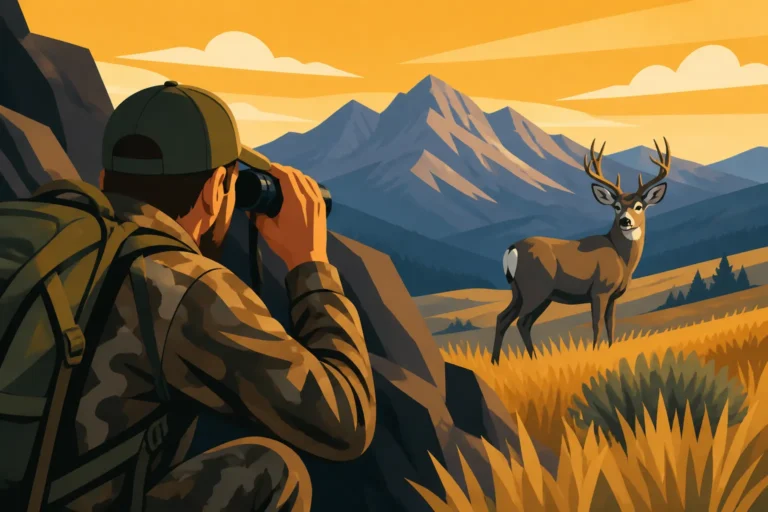
While the allure of long-range shooting might suggest static positions, it often works best as a complementary skill within a dynamic hunting method like spot-and-stalk. In Montana's vast country, especially for species like mule deer or antelope, closing the distance to traditional rifle ranges (under 300 yards) might be impossible due to open terrain, lack of cover, or the animal's keen senses. This is where the ability to confidently and ethically take a 400-600 yard shot becomes a game-changer. Our guide on How to Spot-and-Stalk Antelope in Montana touches on situations where longer shots might become necessary.
When you spot an animal, your primary goal should always be to close the distance as much as possible, using terrain, wind, and vegetation to your advantage. However, if a stalk stalls out or the animal holds up in an unapproachable position, having the long-range capability means you don't have to give up. Instead, you can transition to setting up a stable shooting platform, making your final wind and elevation calculations, and taking the shot. The key is to be patient and make the decision to shoot long only when all other options have been exhausted, and you have a high-percentage, ethical shot. Effective How to E-Scout Montana Hunting Units can greatly aid in identifying potential long-range shooting scenarios and planning your approach.
Setting Up a Stable Shooting Platform
Regardless of how well your rifle shoots or how accurately your ballistic calculator predicts, a wobbly shooting platform will doom your long-range efforts. Stability is king. The prone position, when possible, offers the most stable platform, especially when combined with a quality bipod attached to your rifle. Make sure your bipod feet are secure, digging into the earth or resting on a solid surface.
When prone isn't an option due to terrain or vegetation, you'll need other solutions. A sturdy tripod, such as those made by Spartan Precision or Really Right Stuff, is an excellent investment, allowing you to shoot from kneeling or sitting positions with surprising stability. Many hunters also use their hunting pack as a makeshift rest, molding it into a stable platform. The goal is to eliminate as much human movement and tremor as possible. Practice building these stable platforms quickly and quietly, as a Montana big game animal won't wait for you to get comfortable. For those interested in a deeper dive into hunting methods, our comprehensive Montana Rifle Elk Hunting Guide covers various techniques, including setting up for accurate shots. Developing a sound Montana Public Land Hunting Strategy also often involves considerations for shooting across vast open spaces.
Disclaimer
Hunting involves inherent risks, including but not limited to injury, illness, and death. The information provided in this guide is for informational purposes only and is not a substitute for professional instruction, proper training, or adherence to all local, state, and federal hunting regulations. Always prioritize safety, ethical hunting practices, and respect for wildlife and the environment. Consult with experienced guides and refer to official Montana Fish, Wildlife & & Parks resources for the most up-to-date regulations and safety guidelines.