How to Hunt North-Facing Slopes for Montana Elk
Finding elk in Montana can feel like searching for a ghost, especially when they disappear into the dense timber or after the season's pressure sends them into hiding. Many hunters overlook the subtle but significant role that terrain plays in elk behavior, particularly how north-facing slopes become veritable sanctuaries. This guide will meticulously break down why these shaded slopes are critical elk habitat and equip you with the practical strategies and insights needed to successfully hunt them in the vastness of Montana.
Why North-Facing Slopes are Elk Havens
When you're out hunting in Montana, it's easy to get fixated on open south-facing slopes, thinking that's where the sun and new growth will draw the elk. But seasoned hunters often know that the real magic, especially for mature bulls, happens on the north sides. These slopes provide a unique microclimate and habitat that elk absolutely thrive in, offering a combination of shade, forage, and security that's hard to beat.
Cool, Shaded Bedding Areas
Imagine a warm, sunny Montana afternoon, even in the fall. Elk, especially those big, dark-colored bulls, can overheat quickly. North-facing slopes, often blanketed in thick evergreen timber like fir, spruce, and lodgepole pine, offer dense shade that keeps the ground cooler throughout the day. This isn't just about comfort; it's about survival. Elk need to conserve energy, and spending the heat of the day in a cool, shaded bed allows them to do just that.
These cooler temperatures mean elk don't have to travel as far or expend as much energy seeking relief from the sun. You'll often find them bedded on benches or slight rises within this timber, strategically positioned to catch a thermal draft or scent check their backtrail. It's a prime location for them to rest undetected, making them a challenge to approach. Understanding this thermal advantage is crucial, especially when planning your approach in the mornings as the air starts to warm and lift, or in the evenings as it cools and sinks.
Abundant and Diverse Forage
While south-facing slopes might green up earlier in the spring, north-facing slopes retain moisture longer and can harbor a richer diversity of forage later into the season. The cooler, moister soil supports lush undergrowth, often featuring species like huckleberry, serviceberry, various grasses, and forbs that elk love to browse. This sustained food source is a major draw, especially in drier years or late fall when other areas have dried out and become less palatable.
Think about it: an elk needs to eat a lot to maintain its massive body weight and prepare for or recover from the rut. If they can bed in cool, secure cover and have high-quality food nearby, they're going to choose that spot every time. This combination often leads to a pattern where elk will move minimally from their bedding areas to feed, sometimes only dropping a few hundred feet to a specific bench or drainage to graze before returning to the security of the deep timber. Knowing this can help you pinpoint specific feeding zones adjacent to their bedding havens.
Security and Thermal Advantage
Beyond just food and shade, north-facing slopes offer incredible security. The dense timber provides visual cover, making it difficult for predators (including human hunters) to spot them from a distance. The broken terrain, with its steep pitches, draws, and benches, also makes it harder to approach silently. Elk are masters of using the topography to their advantage, often bedding in positions where they can hear or smell danger approaching from below, while their backside is protected by a steep wall or thick brush.
Furthermore, north-facing slopes are deeply influenced by thermals, which are localized air currents driven by temperature changes. In the morning, as the sun warms the earth, air currents rise up the slopes. In the evening, as the air cools, it flows down the slopes. Elk use these predictable thermal shifts as a natural warning system. If you're planning to still-hunt or approach an elk bedded high on a north-facing slope, understanding these thermals is paramount to keeping your scent from giving you away. For more detail on this, you might want to read our guide on how to Use Thermals in Montana Elk Country.
Effective Scouting for North-Facing Elk
You can't just wander into a north-facing slope and expect to stumble upon a bull. Successful hunting on these tricky slopes demands meticulous scouting, both from your couch and boots on the ground. Knowing what to look for and how to interpret the landscape will dramatically increase your odds.
E-Scouting and Map Analysis
Before you even step foot in the field, spend significant time poring over maps. Digital tools like onX Hunt or even Google Earth are invaluable for identifying promising north-facing slopes. Look for areas with dense timber indicated by dark green coloration, particularly those with a northern aspect. Pay close attention to features like benches, saddles, and small draws that break up the uniform slope. These are often preferred bedding or travel corridors for elk.
A great tip for e-scouting is to use the terrain shading or 3D view features to visualize the contours. Identify potential escape routes, natural funnels, and areas where the timber transitions to more open ground, as these are common movement patterns. You're looking for pockets of cover that are relatively inaccessible or hidden from common access points. Many hunters also find platforms like GoHunt invaluable for overlaying various data layers, such as public land boundaries, timber types, and even historical burn scar data, which can highlight areas of new growth within north-facing timber. This can help you refine your focus before you leave the house. Consider our article on How to E-Scout Montana Hunting Units for more in-depth strategies.
Interpreting Sign on the Ground
Once you've identified potential spots on your map, it's time for some boots-on-the-ground reconnaissance. When you're physically scouting north-facing slopes, you're not just looking for elk; you're looking for evidence of elk and trying to understand their habits in that specific area.
Start by looking for fresh tracks. Elk tracks in the soft, damp soil of north-facing timber will be much clearer and easier to date than on dry, south-facing ground. Pay attention to the size of the tracks—are they indicative of a lone bull, cows, or a herd? Droppings are another key indicator; fresh, shiny droppings mean elk are active in the area. Also, search for rub marks on trees, especially on smaller saplings. Fresh rubs, with sap still oozing, are a sure sign a bull has been marking his territory. Look for old beds, often identifiable as flattened areas in the vegetation, sometimes with a depression. The presence of numerous old beds in a secluded, shaded spot confirms that elk use that area for bedding year after year.
Don't forget to analyze the vegetation itself. Are there browse lines on specific shrubs or trees? Are patches of grass grazed down? All these subtle clues piece together a picture of elk activity.
Tactical Approaches for Hunting North-Facing Slopes
Hunting north-facing slopes is often a slower, more deliberate game than open country glassing. It requires patience, stealth, and a keen understanding of elk behavior within thick cover.
Still-Hunting and Scent Management
Still-hunting is arguably the most effective method for navigating the dense timber and broken terrain of north-facing slopes. This isn't about covering ground quickly; it's about moving at a snail's pace, pausing frequently to listen, look, and scan. Think in terms of yards per hour, not miles. Your goal is to move so slowly and silently that you detect the elk before they detect you. This is where high-quality, quiet clothing and stealthy footwear become paramount. For more on this, check out our guide on How to Still-Hunt Montana Timber.
Scent management is critically important here. Since elk rely heavily on their noses, you must constantly monitor the wind and thermals. Plan your approach to ensure your scent is blowing away from where you expect elk to be. In the mornings, thermals generally rise, so approaching from below the suspected bedding area could work if you move quickly before the thermals stabilize or drop. In the evenings, thermals fall, making an approach from above safer. However, thermals can swirl and change in complex terrain, so never rely solely on them. A small puffer bottle with a bit of milkweed or scent killer is your best friend. Always consider the wind direction and how it interacts with the thermals.
Glassing from Strategic Perches
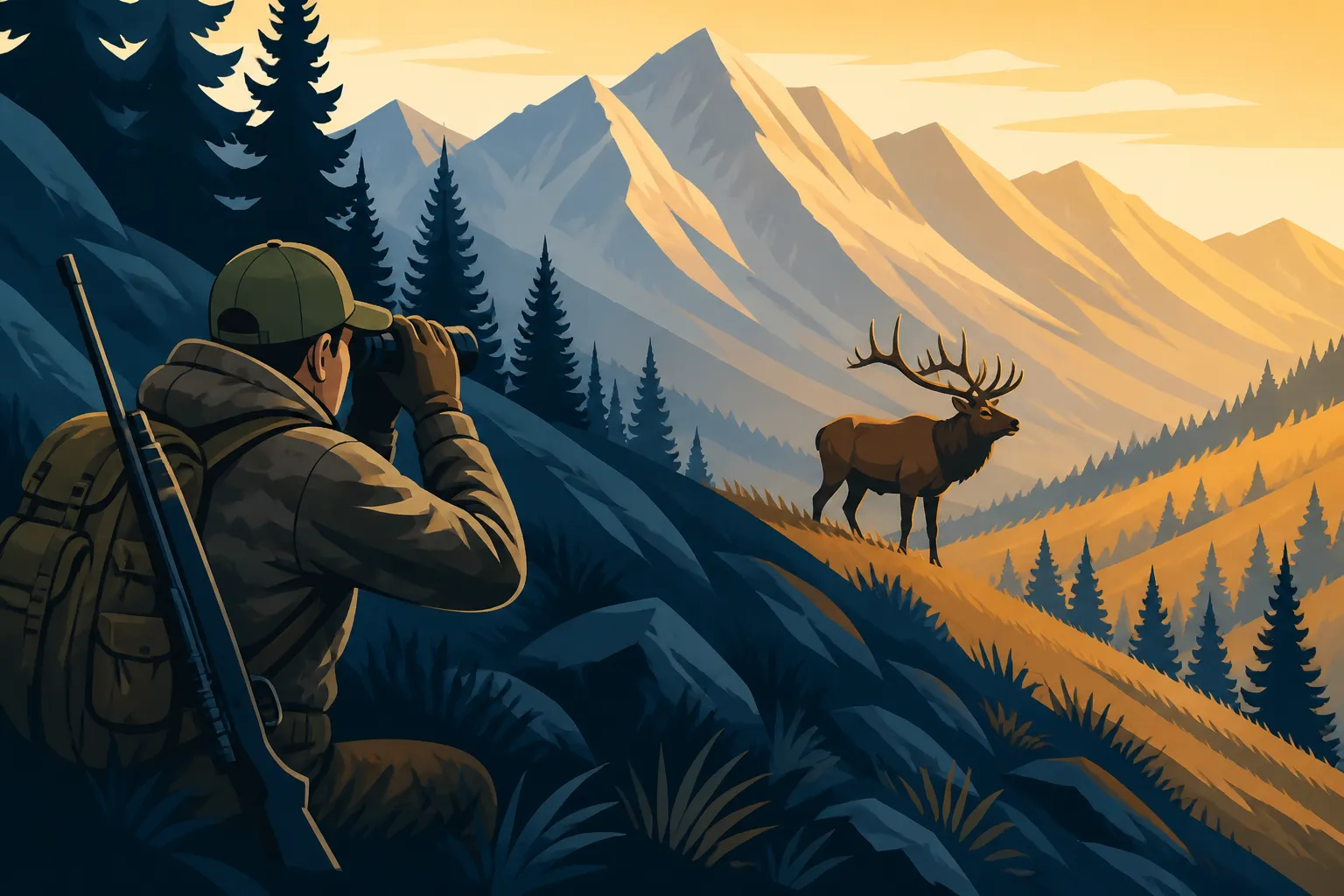
While still-hunting is crucial within the timber, glassing still plays a role, especially on the fringes or when examining opposing north-facing slopes. Find strategic viewpoints where you can look into the timbered slopes. This could be an opposing ridge, a knob, or a clearcut edge. Use your binoculars and spotting scope to meticulously pick apart the shadows and openings. Look for horizontal lines (an elk's back or belly) in a vertical world of trees.
Patience is key here. Elk blend in incredibly well. Sometimes, all you'll see is a flicker of an ear, a patch of hide, or the telltale gleam of an antler tines through the branches. Glassing during the early morning and late evening, when elk might be moving to or from bedding areas, is often most productive. A good set of optics can make all the difference, as detailed in our guide on Best Optics for Montana Big Game. You can spend hours staring at a hillside only for an elk to materialize from what seemed like empty timber.
Calling in Thick Cover
Calling for elk on north-facing slopes can be challenging but highly effective if done correctly. The dense timber often dampens sound, so your calls might not carry as far as in open country. However, this also means elk often respond by trying to pinpoint the source of the sound more precisely. Instead of long, drawn-out bugles, consider shorter, more subtle cow calls or chuckles to entice a curious bull.
If you get a response, resist the urge to immediately charge in. The elk likely has a terrain advantage and might be trying to locate you. Set up quickly, using the timber for concealment, and be ready for a close-range shot. Sometimes, a "silent treatment" approach works best: call once or twice, then go completely silent and listen for the elk to move toward you, trying to locate the "cow" that just called. Being proficient in How to Call Elk in Montana can significantly improve your odds when trying to draw out a bull from the shadows. Remember, close-quarters calling often turns into a cat-and-mouse game, and patience often wins.
Gear Considerations for North-Facing Terrain
Hunting north-facing slopes means dealing with moisture, elevation changes, and sometimes unpredictable weather. Having the right gear isn't just about comfort; it's about safety and effectiveness.
Footwear and Traction
The ground on north-facing slopes can be notoriously damp, muddy, and often covered in slippery moss, downed timber, and loose rock. Your footwear needs to be up to the challenge. Invest in high-quality, waterproof boots with excellent ankle support and aggressive tread patterns. Brands like Kenetrek or Schnee's are popular among Montana hunters for their durability and traction in steep, rugged terrain. You'll be side-hilling, climbing over logs, and descending steep pitches, so stability is paramount to prevent slips and falls.
Consider a stiffer sole for better support on uneven ground and when carrying a heavy pack. Waterproofing is non-negotiable; wet feet can lead to blisters, cold, and a miserable hunt. Paired with good quality wool socks, proper boots will keep your feet dry and comfortable, allowing you to focus on the hunt rather than your aching soles. If you're looking for more guidance, our article on Best Boots for Montana Elk Hunting offers a deeper dive.
Layering Systems and Weather Protection
Weather on north-facing slopes can change quickly, and the temperature difference between shaded timber and open ridges can be significant. A versatile layering system is essential. Start with a moisture-wicking base layer to manage sweat, followed by an insulating mid-layer (fleece or synthetic puffy) for warmth. Your outer layer should be a quiet, durable, waterproof, and windproof shell. You'll be working hard climbing, generating heat, but then standing still in the cold, so being able to add or shed layers quickly is key to regulating your body temperature.
Don't forget a warm hat and gloves. Even if the day starts mild, sitting still for an hour waiting for an elk in the shaded timber can get surprisingly cold. A quality rain jacket and pants are also critical, as showers can move in fast, and wet gear can quickly lead to hypothermia, especially when you're far from the trailhead in a backcountry setting. For those venturing deep into the mountains, our Montana Backcountry Hunting Guide provides comprehensive packing lists and considerations for remote trips.
Navigation and Optics in Dense Cover
While you'll be e-scouting, having a reliable GPS device or a mapping app like onX Hunt on your phone (with downloaded offline maps!) is absolutely critical. It's incredibly easy to get disoriented in thick, featureless timber, especially on a steep slope. Mark your vehicle, important terrain features, and any elk sign you find. This helps you maintain situational awareness and plan your exit strategy.
As for optics, while a spotting scope might be less useful within the dense timber, high-quality binoculars are still invaluable. You'll use them constantly to pick apart shadows, identify distant movement, and confirm what you think you're seeing through the brush. A rangefinder is also crucial for confirming shot distances, as judging yardage in thick timber can be deceptive. Ensure your binoculars have good light-gathering capabilities to perform well in the dim, shaded environment of north-facing slopes.
| Feature / Consideration | North-Facing Slopes | South-Facing Slopes |
|---|---|---|
| Primary Advantage | Shade, Security, Consistent Moisture | Early Green-up, Sunlight, Views |
| Typical Forage | Lush undergrowth, huckleberries, fir/spruce browse | Grasses, sun-loving forbs |
| Elk Behavior | Bedding, security cover, minimal movement | Feeding (morning/evening), sunning, travel |
| Hunter Tactics | Still-hunting, slow movement, close-quarters calling | Glassing, long-range shooting, ambush points |
| Thermal Flow | Morning: rises; Evening: falls (complex in steep terrain) | Morning: rises; Evening: falls (more uniform) |
| Visibility | Low visibility, dense timber, limited sightlines | High visibility, open areas, long sightlines |
| Ground Conditions | Damp, muddy, mossy, slippery, downed timber | Drier, rockier, open ground |
| Gear Importance | Waterproof boots, quiet layers, GPS, rangefinder | Quality optics, layered clothing, comfortable hiking boots |
Navigating the Challenges of North-Facing Elk Hunting
Hunting north-facing slopes isn't without its unique set of challenges. From dealing with other hunters to the sheer physical demands, being prepared for these obstacles will improve your chances of success.
Dealing with Hunter Pressure
Even the most remote-looking north-facing slopes can attract other hunters, especially during Montana's general rifle season. Elk that are heavily pressured will often dive deeper into the thickest, nastiest timber on these slopes, becoming even more difficult to locate and approach. Your strategy needs to adapt to this. Instead of following well-worn trails, be prepared to bushwhack into areas that others avoid due to their difficulty.
Consider hunting during weekdays if possible, or target areas that require significant physical exertion to reach. An early start is also crucial; often, hunters who are already in position before first light have a significant advantage. If you encounter other hunters, be respectful, and if possible, communicate your plans to avoid unintentionally pushing elk into each other. Remember, many elk hunters in Montana are focused on the rut, but elk are in these north-facing sanctuaries all season. To minimize running into others, research How to Beat the Crowds on Montana Public Land.
Physical Demands and Safety
Hunting steep, timbered north-facing slopes is physically demanding. You'll be climbing significant elevation, traversing uneven ground, and potentially packing out a heavy load in challenging conditions. Physical preparation before your hunt is critical. Focus on leg strength, cardio, and endurance. Our guide on How to Physically Prepare for a Montana Elk Hunt can provide an excellent training regimen.
Safety is paramount. Always let someone know where you're going and when you expect to return. Carry a first-aid kit, emergency shelter, and sufficient water and food. The dense timber can also make it harder to communicate with hunting partners or get cell service, so consider a satellite messenger or two-way radio. Be mindful of falling timber, especially after high winds or heavy snow. And always be aware of your surroundings, as you're not the only predator in the Montana woods; bear spray is a must, especially in grizzly country.
Packing Out Elk from Difficult Terrain
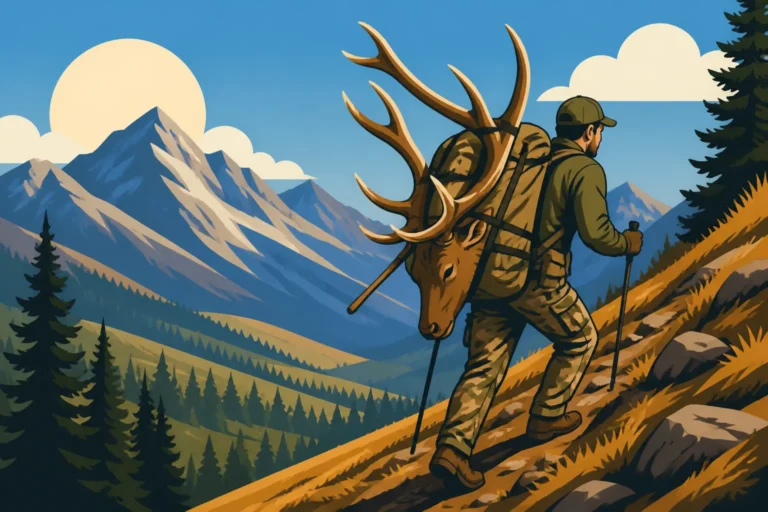
Successfully harvesting an elk on a steep, north-facing slope is only half the battle. Packing out a massive animal from such terrain presents its own set of formidable challenges. The dense timber, steep grade, and slippery footing will make every step arduous. Breaking the elk down into manageable quarters, even boning out the meat, is usually the most practical approach.
Having a good quality pack frame and a sharp knife are essential. If you're hunting solo, you'll need to make multiple trips, which is why physical fitness is so important. Consider using game bags to protect the meat and keep it clean. Planning your extraction route before you even shoot the elk is a smart move. Look for benches, old game trails, or less steep areas on your map that could serve as a slightly easier path down the mountain. Remember, getting that hard-earned meat out ethically and safely is the final act of a successful hunt. For detailed instructions on this, refer to How to Pack Out an Elk in Montana.
North-facing slopes in Montana hold a wealth of opportunity for elk hunters willing to put in the effort. By understanding why elk choose these areas, meticulously scouting them, and employing strategic hunting tactics, you can unlock some of the best, most challenging, and ultimately, most rewarding elk hunting experiences Montana has to offer. It's a game of patience, stealth, and adapting to the mountain's secrets, but the reward of a hard-earned bull from the deep timber is unmatched.
Disclaimer
Hunting is an inherently dangerous activity. This guide provides general information and recommendations. Always consult the latest Montana Fish, Wildlife & Parks regulations and ensure you have the proper licenses and permits before hunting. Your safety is your responsibility.