Best Method to Hunt Montana Moose
Hunting for moose in Montana is a pursuit shrouded in mystique and incredible challenge, not just because of the animal's elusive nature and rugged habitat, but also due to the sheer difficulty of even securing one of those coveted tags. Many dream of the chance to pursue one of North America's largest big game animals, only to be daunted by the low draw odds and the monumental task of finding these giants in the vast, often impenetrable wilderness. This comprehensive guide aims to peel back the layers of this challenging hunt, providing you with the best methods, strategies, and preparation advice to maximize your chances should you be lucky enough to draw a Montana moose tag.
Understanding Montana Moose: Behavior, Habitat, and Challenges
Before you even think about setting foot in the timber with a rifle or bow, truly understanding the animal you're pursuing is paramount. Montana moose are magnificent creatures, but they aren't like elk or deer, and their behavior dictates very different hunting strategies.
Moose Biology, Seasonal Patterns, and Rut Behavior
Montana's moose populations, while localized, are robust in certain areas, thriving in specific wetland and high-elevation timber habitats. Unlike elk, moose are more solitary, though cows will be found with their calves. Their primary diet consists of woody browse, often found in dense willows, aspens, and various shrubs, especially near water sources.
As seasons change, so do their patterns. In the spring and summer, moose tend to be dispersed, feeding heavily to build up reserves. They'll often seek out higher elevations and cooler temperatures as the summer progresses, finding solace in dense conifer stands and shaded north-facing slopes. However, the most opportune time for hunting, and arguably the "best method" window, revolves around their fall rut.
The moose rut in Montana typically kicks off in late September and continues through October, often peaking in early to mid-October. During this period, bulls become significantly more active, vocal, and less cautious as they seek out cows. Cows in estrus will also vocalize, making them more susceptible to calling techniques. This intense period means moose are moving more, increasing the chances of encountering them. Post-rut, as winter approaches, they'll often transition to specific winter ranges, usually areas with good snow protection and abundant browse. Understanding these Montana Moose Season Dates and Tags is crucial for planning any hunt.
Identifying Prime Moose Habitat and Range
Finding moose in Montana isn't about covering vast expanses of open country like you might for mule deer or antelope. Instead, it's a game of focusing on very specific, often dense, and wet habitats. Their preferred range is typically characterized by:
- Wetlands and Water Sources: Moose are semi-aquatic, frequently found in swamps, bogs, marshy areas, and along the banks of slow-moving streams and lakes. They love to feed on aquatic vegetation.
- Dense Willow Thickets: These are prime feeding grounds and excellent cover. If you find extensive willow bottoms, particularly those adjacent to water, you're in good moose country.
- Mixed Conifer and Deciduous Forests: While they browse heavily on willows, they'll often retreat into dense conifer stands for thermal cover and security. Areas where dark timber meets willow bottoms are transition zones worth investigating.
- High-Elevation Basins: In mountainous terrain, moose will utilize high-elevation cirques and basins, often with small lakes or streams, and thick timber. These areas provide both food and escape cover.
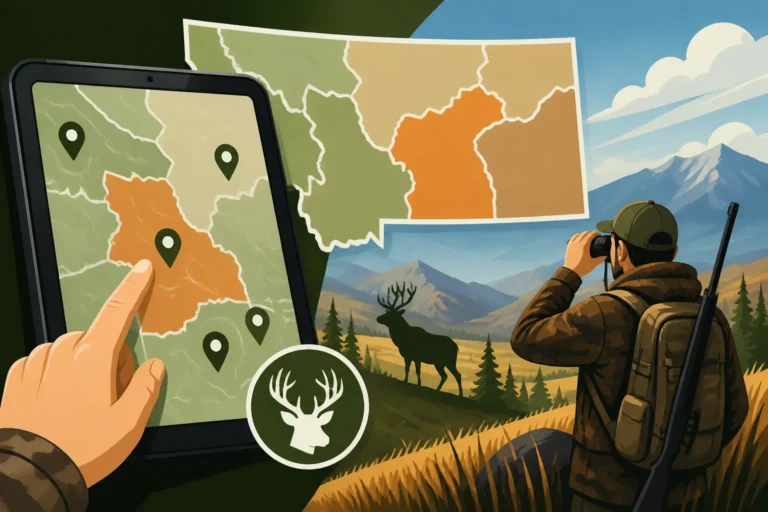
Before you even step foot in the woods, platforms such as GoHunt can be invaluable for e-scouting, allowing you to identify these critical habitat features from your computer. Look for areas showing a high density of water, wetlands, and thick timber on topographical maps and satellite imagery. Many hunters rely on tools like GoHunt for their comprehensive mapping and draw odds data, helping pinpoint potential hotspots within a chosen district. Knowing the Montana Moose Range and Districts is a vital first step in your planning. Concentrate your efforts on areas that show these features, especially if they are difficult to access, as these often hold less hunting pressure.
Strategic Hunting Approaches for Montana Moose
Given the dense cover moose prefer and their often solitary nature, successful hunting methods generally lean towards patience, stealth, and, at times, aggressive calling. Unlike hunting elk in wide-open country where spotting from afar is common, moose hunting often turns into a more intimate, close-quarters affair.
The Art of Still-Hunting and Spot-and-Stalk
Still-hunting is arguably the most consistently effective method for Montana moose, especially outside the peak of the rut. This involves moving incredibly slowly and deliberately through prime moose habitat, stopping frequently to scan, listen, and simply observe. Think of it less as "walking" and more as "creeping."
- Slow and Deliberate Movement: Take a few steps, then pause for several minutes, scanning every shadow, every cluster of willows, and every dark patch of timber. Moose are large, but they can disappear within seconds in dense cover. Focus on breaking up your silhouette and moving like a shadow.
- Wind and Thermals: Always be mindful of the wind. Moose, like all big game, rely heavily on their sense of smell. Always try to approach with the wind in your favor. In mountainous terrain, understanding How to Use Thermals in Montana Elk Country can also be applied to moose, as thermals typically rise in the morning and fall in the evening, affecting scent distribution.
- Utilizing Cover: Stay in the shadows and use natural features like ridgelines, willow banks, and timber patches to conceal your movements. The goal is to see the moose before it sees, hears, or smells you.
- Identifying Sign: Pay close attention to fresh moose sign: large tracks, heavily browsed willows (they often strip bark and break branches), and rub lines where bulls have polished their antlers. Fresh droppings can tell you how recently a moose was in the area. Focus your still-hunting efforts in areas with abundant fresh sign. If you find a heavily used moose trail leading into a dense feeding area, setting up a quiet ambush or slowly still-hunting through it can be highly productive. This is part of a broader Montana Backcountry Hunting Guide approach, where detailed observation and stealth are paramount.
Spot-and-stalk tactics can also be effective, particularly in more open wetland areas, high mountain basins, or burns where visibility might be a bit better. This involves glassing from a distance to locate a moose, then planning a careful approach. Once a moose is spotted, use topographical features, timber, and wind direction to get within an effective shooting range. This requires patience and often takes hours, if not a full day, to execute successfully.
Mastering Moose Calling and Stand Hunting
During the rut, moose calling can be an incredibly powerful tool, transforming the hunt from a passive search into an active engagement. Moose vocalizations are varied, but the primary calls used for hunting are cow calls and bull grunts.
- Cow Calls: A long, drawn-out "moo-ah" sound mimics a cow in estrus. This can pique the interest of a bull looking for a mate or even other cows. Use it sparingly at first, especially when you're still-hunting, to try and elicit a response.
- Bull Grunts: A deep, guttural "err-ugh, err-ugh" imitates a bull. This can challenge a dominant bull or attract a curious younger bull. Combine this with antler-rattling or thrashing small trees to simulate a bull fighting or scraping velvet, and you can create a very realistic scenario.
The key to calling is to be patient and listen. Don't call too frequently. Make a series of calls, then wait 15-20 minutes, intently listening for a response. Moose can approach silently, or they might respond with a grunt or a brush-thrashing noise.
Calling Strategy:
- Set Up: Once you've identified an area with fresh sign or potential moose habitat, find a good calling position with cover, good visibility in the direction you expect a moose to approach, and ideally, a safe backdrop for a shot.
- Initial Calls: Start with some soft cow calls. If no response, try a slightly louder series.
- Aggressive Calling: If you hear a response or believe a bull is in the area but not committing, incorporate bull grunts and simulate antler thrashing. This can often be the trigger that brings a reluctant bull in.
- Decoys: While less common than for deer or antelope, a moose decoy can sometimes provide a visual trigger, especially when a bull hangs up out of sight. However, they are bulky and not practical for many backcountry hunts.
- Stand Hunting: While not as popular for moose as for whitetails, setting up on a well-used game trail, near a known wallow, or an active feeding area, particularly during the rut, can be effective. This is more common in areas with easier access, but deep within the backcountry, a well-placed hide or ground blind can yield results. For general rifle season hunting, especially when pressure builds, understanding How to Hunt Elk in Montana Rifle Season Pressure can offer transferable insights into finding secluded areas where moose might feel safe.
A well-executed calling sequence, especially when a bull is hot on the rut, can be an exhilarating experience, often bringing the bull right into your lap. However, remember to stay vigilant; a bull moose is a powerful animal, and while generally not aggressive towards humans, a rut-crazed bull can be unpredictable.
Essential Gear and Rigorous Preparation for Success
Moose hunting in Montana isn't a walk in the park. It demands specific gear that can withstand the elements and preparation that ensures you're physically and mentally up to the task. The terrain can be unforgiving, weather unpredictable, and the work after the shot immense.
Selecting the Right Optics and Firearm
The right gear won't guarantee a moose, but the wrong gear can definitely lead to a miserable or unsuccessful hunt.
- Optics: Given the dense cover, high-quality binoculars (10×42 or 10×50) are essential for picking apart shadows and identifying moose through thick brush. A good spotting scope might be less critical than for mountain goat or sheep hunting, but can still be useful for confirming an animal at a distance in more open areas. Rangefinders are non-negotiable for accurate shot placement. Look for durable, waterproof models from reputable brands. Many guides will recommend optics from companies like Vortex, Leica, or Swarovski for their clarity and ruggedness. To learn more, check out our guide on Best Optics for Montana Big Game.
- Firearm/Bow: Moose are big, tough animals.
- Rifle Hunters: A powerful rifle with good bullet construction is necessary to ensure a clean, ethical kill. Calibers like .30-06, .300 Win Mag, .338 Win Mag, and .375 H&H are popular and effective choices. Focus on heavy, premium bullets designed for large game, such as Barnes TSX, Nosler Partition, or Swift A-Frame. Shot placement is always critical, but a robust bullet helps penetrate the thick hide and bone of a bull moose. For more on this, you might explore Best Rifle Calibers for Montana Elk, as many of the same principles apply to moose.
- Archery Hunters: For bowhunters, a high-poundage bow (at least 60 lbs draw weight) and heavy, well-constructed arrows with cut-on-contact broadheads are paramount. Broadheads like Iron Will, QAD Exodus, or GrizzlyStik are designed for maximum penetration. Ensure your setup is perfectly tuned for accuracy. Archery hunting for moose is a true test of patience and skill, often requiring much closer ranges than rifle hunting.
| Equipment Category | Key Considerations | Recommended Specifications |
|---|---|---|
| Rifle/Bow | Power, Accuracy, Ethical Kill | Rifle: .30-06 to .375 H&H, premium bullets. Bow: 60+ lb draw, heavy arrows, cut-on-contact broadheads. |
| Optics | Clarity, Durability, Waterproof | Binoculars: 10×42/10×50. Rangefinder: Reliable, accurate. |
| Footwear | Support, Waterproof, Traction | Stiff-soled, ankle-supporting, waterproof boots (e.g., Kenetrek, Schnee's). |
| Clothing | Layering, Moisture-Wicking, Quiet | Merino wool or synthetic base layers, fleece mid-layers, waterproof/breathable outer shell. |
| Backpack | Capacity, Frame, Comfort | 50-80 liter capable of hauling meat (e.g., Mystery Ranch, Kifaru). |
| Navigation | Redundancy, Reliability | GPS device, physical maps, compass, satellite communicator (e.g., Garmin inReach). |
| Game Care | Essential for Meat Preservation | Game bags, sharp knife, small bone saw, paracord. |
Physical and Mental Readiness
This is not a casual hunt. A Montana moose hunt, especially in the backcountry, can be incredibly demanding.
- Physical Fitness: You'll likely be traversing steep, uneven, and often swampy or snow-covered terrain. Packing out a moose, which can weigh over 1,000 pounds, is an arduous task, often requiring multiple trips with heavy loads. A solid fitness regimen focused on cardiovascular endurance, strength training (especially legs and core), and hiking with a weighted pack is critical. Preparing for high-country Montana hunting involves specific training that mirrors the demands of the hunt.
- Mental Fortitude: Beyond the physical, the mental game is huge. Expect long days, challenging weather, potential frustrations (like not seeing animals for days), and the immense satisfaction of success. Be prepared for setbacks and maintain a positive attitude. This is where researching Montana Elk Hunt Fitness Plan can provide an excellent template, as the physical demands are quite similar, perhaps even more intense given the potential size of a moose.
- Logistics and Safety: Moose country can be remote. Always carry essential survival gear, first-aid supplies, and a reliable form of communication like a satellite messenger (Garmin inReach is a popular choice). Let someone know your hunt plan. Be prepared for unexpected weather changes. Understanding How to Pack Out an Elk in Montana offers practical advice that is directly transferable to packing out a moose, which is a monumental undertaking often requiring specialized gear like a good frame pack and game bags.
- Draw Odds: It's worth reiterating that drawing a Montana moose tag is exceptionally difficult. Non-residents often face odds of less than 1% for most districts, even with maximum bonus points. Residents have better odds, but it's still far from a guaranteed tag. Patience, persistent application, and maybe some help from data-driven platforms like GoHunt that analyze draw odds are essential parts of the "preparation." Consider applying for points annually to slowly improve your chances.
Ultimately, the best method to hunt Montana moose is a holistic approach: deep understanding of their behavior and habitat, patient and adaptable hunting tactics, combined with meticulous physical preparation and the right gear. It's a challenging, often once-in-a-lifetime experience, and being fully prepared in every aspect will not only increase your chances of success but also ensure a safer and more enjoyable hunt in the rugged beauty of Big Sky Country.
Disclaimer
Please note that hunting regulations, season dates, and license requirements in Montana can change annually. Always consult the official Montana Fish, Wildlife & Parks (FWP) regulations and website for the most current and accurate information before planning any hunt. This guide is for informational purposes only and does not substitute for official FWP regulations.