How to Spot-and-Stalk Montana Whitetail Deer
The elusive nature of whitetail deer, combined with the often dense cover they inhabit in Montana, can make traditional hunting methods like stand or still-hunting feel incredibly restrictive. It's frustrating to spot a promising buck only to realize your current position offers no real shot opportunity, or worse, spooks him. This guide aims to equip you with the detailed strategies, insights, and tactical approaches needed to successfully execute a spot-and-stalk hunt for Montana whitetail deer, turning those fleeting glimpses into real opportunities.
Understanding Montana Whitetail Behavior for Spot-and-Stalk
Successfully spot-and-stalking Montana whitetail deer demands a deep understanding of their behaviors, habitats, and daily routines. Unlike their mule deer cousins who often favor wide-open spaces, whitetails are masters of concealment, preferring thicker cover and utilizing terrain to their advantage. To even begin a stalk, you first have to know where to find them and what they're likely to do.
Whitetail Habitat and Movement Patterns
Montana's whitetail deer population thrives in diverse environments, from the vast river bottoms and agricultural fringes of the eastern plains to the timbered draws and creek drainages in the western mountains. They are particularly drawn to areas that offer a mosaic of food sources, water, and dense bedding cover. Think about the riparian zones along the Yellowstone River or the Missouri River, where thick willows, cottonwoods, and brush provide perfect sanctuary. These areas also often feature agricultural fields nearby, offering a consistent food supply. Whitetails are creatures of habit; they'll typically move from bedding areas to feeding areas at dawn and dusk, often following established game trails through the thickest cover available. Understanding these patterns is critical. They'll use creek beds, fencelines, and even slight changes in elevation as travel corridors, always seeking the path of least resistance while remaining out of sight. During the day, they might be bedded on south-facing slopes in timber to catch the sun, or nestled deep in a shaded coulee to escape heat. Knowing how to predict these movements and identify likely bedding locations is the first step in formulating a spot-and-stalk plan. If you want a full overview of their habitat and more, read our comprehensive Montana Whitetail Deer Hunting Guide.
The Role of the Rut and Post-Rut
The whitetail rut fundamentally shifts their typical movement patterns and can create prime spot-and-stalk opportunities. Normally reclusive, bucks become far more active and less cautious as they pursue does. This increased activity means they're on the move throughout the day, often covering significant ground in search of receptive females. Early November is generally considered the peak of the whitetail rut in Montana, though it can vary slightly by region and year. During this time, you'll see bucks scent-checking scrapes, rubbing trees, and actively trailing does. This period offers a unique window where bucks might be encountered in areas they wouldn't normally frequent during other seasons, often traveling between pockets of cover rather than staying locked down. Post-rut, however, bucks return to a more focused effort on feeding and recuperating, often seeking out dependable food sources and bedding down in dense, secure areas to conserve energy. While they are still callable, spotting and stalking requires even more precision and patience as their vigilance returns. Understanding Montana Whitetail Rut Timing can significantly impact your success rate during a spot-and-stalk.
Reading Whitetail Sign and Terrain
A successful spot-and-stalk begins long before you put boots on the ground, often with meticulous e-scouting and a keen eye for sign once in the field. Whitetails leave a wealth of clues about their presence and travel routes. Fresh tracks, droppings, rubs (where bucks scrape their antlers on trees), and scrapes (bare earth pawed by a buck, often with an overhead licking branch) all point to recent activity. Pay close attention to the size of tracks and rubs to help estimate the caliber of buck in the area. When reading terrain, identify natural funnels, pinch points, and cover transitions. A narrow strip of timber connecting two larger woodlots, a saddle between two hills, or a dense thicket bordering a hayfield are all prime areas for whitetail movement. These features naturally guide deer and can be ideal ambush points for a patient stalker. Consider how deer might use elevation changes to their advantage, often bedding on ridges where they can watch their backtrail and smell anything approaching from below. Mapping tools, even those offered by services like GoHunt, can help you identify these features from afar, allowing you to prioritize areas for on-the-ground reconnaissance.
Essential Gear and Scouting for Success
Embarking on a whitetail spot-and-stalk in Montana requires more than just a rifle and good intentions. The right gear can make or break your hunt, providing the edge you need to locate, approach, and harvest these cagey deer. Coupled with thorough scouting, you’ll stack the odds in your favor significantly.
Optics and Their Importance
High-quality optics are not just a luxury; they are a non-negotiable necessity for spot-and-stalk hunting, especially for whitetails that blend seamlessly into their environment. You'll need a good pair of binoculars, typically 10×42 or 12×50, to scan distant hillsides, river bottoms, and timber edges for the subtle flick of an ear or the horizontal line of a deer's back against vertical trees. Equally important is a spotting scope, particularly if you're hunting more open country or need to make positive identification of a deer miles away before committing to a stalk. A 60-80mm objective lens with 20-60x magnification is ideal. Don't forget a sturdy tripod for both your binoculars and spotting scope; holding them steady freehand for extended periods is nearly impossible. Consider using brands known for their clarity and low-light performance, as whitetails are most active during the dim hours of dawn and dusk. Investing in quality optics, as outlined in our guide on Best Optics for Montana Big Game, will greatly enhance your ability to locate deer from a distance without disturbing them.
| Optic Type | Recommended Magnification | Primary Use | Key Features for Whitetail |
|---|---|---|---|
| Binoculars | 10×42 or 12×50 | General scanning, quick spotting, close-range ID | Wide field of view, good low-light performance |
| Spotting Scope | 20-60x (60-80mm obj.) | Long-range identification, evaluating antlers | High resolution, steady image with tripod |
| Rangefinder | N/A | Accurate distance measurement | Angle compensation, fast readings |
| Tripod | N/A | Stabilizing binoculars/spotting scope | Lightweight, sturdy, quick adjustments |
Pre-Season E-Scouting and On-the-Ground Reconnaissance
Modern hunting begins online. E-scouting is your virtual boots-on-the-ground, allowing you to study maps, identify potential hunting areas, and understand terrain features long before you ever leave your house. Tools like onX Hunt, BaseMap, or even Google Earth are invaluable. Look for public land access points, delineate public vs. private boundaries, and pinpoint features like water sources, timbered draws, agricultural fields, and natural funnels. Pay close attention to north-facing slopes for thermal cover and south-facing slopes for winter feeding or sunning beds. Identify potential bedding areas near food and water sources. Services like GoHunt can also offer valuable insights into specific hunting units, though their focus is often broader big game species like elk and mule deer.
Once you have potential spots identified, on-the-ground reconnaissance is paramount. Walk the areas you intend to hunt, observing game trails, rub lines, and scrapes. Understand the prevailing wind patterns and how thermals might behave in specific drainages. Knowing these details before the season opens will give you a tremendous advantage, allowing you to confirm your e-scouting observations and refine your spot-and-stalk strategies. Consider a spring or summer trip to avoid disturbing deer too close to the season. Our guide on How to E-Scout Montana Hunting Units provides an even deeper dive into this crucial preparation step.
Wind, Thermals, and Scent Management
When stalking any deer, especially a whitetail with its notoriously keen nose, understanding and utilizing the wind is perhaps the single most important factor. Always, and I mean always, keep the wind in your favor. This means approaching from downwind or crosswind, ensuring your scent doesn't carry to the deer. In mountainous or hilly terrain, thermals also play a significant role. Warm air rises in the morning and cool air falls in the evening. This creates predictable air currents that can carry your scent far, even if the prevailing wind seems to be in your favor. For example, if you're stalking a deer bedded in a draw in the morning, your scent will likely rise and dissipate. In the evening, however, it will fall down the draw, directly to the deer. Carry a wind checker (a small bottle of powder) to constantly monitor air currents.
Beyond simply playing the wind, proper scent management is crucial. This involves showering with scent-free soap, washing your hunting clothes in scent-free detergent, and storing them in airtight bags or containers. Wearing rubber boots can also help reduce scent transfer to the ground. While no system is 100% effective, minimizing your human odor is vital for successful close-range encounters. Neglecting these steps means even the most perfectly executed stalk can be ruined by a simple puff of wind. Learning How to Use the Wind Hunting Montana Elk offers principles directly applicable to whitetail hunting.
The Art of the Whitetail Spot-and-Stalk in Montana
Once you've located a deer and assessed the situation, the true challenge of the spot-and-stalk begins. This isn't just about sneaking; it's a careful chess match against an animal perfectly adapted to its environment. Every step, every pause, and every decision matters.
Locating and Evaluating Your Target
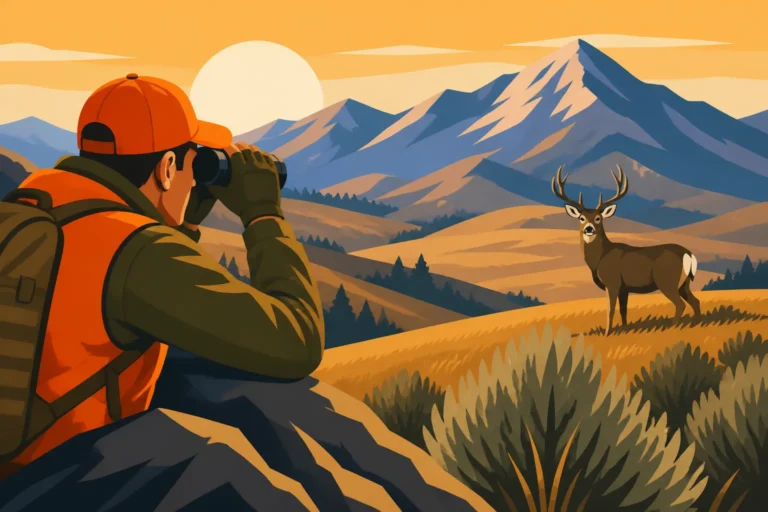
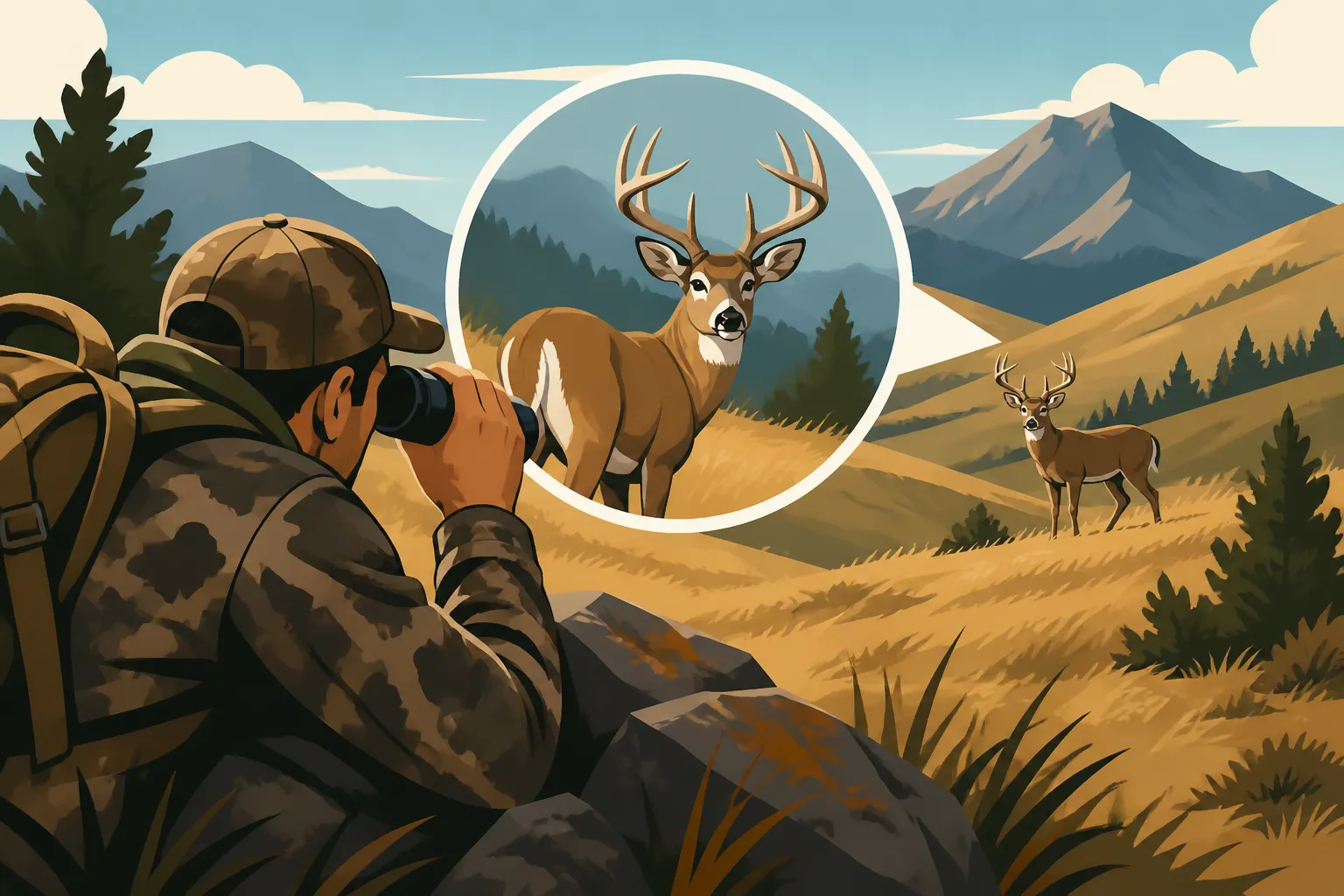
Spotting a whitetail deer, especially a mature buck, in the dense cover they prefer is incredibly difficult. You're rarely looking for a whole deer. Instead, you're searching for small, tell-tale signs: the horizontal line of a back or belly, the curve of an antler, the distinct color of a hide amidst brown brush, or the glint of an eye. Use your binoculars to systematically grid likely bedding areas, timber edges, and transition zones. Don't rush. Spend minutes, sometimes hours, glassing a single area. When you finally locate a deer, do not move immediately.
First, confirm it's a whitetail. Then, evaluate the deer. Is it a buck? Is it a shooter? Take your time to discern antler size, mass, and tine length if possible. This is also the time to observe its behavior. Is it bedded? Feeding? Traveling? Is it alone or are there other deer nearby? Are there any potential hiding spots or escape routes for the deer? This initial evaluation is critical for determining if a stalk is even feasible and what kind of stalk it will be. Only once you've made a positive identification and decided the deer is worth pursuing should you even begin to think about the approach.
The Stalk: Strategy and Execution
This is where the rubber meets the road. A successful stalk is a combination of patience, calculated movement, and exploiting every piece of available cover and terrain. Before you even take the first step, plan your route. Identify key landmarks, estimate distances, and pinpoint exactly where you anticipate ending up for a shot. The goal is to stay hidden and silent. Utilize depressions, ridges, rock formations, and dense vegetation to obscure your approach.
Move slowly. Each step should be deliberate. Feel the ground for twigs or leaves that might snap before putting your full weight down. Pick up your feet; don't shuffle. Pause frequently, lifting your head slowly to re-locate the deer and ensure it hasn't moved or become aware of your presence. Pay attention to the wind constantly – even a slight shift can compromise your position. If the deer raises its head, freeze immediately. Do not move until its head is back down or it is preoccupied. If you can only see a portion of the deer, like its head or ears, don't press forward. Wait until it offers a better opportunity or moves to a more favorable position. This is particularly challenging in dense river bottoms where you might have only fleeting glimpses. Read our detailed guide on How to Move Quietly Through Montana Timber for more tips on stealth.
Shot Placement and Follow-Up
Once you've successfully completed the stalk and are within shooting range, the real challenge becomes taking the shot cleanly and ethically. Take a deep breath to control your heart rate. Find a stable shooting rest, whether it's off your pack, a bipod, a tree limb, or even simply resting your elbow on your knee. Whitetails are not as large as elk or even mule deer, so shot placement is absolutely critical. Aim for the "boiler room" – the lung-heart area just behind the shoulder. This shot offers the largest margin for error and typically results in a quick, humane kill. Avoid shoulder shots unless you're absolutely confident in your rifle's power and your shooting ability, as they can result in bone fragmentation and lost meat.
After the shot, watch the deer's reaction. Did it drop immediately? Did it run? If it runs, mark the spot where it was standing and the direction it went. Listen for sounds of it crashing. Wait at least 15-30 minutes for a clean hit, or several hours if you suspect a gut shot, before beginning your track. Rushing a blood trail can push a wounded deer further. Look for blood, broken branches, or disturbed earth to follow the trail. If you lose the trail, expand your search in concentric circles around the last known sign. Remember, the true mark of an ethical hunter is a quick, clean kill and a diligent recovery.
Overcoming Specific Montana Whitetail Hunting Challenges
Montana presents a unique set of challenges for the whitetail hunter, particularly when employing spot-and-stalk tactics. The vastness of the landscape, coupled with the whitetail's preferred habitat, demands adaptability and resilience.
Dealing with Hunting Pressure
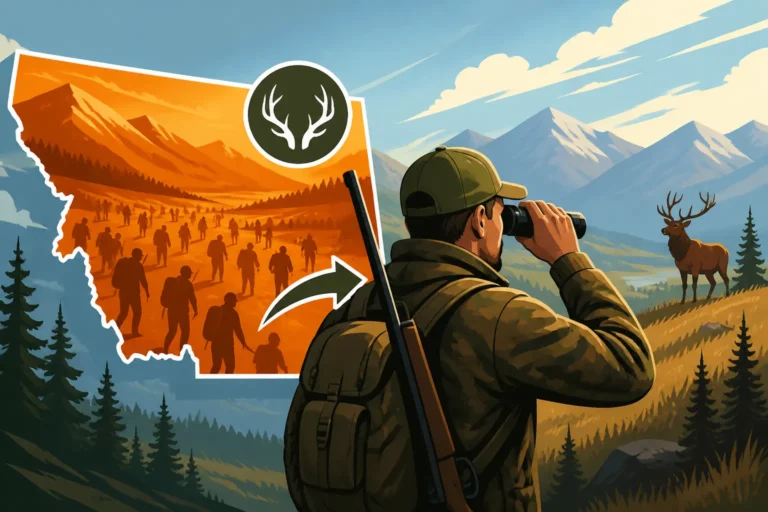
Montana's public lands, while abundant, can experience significant hunting pressure, especially during the general rifle season. This pressure makes spot-and-stalk whitetails even more challenging, as deer become warier and often shift their patterns to escape human intrusion. To mitigate this, consider hunting during weekdays when pressure is typically lower, or targeting areas that require more effort to access. This might mean hiking a few extra miles, crossing difficult terrain, or utilizing a raft or canoe to access river bottom areas that are inaccessible by vehicle. Deer quickly learn to associate human presence with danger and will gravitate towards thicker cover or secluded drainages that receive less foot traffic. Using detailed mapping tools from services like GoHunt can help you identify remote pockets of public land, including Block Management Areas, that might hold less pressured deer. Remember, the harder it is to get to, the less likely other hunters will be there, and the more likely you'll find undisturbed whitetails.
River Bottoms and Thick Cover Challenges
Montana's river bottoms are whitetail havens, offering dense cover, water, and food. However, they are also incredibly difficult to spot-and-stalk due to the sheer thickness of the vegetation. Cottonwood groves, thick willow stands, and dense undergrowth make long-range glassing nearly impossible. In these environments, your stalk might become more of a slow, quiet still-hunt through the cover. You'll need to rely heavily on your hearing and scent. Listen for the rustle of leaves, the snap of a twig, or the subtle sounds of deer moving through the brush. Use game trails as your path of least resistance, but always be aware that deer use them too.
For successful river bottom hunting, focus on identifying pinch points where deer are funneled into narrow travel corridors. This could be where a bluff meets the river, or a small clearing in the dense woods. Consider elevated positions like cut banks or small hills to gain a momentary vantage point for glassing. When the cover is truly impenetrable, a quiet approach to a known bedding area during midday might yield a bedded buck, but requires extreme stealth. Our specific guide on How to Hunt Whitetail in Montana River Bottoms offers even more specialized tactics for these challenging environments.
Weather Considerations
Montana weather is notoriously unpredictable, and it can significantly impact whitetail behavior and your spot-and-stalk strategy. Early season hunts can be hot and dry, making deer nocturnal and focused on water sources. Spotting them means concentrating your efforts around these critical water points. Later in the season, snow and extreme cold can push deer to south-facing slopes for warmth and easier feeding. Fresh snow, while cold, offers a silent approach and makes tracking easier, though it also makes deer more visible to you. Strong winds can be both a blessing and a curse; they can mask your sound, but also make it difficult to hear deer and cause them to bed down more securely.
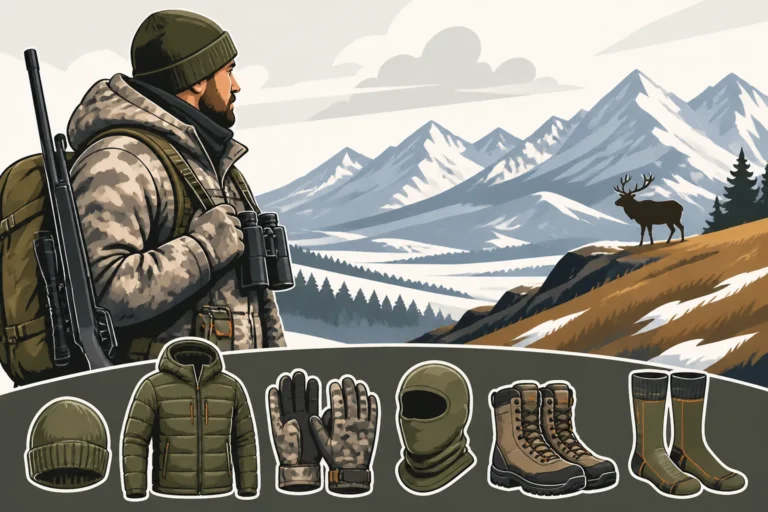
Rain can dampen scent and sound, but it also makes visibility tough. Always pack appropriate gear for rapidly changing conditions. Layer your clothing to adapt to temperature fluctuations. Waterproof outer shells are a must. Paying attention to weather forecasts and understanding how different conditions influence deer movement will allow you to adjust your approach, whether it means focusing on sheltered areas during a blizzard or hitting the timber edges on a sunny day.
Disclaimer
Hunting is an inherently risky activity. Always prioritize safety, adhere to all Montana Fish, Wildlife & Parks regulations, and ensure you have proper training and licensing before heading into the field. This guide provides informational content and should not be taken as a guarantee of success or a substitute for personal research, professional instruction, or adherence to local laws and ethical hunting practices.