How to Hunt Montana Moose
Drawing a Montana moose tag is often considered the holy grail for many big game hunters, a true once-in-a-lifetime opportunity that frustrates countless applicants each year. The sheer difficulty of securing one of these coveted tags means that when you finally beat the odds, you want to be absolutely prepared to make the most of it. This guide will walk you through everything from understanding moose behavior and navigating the complex draw system to effective hunting strategies and essential gear, ensuring you're ready when your number finally comes up for a Montana moose hunt.
Understanding Montana Moose and Their Habitat
Hunting moose in Montana isn't just about getting a tag; it's about deeply understanding these magnificent animals. They're not like elk or deer; their behavior, preferred habitat, and even their reaction to pressure are distinct. If you don't grasp these fundamentals, even with the best tag in hand, your chances of success will be significantly diminished.
Moose Behavior and Biology
Montana is primarily home to the Shiras moose, the smallest of the North American moose subspecies, though still an absolutely massive animal. A mature bull can weigh over 1,000 pounds and stand seven feet at the shoulder, with antlers that can spread over 50 inches wide. Unlike deer or elk, moose are largely solitary animals, especially the bulls, though cows will stay with their calves for about a year. You won't often find them in large herds like you might with elk, which means spotting one often means spotting the one. Their eyesight isn't exceptional, but their sense of smell and hearing are incredibly acute, making close approaches challenging. They're also surprisingly silent movers for their size, capable of slipping through dense cover with incredible stealth. During the rut, typically in late September and October, bulls become more vocal and aggressive, making them more vulnerable to calling tactics. However, outside of the rut, they are often silent and reclusive.
Preferred Habitat and Seasonal Movement
Moose are creatures of riparian zones and dense, often swampy, timber. They thrive in areas with abundant willows, aspens, and other browse, usually near water sources like rivers, lakes, and marshes. In Montana, this often means high-elevation drainages with thick willows, spruce-fir forests, and subalpine meadows, particularly in the western and southwestern parts of the state. They love to be where the feed is rich and the cover is thick, providing both sustenance and protection from predators and heat.
Their seasonal movements are generally less extensive than elk, often staying within a relatively small home range if food and cover are plentiful. However, they will move to higher elevations in summer to escape insects and heat, then descend to more protected areas with deeper snow in winter. Understanding these localized patterns, often specific to a particular drainage or mountain range, is crucial. For example, a moose might spend its summer months feeding on lush willows in a high mountain basin, then slowly work its way down to a more sheltered valley bottom as snow accumulates in the fall. You won't typically find them in wide-open sagebrush flats like you might mule deer, though occasionally they might cross such areas to get from one timbered draw to another.
The Elusive Montana Moose Tag
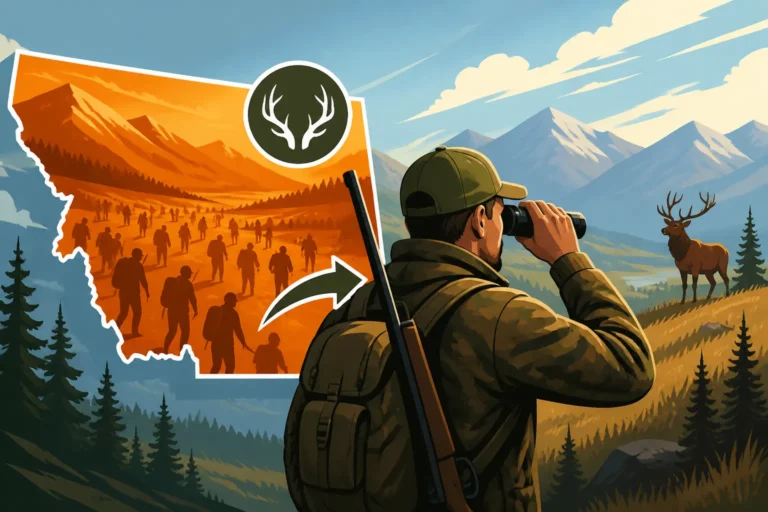
Let's be honest: the toughest part of hunting moose in Montana isn't the hunt itself—it's drawing the tag. This isn't a general tag species; every moose hunt in Montana requires a special permit, and the odds are incredibly long. Many hunters spend a lifetime applying without ever seeing a "successful" notification. But hope isn't lost, and understanding the system is your first step.
Navigating the Draw System
Montana's moose draw is based on a bonus point system. Every year you apply and are unsuccessful, you gain a bonus point. When you apply again, all your accumulated bonus points are squared, and that number is added to a random number between zero and one for each entry. This means the more points you have, the better your odds, but there's always a chance for a low-point applicant to draw. It’s a bit of a mathematical dance, but what it boils down to is persistence. You must have a valid Montana conservation license and a base hunting license to apply, even if you just want to accrue points.
The application period for moose, like most other coveted big game permits, usually runs from March to early April. Missing this window means missing out on building points for another year. It's vital to stay on top of the dates. Many hunters use tools like GoHunt's Insider service, which provides detailed draw odds and application strategies, to help navigate these complex systems and ensure they apply correctly. They break down the Montana Moose Draw Point Requirements and provide insights into specific hunting districts. You'll want to carefully research the different hunting districts, as some offer better success rates, trophy potential, or simply require fewer points to draw than others. For comprehensive information on specific season dates, check out our guide on Montana Moose Season Dates and Tags.
Maximizing Your Chances
Since the odds are tough, every little bit helps. The first and most obvious way to maximize your chances is simply to apply every single year without fail to keep building those bonus points. There's no substitute for time in the draw. Secondly, research the draw odds for specific hunting districts. Some districts have extremely low quotas, meaning drawing a tag there is almost impossible without an astronomical number of points. Others might have slightly higher quotas or less competition, offering a marginally better chance. Don't just pick a unit because it's famous; look at the actual data.
Consider applying for units that are general for elk or deer but offer moose permits, allowing you to combine scouting efforts if you plan to hunt multiple species. This is a common strategy for both residents and nonresidents. For nonresidents, remember that a percentage of tags are often allocated specifically to you, but competition is still fierce. Don't forget that if you apply as a group, you draw as a group, and your points are averaged. Sometimes applying solo, or with a partner who has similar points, can make a difference. Tools like the Montana Hunt Planner Maps Explained can also be invaluable for researching and visualizing potential hunting areas, helping you make informed decisions about where to focus your applications based on moose densities and public access.
Essential Gear and Preparation for Moose Hunting
Once that golden email arrives confirming you've drawn a Montana moose tag, the real work begins. Unlike many hunts that can be done with minimal gear, a moose hunt, particularly in the rugged terrain they inhabit, demands serious preparation and specialized equipment. You'll likely be in dense cover, potentially far from roads, and carrying out a massive animal.
Optics and Spotting Strategy
Moose are huge, but they can disappear in dense cover with uncanny ability. High-quality optics are not just a luxury; they are a necessity. You’ll need a good pair of binoculars (10×42 or 10×50 are great all-around choices) and a reliable spotting scope (20-60x or 15-45x) paired with a sturdy tripod. Given that moose often prefer timbered creek bottoms and willow-choked basins, you'll spend a lot of time "still hunting" or slowly moving through cover. However, when you do get to an overlook, you'll want to methodically glass every patch of willows, every dark timber pocket, and every edge where cover meets a meadow.
The strategy here is different from spotting elk or mule deer in open country. Instead of looking for entire animals, you’ll be searching for subtle clues: an ear, the dark sheen of a hide, the paddle of an antler peeking over brush, or the tell-tale horizontal line of a moose's back among vertical tree trunks. Patience is key. Spend 30 minutes to an hour dissecting a single basin from a good vantage point, then move to the next. For more insights on choosing the right glass, our guide on Best Optics for Montana Big Game offers valuable advice.
Firearms, Ammunition, and Archery Setups
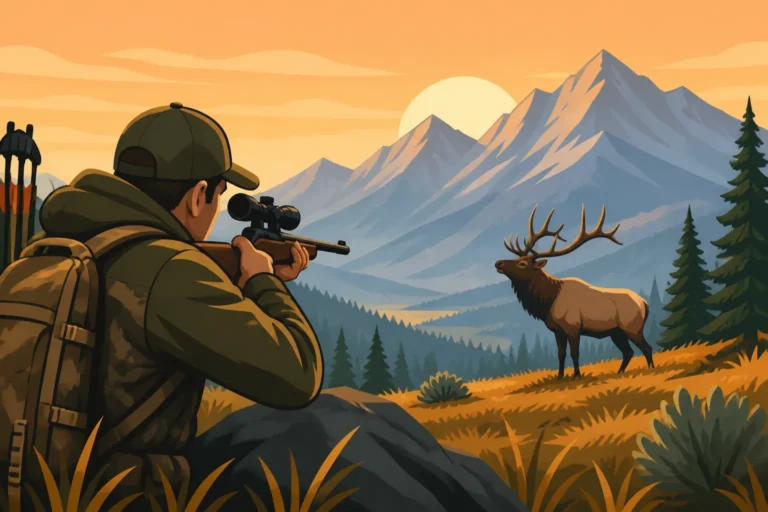
When it comes to putting down a moose, you need adequate stopping power. These animals are incredibly tough. For rifle hunters, anything from a .30-06 Springfield up to a .300 Win Mag or .338 Win Mag is generally recommended. The key is shot placement and a well-constructed bullet designed for large game, such as a bonded or monolithic bullet that will retain weight and penetrate deep. Do not skimp on ammunition quality. Practicing shooting from various field positions—off a pack, prone, kneeling, or even standing freehand—is crucial, as a moose shot often presents itself quickly in thick cover.
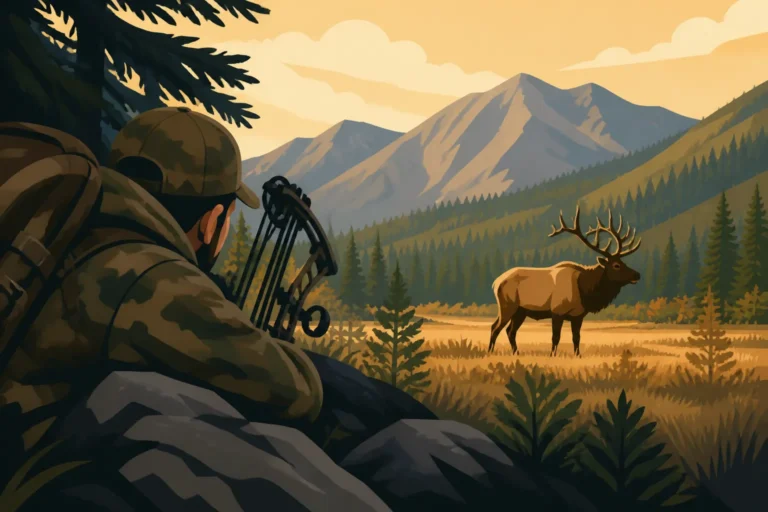
Archery hunters face an even greater challenge. A heavy draw weight bow (60-70 lbs) with heavy arrows (450+ grains) and stout, fixed-blade broadheads are essential for maximum penetration. A two-blade broadhead with a wide cutting diameter is often preferred by moose bowhunters for their deep penetration capabilities. You want to practice shooting at realistic distances, often 40 yards or less, and understand moose anatomy intimately for ethical shot placement. For detailed information on rifle and archery setups, consider reading our resources on Montana Rifle Elk Hunting Guide and Montana Archery Elk Hunting Guide, as much of the advice on power and penetration carries over directly to moose.
Backcountry Essentials and Physical Demands
A Montana moose hunt, especially if drawn in a wilderness or remote district, is a true backcountry endeavor. You'll need reliable gear that can withstand cold, wet, and rugged conditions. This includes a robust backpack capable of carrying heavy loads, a warm sleeping system, a dependable shelter (tent or bivy), navigation tools (GPS, maps, compass), water filtration, and enough food for the duration of your trip. Beyond gear, the physical demands are substantial. Moose often inhabit steep, brushy, and boggy terrain. Hauling out 400-600 pounds of meat, hide, and antlers from a remote kill site can be a multi-day ordeal requiring multiple trips and immense physical exertion.
Start a rigorous fitness regimen months in advance, focusing on strength, endurance, and pack training. Simulate hunting conditions by hiking with a loaded pack up and down hills. You can find excellent advice on specific gear in our Montana Backcountry Hunting Gear List and prepare yourself mentally and physically with our How to Physically Prepare for a Montana Elk Hunt guide, as the demands for moose are often even greater.
Effective Moose Hunting Tactics
You've put in the years, drawn the tag, and prepared your body and gear. Now, it's time to actually hunt. Moose hunting requires a unique blend of patience, stealth, and sometimes, aggressive calling. These tactics differ from elk or deer hunting and understanding them will greatly increase your odds of success.
Spot-and-Stalk Techniques
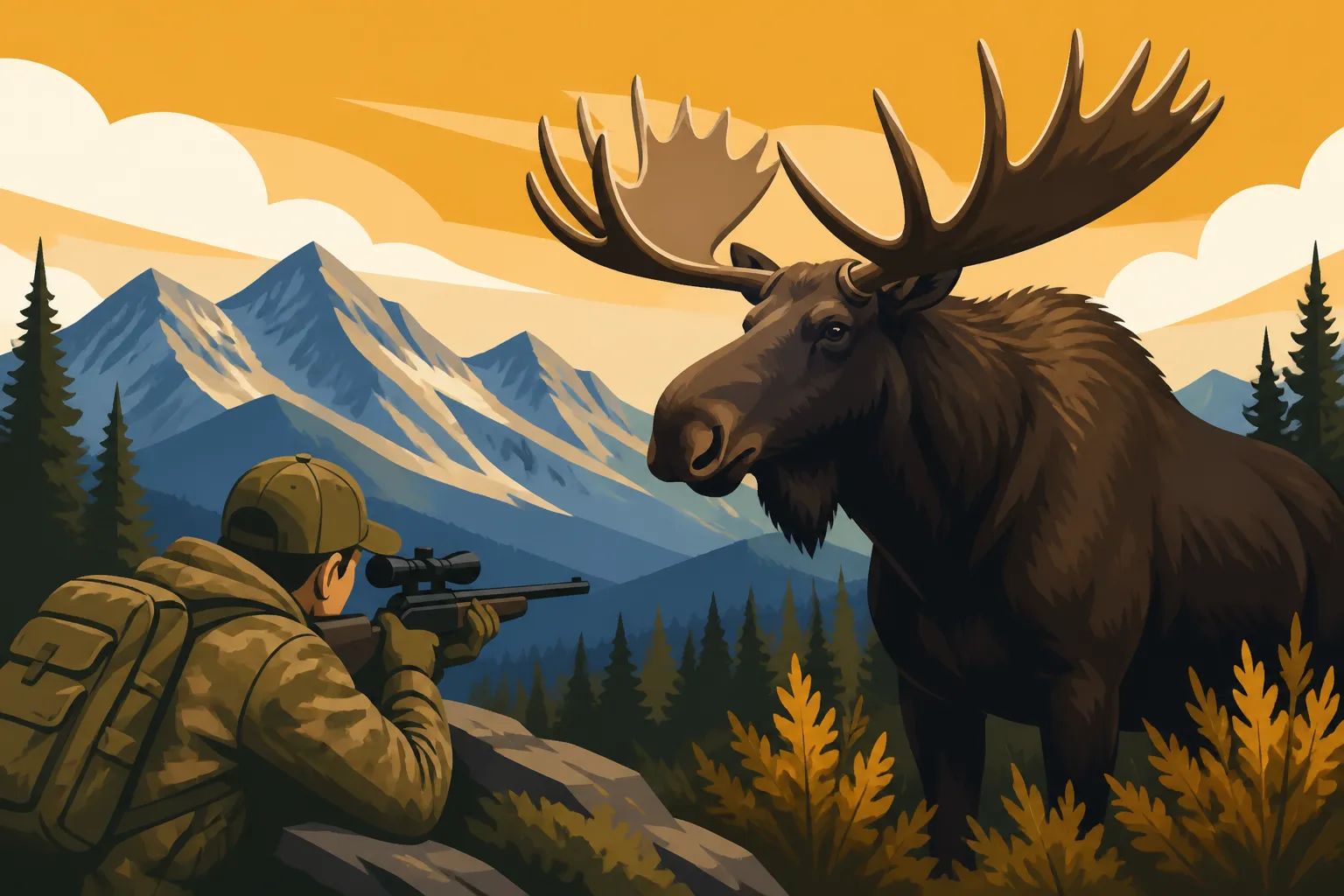
While moose love thick cover, they do occasionally frequent open areas, especially riparian zones, at dawn and dusk. Spot-and-stalk is a viable tactic when conditions allow. This involves finding a high vantage point overlooking moose country, such as willow flats, burns, or clearings bordering dense timber. Then, using your high-quality optics, systematically glass for any sign of a moose. Look for movement, the horizontal line of their back, or the unique shape of their antlers.
Once a moose is spotted, the stalk begins. This is where patience and wind awareness become paramount. Moose have an incredible sense of smell and good hearing. You'll need to use the terrain to your advantage, moving slowly, deliberately, and often taking circuitous routes to maintain a favorable wind and stay out of sight. In dense timber, this can mean crawling on hands and knees, taking minutes to cover just a few yards. The goal is to get within an ethical shooting distance, ideally 200 yards or less for rifle hunters, and often inside 40 yards for archers. Remember, moose are big, but their vital zone is relatively small and can be obscured by thick hides and bone.
Calling Moose During the Rut
The rut is arguably the best time to hunt moose, typically from late September through October, when bulls are most active and receptive to calling. Moose calling is quite distinct from elk calling. It involves mimicking the plaintive estrus moans of a cow moose or the guttural grunts and antler raking of a bull. A cow call is often a drawn-out, nasal "ooo-WAHH" sound, while a bull grunt is a deep, resonant "UH-uh-uh-UH." Antler raking, done by scraping a scapula or small paddle against trees and brush, simulates a bull sparring or thrashing vegetation, which can challenge other bulls.
Setting up near dense cover, especially along the edges of willow thickets or timber, and broadcasting calls can be incredibly effective. Bulls, especially dominant ones, will often respond by grunting back or even crashing through the timber to investigate. Be prepared for a quick shot, as a bull might appear silently or charge in aggressively. Positioning yourself to have clear lanes of fire while remaining concealed is key. Remember, while a bull might come to a cow call, a challenged bull might come in looking for a fight, so always be aware of your surroundings. Our How to Call Elk in Montana guide provides foundational calling strategies that can be adapted for other large game, including moose.
Hunting Moose in Thick Timber and Swamps
Many moose, especially mature bulls, spend the majority of their time in incredibly dense, often wet, environments. This is where the term "still hunting" truly comes into play. Still hunting means moving incredibly slowly and deliberately through the habitat, taking one or two steps, then stopping and thoroughly scanning your surroundings for several minutes. You're looking for any part of a moose: an ear flick, the dark patch of a body, or the glint of an antler.
Focus on fresh tracks, droppings, and browsed vegetation. Moose are creatures of habit, often using the same trails through thickets. These trails are frequently along creek bottoms, around beaver ponds, or through deep timber pockets on north-facing slopes. Pay close attention to the wind, as moose will almost always bed with the wind at their back, allowing them to smell anything approaching from behind. Thermals in mountainous terrain also play a huge role, rising in the morning and falling in the evening. Hunting these areas requires extreme stealth, proper footwear (waterproof boots are a must), and immense patience. It’s physically demanding, and you’ll likely get wet and muddy, but that’s often where the biggest bulls hide.
Post-Harvest Considerations for Montana Moose
Taking down a Montana moose is an incredible accomplishment, but the job is far from over once the animal hits the ground. In fact, for many, the hardest work is just beginning. Proper field dressing, meat care, and packing out are crucial steps to ensure your trophy meat doesn't spoil and you can retrieve all parts legally.
Field Dressing and Meat Care
Moose are enormous, and their meat can spoil quickly, especially if the weather is warm. The first priority after the shot is to quickly field dress the animal. This means removing the guts to allow the carcass to cool as rapidly as possible. You'll need a sharp knife, a game saw or hatchet for the sternum and pelvis, and potentially a good pair of game bags. Due to their size, rolling a moose over can be incredibly difficult, so consider dressing it on its back or side.
Once field dressed, the best approach for most moose hunters, particularly in remote areas, is to quarter the animal. This involves breaking the moose down into manageable pieces (the four quarters, backstraps, tenderloins, neck meat, and sometimes rib meat) to facilitate cooling and transport. Getting the hide off quickly also aids in cooling. Hang the quarters in game bags in a shady, airy spot if possible, or prop them up to allow maximum airflow. Keep them off the ground to prevent contamination. If you're in an area with bears, especially grizzly bears, immediate meat care and strong bear-proof storage or hanging are critical. You might even consider bringing a bear fence or bear spray for safety. Remember to keep the evidence of sex and species (a portion of the scalp with antlers for bulls, or the head for antlerless moose) naturally attached to a major cut of meat until you've checked in with a game warden. Our guide on How to Quarter an Elk in the Montana Backcountry offers methods that are directly applicable to moose, albeit on a larger scale.
Packing Out Your Harvest
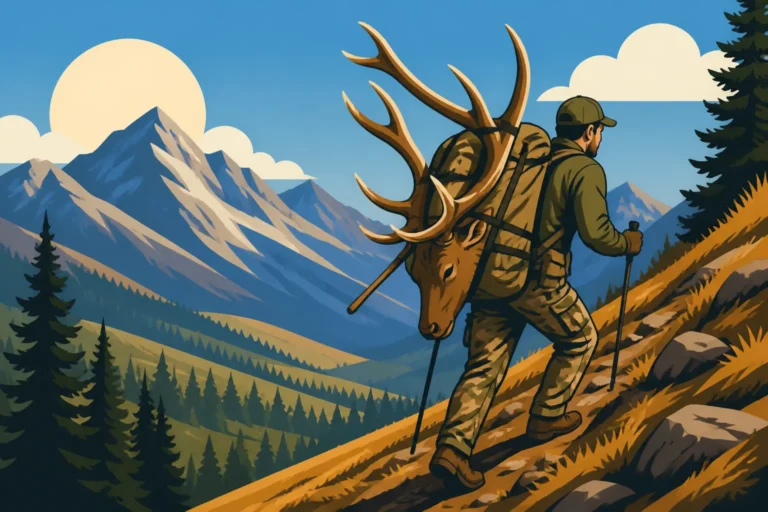
Packing out a moose is often a monumental task. A bull moose can yield 400-600 pounds of boned-out meat, plus the hide and antlers. This is rarely a one-person job and usually requires multiple trips, even with a partner. If you're hunting in true backcountry, horses or llamas are invaluable. If you're on foot, sturdy frame packs are essential. Each quarter can weigh 80-150 pounds or more. You'll need durable game bags to protect the meat from dirt, insects, and scavengers.
Planning your pack-out strategy before you hunt is critical. Identify potential routes to and from your hunting area, considering terrain, water crossings, and distance. In some cases, dragging large pieces short distances might be feasible, but for longer hauls, breaking the animal down into smaller, packable loads is almost always necessary. Ensure you have enough people, or the physical stamina for many solo trips, to safely and efficiently transport all the meat. Losing meat to spoilage or scavengers after such a hard-won tag is a travesty. For detailed strategies and gear for this arduous task, refer to our article on How to Pack Out an Elk in Montana.
Safety and Ethical Hunting Practices
Hunting Montana moose is an incredible adventure, but it's also a serious undertaking that comes with inherent risks and significant responsibilities. Prioritizing safety and adhering to ethical practices ensures a successful, legal, and respectful hunt.
Bear Awareness and Safety
Many of Montana's prime moose habitats overlap directly with grizzly and black bear country. Encounters, especially after an animal is down, are a real possibility. Always carry bear spray and know how to use it. Make noise while traveling through dense cover to avoid surprising a bear. When field dressing or quartering a moose, be vigilant, constantly scanning your surroundings. If you encounter a bear on a kill, assess the situation calmly. Often, if a bear has claimed a carcass, it's safer to back away slowly and try to contact Montana Fish, Wildlife & Parks (FWP) for advice.
Consider hunting with a partner for added safety in bear country. When leaving meat overnight, hang it securely away from your camp, and consider setting up an electric bear fence around your sleeping area. Proper food storage in bear-resistant containers is also a must, not just for your camp, but for preventing habituation of bears to human food. Your safety, and the safety of the bears, depends on your responsible actions. Our Montana Backcountry Hunting Safety Tips cover crucial information for navigating wildlife encounters.
Respecting the Resource and Regulations
Montana moose tags are incredibly rare, representing a precious resource. This makes ethical hunting practices even more important. Always ensure you have a clean, ethical shot opportunity. Never take a shot if you're unsure of your target or if the angle is poor. Follow all FWP regulations meticulously, including checking local hunt codes, specific season dates, and any antler point restrictions for the district you've drawn. These regulations are designed to manage the moose population sustainably and provide fair chase opportunities.
Table: Montana Moose Permit Draw Odds (Sample Data)
| Hunting District | Quota (Bull Moose) | Avg. Points to Draw (Last 5 Years) | Draw Odds (0 Points) | Draw Odds (10 Points) |
|---|---|---|---|---|
| 270 (Gallatin) | 2 | 15.2 | <0.1% | 0.8% |
| 310 (Crazy Mtns) | 1 | 18.5 | <0.1% | 0.5% |
| 330 (Elkhorn) | 3 | 12.1 | 0.1% | 1.5% |
| 380 (Tobacco Root) | 2 | 16.8 | <0.1% | 0.7% |
| 410 (Lewis & Clark) | 4 | 10.9 | 0.2% | 2.1% |
| 441 (Little Belt) | 2 | 14.5 | <0.1% | 0.9% |
| 622 (Flathead) | 3 | 13.0 | 0.1% | 1.7% |
Note: This table provides sample data for illustrative purposes. Actual draw odds and point requirements vary annually. Always consult current Montana FWP regulations and draw statistics, such as those provided by GoHunt, for the most accurate information.
Additionally, be prepared for game retrieval, ensuring no meat is wasted. Leaving an animal to spoil in the field is not only illegal but deeply unethical. After the hunt, remember to properly tag your animal immediately and report your harvest to FWP as required. Being a responsible hunter means respecting the animal, the land, and the regulations that protect this incredible privilege. For more information on navigating these complex rules, especially for specific regions, review our Montana Hunting Districts Explained and understand the nuances of Montana General vs Permit Tags Explained.
Disclaimer
Please be aware that hunting regulations, season dates, and application procedures for Montana can change annually. It is crucial to always consult the most current Montana Fish, Wildlife & Parks (FWP) regulations and official resources before planning and executing any hunting trip. The information provided in this guide is for general informational purposes only and should not be considered a substitute for official FWP documentation.