Montana Drop Camp vs Full Service
Deciding how to tackle a Montana hunting adventure can feel like staring at a choose-your-own-adventure book with really high stakes. For many hunters, the big question often boils down to this: do you opt for the rugged independence of a drop camp, or invest in the comprehensive support of a full-service guided hunt? Both options offer unique experiences, but they cater to very different expectations, skill sets, and budgets. This guide will meticulously break down the nuances of each, helping you navigate the decision for your next Big Sky Country hunt.
Understanding the Core Differences: Drop Camps vs. Full Service
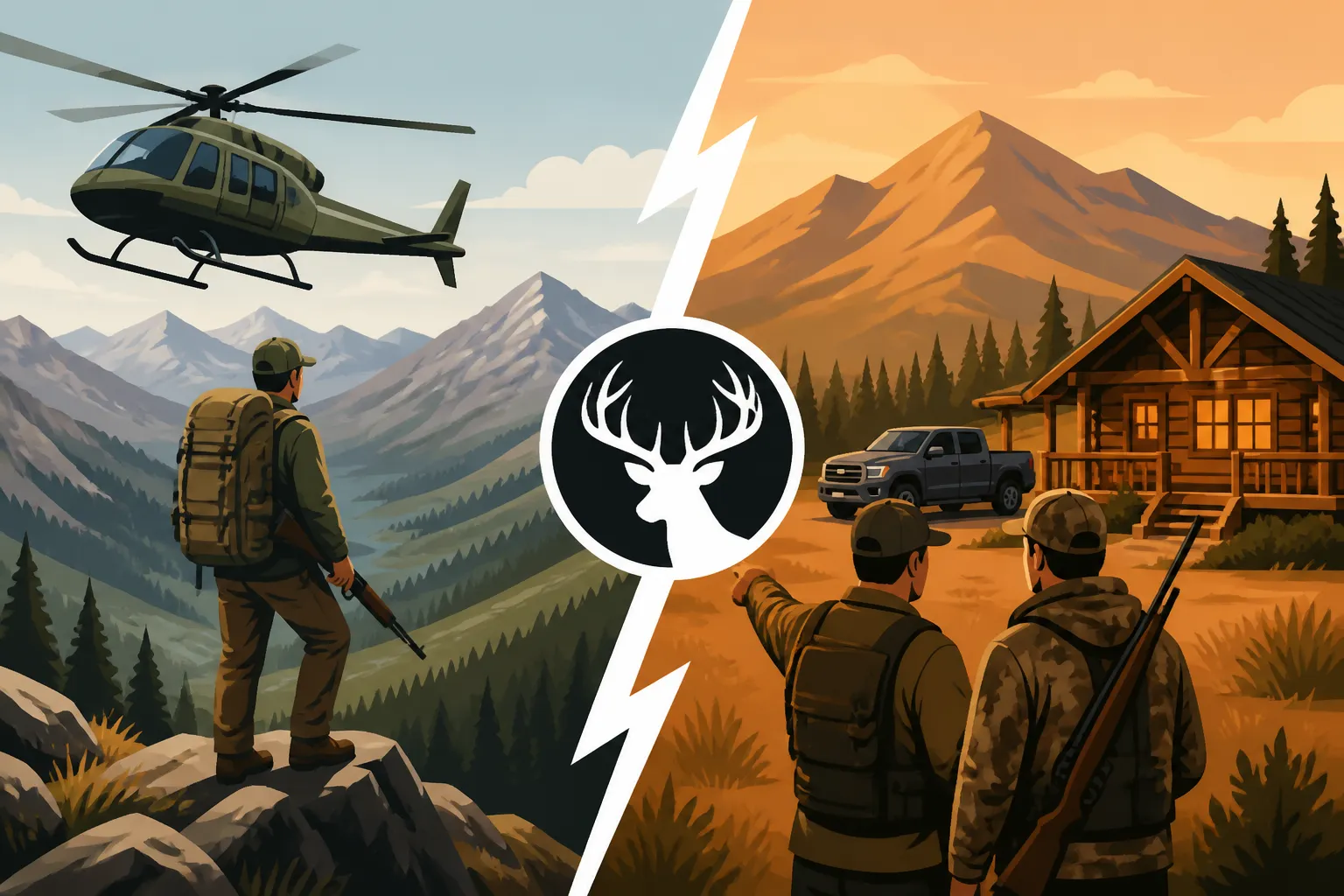
At their heart, both drop camps and full-service hunts aim to get you into prime hunting country in Montana. However, the level of support, hands-on guidance, and ultimately, your responsibilities on the hunt, are vastly different. It’s like comparing backpacking with a fully stocked lodge stay – both get you outdoors, but the journey and comfort are worlds apart.
What is a Montana Drop Camp Hunt?
A Montana drop camp hunt is an incredible bridge for the experienced do-it-yourself (DIY) hunter who wants to access remote, typically roadless wilderness areas without the immense logistical burden of packing in an entire camp. Think of it as a supported DIY hunt. The outfitter’s role is primarily logistical: they use horses, mules, or sometimes even small aircraft to pack you, your gear, and a fully set-up camp into a remote location. Once dropped off, you and your hunting party are entirely on your own for the duration of the hunt.
Typically, the outfitter provides a comfortable wall tent or large dome tent, complete with a wood stove for heat, cots or sleeping pads, and often a cooking area with basic utensils. They might also include water purification systems, bear-proof food storage, and a privy. Your job is to hunt, cook, clean, and manage your time and safety. When the hunt is over, or you've harvested an animal, the outfitter returns to pack you and your game out. This setup allows you to immerse yourself in the wilderness, experiencing the solitude and challenge of a backcountry hunt, but with the peace of mind that a solid camp is waiting for you each evening and a ride out is guaranteed. It’s a fantastic option for those who have the skills but lack the horsepower, literally, to get deep into elk country like the Bob Marshall Wilderness.
What is a Montana Full-Service Guided Hunt?
On the other end of the spectrum is the full-service guided hunt, offering the most comprehensive and hands-on experience. When you book a full-service hunt in Montana, you’re essentially signing up for a complete outdoor hospitality package. The outfitter and their team handle virtually every aspect of your hunt from the moment you arrive until you depart. This means you’ll have a professional, licensed hunting guide accompanying you in the field every day. This guide possesses intimate knowledge of the local terrain, animal patterns, and specific hunting strategies for the area, whether it’s calling elk in the mountains or spotting mule deer across vast plains.
Beyond the guiding, full-service hunts include all accommodations, which can range from comfortable cabins or lodges with amenities like hot showers and prepared meals, to well-appointed base camps in the backcountry. All food and often drinks are provided. Transportation within the hunting area, field dressing, game retrieval, and even initial game care (like caping and quartering) are typically handled by the outfitter and guide. Your primary responsibility is to focus on the hunt itself, enjoy the experience, and follow your guide's instructions. This option is particularly appealing to those who are new to hunting in Montana, want to maximize their chances of success, or simply prefer to leave all the logistical heavy lifting to the experts.
Diving Deep into Montana Drop Camps
Drop camps hold a special place for many hunters. They are not for the faint of heart, but they offer an unparalleled sense of accomplishment and connection to the wilderness. It's a true test of your individual hunting prowess, bolstered by essential logistical support.
The Appeal of Freedom and DIY Spirit
The biggest draw of a Montana drop camp is the freedom it offers. You and your hunting partners are your own bosses once the outfitter leaves. You decide when to wake up, where to hunt, what tactics to employ, and when to call it a day. This autonomy is incredibly liberating for hunters who revel in the challenge of figuring things out for themselves. It’s for the hunter who has spent countless hours e-scouting Montana hunting units, pouring over topo maps, and analyzing satellite imagery, and now wants to put that knowledge to the test. You get to implement your own version of Montana Public Land Hunting Strategy, adapting to conditions on the fly without external directives.
This independence fosters a deep sense of accomplishment when you're successful. There's a profound satisfaction in knowing that you navigated the terrain, located the game, made the shot, and handled the field dressing entirely on your own terms. For many, it's the closest they can get to a true wilderness expedition while still having a secure base camp to return to. It’s ideal for a group of seasoned friends who have a strong hunting dynamic and trust each other's judgment in the field.
Practicalities and Preparation for a Drop Camp
While drop camps offer freedom, they demand significant practical preparation and a robust skill set. You are essentially doing a DIY hunt within a semi-supported environment. This means you need to be proficient in all aspects of hunting, including navigation with a map and compass or GPS, reading sign, effective calling, tracking wounded animals, and knowing how to field judge a Montana bull elk. Critically, you must be capable of field dressing and quartering your animal, potentially solo, and getting it back to camp for the outfitter to pack out. If you've never had to pack out an elk in Montana, this is not the time to learn by trial by fire, unless you are comfortable with that level of stress.
Physical fitness is paramount. You'll be covering vast, often rugged, and steep terrain. Unlike a guided hunt where your guide might lead you on specific routes and help carry heavy loads, in a drop camp, every step, every climb, and every ounce of meat you move is on you. Expect long days of strenuous effort. Your gear list for a drop camp will be extensive; while the camp itself is provided, you’re responsible for all your personal hunting gear, quality optics, appropriate clothing layers for Montana's unpredictable weather, and enough food and supplies for your party for the entire duration. This level of self-reliance is a key aspect of Montana Backcountry Hunting Guide, which drop camps enable.
Cost-Effectiveness and Value
Generally speaking, a drop camp hunt is a significantly more cost-effective option than a full-service guided hunt. You're paying for the outfitter's logistical services – the horses, the packing expertise, the camp setup, and the return trip – but not for their daily presence in the field. This makes deep wilderness hunting accessible to a wider range of budgets. For many hunters, the cost savings allow them to undertake more frequent trips or invest in higher-quality personal gear.
The value derived from a drop camp is in the unique blend of independence and convenience. You gain access to areas that would be virtually impossible to reach with a fully DIY backpack hunt, especially if you don't own horses or specialized equipment. You get a comfortable, established base camp, which is a massive relief after a long day in the mountains compared to breaking down and setting up a spike camp daily. This can be particularly beneficial for hunters who want to spend more days in the field without exhausting themselves purely on camp logistics.
Exploring Montana Full-Service Guided Hunts
For those seeking a more streamlined, higher-probability hunting experience with a focus on success and comfort, a full-service guided hunt is often the superior choice. It's an investment in expertise and convenience, allowing you to immerse yourself fully in the pursuit of game.
The Unmatched Advantage of Expert Guidance
The primary advantage of a full-service guided hunt is the unparalleled expertise of your guide. These professionals spend countless hours in their hunting areas, year after year. They know the elk's migratory patterns, the mule deer's favorite bedding areas, where to find water holes, and how game moves in response to pressure, weather, and the rut. They understand the nuances of How to Call Elk in Montana or How to Spot-and-Stalk Mule Deer in Montana within specific districts, giving you a significant edge.
A good guide can make real-time decisions based on animal behavior, wind direction, and terrain, often navigating you through challenging situations that would overwhelm a less experienced hunter. They'll position you for shots, help with tracking, and ensure safe practices. For nonresident hunters or those unfamiliar with Montana Hunting Districts Explained, a guide’s knowledge is invaluable, significantly increasing the odds of success and ensuring a more efficient hunt. Websites like BookYourHunt can be a great resource to find reputable outfitters and read reviews from past clients, helping you vet potential guides based on their success rates and client feedback.
Comfort, Convenience, and Logistics Handled
One of the biggest appeals of a full-service hunt is the sheer convenience. You don't have to worry about planning meals, setting up tents, splitting firewood, or purifying water. After a long day of hiking up and down mountains, returning to a warm meal, a comfortable bed, and perhaps even a hot shower is a luxury that can’t be overstated. This allows you to conserve your energy for the hunt itself, rather than spending precious time and energy on camp chores.
For many, the reduction of stress and logistical hassle is worth the investment. All you need to do is show up with your personal gear, be ready to hunt, and follow your guide's lead. This is especially attractive for hunters on a tight schedule, those with limited vacation time, or individuals who may not have the physical capability or desire for the arduous demands of a backcountry DIY or drop camp hunt. When your focus can be entirely on the hunt and enjoying the vast beauty of Montana, it elevates the entire experience.
Higher Investment, Higher Potential Return
There's no sugarcoating it: full-service guided hunts are a significant financial investment. When considering Montana Guided Elk Hunt Cost, you’re not just paying for a guide; you're paying for their years of experience, their intimate knowledge of the area, the horses or vehicles used for access, the entire camp infrastructure, meals, lodging, and the staff required to run it all smoothly. You are essentially buying an elevated chance at success and a hassle-free experience.
While the upfront cost is higher, the potential returns are often greater, particularly for coveted species or in challenging terrain. A reputable outfitter will have proven success rates, access to prime hunting grounds (sometimes private land), and the resources to adapt to changing conditions. For many, this investment is about fulfilling a lifelong dream or seeking a trophy animal, and the increased likelihood of success makes the higher price tag justifiable. Tools like GoHunt can help you research hunt costs and compare different outfitters, giving you a clearer picture of what to expect for your investment and what is typically included in various packages.
Key Factors to Consider When Choosing
The decision between a Montana drop camp and a full-service guided hunt is highly personal. It boils down to a realistic assessment of your own capabilities, desires, and resources. Don't just pick the cheaper option or the one your buddy chose; truly consider what you want and need.
Experience Level and Hunting Skills
Your hunting experience and proficiency are perhaps the most critical factors. If you’re a seasoned big game hunter, comfortable with navigation, field dressing, reading animal sign, and making tactical decisions in challenging environments, a drop camp could be an exhilarating step. It's a way to push your boundaries without the full burden of packing in your entire existence.
However, if you're new to Western hunting, especially for an animal as demanding as elk, a full-service guided hunt offers an invaluable learning experience and a much higher probability of success. A guide will teach you about the terrain, animal behavior, and effective Montana Elk Hunting Methods Explained. They provide a safety net and invaluable mentorship that can make or break a first-time hunt. Similarly, if your skills are rusty, or you simply prefer to delegate the technical aspects of hunting, a guide is an excellent choice.
Budget and Financial Planning
Let's talk brass tacks. Budget is often the defining factor. While costs vary widely among outfitters, a general rule of thumb is that drop camps will be significantly less expensive than full-service hunts.
| Feature | Montana Drop Camp Hunt (Estimate) | Montana Full-Service Guided Hunt (Estimate) |
|---|---|---|
| Price Range (per person, per week) | $2,000 – $4,000 | $5,000 – $12,000+ |
| Included Services | Camp setup, pack-in/pack-out, basic camp gear (tent, stove, cots) | Guide, lodging, meals, camp setup, pack-in/pack-out, field care, transportation |
| Guide Present | No | Yes (daily) |
| Logistical Burden | High (hunting, cooking, camp management) | Low (focus on hunting) |
| Required Hunter Skill | High (navigation, field dressing, tracking) | Moderate (shooting, basic fitness) |
| Comfort Level | Rustic but functional | Moderate to High (lodge/cabin/wall tent) |
| Success Potential | Depends heavily on hunter skill | Higher due to guide expertise |
Remember, these figures are just estimates and can fluctuate based on the outfitter, location, length of the hunt, and species. Beyond the outfitter fees, don't forget to budget for your Montana Nonresident License Draw Explained, travel, gear, meat processing, taxidermy, and tips for guides/packers.
Desired Hunting Experience and Objectives
What kind of hunt are you truly after? Is your ideal adventure a rugged test of self-reliance, where success or failure rests squarely on your shoulders, and solitude is key? Then a drop camp aligns perfectly. You’re seeking an immersive wilderness experience where you and your chosen companions dictate the pace and strategy.
Conversely, if your primary goal is to maximize the chances of harvesting an animal, learn from a seasoned expert, enjoy comfort and convenience, and perhaps share the experience with a new group of people, a full-service guided hunt is likely a better fit. Maybe you’ve dreamt of a trophy elk for years, and you want every advantage possible. Or perhaps you're content with any legal animal, but you want the thrill of the chase orchestrated by a professional. Be honest about your priorities for the trip.
Physical Fitness and Accessibility
Both types of Montana hunts demand a good level of physical fitness, but the implications differ. In a drop camp, you are the primary engine. You'll be hiking for miles daily, often at high altitudes and over challenging terrain, with no immediate support if you overexert yourself. You'll also be responsible for packing out meat in segments if you're successful. How to Physically Prepare for a Montana Elk Hunt is crucial for either, but especially for a drop camp.
Full-service hunts, while still physically demanding, often have more flexibility. Outfitters can sometimes tailor the hunt to your fitness level, perhaps utilizing horses more extensively for access or focusing on areas that are less physically punishing. If you have any physical limitations or concerns, discussing these upfront with an outfitter offering a full-service hunt can help you find a suitable option. However, even with a guide, Montana's mountains are no joke, so don't underestimate the need for solid conditioning.
Making the Right Choice: Scenarios and Recommendations
Ultimately, there's no single "best" option; it's about finding the best fit for you. Let's look at some common scenarios to help you solidify your decision.
When a Drop Camp Shines
A Montana drop camp truly shines for a particular kind of hunter and a specific set of circumstances. It’s the perfect middle ground for those who appreciate the wildness of a backcountry hunt but can't manage all the logistics themselves.
- For the Experienced DIY Hunter: If you've cut your teeth on numerous DIY hunts, know your way around a map and GPS, are proficient in field care of game, and possess strong hunting skills (like being able to How to Bugle for Montana Elk or read fresh sign), a drop camp will feel like a natural progression. You're comfortable making your own decisions in the field and relish the challenge.
- When You Have Strong E-Scouting Skills and Unit Knowledge: If you've spent months or years researching a specific Montana Hunting Districts Explained and have a solid plan for where to find game, a drop camp gives you the freedom to execute that plan without a guide's conflicting input. It's your chess game to play.
- For Groups of Self-Sufficient Hunters: A drop camp is an excellent bonding experience for a group of like-minded, experienced hunters. You share the workload, the decision-making, and the triumph or challenge together, creating memories without a third-party leader. It allows for a truly shared adventure.
- Budget-Conscious Backcountry Access: If your budget allows for a deep backcountry experience but can't stretch to a full-service guide, a drop camp provides an economical way to get into remote, less-pressured areas. You get the wilderness access without the hefty daily guide fee.
When a Full-Service Hunt is Your Best Bet
For other hunters, especially those new to Montana or with specific objectives, a full-service guided hunt offers unmatched advantages and a higher likelihood of achieving your goals.
- First-Time Western Hunters: If you're traveling to Montana for your first Western big game hunt, particularly for an animal like elk or a high-country mule deer, a guide is an invaluable asset. They’ll teach you the ropes, ensure your safety, and drastically increase your odds of success on what can be a very challenging endeavor. You don't want your dream trip to turn into a frustrating, confusing experience because of a lack of local knowledge.
- Maximizing Success and Minimizing Risk: When success is a high priority – perhaps it's a once-in-a-lifetime hunt, or you're specifically targeting a trophy animal – a guide's expertise, local knowledge, and dedicated efforts are a game-changer. They know where the animals are, how to get to them, and how to handle every step of the process.
- Comfort and Convenience are Important: If you want to focus 100% on the hunt without worrying about camp chores, cooking, or logistical headaches, a full-service hunt delivers. You get to enjoy the beautiful Montana landscape and the thrill of the chase, knowing everything else is handled. This is especially true for hunters who want to avoid the physical toll of continuous camp management.
- Hunting Challenging or Specific Species: For highly elusive species, or in particularly challenging terrain, a guide's specialized skills can be essential. They might have access to private lands, or unique knowledge of a specific herd that gives you an edge. Think about Montana Mountain Goat Hunting Guide or other limited draw species.
- Learning and Mentorship: A guided hunt provides an incredible opportunity to learn from an experienced professional. You can observe their techniques, ask questions, and gain insights that will serve you well on future hunts, whether guided or DIY. This mentorship is part of the investment.
Ultimately, both Montana drop camps and full-service guided hunts offer incredible avenues to experience the thrill of big game hunting in Big Sky Country. Your best bet is to honestly assess your skills, budget, and desired level of independence before making that exciting decision.
Disclaimer
Please remember that hunting regulations, seasons, and licensing requirements in Montana are subject to change. Always consult the most current Montana Fish, Wildlife & Parks (FWP) regulations before planning any hunt. This guide is for informational purposes only and does not constitute legal or professional hunting advice. Ensure you engage with licensed outfitters and guides and adhere to all safety protocols.