Hunting the Little Belt Mountains
The Little Belt Mountains, tucked away in central Montana, often feel like a well-kept secret, but hunters know their potential for incredible experiences. Navigating these timbered slopes and open parks for elk, deer, and bear can be challenging if you don't know where to start, or if you're coming from flatlander country and aren't used to the mountain game. This guide aims to pull back the curtain on hunting the Little Belts, offering practical advice and insights to help you plan a successful and rewarding hunt in this beautiful, often overlooked range.
Understanding the Little Belt Mountains Hunting Landscape
The Little Belt Mountains are a distinct range in central Montana, roughly an hour southeast of Great Falls. They're part of the Lewis and Clark National Forest, meaning the vast majority of the land is public, which is a huge draw for DIY hunters. These mountains aren't as high or as rugged as some of Montana's more famous ranges, but they still offer plenty of elevation gain, steep draws, and thick timber that can test your mettle. Think rolling, heavily timbered hills interspersed with open parks, grassy slopes, and spring-fed drainages. This varied terrain creates a mosaic of habitats perfect for a diverse array of big game.
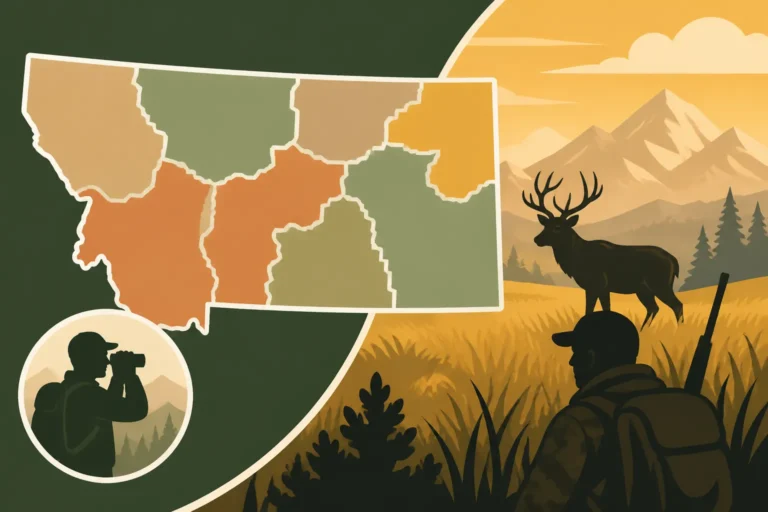
One of the defining characteristics of the Little Belts is the extensive timber, primarily Douglas fir, lodgepole pine, and spruce. This dense cover provides excellent thermal and escape cover for animals, but it also makes visibility a challenge for hunters. You won't often find wide-open glassing opportunities like you might in the vast wilderness areas to the west. Instead, hunting here often means getting into the timber and working slowly. Roads can be surprisingly abundant in some areas, offering good access, but many of these roads quickly give way to true backcountry. For anyone looking to understand the broader context of how hunting is organized here, our guide on Montana Hunting Districts Explained offers a good foundation. The Little Belts fall primarily within Hunting Districts like 410, 417, 502, 510, and 590, each with its own nuances and regulations.
Prime Game Species and Their Habitat in the Little Belts
The Little Belt Mountains are a fantastic destination for multi-species hunts, primarily offering opportunities for elk, mule deer, whitetail deer, and black bear. Each species utilizes the varied terrain differently, so understanding their preferred habitats is key to locating them.
Elk in the Timbered Basins
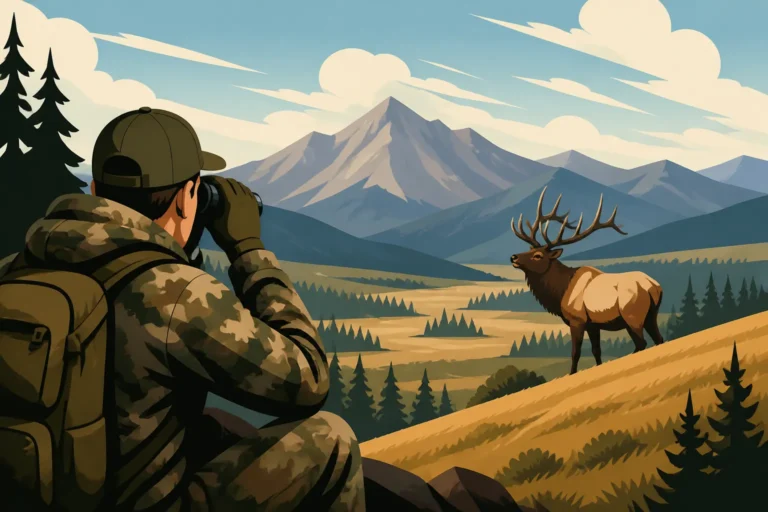
Elk are the crown jewel for many hunters in the Little Belts, and for good reason. The dense timber provides ample cover, and the numerous drainages offer crucial water sources. You'll often find elk favoring the north-facing slopes and the deep, dark timber pockets during hunting season, especially once pressure mounts. These areas tend to hold snow longer, offering cooler bedding sites and more succulent forage. During the early archery season, you might find them in higher basins, transitioning to lower, more protected areas as the weather cools and rifle season approaches. Learning how to identify their travel corridors, wallows, and bedding areas is paramount. Check out our comprehensive Montana Elk Hunting Guide for more detailed strategies specific to this region.
Hunting elk here often means getting off the beaten path and into the thick stuff. Don't be afraid to push deep into areas that look impenetrable on the map; that's often exactly where the elk are hiding. The rut in September can be phenomenal, with bugling bulls echoing through the valleys, but even during the general rifle season, patience and persistence will pay off. Targeting natural benches, saddles between drainages, and areas where different timber types meet can be highly effective.
Mule Deer in Open Parks and Timber Fringes
While elk prefer the dense timber, mule deer in the Little Belts are often found along the fringes of the timber, in the open parks, and on south-facing slopes, particularly in the mornings and evenings. These open areas allow them to feed on forbs and grasses while still having quick access to the safety of the trees. During the warmer parts of the day, or when hunter pressure is high, mule deer will retreat into the timber, though usually not as deep as elk. They'll often bed just inside the timber edge, or in scattered clumps of trees within an open park.
Successful mule deer hunting in the Little Belts often involves a lot of glassing, especially during low light, combined with strategic still-hunting through the timber. Focus on areas where open meadows transition into timbered draws or where aspen groves offer a mix of cover and forage. Winter range is typically found at lower elevations with south-facing aspects that shed snow quickly, but during hunting season, they'll be scattered throughout the mid to upper elevations depending on snowfall and forage. For more insights on targeting these majestic animals, our Montana Mule Deer Hunting Guide provides additional tactics.
Whitetail Deer in Riparian Zones
While mule deer dominate the higher, more open country of the Little Belts, whitetail deer can be found at the lower elevations, particularly along the riparian corridors of creeks and rivers that flow out of the mountains. Places like Belt Creek, which snakes its way through the range, offer ideal whitetail habitat with dense willow thickets, cottonwood groves, and agricultural fields nearby. These areas provide excellent cover and a consistent food source.
Hunting whitetails in the Little Belts often means a different approach than hunting their mule deer cousins. Stand hunting or still-hunting quietly through dense river bottom cover can be very productive. Look for rub lines and scrapes, especially during the rut, and focus on pinch points and travel corridors between bedding and feeding areas. While not as numerous as in eastern Montana's river bottoms, the whitetail population here can still provide a rewarding hunt for those willing to seek them out in their specific niches.
Black Bear in the Thick Cover
Black bears are common residents of the Little Belt Mountains, thriving in the dense timber and brushy drainages. They're omnivores, and their movements are largely dictated by food sources. In spring, they'll often be found on south-facing slopes that green up early, feeding on grasses and emerging forbs. In fall, they shift their focus to berry patches (huckleberries, saskatoons) and areas with abundant acorns or other mast crops. These mountains also provide plenty of carrion, which is another significant food source.
Hunting black bears in the Little Belts often involves a combination of spot-and-stalk tactics, particularly on open hillsides in spring or near berry patches in fall, or still-hunting through thick timber. Understanding bear behavior and identifying fresh sign like scat, tracks, and claw marks on trees is crucial. For those interested in pursuing black bears, our Montana Black Bear Hunting Guide offers in-depth strategies. Remember, safety in bear country is paramount, and carrying bear spray is always a good idea.
Essential Tactics for Hunting the Little Belt Mountains
Hunting in the Little Belts demands a versatile approach. The terrain, timber density, and animal behavior often require a blend of techniques to be successful.
The Art of Still-Hunting and Glassing
Given the mixed landscape of open parks and thick timber, still-hunting is an indispensable tactic. This involves moving slowly, deliberately, and quietly through the woods, pausing frequently to listen and scan. Every few steps, stop and observe, using your binoculars to pick apart the shadows for the outline of an ear, a leg, or an antler. Pay close attention to the wind and thermals, as elk and deer rely heavily on their sense of smell. Our guide on How to Use the Wind Hunting Montana Elk offers critical advice on this often-overlooked aspect.
While still-hunting in the timber, effective glassing comes into play when you encounter an open park, a long drainage, or a distant hillside. A good pair of binoculars and a spotting scope can help you pick out animals that would otherwise go unnoticed. When you find one of these vantage points, take your time. Grid the area slowly, looking for movement or subtle shapes that don't quite fit the natural environment. This combination of slow, deliberate movement in cover and patient glassing from vantage points is highly effective in the Little Belts.
Calling Strategies for Elk and Deer
Elk calling, especially during the archery season and the peak rut in September, can be incredibly effective in the Little Belts. The timbered terrain allows calls to carry well and often encourages elk to come investigate. Both bugles and cow calls can be used to locate animals, draw them closer, or even stop a moving animal for a shot. Learning how to mimic the various calls – from soft mews to aggressive challenge bugles – and knowing when to use them is a skill that takes practice. Our guide on How to Call Elk in Montana provides an excellent starting point for mastering these techniques.
For deer, rattling antlers and grunt calls can also be productive, especially during the whitetail and mule deer rut, which typically occurs in November. While less commonly used for spot-and-stalk mule deer hunting in open country, a well-timed grunt or rattle sequence can sometimes entice a buck from heavy cover or pique the interest of a distant animal.
Reading Sign and Understanding Movement Patterns
The Little Belts are full of animal sign, and learning to interpret it is like reading a story of the woods. Fresh tracks, droppings, rubs on trees (where bucks or bulls rub their antlers), and beds can tell you what animals are in the area, how recently they were there, and what they might be doing. Focus on identifying travel corridors—these are often subtle game trails that connect bedding areas to feeding grounds or water sources. Look for saddles, benches, and creek bottoms that naturally funnel animal movement.
Understanding diurnal movement patterns is also crucial. Generally, animals will feed in the mornings and evenings and bed down during the middle of the day. However, hunting pressure, weather, and the rut can all alter these patterns. A sudden snowstorm might push elk to lower, more sheltered slopes, while intense hunter activity might drive them into the thickest, nastiest cover they can find, often moving exclusively at night. Using resources like onX Hunt can help you visualize these patterns by showing you terrain features and recent hunter activity data (if available), allowing you to anticipate where animals might be heading.
Access, Public Land, and Planning Your Little Belt Hunt
Planning a hunt in the Little Belt Mountains requires careful consideration of access, public land boundaries, and seasonal regulations. Montana Fish, Wildlife & Parks (FWP) provides excellent resources, but combining those with modern mapping tools can truly give you an edge.
Navigating Public and Private Land
The vast majority of the Little Belt Mountains are encompassed within the Lewis and Clark National Forest, providing abundant public hunting opportunities. However, as is common throughout Montana, parcels of private land are interspersed, particularly at lower elevations and along creek bottoms. It’s absolutely critical to know where you are at all times to avoid trespassing. This is where a robust GPS mapping system like onX Hunt becomes an invaluable tool. It clearly delineates public and private land boundaries, shows landowner names, and details various roads and trails. Never go afield in Montana without a reliable way to verify land ownership. For more general information on how to access these types of lands, refer to our Montana Public Land Hunting Guide.
Road access into the Little Belts is generally good, with main highways like US-87 and secondary Forest Service roads penetrating deep into the range. However, many of these Forest Service roads are seasonal, meaning they might be closed during certain times of the year due to snow, mud, or wildlife management considerations. Always check with the local Forest Service office (Belt Creek Ranger District for example) for current road conditions and closures before heading out. Beyond the roads, numerous trails offer foot and horseback access into more remote areas, providing excellent opportunities for a true Montana Backcountry Hunting Guide experience.
E-Scouting and Physical Preparation
E-scouting is perhaps one of the most powerful tools in a modern hunter's arsenal for the Little Belts. Before you even set foot on the mountain, you can use satellite imagery and topographic maps to identify potential bedding areas, feeding zones, water sources, and travel corridors. Look for north-facing slopes with dark timber for elk, or south-facing, open slopes for mule deer. Identify saddles, ridges, and drainages that act as natural funnels. Tools like GoHunt offer advanced map layers and unit statistics that can help you narrow down your focus areas, combining public land data with draw odds and harvest reports to refine your strategy. For a deeper dive into this planning stage, consider our guide on How to E-Scout Montana Hunting Units.
The Little Belts, while not as extreme as some ranges, still demand a reasonable level of physical fitness. You'll be gaining and losing elevation, often in thick timber, and potentially packing out an animal over rough terrain. Conditioning your body with cardio and strength training will make your hunt safer and more enjoyable. Think about incorporating hikes with a weighted pack into your routine. Choosing the Best Boots for Montana Elk Hunting is also a critical part of preparation to ensure comfort and support on uneven terrain.
Key Considerations for Your Little Belt Hunt
Successful hunting in the Little Belts, like anywhere in Montana, comes down to preparation and adaptability. Understanding the regulations and having the right gear can make all the difference.
Regulations and Season Dates
Montana's hunting regulations can seem complex, especially for non-residents. The Little Belts fall into several hunting districts, each with specific rules for species, weapon types, and season dates. Always consult the most current Montana FWP hunting regulations booklet for the year you plan to hunt. Pay close attention to general seasons versus limited-entry permits, antler point restrictions, and any specific archery-only or muzzleloader seasons. Our comprehensive Montana Hunting Seasons Explained guide can help clarify the overall season structure.
For instance, while the general elk and deer rifle season typically runs from late October through November, archery seasons usually precede this in September. Bear seasons might have spring and fall components. Knowing these dates and how they apply to your chosen hunting district is absolutely paramount. Don't rely on old information; regulations change annually.
Essential Gear and Safety
The diverse conditions in the Little Belts mean your gear needs to be versatile. Layers of clothing are crucial, as mountain weather can change rapidly from warm sun to cold rain or snow in a matter of hours. Quality raingear, durable hiking boots, and a reliable backpack are non-negotiable. Beyond the basics, consider a good pair of binoculars (10×42 or 12×50 are popular choices), a rangefinder, and a reliable headlamp. For those pushing into more remote areas, a satellite messenger or GPS device for emergency communication is a smart investment, as cell service is often nonexistent.
Safety should always be your top priority. Let someone know your hunt plan and expected return time. Be familiar with basic first aid and carry a well-stocked kit. In bear country, carrying bear spray and knowing how to use it is essential. Always handle firearms safely, and be aware of your surroundings, especially if hunting during a busy general season.
Table: Hunting Overview in the Little Belt Mountains
| Species | Primary Habitat (Little Belts) | Best Time to Hunt | Key Hunting Tactics |
|---|---|---|---|
| Elk | Dense north-facing timber, high basins, riparian edges | Archery (Sept), Rifle (Nov) | Calling, Still-hunting, Spot & Stalk, Ambush |
| Mule Deer | Open parks, timber fringes, south-facing slopes | Archery (Sept), Rifle (Nov) | Glassing, Spot & Stalk, Still-hunting |
| Whitetail Deer | Lower elevation creek bottoms, riparian areas | Archery (Sept), Rifle (Nov) | Stand hunting, Still-hunting, Rattling (Nov) |
| Black Bear | Dense timber, berry patches, brushy drainages | Spring (May-June), Fall (Sept-Nov) | Spot & Stalk, Still-hunting near food sources |
Hunting the Little Belt Mountains offers a truly authentic Montana experience. It's not always easy, but the satisfaction of finding success in this beautiful, wild country is immeasurable. With thorough preparation, a good understanding of the terrain and its inhabitants, and a commitment to safety, you can create lasting memories in one of Montana's most endearing mountain ranges. Before you head out, make sure to review the Montana Hunt Planner Maps Explained to familiarize yourself with the intricacies of the region.
Disclaimer
Hunting carries inherent risks, including but not limited to adverse weather conditions, dangerous terrain, encounters with wildlife, and firearm-related accidents. The information provided in this guide is for informational purposes only and should not be considered a substitute for personal research, adherence to all applicable laws and regulations, and sound judgment. Always consult official Montana Fish, Wildlife & Parks regulations and local Forest Service advisories before planning or undertaking any hunting activity. Safety should always be your paramount concern.