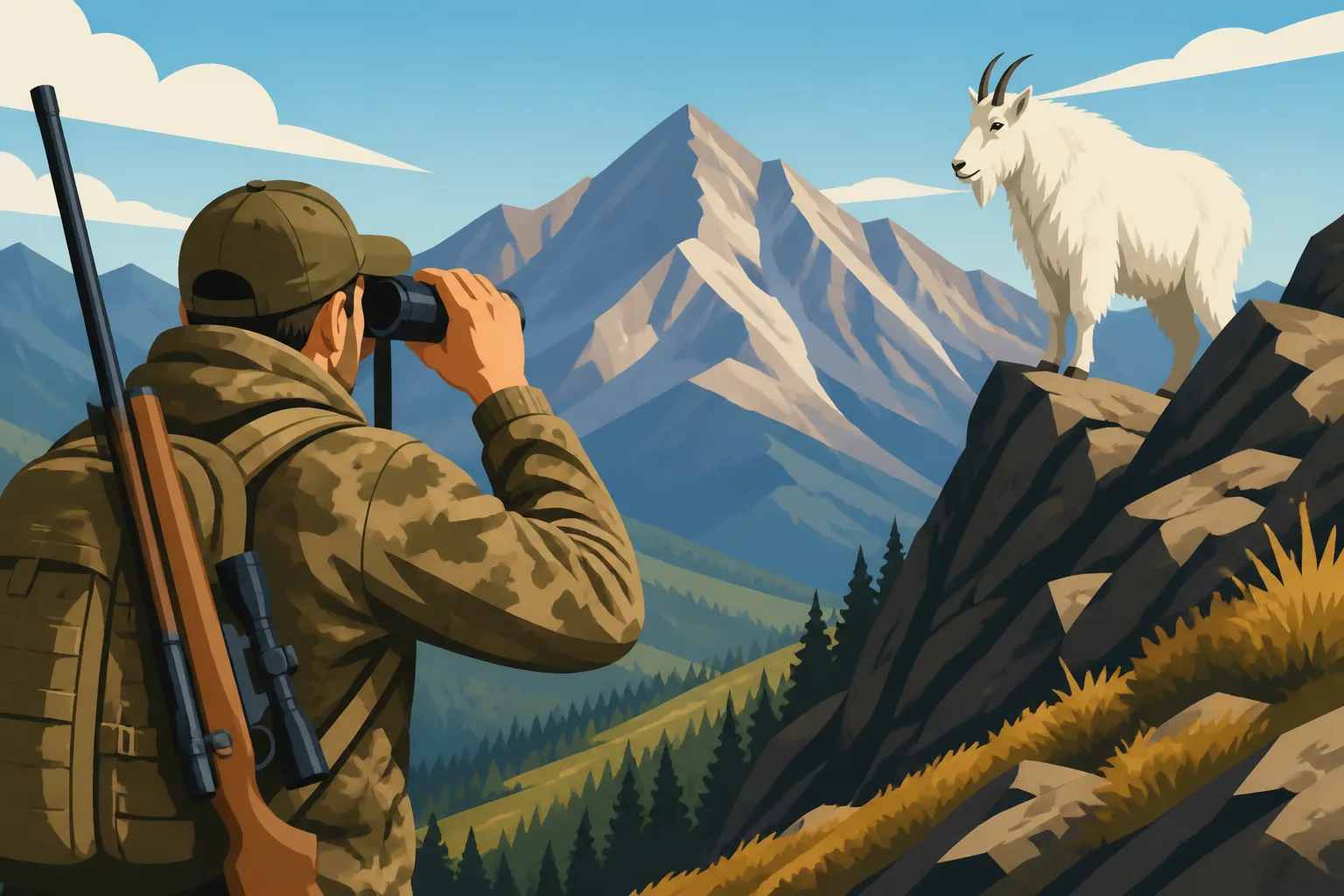
Montana Mountain Goat Hunting for Beginners
Dreaming of a Montana mountain goat hunt can feel incredibly daunting, especially when you're just starting out and the thought of navigating high-alpine terrain and complex draw systems seems overwhelming. Many aspiring hunters look at photos of these majestic creatures clinging to impossible cliffs and wonder if it’s even possible for an "average" person to pursue them. This comprehensive guide is designed to demystify mountain goat hunting for beginners, walking you through the unique challenges, crucial preparations, and essential strategies needed to pursue Montana's iconic white ghosts of the mountains.
Understanding Montana Mountain Goat Biology and Habitat
Before you even think about applying for a tag, it's vital to grasp what makes mountain goats tick and where they call home. These aren't your typical deer or elk, and understanding their biology is the first step to success in the rugged Montana high country.
Mountain Goat Behavior and Life Cycle
Mountain goats (Oreamnos americanus) are truly a marvel of adaptation, perfectly suited to survive in some of the most unforgiving environments on Earth. They are unique to North America and are incredibly agile climbers, with specialized hooves that provide exceptional grip on steep, rocky, and icy terrain. Unlike deer or elk that migrate between summer and winter ranges, goats often live their entire lives within a relatively small, vertical range, simply moving up and down the mountainside based on forage availability and weather. They are predominantly grazers, feeding on grasses, forbs, and lichens, and are usually found in small groups, though mature billies (males) can sometimes be solitary. Their breeding season, or rut, typically occurs from late October through early December, during which billies can become more aggressive and range farther. Nannies (females) give birth to one or occasionally two kids in late spring, usually on protected ledges. Understanding these behaviors helps hunters predict where goats might be at different times of the year and how they'll react to pressure.
Preferred Terrain and Elevations
When we talk about mountain goat habitat in Montana, we're talking about extreme, high-elevation alpine and subalpine environments. Think jagged peaks, rocky cliffs, steep talus slopes, and high mountain meadows. They thrive in areas above treeline, often between 8,000 and 11,000 feet, but can sometimes descend to lower elevations, especially in the late season or when seeking mineral licks. In Montana, you'll find these incredible animals in distinct mountain ranges like the Bitterroot Valley Hunting Guide, the Beartooth Mountains, the Spanish Peaks, and parts of the Great Bear Wilderness and Bob Marshall Wilderness Complex. They prefer terrain that offers escape cover in the form of vertical cliffs and broken rock, making them incredibly difficult to approach undetected. Hunters often spend days glassing vast basins, carefully picking apart the terrain with high-quality optics, knowing that a successful stalk means navigating terrain that would intimidate most other big game species. Knowing the specific types of rock formations and vegetation goats favor can be a game-changer when you're looking to locate them.
The Draw Process and Tags for Beginner Mountain Goat Hunters
Montana's mountain goat tags are among the most coveted and difficult to draw in the lower 48. This isn't a species you just decide to hunt next fall; it's a long-term commitment that requires patience and a strategic approach to the draw.
Montana's Permit System Explained
Hunting mountain goats in Montana operates under a strict permit system, meaning you must draw a special permit to hunt them. These permits are unit-specific and extremely limited, reflecting the relatively small and localized populations of these animals. Unlike general licenses for deer or elk, there's no over-the-counter option for mountain goats. The application period typically opens in the spring, with results usually available by summer. Non-residents face even steeper odds due to quotas. The system uses a combination of bonus points and a random drawing. Every year you apply and are unsuccessful, you accrue another bonus point for that specific species. When you apply in a subsequent year, all your accumulated bonus points are squared, and that total number of "chances" is entered into the drawing, plus one for the current year's application. This system heavily favors those who have been consistently applying for many years. It's a true test of patience, and many hunters dedicate decades to building points before finally drawing a coveted tag. For more details on the draw process, you can explore guides like Montana Moose Sheep Goat Season Dates or Montana Sheep and Goat Hunting Explained.
Building Bonus Points and Strategy
Given the incredibly low draw odds for mountain goats, especially for non-residents, building bonus points is not just a strategy—it's essentially the only viable path for most aspiring hunters. The primary strategy for beginners is to start applying for a bonus point every year, even if you don't plan to hunt immediately. Each point dramatically increases your chances over time, though it's still a lottery. Many hunters use platforms like GoHunt to analyze draw odds, track historical success rates, and strategize their applications across various districts. This data can help you decide if you want to focus on a particular unit with slightly better, albeit still long, odds, or simply build points for the best units over the longest period.
A key part of this strategy is understanding that a Montana mountain goat tag is truly a "once-in-a-lifetime" opportunity for most. Once you draw a permit for a particular species in Montana, you generally cannot draw another tag for that species again. This further underscores the importance of being fully prepared both physically and mentally when your number finally comes up. It also means that when you do draw, you want to make the absolute most of it. Researching potential units, understanding the Montana Mountain Goat Range, and even e-scouting extensively through tools mentioned on GoHunt become paramount during those long years of point accumulation.
| Strategy Component | Description |
|---|---|
| Consistent Point Building | Apply for a mountain goat bonus point every single year without fail. Even if you can't afford a hunt or don't feel ready, securing that point is crucial for future success. This is explained further in resources like How Montana Bonus Points Work. |
| Research Units | While building points, spend time researching different hunting districts (HDs) where mountain goats are available. Look at success rates, terrain, access, and historical draw odds. Tools like the Montana FWP Hunt Planner maps and third-party resources can be invaluable here. |
| Financial Planning | A mountain goat hunt, especially if guided, can be expensive. Start saving early, recognizing that your tag might come up unexpectedly after years of applying. Factor in travel, gear, and processing costs. |
| Physical Preparation | Don't wait until you draw to get in shape. Start a rigorous fitness routine years in advance. Mountain goat hunting demands peak physical condition, regardless of when you might draw. |
Essential Gear and Physical Preparation for Your First Hunt
So, you've decided to embark on the long journey of point building. Now what? The waiting game is the perfect time to get yourself and your gear ready. This isn't a hunt where you can "wing it." The mountains will demand everything you have.
Key Gear for High-Altitude Hunting
Hunting mountain goats means ascending into some of Montana's most rugged and remote terrain, often far above treeline. The weather can change in an instant, shifting from sunny skies to whiteout blizzards within hours, even in early fall. This necessitates a meticulous approach to gear selection, prioritizing durability, warmth, light weight, and functionality. Your clothing system needs to be layered and adaptable, focusing on synthetics or merino wool that wick moisture and insulate even when wet. A high-quality rain gear set, both jacket and pants, is non-negotiable.
Footwear is arguably the most critical component. You'll need stout, waterproof mountaineering or heavy-duty hunting boots with excellent ankle support and a stiff sole for side-hilling and kicking steps into snow or scree. Brands like Kenetrek or Schnee's are popular among Western hunters for their performance in extreme conditions. Paired with quality wool socks, this setup will protect your feet from the constant abuse of rocks, steep ascents, and potential snowfields. Don't forget durable gaiters to keep debris out of your boots. For a more general overview, consider reviewing a Montana Backcountry Hunting Gear List.
Beyond clothing, your optics setup is paramount. A high-magnification spotting scope (20-60x or 20-70x) paired with a sturdy tripod and high-quality binoculars (10x or 12x) are essential for locating goats in vast, broken terrain. You'll spend hours, if not days, behind glass. A reliable rangefinder capable of reading angles is also critical for ethical shot placement in steep country. Lastly, your backpack needs to be comfortable, capable of carrying heavy loads, and ideally designed for packing out meat. Look for packs in the 65-80 liter range from reputable brands like Kifaru, Mystery Ranch, or EXO Mountain Gear. Carrying enough water, food, first-aid, navigation tools (GPS, map, compass, satellite messenger), and emergency shelter are not optional; they are life-saving necessities in the remote Montana high country.
Physical Conditioning Requirements
Let's be blunt: if you're not in excellent physical shape, a Montana mountain goat hunt can be dangerous and miserable. This isn't a walk in the park; it's a brutal athletic endeavor. You'll be climbing thousands of vertical feet, often at high altitudes where oxygen is scarce, carrying heavy loads over uneven, unstable terrain. A typical goat hunt might involve a pack-in of several miles and then daily ascents and descents of 2,000-4,000 feet, sometimes more, often off-trail.
Your fitness regimen needs to go beyond casual hiking. Focus on building cardiovascular endurance, muscular strength (especially in your legs, core, and back), and mental toughness. Incorporate exercises like rucking (hiking with a weighted pack), stair climbing, step-ups, squats, and lunges. Simulate the hunt by training on varied terrain with your loaded pack, trying to mimic the weight you'd carry on a successful pack out. If you live at a lower elevation, try to spend some time conditioning at altitude prior to your hunt, if possible, to help acclimate your body. High-altitude sickness is a real concern and can severely impact your hunt. Many hunters follow specific training plans, often starting a year or more out from their anticipated hunt, to ensure they're prepared for the extreme demands. Think of it as training for an ultra-marathon, but with a rifle and a heavy pack. Resources like How to Prepare for High-Country Montana Hunting offer excellent advice on this crucial aspect.
Basic Hunting Tactics for Mountain Goats
Once you've drawn that coveted tag and put in the time for physical preparation, it's time to talk tactics. Mountain goat hunting is a game of patience, precision, and respect for the animal and its environment.
Spotting and Stalking in Alpine Environments
The vast majority of successful mountain goat hunts begin with intense glassing. These animals are often tiny white specks against enormous, grey and brown backdrops. You'll spend hours, often days, perched on a vantage point, meticulously picking apart distant slopes, rock bands, and snowfields with your binoculars and spotting scope. Goats tend to bed down in areas with good visibility and easy escape routes to vertical terrain. Early mornings and late evenings, when they are most active, are prime glassing times. Look for any movement, a patch of white that seems out of place, or distinct shapes that resemble a goat. Using a platform like GoHunt can help you e-scout and identify potential habitat before you even set foot in the field, giving you a head start on where to focus your efforts.
Once a goat is spotted, the real work begins: the stalk. This is often an all-day affair, requiring careful planning, patience, and often significant elevation changes. You'll need to use the terrain to your advantage, identifying ridges, draws, and rock formations that can conceal your approach. Always consider the wind, as mountain goats have an excellent sense of smell. Move slowly, deliberately, and be prepared to stop and re-evaluate your approach if the goat moves or the wind shifts. You'll likely encounter false peaks, unexpected cliff bands, and loose scree that will test your resolve. The goal is to get within an ethical shooting range, which in these environments might mean 200-400 yards, depending on your rifle, skill, and comfort level. Practice shooting at angles, both uphill and downhill, as flat ground shots are a rarity. Remember, you're often stalking animals that are aware of their surroundings, and any mistake can send them scrambling into impossible terrain. For additional insights on navigating tough terrain, consider reading about How to Move Quietly Through Montana Timber – though goats are above timber, the principles of quiet movement apply to rocky terrain.
Safety Considerations and Ethical Hunting
Safety is paramount when pursuing mountain goats. The terrain they inhabit is inherently dangerous. Loose rock, steep cliffs, snowfields, and unpredictable weather pose significant risks. Always inform someone of your hunting plans, including your route and expected return time. Consider carrying a satellite communication device like a Garmin inReach or Zoleo for emergencies. Hunt with a partner if possible, as an extra set of eyes and hands can be invaluable in a crisis. Be aware of your physical limitations and don't take unnecessary risks just to pursue an animal. No goat is worth a broken bone or worse.
Ethical hunting for mountain goats also involves careful shot placement and understanding the animal you're pursuing. Always strive for a clean, quick kill. Before taking a shot, ensure you have a clear understanding of the target, the background, and the trajectory. Many hunters specifically target billies to manage herd health, as older billies often leave the herd to live solitary lives, and harvesting them has less impact on population dynamics compared to nannies with kids. Being able to distinguish between a billy and a nanny in the field is a critical skill. Billies typically have thicker horns at the base and a more robust build, especially around the shoulders. Their horn tips often broom (wear down) more significantly than a nanny's, which tend to be thinner and more uniform. Observing horn characteristics and body size are key identification elements. Additionally, be prepared for the worst-case scenario: a goat falling into an inaccessible chute after being shot. It's a real possibility in this extreme terrain, and sometimes, despite a perfect shot, recovery is impossible. Have a plan for recovery, and never climb into a situation you can't get out of. This isn't just about bagging a trophy; it's about respecting the animal and the mountains.
Field Care and Packing Out Your Mountain Goat
Congratulations, you've harvested a Montana mountain goat! Now comes the incredibly demanding, but rewarding, task of field care and packing out your prize from the rugged high country. This is where all that physical preparation truly pays off.
Quartering and Preserving Meat in the Mountains
Once your goat is down, the clock starts ticking, especially if temperatures are mild. The first priority is to quickly and efficiently field dress the animal to begin the cooling process. Get the guts out as soon as possible. Then, for ease of packing and to ensure rapid cooling, you'll need to quarter the animal. This involves breaking it down into manageable sections: the four quarters, backstraps, tenderloins, neck meat, and rib meat. If you're planning a full body mount, consult with your taxidermist beforehand about specific skinning and cape care instructions. Otherwise, caping for a shoulder mount involves skinning down the neck and front legs, leaving ample hide for the taxidermist.
Keeping the meat clean is paramount. Lay out a ground tarp or use game bags immediately to prevent dirt, hair, and debris from contaminating the meat. High-quality, breathable game bags (like those from Argali or Alaska Game Bags) are essential. They protect the meat from flies and dirt while allowing air circulation to facilitate cooling. If there's snow or ice nearby, you can use it to help cool the meat, but avoid direct contact with water for extended periods as it can damage the meat. Hang the quarters in a shady, airy spot if possible, away from scavengers. The delicate flavor of mountain goat meat benefits greatly from careful handling and quick cooling, ensuring it's a delicious reward for your hard-earned effort. For additional insights on meat care in the field, look into resources like How to Quarter an Elk in the Montana Backcountry as many of the principles apply, just on a smaller scale.
Packing Out from Remote Terrain
Packing out a mountain goat from its native habitat is one of the most physically demanding aspects of the hunt. Even a small goat can weigh 150-200 pounds, and you’ll likely be carrying 50-80 pounds or more per load, depending on your strength and the size of your hunting party. This load will include meat, the cape, horns, your rifle, and all your essential gear. The terrain that was challenging on the way in becomes exponentially more difficult with a heavy pack. You'll be navigating steep scree fields, crossing snow patches, and carefully descending rocky slopes.
Having a robust, well-fitting backpack is crucial here. Internal or external frame packs designed for heavy loads, such as those from Mystery Ranch or Kifaru, distribute weight effectively and make the arduous journey more tolerable. Take frequent breaks, stay hydrated, and watch your footing. If hunting with a partner, you can share the load and make multiple trips if necessary. It's not uncommon for a pack out to take an entire day, or even two, from the point of harvest to the trailhead. Prepare for this physically and mentally, as fatigue can lead to mistakes. Remember that every step you take with that heavy pack is a testament to your hard work and commitment, bringing your incredible Montana mountain goat experience to a successful close. For more in-depth advice on this subject, consider reading How to Pack Out an Elk in Montana for broader principles of backcountry meat packing.
Disclaimer
Please note that hunting regulations, season dates, and draw procedures in Montana are subject to change. Always consult the official Montana Fish, Wildlife & Parks (FWP) regulations and website for the most current and accurate information before planning any hunt. This guide is for informational purposes only and does not supersede official FWP regulations.