Montana Bighorn Sheep Rams Explained
Hunting for bighorn sheep in Montana is a dream for many, but understanding these incredible animals, especially the rams, can feel like trying to solve a complex puzzle etched into the side of a mountain. From distinguishing a legal ram from a younger one to simply grasping their elusive behavior, the learning curve is steep. This guide will walk you through everything you need to know about Montana's bighorn sheep rams, from their unique biology and how to age them in the field to their habitat, behavior, and the critical role they play in the state's hunting landscape.
The Distinctive Biology and Characteristics of Montana Bighorn Rams
Montana is home to two subspecies of bighorn sheep: Rocky Mountain bighorns (Ovis canadensis canadensis) in the western mountains and some pockets of California bighorns (Ovis canadensis californiana) in more arid, rocky habitats, primarily in the eastern part of the state. While both are magnificent, the Rocky Mountain bighorns are the more prevalent and iconic image most hunters associate with the state. Understanding their physical makeup is the first step to becoming a more informed sheep hunter.
Physical Traits and Horn Growth
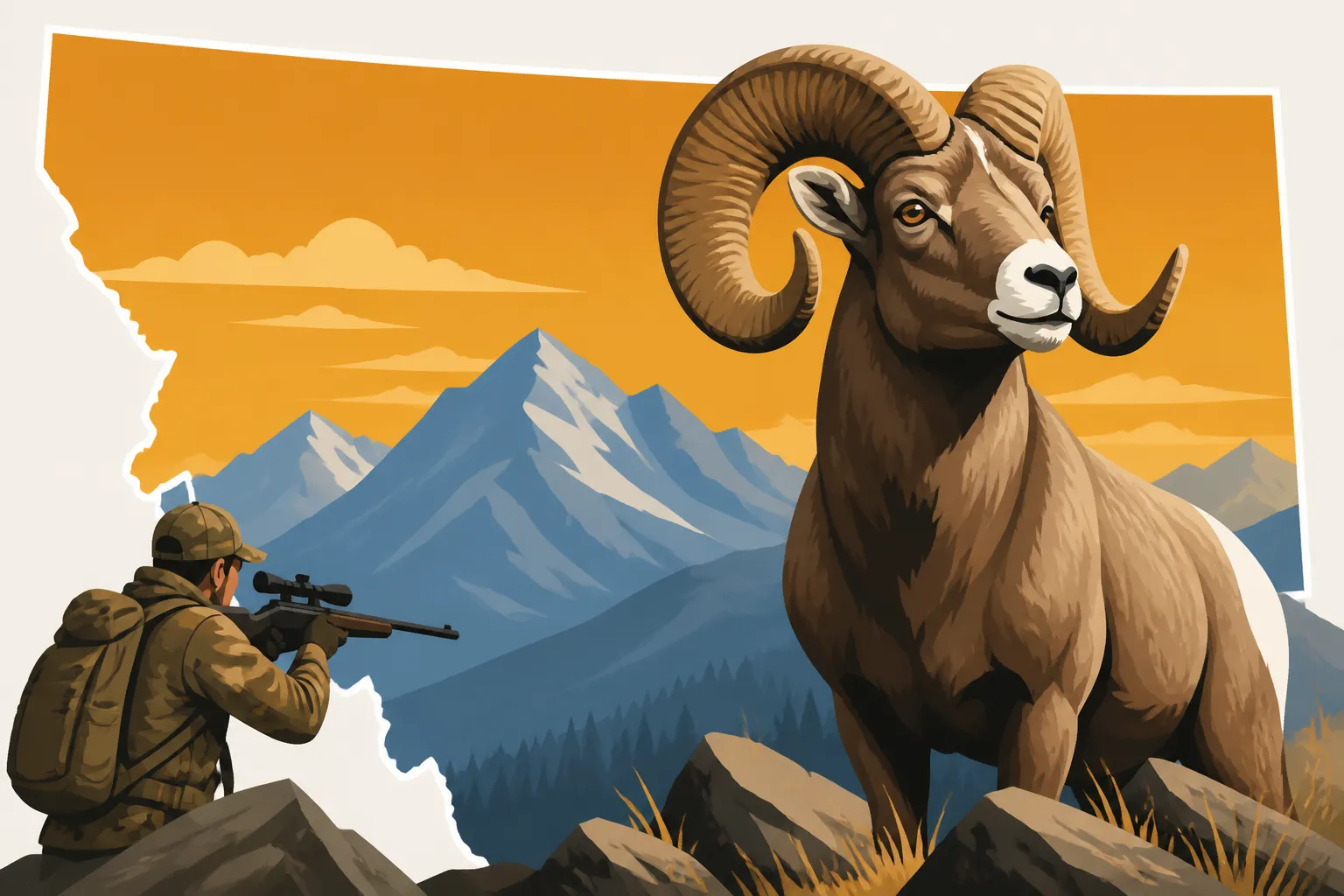
Montana bighorn rams are truly built for the rugged, vertical world they inhabit. They possess incredible agility, strength, and eyesight. A mature ram can weigh anywhere from 175 to over 300 pounds, with some of the largest specimens reaching impressive sizes, especially in prime habitat with good nutrition. Their coats are typically a grayish-brown, often with a lighter patch on their rump, muzzle, and belly. What truly defines a ram, however, are those magnificent horns.
A ram's horns are permanent structures, growing continuously throughout its life, unlike antlers which are shed annually. They are made of keratin, much like our fingernails, and grow in a tight, curling spiral. Each year, as the ram experiences changes in diet, hormone levels, and environmental conditions (like winter stress), a distinctive growth ring, called an "annulus" or "growth ring," forms on the horn. These annuli are essentially nature's permanent record of a ram's age and health. While the general curve of the horns starts outward and then curls back and down, the exact shape can vary among individuals and populations. Some rams will have a very tight curl, while others will be more open. The sheer mass and length of a ram's horns are often the defining factors in what hunters consider a trophy animal, and it's this horn development that determines legal harvest in many districts.
Differences Between Rams and Ewes
While both male and female bighorn sheep (ewes) have horns, there's no mistaking a mature ram for a ewe once you know what to look for. Ewes' horns are much smaller, thinner, and less curled. They typically grow upwards and slightly back, rarely exceeding 8-12 inches in length. They don't have the same impressive mass or tight curl that rams develop. From a distance, ewes often appear smaller in body size, though a large ewe can sometimes be similar in stature to a younger ram.
Beyond the horns, there are subtle body differences. Rams tend to have a more robust, muscular build, especially in the neck and shoulders, which becomes particularly pronounced during the rut when they're engaging in head-butting contests. Their facial features can also appear broader or more blunt compared to the daintier profile of a ewe. Learning to quickly differentiate between a ram and a ewe is crucial not just for hunting success but also for avoiding errors, especially in areas where only rams are legal. When you're glassing from miles away in the vast Montana backcountry, these subtle distinctions become incredibly important.
Aging Bighorn Sheep Rams in the Field
The ultimate challenge and ethical responsibility for any bighorn sheep hunter in Montana is accurately aging a ram in the field to ensure it's a legal animal. Montana's regulations often specify a minimum age or horn curl for harvest, typically 3/4 curl or older. This isn't always easy, even for seasoned veterans, and it requires patience, good optics, and a deep understanding of horn growth.
Reading Annuli and Horn Growth
As mentioned, annuli are the key to aging a ram. Each annulus represents a year of growth. When a ram is young, its horns grow rapidly, and the annuli are spaced further apart. As the ram matures, horn growth slows, and the annuli become closer together. To age a ram, you'd ideally count these rings from the base of the horn to the tip. However, it's rarely that simple in the field.
The first annulus, marking the ram's first year, is often very close to the head. Subsequent rings become more visible. The challenge arises because the tips of the horns, where the oldest annuli are, can often be "broomed" or worn down from fighting, rubbing, or breaking. A ram that's consistently fighting might have the tips of its horns worn completely flat, making accurate counting impossible from certain angles. This is where experience and knowing the common patterns of horn growth in a particular unit come into play. A good spotting scope is absolutely essential for this critical task. You might spend hours observing a single ram, waiting for it to turn just right, or for the light to hit its horns in a way that reveals those subtle rings.
Judging Field Legalities
Montana's bighorn sheep regulations commonly require rams to be at least a "three-quarter curl" to be legal. What exactly does this mean? It refers to the degree of the horn's curl, usually measured from the horn base to the tip. A 3/4 curl means the horn has completed three-quarters of a full circle when viewed from the side. Some districts might also specify minimum age requirements, like 7 years old.
Judging this in the field is incredibly tricky. A common technique involves visualizing a line drawn from the back of the ram's eye straight to the bottom of its jaw. If the horn tip extends past this imaginary line, it's generally considered a 3/4 curl or better. However, angle, distance, and even the ram's head position can dramatically alter your perception. Many hunters carry small templates or use a crosshair in their scope to aid in this judgment. It's not uncommon for hunters to "pass" on a ram they believe is legal, only to realize later it was bigger than they thought, or to regret a shot because they weren't 100% sure. This is why thorough preparation, including studying photos and videos of legal rams and practicing field judging, is so important. Platforms like GoHunt offer detailed insights into unit-specific regulations and often include resources that can help hunters understand these visual cues, making your pre-hunt scouting even more effective.
Key Behavior and Habitat of Montana Rams
Understanding where bighorn sheep rams live and how they behave is fundamental to locating and successfully hunting them. These animals are creatures of habit, yet incredibly adaptable to the harsh mountain environments they call home.
Rutting Behavior and Social Structure
The bighorn sheep rut typically occurs in late fall, usually from November into December. During this period, rams become highly competitive, engaging in spectacular head-butting battles to establish dominance and breeding rights. These clashes are not just for show; they can last for hours and result in incredible force, with rams running at each other at speeds up to 20 miles per hour. The sound of their horns colliding can echo through the mountains, a truly unforgettable experience if you're lucky enough to witness it.
Outside of the rut, rams generally live in bachelor herds or small groups, segregating themselves from ewes and lambs for much of the year. Older, more dominant rams might be solitary. They typically frequent steeper, more rugged terrain than the ewe-lamb groups, often at higher elevations. During the rut, however, they will descend to mingle with ewe bands, making them slightly more accessible, though still extremely wary. This is a critical period for hunters targeting mature rams, but also a time when the animals are highly focused on breeding, which can make them slightly less cautious, but also much more mobile and unpredictable. Understanding How to Hunt the Rut in Montana can provide valuable insights, even for species beyond elk.
Preferred Habitats and Movements
Montana's bighorn sheep thrive in rugged, open, and often arid mountain ranges. Their ideal habitat provides a combination of steep, rocky escape terrain, interspersed with grassy slopes for foraging. You'll often find them on south-facing slopes in the winter, where the sun melts snow and exposes forage. In the summer, they might move to higher alpine meadows for cooler temperatures and fresh forage, always staying within easy reach of cliffs or rocky outcrops where they can quickly flee from predators like mountain lions and wolves.
Their movements can be influenced by weather, forage availability, and hunting pressure. During harsh winters, they might move to lower elevations or areas with less snow, concentrating in predictable spots. However, they're not known for extensive migrations in the same way elk are; their movements are usually localized to their home range within a specific mountain complex. When planning your hunt, studying topographical maps for steep, broken country, especially those areas with good south-facing aspects and minimal timber, is an excellent starting point for figuring out Montana Bighorn Sheep Habitat. Tools like onX Hunt can be incredibly useful for identifying these prime bighorn areas and understanding access.
Understanding Montana's Bighorn Sheep Management
Montana's bighorn sheep population is managed through a carefully controlled limited-entry draw system, reflecting the species' relatively low numbers and high conservation value. Drawing a bighorn tag in Montana is often a once-in-a-lifetime opportunity for residents, and an even rarer feat for non-residents.
Tagging and Draw System
Montana utilizes a bonus point system for its bighorn sheep draw, similar to other highly coveted species. When you apply for a bighorn sheep tag and are unsuccessful, you receive a bonus point. These points accumulate over the years, increasing your odds in subsequent draws, but do not guarantee a tag. Every time you apply, your accumulated bonus points are squared (e.g., 5 points become 25 entries), and a random number is drawn for each entry. The more points you have, the more entries you have in the hat, significantly improving your statistical chances over time.
For non-residents, the draw odds are incredibly tough due to quotas. Only a small percentage of tags are allocated to non-residents, making the process even more competitive. Many hunters apply for decades, patiently building points, before finally drawing one of these coveted tags. Understanding How Montana Bonus Points Work is crucial for anyone hoping to pursue a bighorn in the state. Prospective applicants should also dive into resources like Montana Nonresident License Draw Explained to fully grasp the complexities. Before submitting your application, using online resources like GoHunt's draw odds data and application strategy tools can provide invaluable insights, helping you decide which districts, if any, offer a slightly better chance or align with your point accumulation.
Here's a simplified look at the draw process:
| Step | Description | Considerations |
|---|---|---|
| 1. Purchase Base License | Buy your Conservation License and other required base licenses (Nonresident: Combo License often needed). | Must be done before applying for special permits. Nonresident combo licenses are competitive themselves. |
| 2. Research Units | Study harvest data, population trends, draw odds, and regulations for specific hunting districts. | Platforms like GoHunt are invaluable for this. Look at Montana Hunting Districts Explained for general context. |
| 3. Apply for Permit | Submit your application for your chosen bighorn sheep permit (specific hunt code). | Deadline is usually in April. You can select up to two choices. |
| 4. Accumulate Bonus Points | If unsuccessful, you automatically receive a bonus point for that species. | These points multiply your chances in future draws. Consider applying annually to maximize points. |
| 5. Wait for Results | Draw results are typically announced in early July. | This is the longest, most anxious wait! |
| 6. Hunt (If Successful) | Prepare for one of the most physically demanding and rewarding hunts. | If unsuccessful, continue applying next year and building points. |
Conservation Efforts
Montana Fish, Wildlife & Parks (FWP) plays a vital role in managing and conserving bighorn sheep populations. This involves habitat improvement projects, disease monitoring, and regulating harvest to maintain healthy populations. Bighorn sheep are susceptible to diseases, particularly pneumonia, which can decimate entire herds. FWP works closely with landowners, researchers, and other agencies to mitigate these threats and ensure the long-term viability of the species.
The limited number of tags issued each year directly reflects these conservation efforts. The goal isn't just to provide hunting opportunities, but to ensure that bighorn sheep populations remain robust and healthy across their range. Hunters who are fortunate enough to draw a tag become direct contributors to these conservation programs through their license fees, making their hunt not just a personal achievement but also a contribution to the species' future. Being part of the solution, whether through drawing a tag or simply supporting conservation organizations, is a critical aspect of being a responsible hunter in Montana.
Preparing for a Montana Bighorn Hunt
Drawing a bighorn sheep tag in Montana is often the culmination of years, sometimes decades, of dreaming and applying. Once you get that coveted email or see your name on the draw results, the real work begins. This isn't just any hunt; it's a monumental undertaking that requires extensive planning and physical and mental fortitude.
Physical Conditioning and Gear
A bighorn sheep hunt in Montana is arguably one of the most physically demanding hunts you can embark on. These animals live in some of the most remote, steepest, and rugged terrain imaginable. You'll be gaining thousands of feet in elevation, often off-trail, scrambling over rocks, and navigating loose scree fields. Carrying a heavy pack, optics, and potentially meat out of this country demands peak physical condition. Don't underestimate this aspect – start a rigorous training regimen months, even a year, in advance. Focus on cardio, strength training (especially legs and core), and hiking with a weighted pack on steep inclines. A well-designed Montana Elk Hunt Fitness Plan could easily be adapted for sheep.
Your gear needs to be top-notch. High-quality optics are non-negotiable. A good spotting scope (20-60x or 25-75x) with a sturdy tripod is essential for picking apart distant mountainsides and field judging rams. Binoculars (10×42 or 12×50) are your primary glassing tool. You'll need durable, broken-in mountaineering boots, a reliable backpack (50-80 liters), layers of technical clothing for varying mountain weather, a robust shelter, and adequate water filtration. Every item in your pack should be meticulously chosen for weight, durability, and functionality. Thinking through your Montana Backcountry Hunting Gear List is a great starting point for any high-country hunt.
E-Scouting and In-Field Strategies
Once you know your hunting district, the real fun of research begins. E-scouting is your best friend here. Utilize satellite imagery, topographical maps, and public land ownership layers (like those found on GoHunt or onX Hunt) to identify potential sheep habitat: steep, rocky areas, escape terrain, bedding benches, and potential water sources. Look for areas with a mosaic of open slopes and cliffs. Pay attention to north-facing slopes for summer bedding and south-facing slopes for winter feeding.
In the field, patience is your most valuable asset. Bighorn sheep hunting is primarily a "glassing" game. Find a vantage point that allows you to see vast expanses of sheep country. Set up your spotting scope and systematically grid the mountainsides, searching for white rumps, horn curls, or movement. Spend hours behind the glass, returning to the same spots at different times of day. Bighorns can be incredibly difficult to spot, often blending perfectly with their rocky surroundings. When you do locate sheep, take your time to stalk carefully, using terrain features to mask your approach. Always be mindful of the wind and thermals in steep country. The ultimate goal is to get into a position for a clean, ethical shot on a legal ram, which often means an arduous ascent and a well-executed final stalk.
Disclaimer
Please remember that hunting regulations, season dates, and draw odds in Montana can change annually. While this guide provides comprehensive information, always consult the most current Montana Fish, Wildlife & Parks (FWP) regulations and official resources before planning any hunt. This content is for informational purposes only and should not be considered legal or professional advice.