Montana Whitetail vs Mule Deer Differences
It's easy to look at a deer from a distance in Montana and just see "deer." But for anyone who's spent serious time in the field, knowing the difference between a whitetail and a mule deer isn't just about identifying the species; it's about understanding their world, their habits, and ultimately, how you're going to hunt them. Many a hunter has made the mistake of assuming one strategy fits all, only to be left scratching their head wondering why the deer vanished. This guide is here to unravel those distinct differences, offering you the insights needed to better understand and pursue both majestic creatures across Montana's diverse landscapes.
Physical Distinctions: More Than Just Antlers
When you're out in the vastness of Montana, spotting a deer can be exciting. But taking that extra moment to truly identify it can be the difference between a successful hunt and a frustrating one. While both are deer, their physical characteristics are remarkably distinct, and understanding these can be your first clue to their behavior and preferred habitat.
Antler Configuration and Body Size
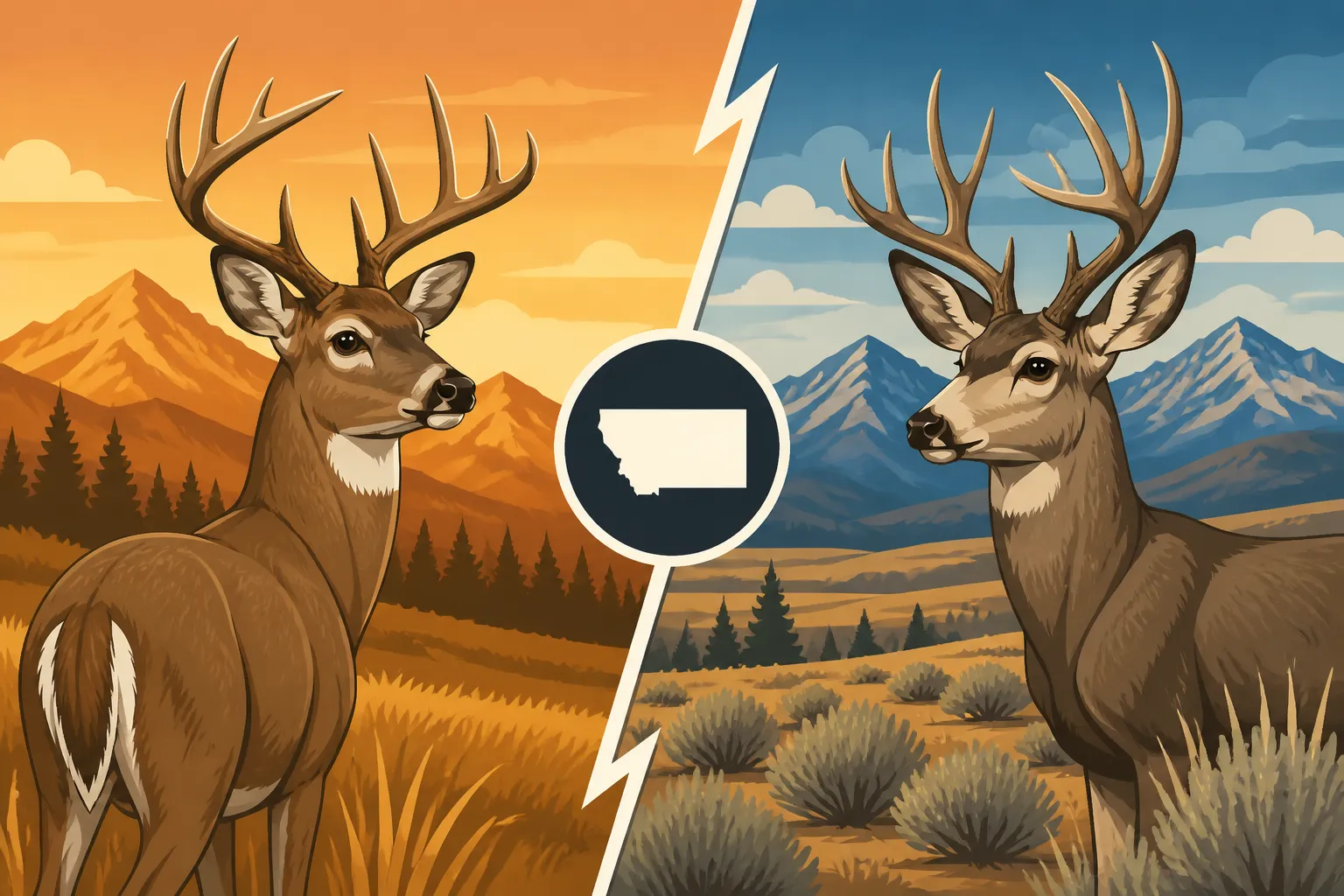
The antlers are often the most obvious differentiator, especially for bucks. Whitetail bucks typically grow antlers where all the tines (points) sprout from a single main beam that sweeps forward. Imagine a basket-like appearance where the tines rise vertically. You'll hear hunters describe them as "typical" or "non-typical" based on the symmetry and tine growth, but the core structure remains: a main beam with points coming off it. A healthy mature whitetail buck in Montana might have a heavy, widespread rack, but those individual tines still originate from that forward-curving main beam.
Mule deer, on the other hand, are known for their "forked" antlers. Their main beams tend to fork and re-fork, creating a distinct "Y" shape. You won't see a single main beam with points jutting up; instead, the antler branches into two, and then those branches often branch again. This double-forking characteristic is a dead giveaway. Beyond the antlers, mule deer generally present a more robust, stocky appearance. They tend to have broader bodies, thicker necks, and are often noticeably larger than whitetails, especially in the mature age classes. While both can vary greatly depending on diet and age, a big mule deer buck can easily outweigh a mature whitetail buck by 50 to 100 pounds or more, sometimes pushing well over 300 pounds live weight in prime conditions.
Ear Size, Tail Shape, and Coloration
Beyond the antlers, a quick look at the ears and tail can seal the identification deal. Mule deer are named for their large, mule-like ears. These ears are noticeably larger than a whitetail's and are constantly swiveling, picking up the slightest sounds across vast landscapes. When a mule deer hears something, those ears will often spin independently, giving it a 360-degree auditory advantage. Their tail is another clear marker: it's typically a narrow, rope-like tail, often with a black tip. When a mule deer is spooked, it will often raise this tail, but it won't "flag" it back and forth like a whitetail. Instead, it holds it relatively stiffly, like a black-tipped paintbrush held high.
Whitetail deer have much smaller, more proportionate ears, though they are still excellent at picking up sounds. The defining feature of a whitetail is, of course, its tail. When startled, a whitetail will raise its broad, white underside of its tail high, waving it back and forth like a bright white flag. This "flagging" is a clear signal to other deer of danger and is unmistakable. Coloration can sometimes be a subtle clue too. While both species vary season to season and geographically, mule deer often appear a bit grayer or browner, especially in winter coats, sometimes with a distinctive white rump patch. Whitetails tend to have a richer reddish-brown summer coat that turns to a more grayish-brown in winter, with a more muted, uniform hindquarter. The differences can be nuanced, but taken together, these physical traits make identification straightforward once you know what to look for.
Habitat Preferences and Geographical Distribution
The landscapes of Montana are incredibly varied, from high alpine peaks to vast prairies and dense river bottoms. It's no surprise that whitetails and mule deer have adapted to thrive in different parts of this incredible state, reflecting their distinct needs for food, cover, and escape. Understanding where each species prefers to live is fundamental to effective scouting and hunting.
Whitetail Strongholds: River Bottoms and Timber
Whitetail deer are creatures of cover. In Montana, their hearts truly lie in the dense, riparian zones along rivers and creeks, the thick timber pockets, and the brushy areas bordering agricultural fields. Think of the meandering river bottoms of the Yellowstone, Milk, or Missouri Rivers, especially in central and eastern Montana. These areas provide the perfect blend of dense willow thickets, cottonwood stands, and underbrush for bedding, safety, and browse. They use this cover to "ghost" through the landscape, disappearing almost magically even when you know they're there. If you're planning on How to Hunt Whitetail Deer in Montana you'll find yourself focusing on these types of areas.
They are incredibly adept at navigating thick woods, using small trails and natural features to avoid detection. You'll often find them tucked into draws and coulees with thick cover, even out in the prairie states where woody vegetation is sparse. They're not keen on vast open spaces, preferring to stay within easy reach of security cover. This preference makes them a particular challenge for hunters, as their world is often one of limited visibility and quick, silent escapes.
Mule Deer Domain: Open Country and High Elevation
Mule deer, in stark contrast, are the kings and queens of the wide-open spaces and more rugged, broken country. While you might find them in timber, especially for bedding or during harsh weather, they truly excel in the sagebrush flats, coulees, badlands, and the vast, often steep terrain of Montana's mountains and foothills. Western Montana's high country, the rugged Missouri Breaks, and the vast expanses of the plains with their dramatic coulees and buttes are prime mule deer territory. If you're wondering How to Hunt Mule Deer in Montana, you'll quickly realize how much time you'll spend glassing vast expanses.
They rely on their keen eyesight and large ears to detect threats from a distance, using the undulations of the landscape, isolated timber patches, and the contours of the land for cover. Instead of hiding in cover, they often hide behind it or use its vastness to maintain distance. Their bounding gait, often described as a "stot," is perfectly adapted for covering rough, broken ground quickly, putting obstacles between themselves and perceived danger. They can also be found at much higher elevations than whitetails, summering in the alpine basins and moving down as winter snows push them to lower, more accessible forage.
Overlap Zones and Transitional Areas
It's not always a clear-cut distinction, and that's where things get interesting (and sometimes confusing) for hunters. There are certainly areas in Montana where both species coexist. These "overlap zones" often occur where the plains meet the mountains, or where river bottoms cut through more open, rolling terrain. For example, a river valley might be a whitetail haven, but climb just a few hundred feet out of that valley onto the surrounding benchlands, and you might start seeing mule deer.
These transitional areas can present unique challenges and opportunities. A hunter might spot a deer in a mixed habitat and need to quickly discern its species before making a move, as the approach tactics will differ greatly. In some parts of central Montana, for instance, you might find whitetails using the thick riparian strips along a creek while mule deer browse the adjacent sage-covered hillsides. Understanding these nuances, perhaps by using tools like GoHunt to analyze habitat maps, can provide a significant advantage in areas where both species share the landscape. It forces you to think more critically about the exact micro-habitat you're in, rather than just the broader region.
Behavioral Differences and Hunting Strategy Implications
Understanding the distinct behaviors of whitetail and mule deer is paramount to becoming a successful deer hunter in Montana. They literally move, react, and exist in their world in fundamentally different ways, which means your hunting approach needs to shift just as dramatically.
Whitetail Elusiveness and "Ghosting" Tactics
Whitetails are masters of elusiveness. They are incredibly wary and use dense cover as their primary defense. When a whitetail feels threatened, its first instinct is often to sneak away, using every bit of brush, every downed log, and every fold in the terrain to stay out of sight. They're notorious for "ghosting" – melting away into cover without you ever knowing they were there. If you jump one, it might run a short distance, then stop behind cover to assess the situation, often circling back to see what spooked it. This behavior makes them incredibly challenging to spot-and-stalk in their preferred thick habitats.
Because of this, successful whitetail hunting often revolves around patience, stealth, and anticipating their movements. Still-hunting, where you move incredibly slowly and deliberately through timber, pausing frequently to observe and listen, is a classic and effective method. Setting up tree stands or ground blinds overlooking well-used trails, food sources, or pinch points in dense cover, especially near Montana Whitetail River Bottom Behavior areas, is also highly productive. Calling, such as grunts or doe bleats, can be effective during the rut, drawing in curious bucks who might otherwise remain hidden. Their reliance on cover means you have to get into their world, often in thick stuff, and be prepared for quick, close-range encounters.
Mule Deer's Open-Country Adaptations and "Bounding"
Mule deer have evolved for survival in open, broken country where long-range visibility is common. Their primary defense mechanism is early detection and using distance and terrain to escape. When a mule deer is alerted, it typically freezes, often staring intently, trying to pinpoint the threat. If it decides to flee, it will often break into its distinctive bounding gait, covering ground rapidly while keeping an eye on you. They often run uphill, gaining elevation and putting distance between themselves and danger, sometimes stopping on a distant ridge to look back. Their large ears, excellent eyesight, and open-country adaptations mean they are highly tuned to movement and sound from afar.
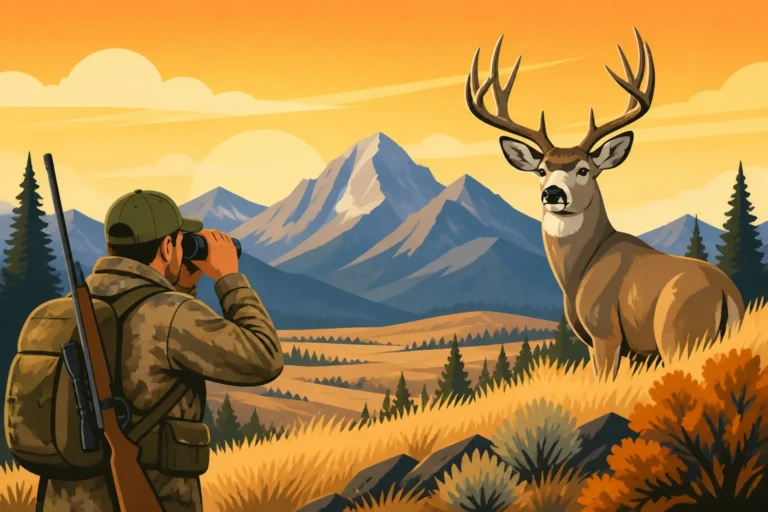
This behavior dictates a completely different hunting strategy. Montana Mule Deer Hunting: Spot-and-Stalk Tactics is the quintessential approach. Hunters often spend hours glassing vast areas from elevated positions, using high-quality binoculars and spotting scopes to locate deer. Once a target animal is identified, the challenge becomes planning and executing a meticulous stalk across open terrain, using every ditch, ridge, and clump of sage for concealment. Patience is key, as is a deep understanding of wind currents and terrain features. Unlike whitetails, you often see mule deer from a long distance, giving you time to plan, but also giving them ample opportunity to spot you if you're not careful. This also means you need to be proficient with longer-range shooting, a skill often honed by practicing in open environments, sometimes even utilizing ballistic apps like those offered by GoHunt to account for elevation and wind.
Rut Behavior and Seasonal Movements
Both species experience a rut, but their manifestations and timings can differ, impacting hunting tactics. The whitetail rut in Montana generally peaks in mid-November, often correlating with the general rifle season. During this time, bucks become highly active, aggressively scent-checking scrapes and rubs, chasing does, and engaging in sparring matches. They are more vulnerable as they move extensively, often dropping their guard in pursuit of a doe. This is when calling and still-hunting through transition zones between bedding and feeding areas can be most effective. Their movements can become quite predictable around specific areas of cover and food.
Mule deer also rut in November, with a peak often slightly later than whitetails, though there's considerable overlap. Mule deer bucks, while also focused on does, tend to cover more expansive ground during the rut. They might travel significant distances across open country, rather than being confined to smaller, dense pockets. They'll follow does into more open areas, making them visible to glassing hunters. During extreme weather or heavy snow, mule deer, especially in mountainous regions, undertake significant migrations from high-elevation summer ranges to lower-elevation wintering grounds. Understanding these Montana Mule Deer Migration patterns is critical for late-season success. These migrations can funnel deer through specific corridors, creating unique hunting opportunities for those who've done their homework.
Population Trends and Management in Montana
Montana's deer populations are a dynamic landscape, influenced by everything from habitat changes and severe winters to disease and human development. For hunters, keeping an eye on these trends and understanding how Montana Fish, Wildlife & Parks (FWP) manages each species is essential for planning future hunts and ensuring the health of the herds.
Current Population Dynamics
Whitetail deer populations in Montana have generally been robust, particularly in the lower elevations and river drainages. However, they are susceptible to diseases like Epizootic Hemorrhagic Disease (EHD), which can cause significant localized die-offs, especially in warmer, drier years. Despite these setbacks, whitetails tend to rebound relatively quickly due to their higher reproductive rates and adaptability to various habitats, including agricultural landscapes. For example, some river systems in eastern Montana continue to hold dense whitetail numbers, providing consistent hunting opportunities.
Mule deer populations, on the other hand, have experienced more fluctuation. Severe winters, habitat degradation, and persistent drought in some regions have led to declines in specific areas. While regions like the Missouri Breaks or certain mountain ranges still boast strong mule deer herds, the overall Montana Mule Deer Population Trends are closely monitored, and tags are adjusted accordingly. FWP often implements more conservative management strategies for mule deer, especially for bucks, to help ensure population stability and recovery. This means that drawing a sought-after mule deer tag might require more preference or bonus points than a general whitetail tag in many units.
Management Strategies and Hunter Opportunity
Montana FWP employs different management strategies for whitetail and mule deer, reflecting their population dynamics and habitat needs. For whitetails, general deer licenses often allow hunters to harvest either sex, or they might have specific antlerless B licenses available, especially in areas with higher populations. There are usually ample opportunities for both resident and nonresident hunters to pursue whitetails across much of the state, with seasons extending into late November. This provides a great opportunity for hunters to participate in Montana Whitetail Deer Season Dates and Tags.
Mule deer management tends to be more restrictive. While many hunting districts offer general mule deer tags, especially for residents, nonresident opportunities for quality mule deer bucks are often tied to drawing specific permits or combination licenses. FWP uses antler restrictions, like "brow-tined bull" or "forked antler" minimums in some areas, to protect younger bucks and allow for greater age class structure. The agency constantly adjusts tag quotas based on surveys, winter mortality, and habitat conditions. Hunters seriously considering a mule deer hunt need to pay close attention to the FWP regulations, district-specific draw odds, and often apply for specific permits, as outlined in guides like Montana Hunting Districts Explained. Utilizing resources like GoHunt's draw odds data and application services can be invaluable for navigating these complex regulations and maximizing your chances of securing a tag for either species. Knowing which district offers what opportunity, and what kind of tag you'll need, is half the battle.
| Feature | Whitetail Deer (Odocoileus virginianus) | Mule Deer (Odocoileus hemionus) |
|---|---|---|
| Antler Structure | Main beam curves forward, tines typically rise from main beam (basket-like) | Main beam forks and re-forks (Y-shaped configuration) |
| Ear Size | Smaller, more proportionate to head | Very large, "mule-like" ears |
| Tail Appearance | Broad, brown top, white underside; "flags" high when spooked | Narrow, rope-like, usually with black tip; held erect but not flagged |
| Body Size | Generally smaller, more slender build | Larger, stockier build, often heavier |
| Movement/Gait | Runs with a fluid stride, often low to the ground | Distinctive "stot" or bounding gait, all four feet leaving ground at once |
| Primary Habitat | Dense cover, river bottoms, timbered areas, agricultural fringes | Open country, sagebrush flats, coulees, mountains, broken terrain |
| Defense Tactic | Relies on concealment, sneaking away, using cover to hide | Relies on early detection, distance, using terrain to escape |
| Rut Timing | Generally peaks mid-November | Often peaks slightly later in November |
| Hunting Method | Still-hunting, stand hunting, calling, drives | Glassing, spot-and-stalk |
Disclaimer
The information provided in this guide is for general informational purposes only and does not constitute legal advice or guarantee hunting success. Hunting regulations and conditions in Montana can change frequently. Always consult the most current Montana Fish, Wildlife & Parks (FWP) regulations and obtain all necessary licenses and permits before planning or undertaking any hunting activity. Responsible and ethical hunting practices are paramount.