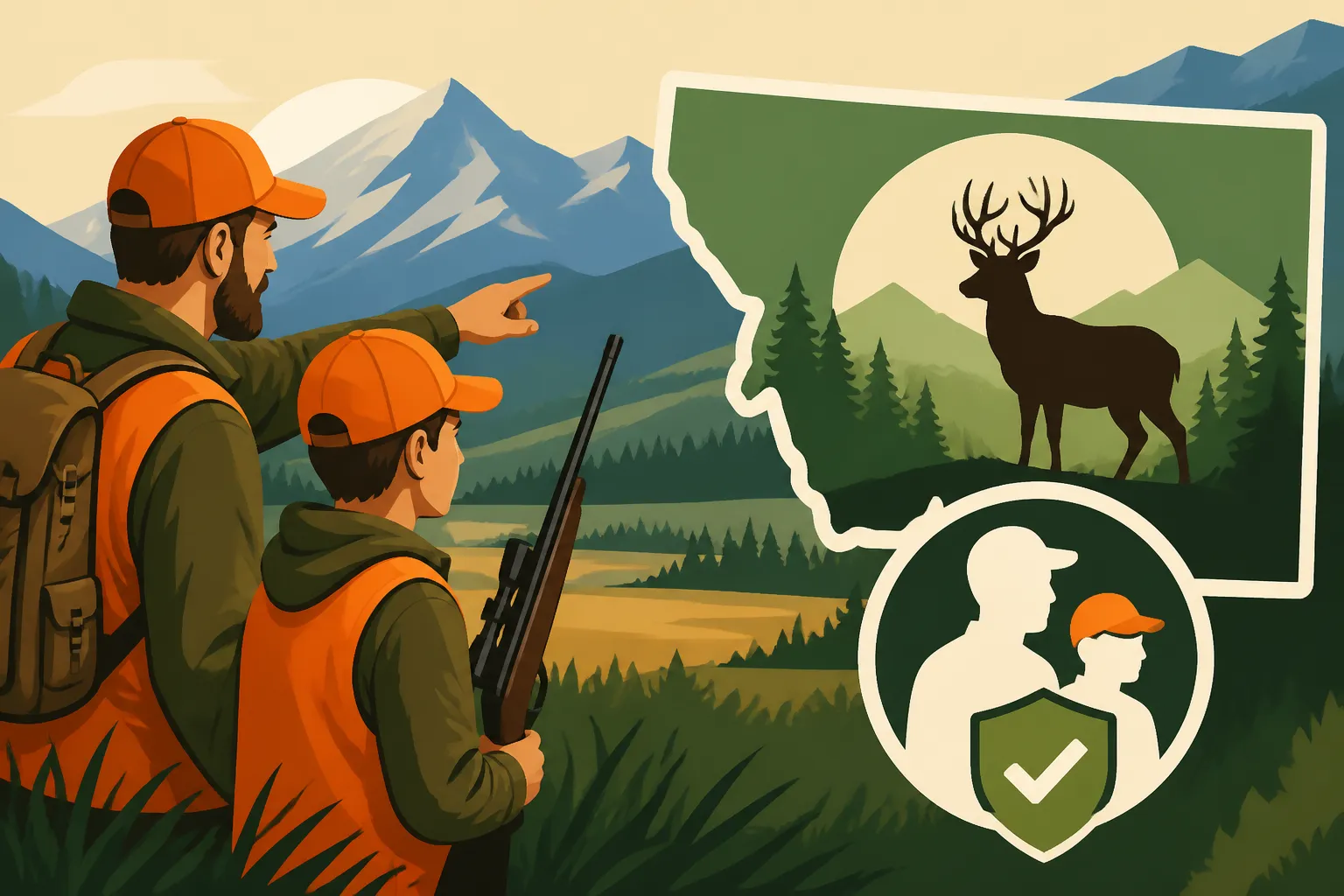
Montana Apprentice Hunter License Explained
It's no secret that the world of hunting can feel incredibly intimidating for newcomers, especially when you start looking at regulations, licenses, and the seemingly endless list of requirements. You want to introduce someone to the joy of the outdoors, the thrill of the chase, and the satisfaction of ethical harvest, but the bureaucracy can feel like a massive roadblock. This comprehensive guide is here to break down the Montana Apprentice Hunter License, a fantastic pathway designed to help new hunters, both youth and adults, dip their toes into hunting while learning from experienced mentors.
Understanding the Montana Apprentice Hunter License
The Montana Apprentice Hunter License is a brilliant initiative by Montana Fish, Wildlife & Parks (FWP) to make hunting more accessible for those who are new to the sport. It's essentially a probationary license that allows individuals to hunt without first completing a full hunter education course, provided they are accompanied and directly supervised by a qualified mentor. This isn't just a loophole; it's a structured program designed to foster mentorship and pass on hunting traditions safely and responsibly.
What is the Core Concept?
At its heart, the apprentice license is about hands-on learning under supervision. Imagine trying to learn to drive a car by just reading a manual. You need someone in the passenger seat, guiding you through the turns, explaining the nuances of the road in real-time. That's exactly what the apprentice hunter license aims to achieve for hunting. It recognizes that some of the most valuable lessons are learned in the field, side-by-side with an experienced hunter who can teach judgment, safety, and ethics as they happen. It’s perfect for a parent who wants to take their child out for the first time or even an adult who’s always been curious about hunting but never had the opportunity to go through the full hunter education process right away.
Who is Eligible for the License?
The eligibility for the Montana Apprentice Hunter License is fairly broad, encompassing both young, aspiring hunters and adults looking to start their journey.
- Youth Hunters: Anyone aged 10 to 17 can apply for an apprentice hunter license. This is a huge boon for families, allowing kids to participate in hunting activities at an earlier stage, fostering a deeper connection to nature and the sport.
- Adult Hunters: Yes, adults can get an apprentice license too! If you're 18 years of age or older and haven't completed hunter education, you can acquire this license. However, there's a crucial difference: an adult apprentice license is typically only valid for one license year. For youth, it’s usually valid for two consecutive license years. This distinction underscores that for adults, it's very much intended as a bridge to getting full hunter education, not a permanent workaround.
The spirit of the program is to get people out there learning, but with a clear understanding that formal hunter education is the eventual goal for sustained hunting participation.
Detailed Requirements for Apprentice Hunters and Mentors
Getting an apprentice hunter license isn't simply a matter of checking a box. There are very specific requirements for both the apprentice and, critically, the mentor who will be guiding them. This structure is in place to ensure safety, ethical conduct, and a proper transfer of knowledge. It can feel like a lot to keep track of, but each rule is there for a good reason, ultimately protecting the apprentice and upholding the integrity of the hunt.
Apprentice Hunter Requirements
For the apprentice hunter, the requirements primarily revolve around their age and their commitment to learning under supervision.
- Age Matters: As mentioned, youth can be as young as 10 years old. This aligns with many other states' youth hunting programs and provides a fantastic opportunity for early engagement. However, regardless of age, the apprentice must be accompanied by a qualified mentor at all times while hunting. There is no independent hunting allowed with this license.
- Direct Supervision is Key: This isn't just about being in the same general vicinity. Direct supervision means the mentor must be close enough to the apprentice to provide immediate direction, control, and instruction. If you're hunting deer, for instance, the mentor needs to be within arm's reach or a clear conversational distance, able to physically assist or intervene if needed. This is where the rubber meets the road in terms of safety. The mentor must be able to prevent any unsafe acts and ensure ethical shot placement.
- Understanding the Limits: An apprentice hunter cannot hunt big game with certain types of limited-entry permits (sometimes referred to as "permit tags"). Generally, they are restricted to general season opportunities where a standard general license is valid. For example, if you're looking into hunting elk, an apprentice might participate in a general elk season, but would likely not be able to draw and utilize a limited entry permit for a specific hunt district that requires preference or bonus points. Always double-check the specific regulations for the species and district you plan to hunt. You can usually find this information on the FWP website, and resources like GoHunt can help you navigate these complex draw odds and regulations to plan your hunts effectively. This ensures that these highly sought-after permits are reserved for fully hunter education-certified individuals who have invested in the full educational process.
Mentor Requirements: The Backbone of the Program
The mentor is arguably the most crucial component of the apprentice hunter program. Their qualifications and responsibilities are taken very seriously by FWP, and rightly so.
- Age and Certification: A mentor must be at least 18 years old. More importantly, they must possess a valid Montana hunting license and have completed a certified hunter education course (or meet an exemption, such as having previously held a hunting license from Montana or another state before a certain date). This ensures that the person doing the teaching is already well-versed in hunting safety, ethics, and regulations. It’s not just about knowing how to shoot; it’s about understanding the entire process, from respecting private land to proper field dressing.
- Direct Supervision Defined: The mentor's role isn't passive. They are legally responsible for the apprentice's actions while hunting. This means they must be in direct, physical control and supervision of the apprentice. If the apprentice shoots, the mentor must be close enough to have seen the shot, confirm the target, and immediately assess the situation. They are guiding every decision, every movement, and every shot attempt. It’s a significant responsibility and one that mentors should take very seriously.
- One-on-One Mentorship: Generally, a mentor can only supervise one apprentice at a time while hunting. This ensures that the mentor's attention isn't divided, allowing them to focus entirely on the safety and instruction of that single apprentice. Imagine trying to teach two new drivers at once—it’s just not safe or effective. The same principle applies here. This intimate, one-on-one approach is what makes the apprentice program so valuable.
Benefits and Limitations of the Apprentice License
The Montana Apprentice Hunter License offers a clear path into hunting for many, but it's essential to understand both its advantages and its inherent restrictions. It's a fantastic tool, but it's not a permanent solution, nor is it without strictures.
Advantages of the Apprentice License
This program unlocks several key benefits that truly make a difference for aspiring hunters.
- Immediate Field Experience: This is perhaps the biggest draw. Instead of waiting to complete a lengthy hunter education course, an apprentice can get out into the field and experience hunting firsthand. This practical exposure can be invaluable, offering lessons that simply cannot be replicated in a classroom. Learning about scent control, tracking, shot placement, and field dressing becomes real when you’re actually doing it. This immediacy is incredibly motivating for new hunters. It allows them to participate in the excitement of Montana Hunting Seasons Explained as soon as they're ready and find a mentor.
- Guided Learning Environment: The mentor-apprentice structure creates a built-in, personalized learning environment. A seasoned hunter can teach the nuances of wildlife behavior, tracking, ethical shot angles, and how to read the landscape. They can explain the "why" behind every decision, from choosing a stand location to determining whether a shot is safe and ethical. This one-on-one instruction is far more effective than trying to learn solely from books or videos. For instance, a mentor can explain the intricacies of How to Use the Wind Hunting Montana Elk or How to Find Elk in Montana Dark Timber in a real-world scenario.
- Overcoming Initial Hurdles: For many, the time commitment or scheduling conflicts of a hunter education course can be a barrier. The apprentice license removes this initial hurdle, allowing individuals to enter the hunting community and then complete their formal education when the timing is right. This flexibility is particularly helpful for busy families or adults with demanding work schedules. It provides a taste of hunting, inspiring them to then commit to the full certification process.
- Fostering Mentorship and Tradition: The program inherently encourages experienced hunters to become mentors, actively passing down their knowledge and love for the sport. This strengthens the hunting community and ensures that vital traditions and skills are preserved for future generations. It’s a direct response to the concern about declining hunter numbers across the country.
Important Limitations to Consider
While beneficial, it's critical to be aware of the limitations of the apprentice hunter license to avoid any misunderstandings or legal issues.
- Temporary Nature: For youth, the apprentice license is valid for two consecutive license years. For adults, it's typically only one license year. This means it is explicitly designed as a temporary stepping stone, not a permanent alternative to hunter education. The expectation is that during this period, the apprentice will complete the Montana Hunter Education Requirement to obtain a full, unrestricted license.
- Constant Direct Supervision: As highlighted earlier, the requirement for direct supervision is non-negotiable. An apprentice cannot hunt alone, ever. If the mentor steps away for any reason, the apprentice must cease hunting activities. This constant proximity can sometimes be a challenge, especially in certain hunting scenarios or with varying levels of physical fitness between mentor and apprentice.
- Cannot Purchase Certain Tags: Apprentice hunters are typically restricted from purchasing certain limited-entry permits for big game or special drawing tags. While they can pursue general season game with a general license, the highly sought-after special draws are usually off-limits. This is an important distinction when planning a hunt, especially for species like elk or deer where specific units often have permit requirements. Understanding the difference between Montana General vs Permit Tags Explained is crucial here.
- Not Recognized in All States: The Montana Apprentice Hunter License is specific to Montana. If an apprentice wishes to hunt in another state, they will likely need to meet that state's hunter education requirements or apprentice program rules. It does not act as a universal hunter education certification.
Here's a quick comparison of key aspects between an apprentice license and a full hunter education certificate:
| Feature | Montana Apprentice Hunter License | Montana Hunter Education Certificate Holder |
|---|---|---|
| Hunter Education | Not required initially | Required |
| Supervision | Mandatory direct supervision by a qualified mentor | Can hunt independently (if of legal age) |
| Validity | Youth: 2 consecutive license years; Adult: 1 license year | Valid indefinitely once obtained |
| Permit Eligibility | Generally restricted to general season tags; limited-entry permits often excluded | Eligible for all legal tags and permits (subject to draw odds and regulations) |
| Legal Age to Hunt Solo | Never, must always be with mentor | Varies by species/method, but generally can hunt solo if 12+ (with some caveats) |
| State Recognition | Montana-specific | Reciprocal with most other states and provinces |
Applying for Your Montana Apprentice Hunter License
The process of obtaining a Montana Apprentice Hunter License is straightforward, especially if you're prepared. It’s designed to be accessible, reflecting the program's goal of getting new hunters into the field.
Step-by-Step Application Process
You'll primarily interact with the Montana Fish, Wildlife & Parks (FWP) online licensing system or a licensed vendor.
- Gather Necessary Information:
- Apprentice Information: You'll need the apprentice's full legal name, date of birth, and physical address.
- Mentor Information: For the mentor, you'll need their FWP customer ID number (usually found on their Montana hunting license or conservation license), full legal name, and date of birth. The system will verify their hunter education status.
- Access the FWP Online Licensing System: The easiest and most common way to apply is through the Montana FWP's online licensing portal. You can navigate there from the main FWP website. Look for sections related to "Licenses & Permits" or "Buy a License."
- Create/Login to Customer Account: Both the apprentice and mentor should have an FWP customer account. If you don't have one, you'll need to create one. This is a fairly simple process that involves providing personal details and establishing a username and password.
- Select the Apprentice License Option: Within the licensing system, you'll find options for various licenses. Select the "Apprentice Hunter License" for the appropriate age group (youth or adult).
- Enter Apprentice and Mentor Details: You will be prompted to enter the required information for both the apprentice and the designated mentor. The system will perform checks to ensure the mentor meets all qualifications (age, valid license, hunter education). This is where the integration of systems helps to quickly verify eligibility.
- Purchase Your Base License and Relevant Tags: In addition to the apprentice hunter license itself, the apprentice will still need to purchase a base hunting license (like a Conservation License for residents, or a base hunting license for non-residents) and any specific tags for the species they plan to hunt (e.g., a deer tag, an antelope tag, or an elk tag). These are often purchased as part of a package or added on individually. If you're looking to apply for special draws, GoHunt is an excellent resource for understanding draw odds and application timelines for specific units, even if the apprentice can't directly apply for certain permit tags, their mentor can use this to plan general season hunts.
- Review and Confirm: Double-check all the information before finalizing your purchase. Once confirmed, you'll receive your license, often as a printable document or an e-license that can be carried on a smartphone.
Tips for a Successful Apprentice Hunt
Once you've got the license in hand, the real adventure begins. Here are some tips to make the most of the apprentice hunting experience:
- Prioritize Safety Above All Else: This should be the mentor's unwavering focus. Review firearm safety rules constantly. Emphasize target identification and what's beyond it. Never compromise on safety for the sake of a shot. This foundational aspect is part of what makes Montana Backcountry Hunting Safety Tips so important to review.
- Start Small and Simple: Don't plan an epic backcountry elk hunt for the first time out. Start with small game or species with more generous seasons and fewer complex requirements, like general season deer or upland birds. This allows the apprentice to build confidence and skills without overwhelming pressure. Consider something like Montana Antelope Hunting for Beginners if you're on the plains, or Montana Whitetail Deer Hunting for Beginners in the river bottoms.
- Focus on the Experience, Not Just the Harvest: The goal of the apprentice program is learning, not necessarily bagging a trophy. Celebrate small victories—spotting an animal, making a good stalk, understanding a thermal shift. These are the lessons that build a true hunter.
- Be Patient and Positive: Learning to hunt takes time and resilience. There will be missed opportunities, cold mornings, and frustrating moments. A positive, patient mentor makes all the difference in keeping an apprentice engaged and motivated.
- Continue Formal Education: Remember, this is a bridge. Encourage and assist the apprentice in completing a full hunter education course during their license's validity period. This ensures they can continue hunting independently and responsibly in the future. Many online and in-person options are available, and completing it is crucial for a long-term hunting journey.
- Utilize E-Scouting Tools: Even for general season hunts, tools like GoHunt can be invaluable. Mentors can use them to teach apprentices how to identify public land, scout for water sources, or understand terrain features before ever setting foot in the field. This can be a great way to introduce them to How to E-Scout Montana Hunting Units and build their scouting skills.
By following these guidelines, the Montana Apprentice Hunter License can be an incredibly rewarding experience, fostering new hunters and preserving Montana's rich hunting heritage for years to come.
Disclaimer
Please remember that hunting regulations in Montana, like anywhere, can change. While this guide provides a comprehensive overview of the Montana Apprentice Hunter License, it is crucial to always consult the most current official Montana Fish, Wildlife & Parks (FWP) regulations for the most accurate and up-to-date information before planning any hunting activity. This content is for informational purposes only and should not be considered legal advice.