How to Plan a Montana Backpack Elk Hunt
Embarking on a Montana backpack elk hunt is a dream for many, but the sheer scale of the landscape and the physical demands can feel overwhelming. You're probably wrestling with questions about what gear to bring, how to find elk in vast public lands, and whether your body can even handle the challenge. This guide will walk you through the essential steps to plan a successful, safe, and rewarding backcountry elk hunt in Montana, transforming that dream into a tangible adventure.
The Lure and Logistics of a Montana Backpack Elk Hunt
There's something uniquely alluring about a backpack elk hunt in Montana. It’s not just about the animal; it's about the deep dive into true wilderness, the self-reliance, and the immense satisfaction of earning every step and every opportunity. But let's be real: it's also incredibly demanding and requires meticulous planning.
Why Go Backpacking for Elk in Montana?
Many hunters are drawn to the backcountry for the solitude and the chance to find less pressured animals. When you commit to a backpack hunt, you're embracing a challenge that few others are willing to take on, giving you access to areas where the elk often behave more naturally. You escape the roads and the day-trippers, pushing deep into the remote mountains where the air is thinner, the views are expansive, and the elk might just be a little less wary.
However, this isn't a decision to take lightly. The "pros" of deep wilderness access and potentially unpressured elk come with significant "cons": extreme physical exertion, heightened safety risks, heavy loads (especially if you fill a tag), and the need for comprehensive survival and self-sufficiency skills. You're trading convenience for a profound experience, and that trade-off requires respect and preparation. Imagine the sheer effort of climbing thousands of feet with a heavy pack, then adding 100+ pounds of elk meat to that burden. It’s not for the faint of heart, but the rewards are immeasurable.
Navigating Montana's Hunting Regulations and Seasons
Before you even think about gear or physical training, you absolutely must understand Montana's hunting regulations and season dates. This is the foundation of your hunt plan. Montana has specific seasons for archery and general rifle, with varying dates depending on the hunting district. For nonresidents, drawing an elk tag, specifically a Montana Nonresident Combination License, can be a multi-year endeavor. You’ll be dealing with a preference point system that rewards loyalty, but even with points, success isn't guaranteed every year, especially for bull elk.
It's critical to study the Montana Elk Season Dates Guide well in advance of the application period. Pay close attention to whether the district you're e-scouting is a "general" unit or if it requires a "permit." Understanding the distinction between Montana General vs Permit Tags Explained is crucial because permit tags are significantly harder to draw and often require many more bonus points. Websites like GoHunt offer valuable resources and data analysis that can help you understand draw odds and plan your application strategy, providing insights into which districts might offer better chances given your point accumulation. This upfront research can save you years of frustration and ensure you're applying for tags that align with your actual chances of drawing.
Choosing Your Hunting District
Montana is a vast state, and selecting the right hunting district is paramount for a backpack elk hunt. You're looking for areas with extensive public land, ideally large wilderness areas or national forest lands with limited road access, to ensure you can truly get away from the crowds. This means diving into maps and understanding land ownership boundaries.
Many hunters focus on the western mountainous regions like the Bitterroot National Forest, the Lolo National Forest, or parts of the Custer Gallatin National Forest, which offer vast expanses of timber, steep terrain, and designated wilderness areas. These are prime candidates for a Montana Backcountry Hunting Guide experience. The challenge is often finding a district that balances elk numbers with manageable hunter pressure, while still offering the type of remote terrain suitable for backpacking. Consider districts within the Bob Marshall Wilderness Complex or areas adjacent to it for a truly immersive experience. However, be aware that these areas require even more robust planning due to their sheer size and remoteness. Understanding the specifics of a Montana National Forest Hunting Guide will be invaluable here.
Strategic Pre-Season Planning and E-Scouting
Once you have a handle on licenses and potential districts, it’s time to truly roll up your sleeves and dive into the digital realm. Pre-season planning, particularly e-scouting, is arguably the most critical component of a successful Montana backpack elk hunt.
Deep Dive into E-Scouting Tools and Techniques
E-scouting is your virtual boots-on-the-ground. You can spend hundreds of hours researching an area from your home, pinpointing potential elk hotspots, travel corridors, bedding areas, and water sources. Start with high-quality digital mapping applications like onX Hunt or GoHunt’s mapping features. These tools allow you to analyze satellite imagery, topographical maps, and public/private land boundaries with incredible detail. Look for north-facing timbered slopes where elk will bed during the day, especially as temperatures rise, and south-facing slopes that might green up earlier in the spring, attracting elk for forage.
Identify benches, saddles, and drainages that act as natural travel routes. Consider elevation changes and how they might affect thermals and wind direction throughout the day—a crucial element in mountain hunting. Pay attention to water sources, especially during drier years, as elk will always be near reliable water. Mark potential glassing points, spike camp locations, and emergency exit routes. Use the contour lines to gauge the steepness of the terrain; what looks like a gentle slope on a flat map can be a brutal climb in real life. Repeating this process for several potential areas allows you to have backup plans if your primary spot isn't producing. For a more detailed walkthrough, check out How to E-Scout Montana Hunting Units.
Understanding Elk Behavior and Habitat
To successfully hunt elk, you need to think like an elk. This means understanding their seasonal movements, dietary needs, and how they react to pressure. During the archery season, typically in September, the rut will be in full swing, and bulls will be vocal. This is when calling can be highly effective. Elk will often be found in higher elevations, particularly early in the season, seeking cooler temperatures and lush feed.
As the general rifle season progresses into October and November, elk might shift their patterns. Pressure from hunters can push them into thicker timber, steeper drainages, or designated wilderness areas where hunting pressure is lower. Weather also plays a huge role; early snow can push elk down to lower elevations, while prolonged mild weather can keep them high. Look for areas that offer a mix of feed, water, and security cover—thick timber stands, steep terrain, and north-facing slopes are common havens. Understanding Montana Elk Migration Patterns can also be a game-changer, as certain herds move dramatically between summer and winter ranges.
Developing a Flexible Hunt Plan
Even with meticulous e-scouting, Mother Nature and elk can be unpredictable. That's why a flexible hunt plan is crucial. Don't just pick one spot and stick to it no matter what. Instead, identify primary hunting areas, but also have two or three backup locations within your chosen district, or even in an adjacent district if regulations allow. Consider different strategies for each area: perhaps a basin for glassing, a timbered ridge for still-hunting, or a series of meadows for evening bugling.
Your plan should account for varying weather conditions. What if a heavy snowstorm rolls in? What if it's unseasonably warm? How will these conditions affect elk movement and your ability to hunt safely? Think about where you will set up your primary base camp and potential spike camp locations deeper in the backcountry. Map out different entry and exit points, considering both convenience and the prevailing wind directions. Always have a "Plan B" and even a "Plan C." This adaptability is a hallmark of experienced backcountry hunters and will significantly increase your odds of success and safety.
Essential Gear and Physical Readiness for the Mountains
A Montana backpack elk hunt will test your gear and your body to their limits. Cutting corners here isn't just uncomfortable; it can be dangerous.
Backpacking Gear for Montana Elk Hunters
Your gear selection needs to prioritize lightweight, durable, and reliable items. Every ounce counts when you're carrying everything on your back for days or even weeks. Start with the "Big Four": your backpack, tent/shelter, sleeping bag, and sleeping pad. For your backpack, you'll need a robust internal or external frame pack capable of comfortably carrying 60-80 pounds of gear and, potentially, hundreds of pounds of meat. Brands like Mystery Ranch, Kifaru, and Stone Glacier are popular choices among serious elk hunters because they are designed for heavy loads and extreme conditions.
Your shelter should be lightweight but provide adequate protection from Montana's unpredictable weather, which can range from warm sunshine to driving rain or snow in a single day. A good three- or four-season tent or a reliable ultralight tarp system will be crucial. For clothing, a layering system is non-negotiable. Think moisture-wicking base layers, insulating mid-layers (puffy jackets are a backcountry staple), and a waterproof/windproof outer shell. Don't forget high-quality optics (binoculars, spotting scope, rangefinder), a reliable rifle or bow, and sturdy hiking boots that are broken in and suitable for mountainous terrain. The article on Best Boots for Montana Elk Hunting provides excellent guidance. For a more comprehensive list, refer to a Montana Backcountry Hunting Gear List. Remember to pack a satellite communication device like a Garmin inReach for emergencies, as cell service will be nonexistent in most backcountry areas.
| Gear Category | Key Considerations | Example Items |
|---|---|---|
| Big Four | Weight, Durability, Load Capacity, Weather Rating | Backpack (80L+), 3/4-Season Tent, 0°F Sleeping Bag, R-Value Sleeping Pad |
| Clothing System | Layering, Moisture-wicking, Insulation, Waterproof | Merino base layers, Fleece, Down Puffy, Gore-Tex shell |
| Optics & Nav. | Clarity, Magnification, Range, GPS/Communication | 10×42 Binos, Spotting Scope, Rangefinder, GPS/inReach |
| Hunting Specific | Caliber/Draw Weight, Accuracy, Broadheads/Ammunition | Rifle (.300 WM, .30-06), Bow (70lb), Reliable Ammo |
| Cooking & Water | Efficiency, Lightweight, Filtration Capacity | Jetboil, Fuel Canister, Water Filter (Sawyer, Katadyn), Hydration Bladder |
| Safety & Survival | First Aid, Shelter, Fire, Signaling | Comprehensive First Aid Kit, Emergency Bivy, Fire Starter, Whistle |
The Importance of a Solid Fitness Plan
A Montana backpack elk hunt is physically grueling. You'll be covering miles over steep, uneven terrain at high altitudes, often carrying a heavy pack. If you're not in prime physical condition, your hunt will quickly turn into a suffer-fest, and your chances of success will plummet. Start your physical preparation months in advance, ideally six months to a year out.
Focus on cardiovascular endurance through activities like trail running, hiking with a weighted pack, and stair climbing. Incorporate strength training, particularly targeting your core, legs, and back, as these muscle groups will bear the brunt of the work. Hill sprints and long hikes with gradually increasing pack weight are excellent ways to simulate hunting conditions. Don't underestimate the importance of mental toughness, which often comes with pushing your physical limits in training. The more you suffer in training, the less you'll suffer on the mountain. For a detailed regimen, consult How to Physically Prepare for a Montana Elk Hunt. Remember, the better shape you're in, the more enjoyable and effective your hunt will be, allowing you to focus on hunting instead of just surviving.
Food, Water, and Field Care Considerations
Proper nutrition and hydration are critical for maintaining energy and focus in the backcountry. Plan your meals carefully, opting for high-calorie, lightweight, and easy-to-prepare foods. Dehydrated meals are a staple, supplemented with energy bars, nuts, dried fruit, and jerky. Calculate your caloric needs based on exertion levels; you'll burn a lot more calories than you think.
Water sources can be plentiful in some Montana mountain ranges, but they can also be scarce in others, especially during dry spells. Always carry a reliable water filter or purification tablets. Know your route and identify potential water sources during your e-scouting phase. Pack enough water capacity to get you between known sources, often carrying 2-4 liters at any given time.
Field care of your harvest is paramount, especially if you're deep in the backcountry. If you're fortunate enough to harvest an elk, you'll need to quarter it quickly to cool the meat, especially in warmer early-season temperatures. Carry game bags (synthetic ones breathe better and are reusable) and a sharp, reliable knife with extra blades. Know how to properly quarter an elk in the field—practicing on smaller game or watching instructional videos beforehand is highly recommended. The article How to Pack Out an Elk in Montana offers invaluable advice on this critical aspect.
On the Mountain: Executing Your Hunt and Staying Safe
You've planned, you've trained, you've packed. Now it's time to put it all into action. The mountains of Montana are an incredible classroom, and every day brings new lessons.
Hunting Tactics for Backpacking Success
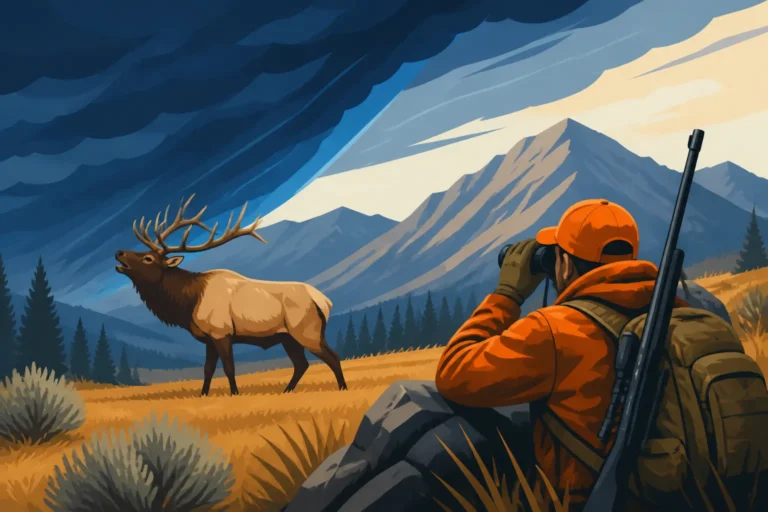
Once you're in your chosen hunting area, you'll employ various tactics to locate and close the distance on elk. Glassing is often the most effective method in open country. Find a high vantage point before first light and systematically scan all visible terrain with your binoculars and spotting scope. Look for subtle movements, horizontal lines (an elk's back), or patches of contrasting color. Take your time, break up the landscape into small grids, and be patient. The article How to Glass Montana's Big Country is an essential read for mastering this skill.
In timbered areas, still-hunting becomes your primary approach. Move slowly, deliberately, and quietly, taking one or two steps, then pausing for several minutes to observe and listen. Use the wind and thermals to your advantage, always trying to keep them in your face or quartering. Pay attention to every sound – a twig snap, a distant bugle, the rustle of leaves. When the elk are vocal, especially during the rut, calling can be highly effective. Learn how to bugle for Montana elk to locate bulls and cow call to draw them in. Sometimes a combination of tactics works best: glassing to locate, then closing the distance, and using calls to entice a bull into range.
Managing Risks and Unexpected Challenges
Backcountry hunting carries inherent risks. Being prepared for unexpected challenges is not just smart; it's essential for survival. Montana weather can change rapidly and drastically. A clear, warm morning can quickly turn into a blizzard. Always carry extra layers, including a waterproof outer shell, even if the forecast looks good. Understand the signs of hypothermia and frostbite, and how to treat them.
Injuries are another major concern. A sprained ankle miles deep in the wilderness can quickly become a life-threatening situation. Carry a comprehensive first-aid kit and know how to use it. Consider taking a wilderness first-aid course. Wildlife encounters, especially with grizzly bears, are a real possibility in many parts of Montana. Carry bear spray, know how to use it, and practice proper food storage to avoid attracting bears to your camp. Always let someone know your detailed hunt plan, including your expected return date and route. A satellite communication device like a Garmin inReach is not just a luxury; it's a critical safety tool that can summon help when you're beyond cell service.
Packing Out Your Harvest and Post-Hunt Considerations
Harvesting an elk in the backcountry is the ultimate reward, but it also initiates the most arduous part of the journey: getting the meat out. This is where your physical training and gear choices really prove their worth. Quartering an elk into manageable pieces on the spot is necessary. Bone out the meat to reduce weight, and place it immediately into clean game bags.
You'll need to make multiple trips, often covering many miles, with extremely heavy loads. A strong, well-fitting pack designed for hauling heavy game is absolutely critical. Distribute the weight evenly within your pack, keeping the heaviest items close to your back and high on your frame. Take frequent breaks, stay hydrated, and don't push yourself to the point of injury. It's a marathon, not a sprint. Consider a portable meat hauling frame or a dedicated game cart if the terrain allows, though in most steep Montana backcountry, a strong pack and good grit are your only options. Once the meat is out, ensure it's cooled quickly and properly. Find a local processor or prepare it for transport home, keeping food safety a top priority.
Disclaimer
Please be aware that hunting regulations and conditions in Montana can change. Always consult the latest official Montana Fish, Wildlife & Parks (FWP) regulations and maps before planning and embarking on any hunt. This guide is for informational purposes only and should not replace official sources or professional advice.