Montana Mule Deer Hunting: Calling Tactics
There's nothing quite like the sight of a big Montana mule deer buck, all antlers and attitude, but often, that sight is fleeting. You might spot him on a distant ridge, only for him to vanish into a coulee, or worse, have him bust you from thick cover and disappear before you can even raise your rifle. Many hunters rely solely on their optics and stalking prowess, and while those are undeniably crucial, adding calling tactics to your arsenal can turn those fleeting glimpses into real opportunities, especially when deer are reluctant to move or are hanging up just out of range. This guide will dive deep into the art and science of calling mule deer in Big Sky Country, helping you understand their vocalizations and how to use them to your advantage.
The Silent Language of Montana Mule Deer: Understanding Their World
Before you even think about putting a call to your lips, it's absolutely vital to understand the world through a mule deer's senses and what their natural vocalizations actually mean. Mule deer are creatures of habit, but they are also incredibly sensitive to their surroundings, and an out-of-place sound can send them bolting.
Decoding Mule Deer Vocalizations
Mule deer aren't as vocal as elk, that's for sure. You won't hear them bugling across vast canyons or incessantly cow calling. Their communication is generally more subtle, primarily focused on warning signals, breeding interactions, and mother-fawn bonds. The most common sounds you'll hear, or try to mimic, include bleats, grunts, and snort-wheezes.
A "bleat" is a soft, often pleading sound, typically made by a doe to her fawn, or by a fawn in distress. It’s a sound of reassurance, inquiry, or mild concern. During the rut, does might bleat to communicate with bucks. Bucks can also bleat, usually a bit deeper, to signify interest or to locate does. Understanding these subtle nuances is key; a panicked bleat might alert a doe to danger, while a soft, inquisitive bleat could draw her in, and potentially a buck following her.
Grabbing even more attention are "grunts," which are generally deeper and more guttural. Bucks make grunts, especially during the rut, to assert dominance, challenge rivals, or express frustration when chasing a doe. It’s a short, abrupt sound, often followed by a display of body language. A buck grunt is a signal of presence and intent, and can sometimes provoke a response from another buck looking to challenge or investigate.
The most aggressive vocalization you're likely to hear from a mature buck is the "snort-wheeze." This is a definitive challenge, usually emitted when a buck is agitated, confronting another buck, or about to engage in a fight. It's a combination of a sharp snort and a drawn-out wheezing sound. Hearing a snort-wheeze from a mule deer, particularly a mature buck, is a clear indication that he's serious about defending his territory or his does. While it can be intimidating, a well-timed snort-wheeze can sometimes be the ticket to calling in a reluctant buck who needs a little extra push to commit.
The Role of Senses in Calling
When you're calling, you're primarily appealing to a mule deer's auditory sense, but you can't ignore their other incredibly sharp senses. Mule deer possess exceptional hearing, able to pinpoint the source of a sound with remarkable accuracy. However, it's their nose and eyes that often serve as their primary defense mechanisms.
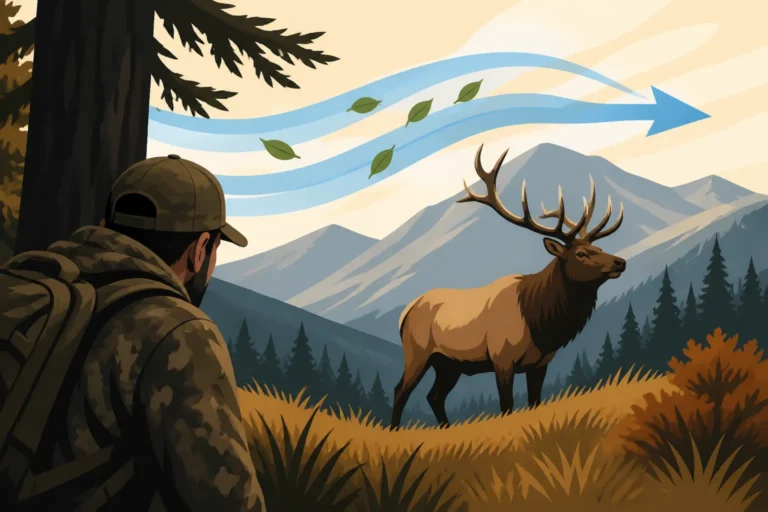
Their sense of smell is legendary. Even the slightest whiff of human scent can send a mule deer high-tailing it out of the country. This means wind direction is absolutely paramount when calling. You need to position yourself so your scent doesn't carry to the deer you're trying to call. Using a mapping platform like GoHunt can help you analyze terrain and predict thermals, which are critical for staying scent-free in mountain environments. Remember, a deer might come in to investigate your call, but if it smells you first, the game is over.
Equally important is their eyesight. Mule deer have a broad field of vision and are incredibly sensitive to movement. Any sudden motion, unnatural silhouette, or flash of color can spook them. When calling, you need to be concealed, ideally with a good backdrop, and remain absolutely motionless as the deer approaches. They will often circle downwind to get a sniff, meaning they might pop up from an unexpected direction. If you're calling, always be ready, eyes scanning, and positioned to take a shot quickly and smoothly once they appear. For tips on effective visual tactics, check out our guide on How to Glass for Montana Mule Deer.
Mastering the Melody: Essential Mule Deer Calls and When to Use Them
Knowing what sounds mule deer make is one thing; effectively mimicking them in the field to draw in a buck is another. It takes practice, patience, and a keen understanding of the specific situations that warrant different calls.
Common Call Types and Their Application
There are several types of calls designed to replicate mule deer vocalizations, each with its own niche.
Doe Bleat Calls: These are perhaps the most versatile and safest calls to start with. Doe bleats are typically high-pitched, short, and relatively soft. They mimic a doe looking for company or a lost fawn.
- When to use them: Doe bleats work well throughout the archery and early rifle seasons, even outside the peak rut. They can appeal to curious does, which can often bring a buck in tow. If you've just spotted a buck that's on the fence, or moving away slowly, a soft doe bleat can sometimes stop him in his tracks or pique his curiosity enough for him to investigate. I often use a single, soft bleat when I'm still-hunting through timber and want to check if anything is nearby without giving away my position. It’s a good “hello, is anyone there?” type of sound.
- Technique: Start with a single, soft bleat. Wait several minutes. If no response, try another, maybe slightly louder. Avoid over-calling; less is often more with mule deer.
Fawn Distress Calls: These are higher-pitched and more frantic than a regular doe bleat, designed to sound like a young deer in trouble.
- When to use them: Fawn distress calls can elicit a protective response from does, which can be an effective way to bring them into range. Occasionally, a curious or even aggressive buck might come to investigate the commotion, especially if he thinks there's a predator involved or a doe nearby that needs "rescuing." This call can be effective during the pre-rut and early rut phases. It’s a powerful call, but can also attract predators like coyotes or even bears, so be prepared for anything.
- Technique: A series of short, high-pitched cries, sometimes with a slight waver. Don't be afraid to make it sound genuinely distressed. Pause between sequences.
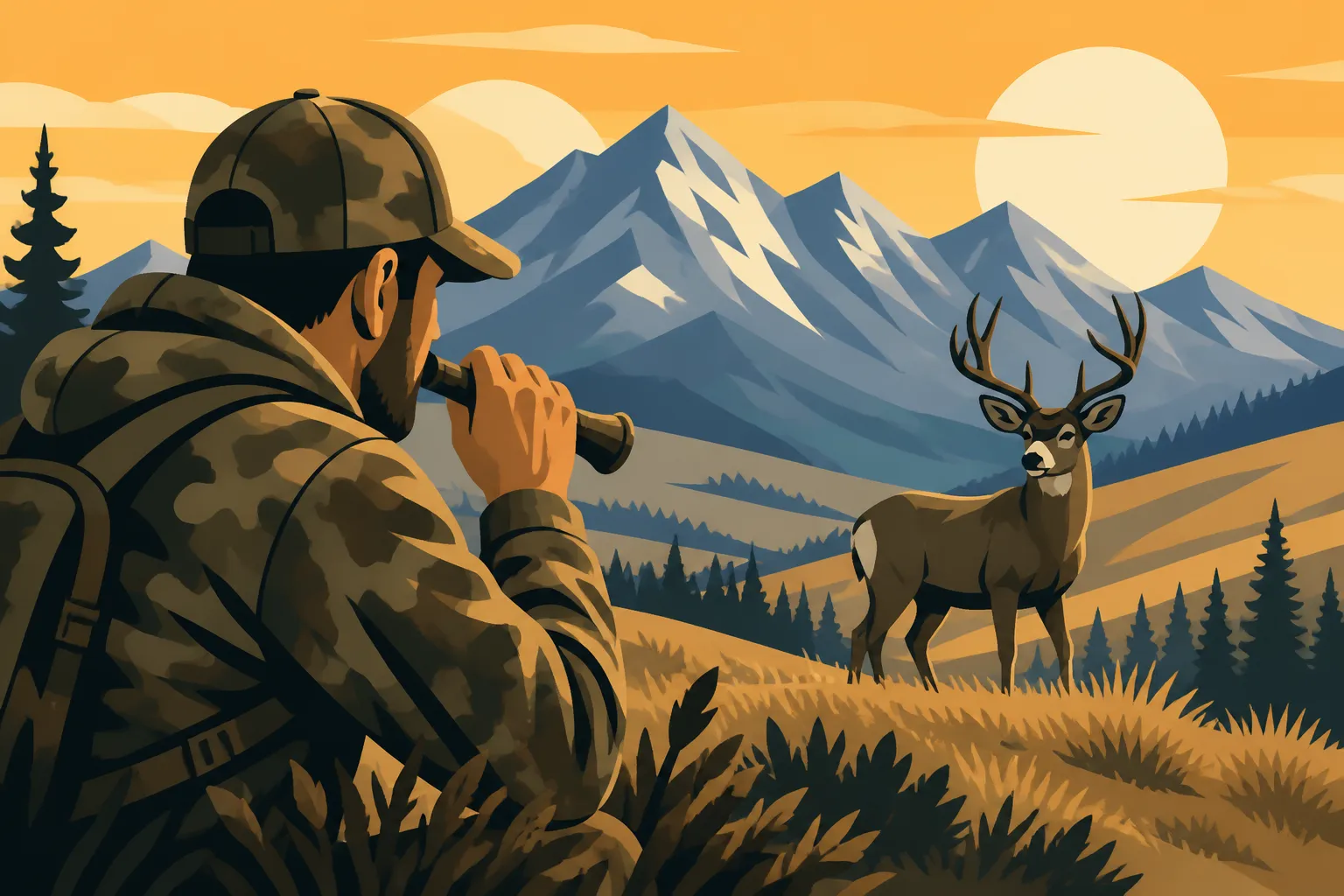
Buck Grunt Calls: These calls mimic the deeper, more aggressive sounds of a male mule deer. They can be hand-held or tube-style calls.
- When to use them: Buck grunts are most effective during the rut and pre-rut phases when bucks are actively seeking does and establishing dominance. They can challenge a wary buck to come investigate a potential rival or draw in a buck trailing a doe. If you've seen a buck chasing a doe and they've gone out of sight, a series of grunts might pull him back. These are often used when executing Montana Mule Deer Hunting: Spot-and-Stalk Tactics and a buck needs that extra incentive to close the distance.
- Technique: Short, guttural "urrpp" or "unh-unh" sounds. You can vary the intensity from a soft, searching grunt to a more challenging, aggressive series. Don't overdo it, and always be ready for a fast approach.
Snort-Wheeze Calls: The most aggressive of the mule deer vocalizations, used to challenge rival bucks.
- When to use them: Use this sparingly and only when you know there's a mature, dominant buck in the area who might respond to a direct challenge. This is often a last-ditch effort for a buck that's hanging up or won't come to other calls. It's a high-risk, high-reward call.
- Technique: A sharp snort followed by a drawn-out wheeze. Practice this sound to ensure it sounds natural and aggressive, not like a panicked gasp.
When considering which calls to buy, there are many reputable brands. Primos, Haydel's, and Flextone all make effective deer calls. Some hunters even prefer to learn how to make basic bleats and grunts with just their natural voice, though this takes considerable practice. Remember, the key isn't necessarily the brand, but how realistically you can mimic the sounds and how well you apply them. Platforms like GoHunt often feature articles or videos that demonstrate proper calling techniques, which can be a huge help for beginners.
Table of Mule Deer Calls and Usage
To help you keep track of these different calls and their ideal applications, here's a handy table:
| Call Type | Sound Description | Ideal Usage Scenarios | Best Time of Year | Key Considerations |
|---|---|---|---|---|
| Doe Bleat | Soft, pleading, inquisitive "maaaah" | Attracting curious deer, stopping a moving buck, locating does | Archery to Late Rifle | Subtle, don't over-call, can bring in does or bucks |
| Fawn Distress | High-pitched, continuous, desperate "eh-eh-eh" | Drawing in protective does, curious bucks, or predators | Early to Mid-Season | Be ready for anything, can attract non-target species |
| Buck Grunt | Guttural "urrpp" or "unh-unh" | Challenging bucks, expressing dominance, stopping a buck | Pre-rut to Peak Rut | Use sparingly, have good cover, be prepared for aggression |
| Snort-Wheeze | Aggressive snort followed by a drawn-out wheeze | Last resort to challenge dominant, stubborn bucks | Peak Rut | High-risk/high-reward, only for mature bucks, requires concealment |
Putting it All Together: Effective Calling Strategies in the Field
Knowing the calls is only half the battle. The true art lies in knowing when and how to deploy them in Montana's varied terrain, from the dense timber to the wide-open breaks.
Calling During the Rut and Pre-Rut
The rut, or breeding season, is undoubtedly the most effective time to use deer calls, especially buck vocalizations. Mule deer rut in Montana typically peaks in mid-to-late November, often coinciding with the general rifle season. Before the peak, during the pre-rut, bucks are actively scraping, rubbing, and beginning to chase does, making them more responsive to calls. For more on this, consult our detailed guide on the Montana Mule Deer Rut Explained.
- Challenging a Visible Buck: If you spot a buck that's just out of range or moving away, a series of aggressive grunts or even a snort-wheeze can sometimes stop him or turn him around. This works best if you have good cover and can make him believe another buck is intruding on his territory. For example, I once spotted a decent 4-point buck moving through a stringer of pines in central Montana, clearly heading out of my shooting lane. A quick, aggressive grunt stopped him dead, looking back, and a follow-up grunt when he started to walk again brought him cautiously into a small opening for a clean shot.
- Blind Calling in Prime Habitat: When you're still-hunting through thick timber or working a brushy draws known for holding bucks, blind calling can be effective. Try a series of soft doe bleats and light grunts every 10-15 minutes as you move slowly through the area. This can pique the curiosity of a bedded buck or one that's quietly feeding. Just remember to move slowly, using the wind to your advantage, as discussed in our Montana DIY Elk Hunting Guide which has transferable principles for deer.
- Drawing a Buck Away from Does: Sometimes you'll find a nice buck locked down with a group of does, and he's completely uninterested in moving. A well-placed buck grunt or snort-wheeze, particularly from a position that makes him believe a rival is trying to cut off his does, can sometimes pull him away for a quick investigation. You need to be patient and ready, as he might come in hot.
Post-Rut and Late-Season Calling
Even after the main rut winds down, calling can still have its place, though it becomes more challenging. Bucks are often exhausted, focusing more on feeding and recovering.
- Locating Does: In the late season, bucks will often still be with does, especially if there are any unbred ones. Soft doe bleats can still be used to locate groups of does, and by extension, any bucks that might be lingering. This is particularly useful when you're exploring How to Hunt Mule Deer on Montana Public Land and trying to cover a lot of ground effectively.
- Curiosity Calls: Sometimes, a single, soft bleat can still draw in a curious deer, even a buck. Their survival instincts are high, but a gentle, non-threatening sound can sometimes make them peek over a ridge or step out of cover. Don't expect aggressive responses, but a subtle bleat can sometimes offer that one opportunity.
Integrating Calling with Other Hunting Methods
Calling isn't a standalone tactic; it's a tool to be integrated into your broader hunting strategy.
- Spot-and-Stalk Enhancement: When you're working a How to Spot-and-Stalk Montana Mule Deer scenario and a buck gets wary, or is about to disappear, a soft bleat or grunt can buy you crucial seconds. It can stop a moving deer, giving you time to set up for a shot, or turn his head for a better angle. This is where precision and quick decision-making come into play.
- Still-Hunting Augmentation: As mentioned earlier, incorporating calls into your still-hunting rhythm can be highly effective. After moving slowly for 50-100 yards through prime cover, stop, scan, and let out a soft doe bleat or a light grunt. Wait patiently for several minutes, listening for any response or movement. It's like gently knocking on doors as you move through their living room.
- Ambush Situations: If you're set up over a water source, a bedding area, or a natural travel corridor, occasional soft calls can sometimes pull a deer slightly off its path or bring it closer to your position. For insights into understanding deer movement, resources from companies like GoHunt, which offer detailed mapping and species data, can help you identify these key ambush points.
Avoiding the Sour Note: Common Mistakes and Advanced Tips for Success
Calling mule deer is as much an art as it is a science, and like any art, it comes with a learning curve. There are common pitfalls to avoid and subtle techniques that can drastically improve your success.
Common Mistakes to Avoid
Making these mistakes can quickly turn a potential encounter into a frustrating bust.
- Over-Calling: This is probably the most common mistake. Mule deer are not elk; they are generally less vocal. Too much calling, especially loud or aggressive calling, can sound unnatural and spook them. A good rule of thumb is to start soft and subtle, and increase intensity only if the situation warrants it. Think of it as a conversation, not a monologue.
- Calling Without Proper Concealment: If a deer comes in and spots you immediately, the game is over. Always be concealed, ideally with a good backdrop that breaks up your silhouette. Ensure you can draw your bow or raise your rifle smoothly without excessive movement. Remember that mule deer will often try to circle downwind to get your scent, so have your shooting lanes clear in multiple directions.
- Ignoring the Wind: As discussed, a mule deer's nose is its greatest defense. Never call if your scent is blowing directly towards where you expect the deer to come from. Even if the call is perfect, your scent will override everything. Always hunt with the wind in your favor or crosswind, if possible. This critical factor is emphasized in nearly every successful Montana Public Land Hunting Strategy.
- Impatience: Mule deer often approach cautiously, taking their time, stopping to observe, and circling to get a better vantage point or scent. Don't call, wait a minute, and then pack up. Give it at least 10-15 minutes, sometimes longer, especially if you think a deer might be on its way. They might be waiting for you to make a mistake.
- Calling to Bedded Deer Without a Plan: While you might be tempted to call to a bedded buck, especially a big one, doing so without an exit strategy or good cover can easily educate him. If he stands up and looks your way, and you're exposed, he's gone. Often, it's better to try to stalk a bedded deer quietly or wait for him to stand on his own accord.
Advanced Tips for Consistent Success
Once you've got the basics down, these nuanced tips can help you elevate your mule deer calling game.
- Practice, Practice, Practice: The more realistic your calls sound, the better. Practice at home, listen to actual mule deer vocalizations online, and record yourself. Pay attention to pitch, duration, and volume. A call that sounds flat or fake will do more harm than good.
- Use Decoys in Open Country: In open, prairie-like areas or the rolling hills of eastern Montana, combining calling with a decoy can be deadly. A deer decoy, especially a doe or a small buck, provides a visual stimulant that complements your auditory calls. This is particularly effective during the rut when bucks are cruising for mates. When using a decoy, position it so the approaching deer will focus on the decoy and not you, giving you an opportunity for a shot. For calling antelope in open country, see How to Decoy Antelope in Montana for similar principles.
- Mimic a "Lost Fawn" Scenario: This is a powerful, though less frequently used, tactic. A series of desperate fawn bleats can often bring a doe charging in, sometimes followed by a buck. Position yourself carefully, and be ready, as the doe will likely be agitated and looking for a threat.
- Call and Move: Don't just sit in one spot. Incorporate calling into a slow, deliberate still-hunting approach. Call for a few minutes, wait, and then move 50-100 yards to a new position, always checking the wind and utilizing terrain features for concealment. This technique works especially well when trying to locate mule deer in dense patches of aspens or dark timber.
- Understand Pressure: If an area has been heavily hunted and deer are call-shy, your best bet might be to use extremely subtle, soft calls, or rely more heavily on scouting and silent stalking. Over-pressured deer can learn to associate calls with danger. Utilizing platforms like GoHunt can provide insights into specific hunting units and potential hunter pressure, allowing you to tailor your tactics.
- Be Ready for the Unexpected: Mule deer, especially bucks, can appear silently and quickly. Always have your rifle or bow ready, eyes scanning 360 degrees, and be prepared for a shot at any moment. Your initial calls should be made from a shooting-ready position, allowing you to react instantly.
Calling mule deer isn't a magic bullet, but it's a powerful tool that, when used correctly and in conjunction with solid hunting fundamentals, can significantly increase your odds of success in the challenging but rewarding landscapes of Montana.
Disclaimer
Hunting is an inherently dangerous activity. Always prioritize safety, adhere to all local, state, and federal hunting regulations, and obtain the necessary licenses and permits before engaging in any hunting activity. The information provided in this guide is for educational purposes only and should not replace professional guidance or personal judgment. Be aware of your surroundings, understand local wildlife, and always practice ethical hunting.