Montana Mule Deer Hunting: Spot-and-Stalk Tactics
Many hunters dream of chasing mule deer in Montana's vast, open landscapes, but the reality of covering endless country to find a trophy buck can feel daunting, especially when relying on traditional methods. The sheer scale of the terrain, combined with the mule deer's uncanny ability to disappear, often leaves hunters frustrated and walking miles without a solid plan. This guide is dedicated to breaking down the most effective strategy for success in these expansive environments: the spot-and-stalk, offering practical tactics to help you locate, approach, and successfully harvest a Montana mule deer.
Understanding Montana Mule Deer and Their Habitat
Successfully spot-and-stalk hunting mule deer in Montana starts with a deep understanding of the animal itself. These creatures are truly built for the rugged, open country they inhabit, and their behavior dictates how you should approach them.
Mule Deer Behavior and Movement Patterns
Mule deer are fundamentally different from their whitetail cousins. They thrive in more open, broken country, relying on their exceptional eyesight and the complex topography to avoid predators. When spooked, they typically engage in a distinctive "bounding" gait for a short distance before often stopping to assess the threat. Understanding this habit is critical, as it sometimes offers a quick follow-up opportunity if you're prepared. Their primary defense is to put distance and terrain between themselves and danger, rather than to simply disappear into dense cover and hide, though they will use sparse cover to their advantage.
Their daily movements are heavily influenced by the constant search for food, water, and security. In the early season, particularly during archery hunts, you might find them higher in elevation, feeding on lush forbs in alpine basins or timbered fringes. As hunting pressure increases or seasons transition into cooler weather, they often gravitate towards more secure bedding areas, such as dense timber pockets on north-facing slopes, deep coulees, or thickets of sagebrush that offer both concealment and thermal protection. You'll typically observe them actively feeding in the early morning and late evening, often bedding down during the warmer, brighter hours of midday in a spot that provides good visibility of their surroundings and readily available escape routes.
Unlike whitetails, which often leave obvious signs like distinct trails, rubs, and scrapes in heavily wooded areas, mule deer movements are more fluid and less confined to narrow corridors across the broad landscapes they inhabit. This means patterning them requires a different approach. Instead of looking for sign, you're often searching for areas that combine high-quality forage – whether that's browse, forbs, or even agricultural crops – adjacent to suitable bedding cover, often situated on ridges, benches, or within complex coulee systems that offer elevated vantage points and concealment. They use the terrain's contours for travel and escape, making these features critical to your scouting.
During the rut, which typically occurs in November, mule deer behavior changes dramatically. Bucks become significantly more focused on seeking out and tending does, often dropping their guard in their pursuit. This increased vulnerability, coupled with their more visible movements, can make the rut a prime time for many hunters to successfully spot and stalk a mature buck. They'll be moving more throughout the day, often following groups of does, making them potentially easier to locate in open country.
Key Montana Mule Deer Habitats
Montana offers an incredible diversity of mule deer habitats, each presenting unique spot-and-stalk challenges and opportunities. On one end of the spectrum, you have the high, rugged, rocky peaks of the western mountains, where mule deer often inhabit expansive alpine basins, the fringes of dark timber, and extremely steep, broken country. Here, success often means ascending to high points to glass vast areas, then planning a careful descent and approach through unforgiving terrain.
Moving eastward, into regions like the Missouri Breaks or other badlands environments, mule deer utilize deep coulees, scattered pockets of juniper and ponderosa pine, and extensive sagebrush flats. In these areas, they frequently bed on south-facing slopes in the morning to soak up the sun's warmth, then shift to north-facing slopes or into the shaded depths of the breaks during midday for shade and increased concealment. These environments demand excellent navigational skills and a keen eye for subtle terrain features that can hide a bedded buck.
The vast eastern plains of Montana, characterized by rolling grasslands, subtle draws, and agricultural fringes, also hold substantial numbers of mule deer. Here, cover can be scarce, making spotting even more challenging. Mule deer on the plains might bed in the bottom of a seemingly insignificant swale, behind a small rise, or within the sparse cover of a dry creek bed or a patch of taller grass. Understanding these micro-habitats within the larger, often deceptively flat, landscape is absolutely critical for success. For more in-depth information on where to concentrate your efforts, explore our guide on Montana Mule Deer: Where to Find Them.
Mastering the Art of Spotting and Glassing
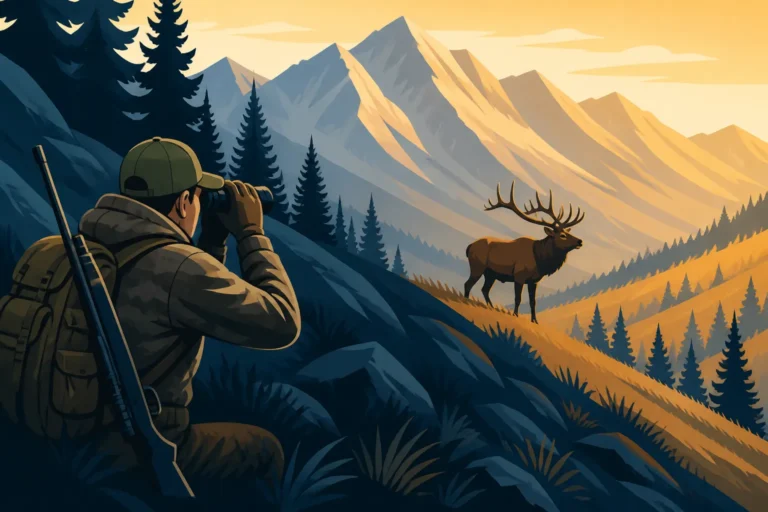
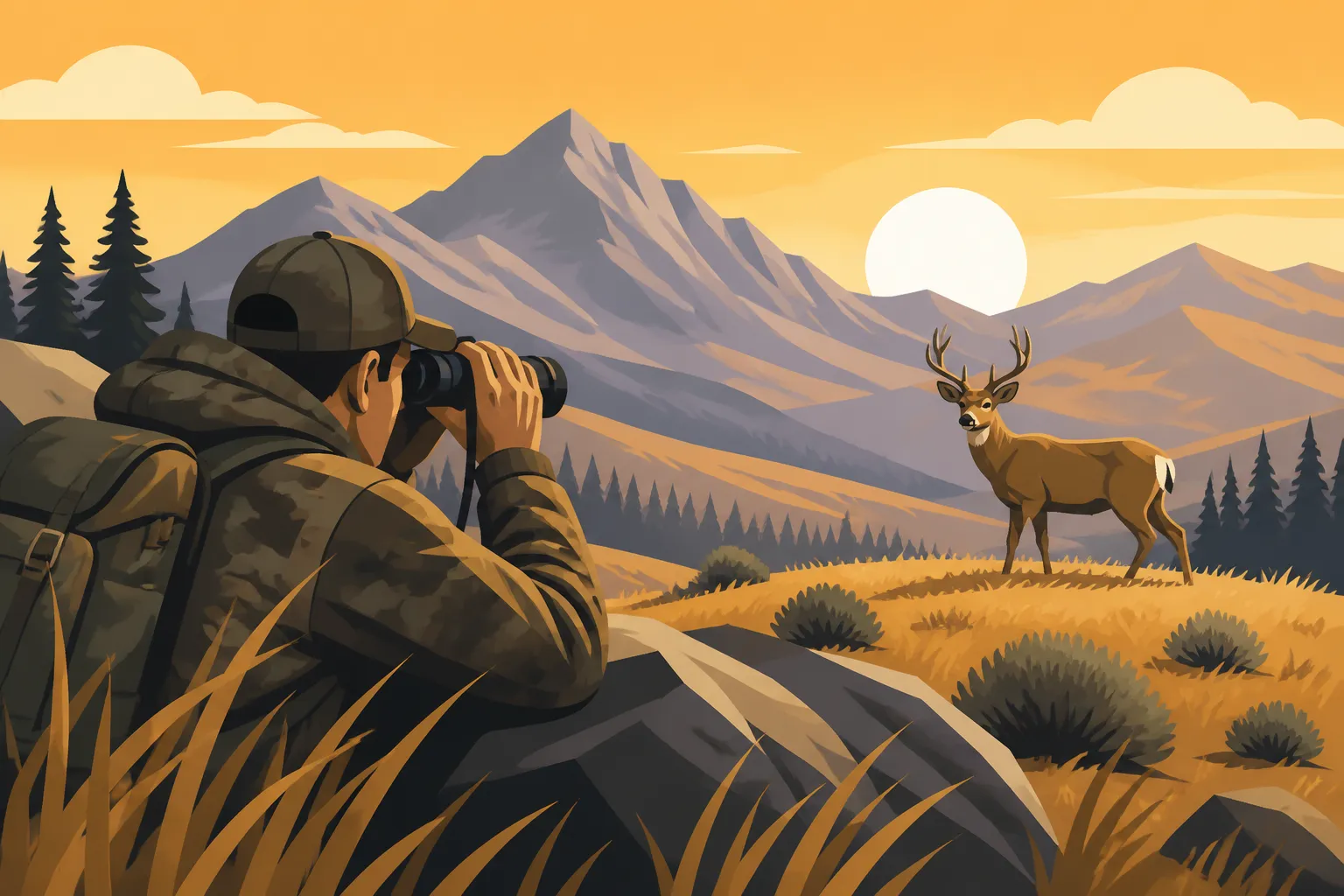
The "spot" in spot-and-stalk is arguably the most crucial and often the most time-consuming part of the equation. In Montana's expansive landscapes, simply walking around hoping to stumble upon a deer is generally a recipe for exhaustion and frustration.
Essential Optics and Their Use
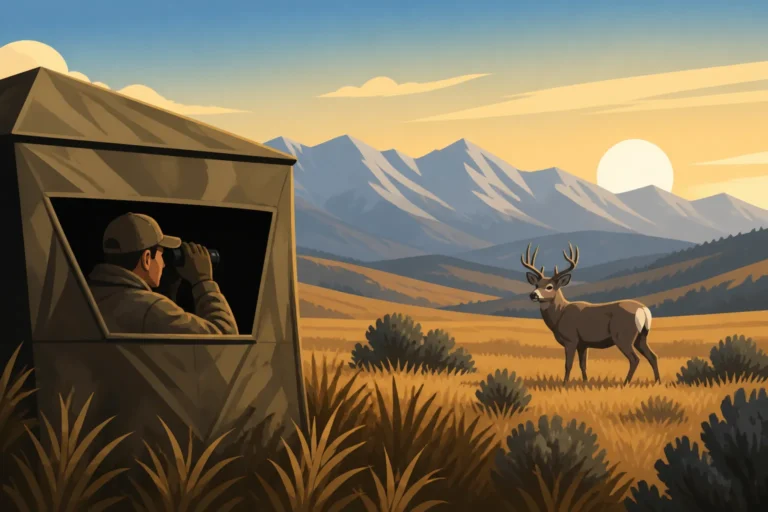
For spot-and-stalk hunting in Montana, good optics aren't just an advantage; they are an absolute necessity. You are trying to find an animal that can be incredibly camouflaged in country so vast it could easily swallow a pickup truck. A quality pair of binoculars is your primary tool for scanning these immense landscapes. Most experienced hunters opt for 10x or 12x magnification, as they offer a good balance of power and field of view. Do not skimp on this purchase; clear, high-quality glass makes an enormous difference in discerning a deer from a distant rock or shrub, especially in challenging light conditions. Brands like Vortex, Swarovski, and Leica are popular choices among serious hunters for their clarity and durability.
Beyond your binoculars, a spotting scope is invaluable, especially for evaluating potential bucks and confirming details before you commit to what could be a grueling several-hour stalk. A model with a 60-80mm objective lens and 20-60x magnification is common. Always, and I mean always, use a sturdy tripod for both your binoculars (with a bino adapter) and your spotting scope. This significantly reduces shake and eye fatigue, allowing you to glass for extended periods without tiring, which is crucial when meticulously picking apart distant hillsides for hours on end. A shaky image leads to missed details and, ultimately, missed opportunities.
Rangefinders are another critical piece of gear, not only for ethical shot placement once a stalk is complete but also for evaluating distances during the spotting phase. Knowing the approximate range to a deer and potential landmarks around it can help you plan your stalk more effectively. Modern rangefinders often include incline/decline compensation, which is a huge benefit in Montana's steep and varied mountainous terrain, providing a more accurate "shoot-to" distance. For a deeper dive into selecting the right glass for your hunt, consult our comprehensive guide on Best Optics for Montana Big Game.
Strategic Glassing Techniques
Simply sweeping your binoculars haphazardly across the landscape is a common mistake and a surefire way to miss deer. Effective glassing requires discipline, patience, and a systematic approach. First, find a vantage point that offers a broad, unobstructed view of the terrain you intend to hunt. This could be a prominent ridge, a knob, or a high point overlooking a basin. Once positioned, set up your tripod and begin systematically "gridding" the area. Start at the nearest point of interest, slowly move your optics across a manageable section, then drop down slightly and repeat the scan, much like you would read a book.
Pay excruciatingly close attention to areas where shadows meet sunlight, the edges of timber, the bottoms and sides of draws, and any subtle changes in texture, color, or shape that look out of place. Mule deer blend into their environment with uncanny ability, so you're rarely looking for an entire deer. More often, you're searching for a horizontal line in a vertical world (the deer's back), the flick of an ear, a patch of contrasting color that doesn't quite match the surrounding vegetation, or the tell-tale glint of an antler. Take your time; dedicate 15-20 minutes or more to meticulously scrutinizing one hillside before shifting your focus to the next section. Rushing this process is a guaranteed way to overlook a bedded or moving buck.
Early mornings and late evenings are often the most productive times to spot deer when they are most active, moving from bedding to feeding areas. However, do not discount midday. Deer often bed in spots that offer them a good view, and you might spot a bedded buck, especially if it's on a prominent point or a slope with sparse cover. Learning the nuances of How to Glass Montana's Big Country will significantly improve your success rate. Additionally, utilize digital scouting tools like those from GoHunt to e-scout potential glassing knobs and identify prime mule deer habitat from the comfort of your home, helping you refine your strategy before you even set foot in the field. Platforms like GoHunt provide detailed topographic maps, satellite imagery, draw odds data, and hunting research that can be invaluable for pinpointing where to focus your spot-and-stalk efforts, even months before the season starts. This kind of advanced planning is key to maximizing your time in the field.
Executing the Stalk: The Final Approach
Once a mule deer is spotted, the true challenge of the "stalk" begins. This phase requires meticulous planning, extreme stealth, and an unwavering focus on the prevailing environmental conditions.
Reading the Wind and Thermals
The wind is, without question, your number one priority on any spot-and-stalk attempt. Mule deer, like all deer, possess an incredibly keen sense of smell, far surpassing their eyesight and hearing in terms of detection range. If they catch even a faint whiff of your scent, the game is almost certainly over, and the deer will vanish before you even know they detected you. Before you take a single step towards a spotted deer, you must accurately determine the wind direction and, crucially, understand how it interacts with the specific terrain features between you and your target. Always, always, always approach from directly downwind, or at the very least, crosswind, ensuring your scent cone is blowing well away from the deer's location.
In Montana's mountainous and even broken prairie terrain, thermals play an equally massive role in how scent travels. As the sun rises and heats the ground in the morning, air warms and begins to rise, creating an uphill thermal current. Conversely, in the evening, as the air cools, it becomes denser and flows downhill. This means your scent will typically travel uphill in the morning and downhill in the evening. You must factor these predictable air currents into your approach, sometimes dictating an entirely different route or even the timing of your stalk. Occasionally, hunting in the middle of the day can offer more stable, or at least more predictably variable, wind patterns as the thermals transition, which can sometimes work to your advantage.
Always carry a reliable wind checker and use it constantly. Whether it's a small squeeze bottle of talcum powder, a handful of milkweed seeds, or a commercial wind-indicator product, constantly checking the wind will reveal subtle shifts and gusts that could otherwise betray your position. Wind direction can change rapidly and unpredictably, especially in broken country, swirling around ridges and through draws. A successful stalk often hinges entirely on your unwavering ability to remain undetected by scent. To master these critical elements, delve into our guides on How to Use the Wind Hunting Montana Elk and How to Use Thermals in Montana Elk Country, as the fundamental principles apply directly to mule deer.
Utilizing Terrain and Cover
Once you've spotted your deer and meticulously planned your approach based on the wind, the next monumental challenge is to get within shooting range undetected. This demands an intimate understanding of the terrain and an expert ability to use every fold, every clump of sagebrush, every rock, and every tree to your absolute advantage. The cardinal rule here is: never skyline yourself. Staying low, moving incredibly slowly, and thinking several steps ahead about your next piece of available cover are paramount.
A well-executed stalk often involves taking a circuitous, indirect route. This might feel counter-intuitive, or like you're going significantly out of your way, but avoiding detection is the single most important factor. Look for draws, the backside of ridges, deep cuts, and even dense thickets of brush that can completely conceal your movement. Sometimes, the final hundred yards might necessitate a full-blown belly crawl, literally inching your way across the ground. The slower you move, the more deliberate your steps, and the more you integrate with the landscape, the less likely you are to be spotted by a sharp-eyed mule deer.
Remember that mule deer have exceptional eyesight, particularly for detecting movement. If you absolutely have to cross an open area, time your movement with natural disturbances – a strong gust of wind that rustles the vegetation, a cloud passing overhead, or most effectively, when the deer's head is down and it's actively feeding. Often, the smartest play is simply to wait. Waiting for the deer to move into a more favorable position for a stalk, or for conditions to improve, can feel agonizingly slow, but patience frequently pays off. If you're bowhunting, this becomes an even more critical calculation, as discussed in detail in Montana Mule Deer Hunting: Archery Tactics, while rifle hunters typically have a bit more forgiveness in range, as explored in Montana Mule Deer Hunting: Rifle Tactics.
The Final Moments and Shot Opportunity
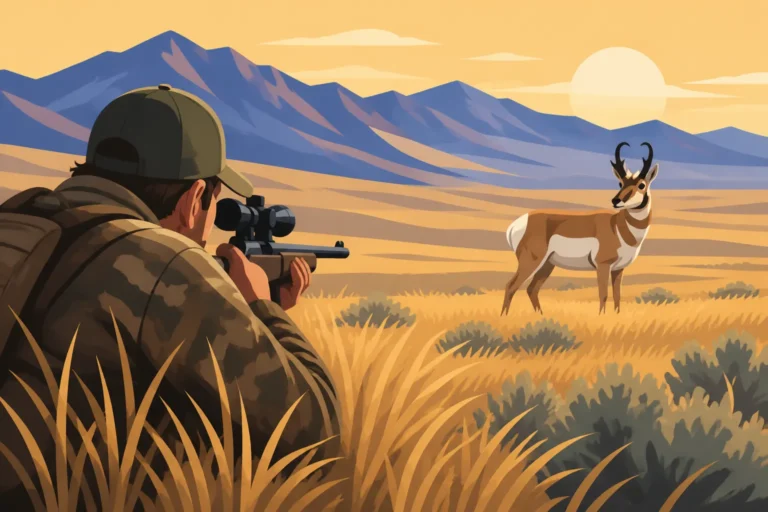
As you draw closer to the mule deer, the pressure intensifies, and your heart rate might begin to climb. The key here is to stay calm and control your breathing. Before you make your final move into a shooting position, use your rangefinder to range key landmarks around the deer – a prominent rock, a lone tree, a patch of contrasting grass. These reference points will give you accurate distances for your shot, eliminating guesswork when the moment arrives. Then, focus on getting into the most stable shooting position possible, whether that's prone (the most stable), kneeling, or using a bipod or shooting stick.
Once in position, wait for the deer to present a clean, ethical shot. Do not rush this critical moment. If the deer is facing directly at you, or presenting a steep quartering-away shot, wait until it shifts. Ideally, you want a broadside or slight quartering-away angle that offers a clear path to the vital organs. Breathe deeply, control your adrenaline-fueled heart rate, and focus intently on your shot fundamentals. Remember, the entire point of all that careful spotting and agonizingly slow stalking is to make one, well-placed shot count.
After the shot, observe the deer's reaction closely. Did it drop immediately? Did it run? If it runs, mark the exact last spot you saw it and listen intently for any sounds, such as a crash or a stumbling noise. Critically, give the animal time, especially if the shot wasn't immediately fatal. A general rule of thumb is to wait at least 30 minutes for a broadside shot, and an hour or more for a less-than-ideal hit, before you begin tracking. A patient approach after the shot can mean the difference between recovering your hard-earned animal and losing it in the vastness of Montana's landscape.
Preparation and Equipment for Success
Spot-and-stalk mule deer hunting in Montana is a demanding endeavor, both physically and mentally. Proper preparation and the right gear can significantly increase your chances of success and ensure a safer, more enjoyable experience.
Physical and Mental Conditioning
Montana's mule deer country is inherently rugged and unforgiving. Whether you're ascending to high alpine basins, traversing endless coulees on the eastern plains, or navigating the steep draws of the badlands, you will be covering significant ground, often with substantial elevation changes, all while carrying a pack. Physical fitness is not merely about comfort; it is a critical component of successful spot-and-stalk hunting. You need the endurance to hike miles day after day, the strength to carry a heavy pack loaded with gear and potentially meat, and the stability to maintain a steady shooting position after a strenuous climb or long hike.
Start your physical preparation several months in advance of your hunt. Focus on a well-rounded fitness regimen that includes cardiovascular training (hiking, running, stair climbing), strength training (especially targeting legs, core, and back), and most importantly, hiking with a weighted pack. Simulate hunting conditions as much as possible, including uphill and downhill movements. Being physically prepared not only makes the hunt more enjoyable but also contributes significantly to your mental resilience when faced with long, arduous days, unexpected bad weather, or the inevitable frustrations of repeated failed stalks. For a comprehensive training regimen, adapting a plan like the Montana Elk Hunt Fitness Plan can provide excellent guidance, as the physical demands are quite similar.
Mental toughness is just as important, if not more so, than physical conditioning. Spot-and-stalk hunting is often a game of extreme patience and sheer perseverance. You will get busted by deer. You will make mistakes in your approach. You will undoubtedly have days where you glass for hours on end and see absolutely nothing. The ability to stay positive, learn from setbacks, maintain focus despite fatigue, and keep pushing forward is what truly separates successful spot-and-stalk hunters from those who give up prematurely. The vastness of Montana requires a strong will and an understanding that success might not come easily, but the reward is immense.
Essential Gear for the Spot-and-Stalk Hunter
Beyond your chosen weapon and the critical optics we've already discussed, a few other pieces of gear are absolutely non-negotiable for a successful and safe Montana mule deer hunt. A comfortable, well-fitting backpack designed for hunting is essential. It needs to comfortably carry your optics, ample water, sufficient food, extra clothing layers, and critically, have the capacity and load-carrying capabilities to handle deboned meat if you are successful. Brands like Mystery Ranch or Kuiu offer excellent packs designed for backcountry hunting that distribute weight effectively.
Layered clothing is crucial due to Montana's notoriously unpredictable weather. You might start a crisp autumn morning in freezing temperatures, shed layers as you climb a sunny slope, and then suddenly need waterproof outerwear for an unexpected afternoon rain or snow squall. Durable, quiet fabrics that won't rustle and alert deer are a must. Good quality, broken-in boots with excellent ankle support are also paramount for covering rough, uneven terrain and preventing blisters, which can quickly end a hunt. Ensure they are waterproof and well-insulated for the conditions you expect.
Reliable navigation tools are indispensable. A dedicated GPS device or a smartphone with a robust hunting app like OnX Hunt, or those from GoHunt, are vital for knowing your precise location, identifying public versus private land boundaries, and marking deer sightings, potential bedding areas, or kill sites. Always carry a physical map of your hunting district and a compass as a backup, and know how to use them, especially if batteries fail. Don't forget basic first aid supplies, reliable fire-starting equipment, a quality headlamp with extra batteries, and game bags for meat care. For more comprehensive packing advice, our Montana Backcountry Hunting Guide offers many transferable tips that apply directly to spot-and-stalk mule deer hunting.
Spot-and-Stalk Hunting Strategy Overview
| Element of Stalk | Key Considerations | Why It Matters |
|---|---|---|
| Spotting | High-quality optics (10-12x binos, spotting scope, sturdy tripod), systematic grid glassing, strategic vantage points, focus during early/late light and transition zones. | Finding the deer is often the most challenging and time-consuming first step. Without good glass and meticulous technique, mule deer effortlessly disappear into vast country. |
| Wind | Constant checking with a reliable indicator, always approach from downwind or at least crosswind, thorough understanding of thermals (up/downhill air flow based on time of day). | Mule deer rely profoundly on their sense of smell. Even a faint whiff of human odor will immediately alert them and typically end the stalk. |
| Terrain Use | Stay consistently low, effectively utilize draws, ridges, sparse vegetation, and any available cover; actively avoid skylining yourself; move with extreme slowness and deliberation. | Mule deer possess excellent eyesight, especially for detecting movement and silhouetted forms. Any unnecessary movement or being outlined against the horizon is easily detected. |
| Noise Reduction | Wear quiet clothing materials, take slow and intentional steps, carefully avoid breaking branches or rustling through brush, secure all gear to prevent rattling or clanking. | Deer have incredibly keen hearing. Unnecessary or abrupt noises will give away your position long before you're in range. |
| Patience | Cultivate a strong willingness to wait hours for a deer to move into a more favorable position, for weather conditions to change, or simply for the deer to stand up from its bed. | Rushing a stalk is the most common reason for getting busted. Waiting for the absolute perfect moment or condition is key to minimizing risk and maximizing success. |
Disclaimer
Hunting is an inherently risky activity. Always prioritize safety, understand and meticulously follow all Montana Fish, Wildlife & Parks regulations, and be acutely aware of your physical limitations and environmental conditions. This guide provides general information and tactics, but individual results may vary significantly based on conditions, skill, and luck. It is solely your responsibility to ensure you are hunting legally, ethically, and safely at all times.