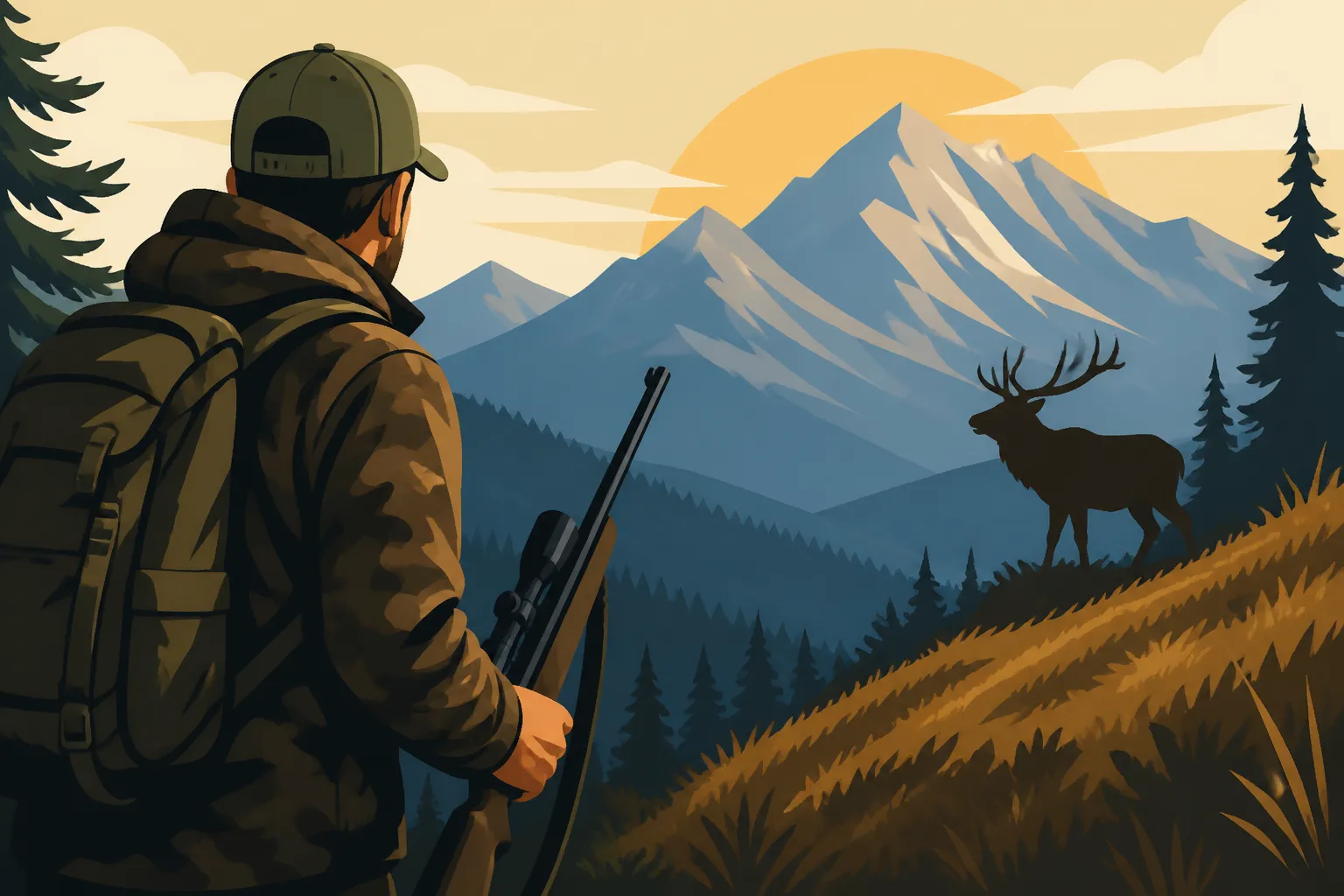
Hunting the Bitterroot National Forest
For many hunters, the thought of tackling a vast, challenging landscape like the Bitterroot National Forest is both exhilarating and daunting. Finding concrete, detailed information on how to successfully navigate these rugged mountains for big game can feel like an impossible task, often leaving you piecing together fragmented advice. This comprehensive guide is here to cut through the confusion, offering a realistic, in-depth look at what it truly takes to hunt the iconic Bitterroot National Forest, helping you prepare for an unforgettable Montana adventure.
Understanding the Bitterroot National Forest Hunting Landscape
The Bitterroot National Forest, spanning over 1.6 million acres across western Montana and parts of Idaho, is a beast of a hunting ground. It's not your gentle rolling hills; we're talking about seriously rugged, steep, and heavily timbered terrain that will test your physical and mental fortitude. It’s defined by the majestic Bitterroot Mountains to the west, bordering the famous Selway-Bitterroot Wilderness Area, and the Sapphire Mountains to the east. This landscape presents unique challenges and equally unique rewards for those willing to put in the effort.
Terrain and Habitat Diversity
When you picture the Bitterroot, envision a vertical world. Elevations range dramatically, from the low valleys and river bottoms of the Bitterroot River itself, up to towering peaks over 10,000 feet. This creates an incredible diversity of habitats. You'll find dense stands of lodgepole pine, Douglas fir, and spruce in the mid-elevations, often so thick you can barely see twenty yards. Higher up, you'll encounter open alpine basins, subalpine fir, and vast expanses of prime elk and mule deer summer range. Lower down, especially near the river corridors and private lands, you might stumble into pockets of Ponderosa pine and deciduous brush that whitetail deer favor.
The sheer steepness is a constant companion here. Access can be limited to designated trails, old logging roads, or simply bushwhacking straight up. Thermal currents are a daily reality, dictating how animals move and how you should approach your hunt. Understanding how these diverse habitats are intertwined with the steep topography is crucial for locating animals, especially the elusive mature bulls and bucks that often seek sanctuary in the steepest, thickest cover. Many areas are designated wilderness, meaning no motorized travel, making for true backcountry hunting. If you're looking for a serious challenge and an authentic wilderness experience, the Bitterroot delivers.
General Characteristics of Bitterroot Hunting
Hunting in the Bitterroot isn't for the faint of heart. It's often described as a true mountain grind. Expect long days, often starting before dawn and ending well after dark. The weather can be notoriously fickle; you might start a day in sunshine and find yourself slogging through a foot of fresh snow by afternoon, even in September. Grizzly bears are present, particularly in the northern reaches and wilderness areas, requiring diligent bear safety protocols.
The pay-off, however, can be immense. While not known for producing the sheer numbers of animals found in some eastern Montana districts, the Bitterroot holds a good population of healthy elk and mule deer, with the potential for genuinely big animals for hunters who venture deep into less-pressured areas. The solitude you can find, especially away from the main trailheads, is unmatched, offering a profound connection to the wild. This isn't a place for quick success, but for those who embrace the challenge, it provides an unparalleled Western hunting experience.
Primary Game Species and Their Haunts
The Bitterroot National Forest is a diverse ecosystem supporting several big game species, but elk and mule deer are often the main draw for hunters. Understanding their preferences and habits within this rugged environment is key to finding success.
Elk Hunting in the Bitterroot
Elk are the kings of the Bitterroot mountains, and hunting them here is a quintessential Western experience. You’ll primarily be hunting Rocky Mountain Elk. Their populations are generally healthy, though spread across vast, challenging terrain. During the early archery season, often coinciding with the bugle, you'll find bulls in higher basins, typically above 7,000 feet, where feed is lush, and they're focused on establishing dominance and breeding. As the rut progresses and rifle season approaches, some elk will drop lower, moving into the dense timber pockets and north-facing slopes to escape pressure and find thermal cover.
When elk hunting in the Bitterroot, concentrate on finding good feed adjacent to heavy cover. Look for wallows and fresh sign—tracks, scat, and rubs—in dark timber stringers, especially those leading to or from secluded alpine meadows. Water sources, even small seeps, can be crucial. North-facing slopes often hold elk later into the season because they retain snow longer and offer cooler bedding areas. The transition zones between different timber types or where timber meets open parks are also prime areas. These elk are incredibly wary due to hunter pressure and the presence of predators, so stealth and patience are paramount. Consider strategies outlined in a more detailed Montana Elk Hunting Methods Explained guide to refine your approach.
Mule Deer Hunting in the Bitterroot
Mule deer in the Bitterroot, much like elk, favor the rugged, broken country. You'll typically find them in higher elevations during the archery season and early general rifle season, often sharing habitat with elk in the more open, high-country timber and brushy clearcuts. They are masters of using broken topography to disappear, so learning How to Glass for Montana Mule Deer effectively is a critical skill.
As the season progresses and snow pushes them down, mule deer will migrate to lower, more protected winter ranges. Look for them on south-facing slopes, which get more sun exposure and melt snow quicker, revealing accessible forage. They often use similar escape cover as elk but are also prone to utilizing brushy draws and finger ridges within more open country. Targeting drainages with good pockets of aspen or mountain mahogany can be productive. While the Bitterroot isn't as renowned for giant mule deer as some of Montana's eastern units, there are certainly trophy bucks to be found for those willing to brave the steep, dense timber and put in the legwork. For a broader understanding of strategies, refer to our Montana Mule Deer Hunting Guide.
Other Notable Species
- Whitetail Deer: Primarily found in the lower elevations, along the Bitterroot River corridor, and in agricultural fringes. These deer are often associated with private land but can be found on public lands near river bottoms and thick riparian areas. They prefer denser cover than mule deer and are typically hunted from stands or by still-hunting river bottoms.
- Black Bear: The Bitterroot has a healthy black bear population. They can be found throughout the forest, often in areas with abundant berry bushes, huckleberries in late summer, or around fresh green-ups in the spring. Hunters often encounter them opportunistically while pursuing deer or elk. Both spring and fall seasons are popular.
- Mountain Lion: Present throughout the Bitterroot, often following the movements of their primary prey species, deer and elk. Hunting mountain lions typically requires specialized skills, often involving hounds in winter conditions.
- Moose and Bighorn Sheep: These are extremely limited, permit-only opportunities in specific districts within or adjacent to the Bitterroot National Forest. Drawing one of these tags requires significant bonus points and a lot of luck. If you're lucky enough to draw, extensive scouting and preparation are crucial.
Effective Hunting Strategies for Bitterroot National Forest
Successfully hunting the Bitterroot National Forest demands a blend of physical endurance, strategic thinking, and the right approach to its unique challenges. This isn't a place where you can just walk out of your truck and expect to fill your tag.
Mastering Backcountry Techniques
Given the vastness and ruggedness of the Bitterroot, backcountry hunting techniques are not just an option, they're often a necessity, particularly if you're chasing less-pressured animals. This means packing in all your gear, setting up a spike camp or even doing a series of day hunts from a base camp. You'll need to be proficient in navigation, able to read a map and compass, and ideally, comfortable with modern GPS units or apps like onX Hunt. This app, with its detailed topo maps and land ownership overlays, is invaluable for understanding public land boundaries, identifying potential bedding areas, and navigating the often-roadless terrain of the Bitterroot.
For those planning to spend multiple days away from a vehicle, learning How to Pack Into the Montana Backcountry effectively is critical. Lightweight gear, reliable shelters, and efficient food systems are paramount. Consider a backpacking style that allows you to move silently through timber, employing still-hunting tactics that are often crucial in the dense cover elk and deer inhabit. Being prepared to quarter an animal and pack it out over steep, difficult terrain is a reality here; it’s not uncommon to pack out an elk for miles.
Key Tactical Approaches
- Spot and Stalk: While heavily timbered, there are still ample opportunities for spot-and-stalk hunting, especially in the higher, more open basins or along ridgelines that offer vantage points into drainages. Patience with optics, such as high-quality binoculars and spotting scopes, is essential. Spend time glassing distant slopes at first light and last light, looking for subtle movements or the tell-tale horizontal line of an elk or deer amidst the vertical trees. This is particularly effective for Montana Archery Elk Hunting Guide or early season mule deer.
- Still-Hunting Timber: This is perhaps the most productive method for rifle hunters, and often for bowhunters, in the Bitterroot's dense forests. Move incredibly slowly, stopping often (every 10-20 yards) for extended periods to glass and listen. Use the wind to your advantage, always trying to hunt into it or across it. Focus on benches, saddles, and creek bottoms where animals travel or bed. The goal is to surprise animals in their beds or catch them feeding slowly. Learn How to Still-Hunt Montana Timber to maximize your chances.
- Calling for Elk: During the archery season and the early part of the general rifle season, calling can be highly effective, especially for bull elk during the rut. Locator bugles can help pinpoint a bull, and cow calls or soft glunking sounds can draw a curious animal closer. Be prepared for aggressive responses but also for silent approaches. Setting up with a partner—one caller and one shooter—can significantly increase success rates. For specific techniques, our How to Call Elk in Montana guide offers in-depth advice.
Gear and Physical Preparation
The Bitterroot is a gear-testing environment. Your boots are arguably your most important piece of equipment; invest in high-quality, waterproof, and supportive hunting boots. Our guide on Best Boots for Montana Elk Hunting can offer some recommendations. A reliable backpack, capable of carrying heavy loads, is also essential, especially for packing out meat.
Physical preparation cannot be overstated. Days in the Bitterroot involve significant elevation gain and loss, often covering many miles with a heavy pack. Start a rigorous fitness regimen well in advance, focusing on cardiovascular endurance, leg strength, and core stability. Hiking with a weighted pack is excellent training. The fitter you are, the safer and more enjoyable your hunt will be, and the better equipped you'll be to capitalize on opportunities.
Navigating Regulations, Access, and Planning Your Bitterroot Hunt
Planning a hunt in the Bitterroot National Forest involves more than just knowing where the animals are; it requires a solid understanding of regulations, public access points, and strategic e-scouting. The complexity of Montana's hunting system, combined with the vastness of the Bitterroot, means careful preparation is essential.
Understanding Hunting Districts and Regulations
The Bitterroot National Forest spans several Montana hunting districts (HDs), primarily in Region 2. These districts can have varying regulations regarding general hunting, limited entry permits, and season dates. For instance, some districts might be general for elk and deer, while others might have antler point restrictions or require special permits (like a 380-00 permit for certain units within the Bitterroot). Always check the latest Montana Fish, Wildlife & Parks (FWP) regulations for the specific hunting district you plan to target. Our Montana Hunting Seasons Explained article offers a good overview of the state's season structure.
It's also crucial to understand the difference between general tags and permit tags. A general elk tag allows you to hunt elk in any general elk district during the specified season. Permit tags, however, are drawn through a lottery system and are required for specific, often highly coveted, limited-entry units or for antlerless opportunities in some areas. Researching Montana Elk Draw Odds by District can help you gauge your chances if you're eyeing a permit-only area. Utilizing tools like GoHunt can provide detailed unit profiles, draw odds, and regulation breakdowns, which are incredibly useful for navigating Montana's complex system.
Public Access and E-Scouting
Accessing the Bitterroot National Forest is primarily through a network of U.S. Forest Service roads, although many areas quickly transition to designated wilderness or roadless areas where motorized travel is prohibited. Popular access points include trailheads off Highway 93, the main artery running through the Bitterroot Valley, and roads off the Skalkaho Highway or along the West Fork of the Bitterroot River. Remember that some "roads" on older maps might now be closed or impassable due to washouts or overgrowth.
onX Hunt is an indispensable tool for e-scouting the Bitterroot. Before you even set foot on the ground, you can use it to:
- Identify public land boundaries (National Forest, State Land, BLM).
- Locate trailheads and assess the difficulty of trails.
- Identify roadless areas and wilderness boundaries, which often hold less-pressured game.
- Pinpoint north-facing slopes, dense timber pockets, and potential water sources using topographic and satellite layers.
- Mark potential glassing knobs, bedding areas, and travel corridors.
This level of detail allows you to develop a solid game plan long before your boots hit the dirt, saving valuable time and energy once you're in the field. Our guide on How to E-Scout Montana Districts delves deeper into these techniques.
Planning Your Trip Logistics
The Bitterroot Valley, with towns like Hamilton, Darby, and Missoula (just north), offers a range of services from lodging and groceries to gas stations and sporting goods stores. These towns can serve as excellent base camps for resupplying if you're undertaking an extended backcountry hunt. However, cell service can be spotty or non-existent once you venture deep into the forest, so always have a reliable satellite communication device (like a Garmin inReach or ZOLEO) for emergencies.
Consider the time of year you'll be hunting. Early archery season can bring warm weather and active bears. Rifle season, especially later in the fall, can mean snow and freezing temperatures, requiring appropriate cold-weather gear and avalanche awareness in certain areas. Have a backup plan for changing weather conditions, and be prepared to adapt your hunting strategy if a major storm rolls in. A detailed Montana Backcountry Hunting Gear List can help ensure you don't forget essential items for surviving and thriving in this challenging environment.
| Game Species | Primary Bitterroot Habitat | General Season Timing | Key Considerations |
|---|---|---|---|
| Elk | High alpine basins, dense timber, north-facing slopes | Archery (Sept), Rifle (Oct-Nov) | Rugged terrain, calling effective during rut |
| Mule Deer | Open timbered ridges, clearcuts, south-facing slopes | Archery (Sept), Rifle (Oct-Nov) | High country in early season, glassing is key |
| Whitetail | River bottoms, private land fringes, dense riparian | Archery (Sept), Rifle (Oct-Nov) | Lower elevations, often on private land/BMAs |
| Black Bear | Berry patches, dense timber, spring green-ups | Spring (Apr-May), Fall (Sept-Nov) | Opportunistic encounters, bear safety crucial |
| Mountain Lion | Follows deer/elk herds, rugged timbered terrain | Varies by district (typically Dec-Apr) | Requires specialized methods (hounds), permit-only |
Always remember, the Bitterroot National Forest is wild country. Go in prepared, be respectful of the land and its wildlife, and you'll experience a hunt that will stay with you for a lifetime.
Disclaimer
Hunting in the Bitterroot National Forest, like all outdoor activities, carries inherent risks, including but not limited to adverse weather, rugged terrain, wildlife encounters, and personal injury. This guide provides general information and recommendations; however, conditions and regulations can change. It is your responsibility to stay informed of current Montana Fish, Wildlife & Parks regulations, obtain all necessary licenses and permits, practice safe hunting techniques, and take appropriate precautions for your personal safety. Always scout your chosen area, carry appropriate safety and communication equipment, and inform others of your plans. The information presented here is for educational purposes and should not replace professional guidance or your own thorough research and preparation.