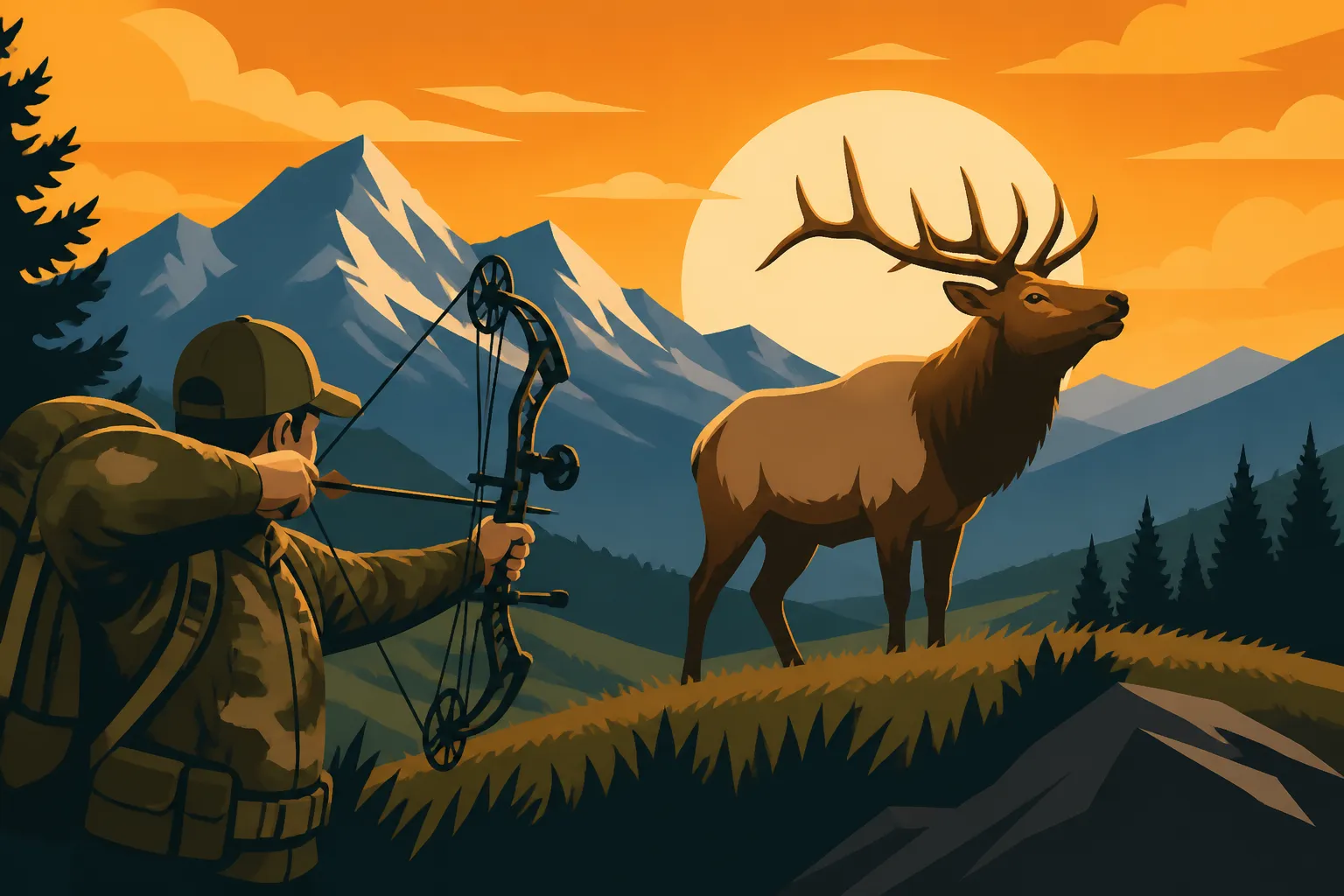
Best Montana Outfitters for Archery Elk
Trying to find the absolute best Montana outfitter for an archery elk hunt can feel like searching for a needle in a haystack, especially when you're investing significant time, effort, and resources into a dream hunt. The sheer number of options, combined with the specific demands of bowhunting, makes selecting the right partner crucial for success. This guide will walk you through what truly makes an outfitter stand out for archery elk in Big Sky Country, helping you make an informed decision for an unforgettable experience.
The Allure and Challenge of Archery Elk Hunting in Montana
There's something uniquely captivating about pursuing elk with a bow in Montana. It’s a hunt that gets into your blood, demanding a level of dedication and intimacy with the landscape that rifle hunting often doesn't. However, this appeal comes with its own set of formidable challenges, making the choice of an outfitter all the more critical.
Why Archery Is a Different Beast
Archery elk hunting isn't just a season; it's a different discipline entirely. You're not just aiming for a vital shot; you're trying to get within spitting distance of an animal that boasts incredible senses, often in dense timber or rugged mountain terrain. This isn't a long-range game where you can pick off an elk from hundreds of yards away. You need to close the distance, often within 20 to 50 yards, which requires a nuanced understanding of elk behavior, terrain, and wind. It means mastering cow calls, bugles, and even silent stalking.
The physical demands are also ramped up. You’ll be hiking further, often at higher elevations, and moving more quietly. A slight misstep can blow your entire setup. This intimate style of hunting pushes your limits, and having an outfitter who understands these unique pressures and provides guides specifically skilled in Montana Archery Elk Hunting Guide tactics is paramount. They need to know how to read the wind just right in a canyon or how to approach a bugling bull without being detected.
The Montana Landscape: A Guide's Domain
Montana is massive, a mosaic of towering mountains, vast national forests, and sprawling public lands. For a DIY hunter, simply knowing where to start can be overwhelming. But for an outfitter, this diverse terrain is their office. The "best" outfitter isn't just someone with a lot of land; it's someone who knows specific drainages, timber pockets, and feeding benches where elk will be during the early archery season. They've spent years, sometimes decades, learning the intricate movements of elk herds across specific hunting districts.
Whether you're looking to hunt the high country of the Beaverhead-Deerlodge National Forest or the timbered slopes of the Custer Gallatin, an outfitter's intimate knowledge of the local topography, water sources, and escape routes is invaluable. They'll know where to find elk wallows, how to set up on a bugling bull in dense timber, and how to effectively How to Glass Montana's Big Country to locate animals. Their expertise turns a daunting wilderness into a solvable puzzle. Montana Backcountry Hunting Guide often relies heavily on this type of local knowledge.
Hallmarks of a Premier Archery Elk Outfitter
When you're sifting through numerous options for a guided archery elk hunt, it's easy to get lost in flashy websites or promises of giant bulls. To truly identify the best, you need to look beyond the surface and understand the core components that define excellence in this specialized field.
Experience That Matters: Specializing in Archery
Any outfitter can offer an "elk hunt," but a truly top-tier outfitter for archery elk has a specific, demonstrable specialization. This means their guides aren't just general big game guides; they are archery elk hunters themselves. They understand the nuances of bowhunting: the need for close-range encounters, the importance of silence, the skill of effective calling, and the critical role of wind direction. They’ve encountered countless scenarios where a rifle shot would be easy, but an ethical bow shot requires patience, cunning, and an intimate knowledge of elk behavior.
Look for outfitters who primarily book archery hunts or who have dedicated archery-only camps and guides. Ask about their success rates specifically for archery hunters, not just their overall elk harvest rates. An outfitter whose guides are proficient in How to Call Elk in Montana and can adapt their calling tactics to different situations and elk responses will significantly increase your odds. An outfitter with a long history of successful archery elk hunts indicates a deep understanding of the tactics and commitment required.
Guiding Philosophy and Hunter Experience
The guiding style can make or break your hunt. Some outfitters prioritize a 1:1 hunter-to-guide ratio, which is often ideal for archery, allowing for more personalized attention, slower stalks, and a better chance to react to rapidly changing situations. A 2:1 ratio can work, especially if you're hunting with a friend, but it introduces more variables and might reduce your individual opportunities. Discuss the outfitter's typical hunter-to-guide ratio and what their daily hunting strategy entails.
Do they focus on spot-and-stalk tactics? Are they aggressive callers during the rut, or do they prefer a more subtle approach? Some outfitters might spend more time glassing, while others might favor still-hunting through timber. Understand their philosophy and ensure it aligns with your preferred hunting style and physical capabilities. If you're physically preparing for a demanding hunt, ensure your guide will match your intensity. How to Physically Prepare for a Montana Elk Hunt is crucial, and a good outfitter will be upfront about the physical demands. The "best" outfitter will tailor the hunt to your fitness and skill level, within reason.
Prime Hunting Grounds: Access is Everything
Access to prime elk habitat is perhaps the most critical factor for an outfitter's success. This isn't just about having some land; it's about having access to areas known for producing quality elk, especially during the archery season when elk are often in different patterns than during rifle season. Many of the best outfitters secure exclusive access to large tracts of private land, which can offer lower hunting pressure and higher elk densities. However, some excel at guiding on vast public lands, leveraging their deep knowledge of specific drainages or wilderness areas.
Inquire about the type of land they primarily hunt—private ranches, national forest, or a mix. If it's private land, how large are the parcels, and how many hunters do they host per season? If it's public land, how do they manage pressure, and what are their strategies for finding elk in those areas? Districts like those in the Missouri Breaks or along the Rocky Mountain Front can be excellent, but specific local knowledge is key. Some outfitters also specialize in hunts where they acquire outfitter-sponsored tags, which can be a significant advantage for non-residents in drawing a coveted tag.
Setting Up for Success: Camp and Logistics
A successful hunt extends beyond the actual stalking and shooting. The logistics and comfort of your camp play a huge role in your overall experience. For backcountry archery elk, many top outfitters offer spike camps or wall tent camps that put you deep in elk country, minimizing travel time to and from hunting grounds. This immersive experience is often preferred by serious bowhunters who want to maximize their time in the field.
- Camp Types: Discuss whether they offer lodge-based hunts, comfortable wall tents with wood stoves, or true spike camps where you pack in light. Each has its pros and cons in terms of comfort, remoteness, and price. For a true backcountry experience, a reputable outfitter will outline exactly How to Set Up a Montana Elk Camp and what to expect regarding amenities.
- Meals: What kind of food is provided? Is it hearty, home-cooked fare that fuels long days, or more basic camp meals? Good food can significantly boost morale and energy on a physically demanding hunt.
- Support Staff: Are there cooks, wranglers, or camp jacks to handle chores, allowing you to focus purely on hunting and recovery? This support is invaluable, especially when you're tired after a long day or need to How to Pack Out an Elk in Montana.
- Travel and Access: How do you get to camp? Is it a vehicle drive, horseback pack-in, or even a bush plane? Understanding the travel logistics will give you a clearer picture of the remoteness and adventure level of the hunt. How to Pack Into the Montana Backcountry can be a major undertaking, and a good outfitter handles this seamlessly.
Your Roadmap to Vetting and Selecting an Outfitter
Choosing an outfitter isn't a decision to rush. It requires diligent research and a systematic approach to ensure you're making the best choice for your archery elk hunt. Think of it as interviewing a potential partner for one of the most important investments you'll make in your hunting life.
Leveraging Digital Resources for Your Search
In today's connected world, a wealth of information is available online to help you narrow down your choices. Websites like BookYourHunt offer extensive directories of outfitters, often with reviews from past clients, detailed descriptions of their hunts, and sometimes even video testimonials. These platforms can be a great starting point to get a broad overview of available options and to see what general prices and packages entail.
Another invaluable resource is GoHunt, which provides detailed information on hunting units, draw odds, and often includes outfitter directories or features. While GoHunt might be more focused on DIY hunting research and draw strategies, their insights into specific areas can help you understand why an outfitter might be successful in a certain district. Online hunting forums, social media groups dedicated to Montana hunting, and even YouTube channels can offer anecdotal evidence and recommendations. Just remember to take these with a grain of salt and cross-reference information. Look for patterns in feedback, both positive and negative, to build a comprehensive picture.
The Interview: Crucial Questions to Ask
Once you’ve identified a few potential outfitters, it’s time to pick up the phone and have a real conversation. This is your chance to get specific answers and assess their communication style and professionalism. Don't be shy; ask every question that comes to mind. Here’s a table of essential questions to guide your discussion:
| Category | Key Questions to Ask | Why It Matters |
|---|---|---|
| Archery Specifics | What percentage of your elk hunters are bowhunters? What is your archery-specific success rate over the last 3-5 years? What tactics do your guides primarily use for archery elk (calling, spot-and-stalk, still-hunting)? How many guides specialize in archery? | Ensures the outfitter truly caters to bowhunting, rather than just offering it as an afterthought. Success rates specific to archery give a realistic expectation. |
| Logistics & Camp | What is the typical hunter-to-guide ratio for archery? What type of camp is it (lodge, wall tent, spike)? What is included in the price (food, lodging, game care, transportation)? What's the daily routine like? How far do we typically hunt from camp? | Helps understand the level of personalization, comfort, and remoteness. Clarifies expectations for the entire experience and helps budget accurately. |
| Hunting Area | What hunting district(s) do you operate in? Is the hunt primarily on public or private land? If private, how much acreage, and is it exclusive? How do you manage hunting pressure? How far from camp are the main hunting areas? | Crucial for understanding the quality and type of terrain you'll be hunting. Addresses potential crowding issues and the outfitter's access to prime habitat. |
| Season & Timing | Which dates do you recommend for archery elk, and why? Do you hunt the early season, the rut, or both? How does this impact elk behavior and hunting strategy? | Helps align your hunt timing with peak elk activity and your desired hunting experience (e.g., bugling during the rut). |
| Physical Demands | What is the typical physical demand of this hunt? What kind of terrain will we be covering? How many miles per day can a hunter expect to walk? | Ensures your physical conditioning matches the hunt's requirements. A good outfitter won't sugarcoat this. |
| Licenses & Tags | What are the current license and tag requirements for a nonresident archery elk hunter? Do you offer outfitter-sponsored tags? What are the draw odds for your area, and how many preference points are typically needed? | Critical for understanding the application process and the likelihood of securing a tag. Outfitters often have a deep understanding of Montana Nonresident License Draw Explained. |
| Contingencies | What is your policy for wounded animals? What happens if I don't fill my tag? What if there's an emergency? | Addresses ethical considerations and unforeseen circumstances. A clear policy on wounded animals shows responsibility. |
| References | Can you provide 3-5 references from archery elk hunters from the past 1-2 seasons? | The most important question. Speaking to past clients provides invaluable, unbiased insights. |
Beyond the Brochure: References and Verification
Don't just rely on what an outfitter tells you or what you read on their website. The most critical step in vetting any outfitter is to speak with their past clients. Ask the outfitter for 3-5 references specifically from archery elk hunters who have hunted with them in the last two seasons. When you call these references, ask detailed questions beyond "Did you kill an elk?" Inquire about:
- The guide's knowledge and enthusiasm.
- The physical demands and if they matched expectations.
- The quality of the food and camp.
- How issues were handled if they arose.
- Whether they would book with the outfitter again.
- The overall atmosphere and if the outfitter and guides were good company.
In addition to references, always verify that the outfitter is properly licensed and insured in Montana. The Montana Board of Outfitters and Guides is the regulatory body, and they maintain records of licensed outfitters. This ensures they operate legally and adhere to state regulations, offering a layer of protection for you as a hunter. Understanding Montana Outfitter Licensing Explained is a basic but crucial step.
Finding the best Montana outfitter for your archery elk hunt is a journey that begins with understanding your own expectations and ends with thorough research and clear communication. By focusing on outfitters with a proven track record in archery, a guiding philosophy that matches your goals, and access to prime elk habitat, you can significantly increase your chances of a successful and memorable hunt. Take your time, ask the tough questions, and don't hesitate to check references. Your dream elk hunt deserves nothing less.
Disclaimer
This article is for general informational purposes only and does not constitute professional advice. Laws, prices and regulations vary by location and change over time. Consult a qualified professional for guidance on your specific situation.