How to Judge a Montana Bull Elk in the Field
One of the biggest anxieties for any hunter chasing elk in Big Sky Country, especially when a magnificent bull steps out of the timber, is the split-second decision of whether it's a legal animal. The pressure is immense: you've put in the work, hiked the miles, and now, with your heart hammering, you need to quickly and accurately judge antler configuration under varying light and terrain conditions. This comprehensive guide will walk you through the nuances of field judging a Montana bull elk, helping you make confident, legal, and satisfying decisions when it matters most.
Understanding Montana's Antler Restrictions and Regulations
Before you even think about lifting your rifle or drawing your bow, you absolutely must know the specific regulations for the hunting district you're in. Montana's FWP (Fish, Wildlife & Parks) sets rules that can vary significantly from one unit to another, and misinterpreting them can turn a dream hunt into a costly and disappointing experience. It’s not just about finding an elk; it's about finding the right elk according to the law.
General vs. Permit Units and Antler Point Rules
Montana operates under a system of both "general" hunting districts and "permit-only" districts for elk. General units are typically open to anyone who draws a general elk license, while permit units require an additional, often harder-to-draw, special permit. The critical difference for field judging often lies in the antler point regulations associated with these units.
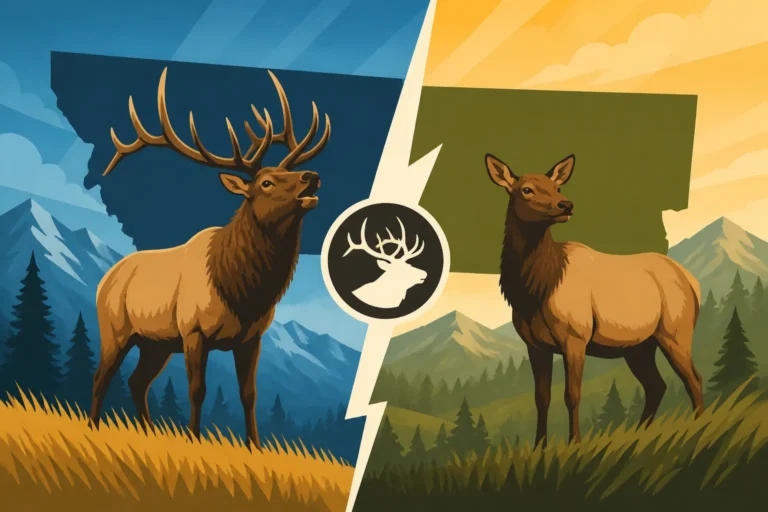
In many general elk units, regulations are designed to protect younger bulls and promote herd quality, leading to rules like "brow tine" or "spike bull only." A "brow tine bull" generally means the bull must have at least one antler with a brow tine (the first point off the main beam) that is at least four inches long. This rule ensures you're not shooting a young bull with minimal antler growth. A "spike bull" regulation means the bull can only have antlers that are essentially unbranched, with no branch antler (tine) longer than four inches off the main beam. These are typically yearling bulls. Contrast this with permit units, where the regulation might be "any legal bull," meaning any bull with an antler visibly protruding beyond its ear, or even more specific point requirements like a "four-point or better" on at least one side. It’s imperative to consult the current year's Montana hunting regulations booklet for your specific district, as these rules can change year to year. Understanding Montana General vs Permit Tags Explained is a foundational step in preparing for any elk hunt here.
Imagine you've been grinding it out for days in a rugged general unit near the Gravelly Range. Finally, a decent-looking bull steps out at last light. If your unit requires a brow tine of at least four inches, you need to be absolutely certain you can see that brow tine and accurately estimate its length. Firing on a bull that doesn't meet this specific criterion, even if it has several other points, could lead to a hefty fine and loss of your animal. The pressure to make that call quickly, especially in low light or dense cover, is real, and it’s why preparation is so important.
The Importance of Knowing Before You Go
There’s no substitute for thorough pre-hunt research. Simply put, if you don't know the rules for your specific hunting district, you are setting yourself up for potential legal trouble and ethical dilemmas. This isn't just about avoiding a ticket; it's about respecting the resource and hunting responsibly. The consequences of misjudging an elk range from a warning to a significant fine, seizure of your animal, and even loss of hunting privileges.
The moment of truth in the field can be chaotic. Adrenaline spikes, daylight fades, and the elk might only offer a fleeting glimpse. In that split second, you need to have the regulations locked in your memory, allowing you to focus purely on the animal's characteristics. Before you head out, spend dedicated time studying the FWP regulations specific to your drawn tags or general areas. Print out the relevant pages, highlight them, and discuss them with your hunting partners. Tools like GoHunt's Insider platform offer excellent resources and up-to-date regulation summaries that can be incredibly helpful for deciphering complex rules and understanding Montana Elk Season Dates and Tags. They can also help you understand Montana Antler Restrictions Explained in detail. Even seasoned Montana hunters spend hours on this because a slight change in wording can have major implications. Knowing your unit's specifics, whether it's a brow tine rule or an antlerless only designation, is non-negotiable.
Key Indicators for Field Judging a Bull Elk
When a bull elk presents itself, you've got a mental checklist running a mile a minute. Beyond simply counting points, there are several key visual cues that can help you rapidly assess age, potential score, and, most importantly, legality. It’s a combination of objective observation and learned estimation.
Antler Configuration and Points
The most immediate and often critical aspect of field judging is counting antler points and assessing their configuration. An elk's antlers grow from pedicles on its skull, forming a main beam from which tines (points) branch off. Understanding the common terminology is vital.
The "main beam" is the primary curve of the antler. Points are counted from the base upwards. The first point, closest to the head, is the "brow tine." The second is often called the "royal," the third the "bez," and so on. A typical mature bull often has six points on each side, commonly referred to as a "six-by-six" or "12-point." However, don't get hung up on symmetry; many bulls are asymmetrical, like a "six-by-five." When counting, a point must typically be at least one inch long to count, or sometimes defined as longer than its width at the base. You also need to differentiate between a "true point" and a "cheater" or "burr." A true point comes off the main beam or another point, whereas a "cheater" is usually a small, insignificant projection, often not counted as a full point depending on specific regulations. For brow tine rules, the length of that first point is paramount. You need to quickly gauge if it visually exceeds four inches. Often, you can use the bull's ear as a rough reference – an elk ear is typically 7-8 inches long. If the brow tine is at least half the length of the visible portion of the ear, it's likely legal. This quick visual aid can be a lifesaver when an elk is moving or partially obscured.
Body Size and Proportions as Age Indicators
Beyond the rack, a bull's body provides crucial clues about its age, which often correlates with antler maturity. Younger bulls, like spikes and raghorns (2-3 year olds), tend to have a leaner, more athletic build. Their necks are relatively thin, their shoulders and hindquarters aren't as developed, and their belly is usually tight and tucked up.
As a bull matures into its prime (5-8 years old), its body undergoes a significant transformation. Their necks become incredibly thick and muscular, especially during the rut, often blending seamlessly into their shoulders. This "swollen neck" look is a dead giveaway for a mature, breeding bull. Their shoulders become broad and deep, their chest expands, and their hindquarters develop into powerful mass. Many older bulls will also start to show a slight "pot belly" or sagging in their midsection. Picture a yearling spike, agile and sleek, next to a prime herd bull, whose massive body carries the weight of years of dominance and breeding. The difference is striking, even from a distance. While antlers might vary greatly, a bull's overall body conformation is a reliable indicator of its age and, by extension, its potential antler development. This is especially true for How to Hunt Elk in Montana's Wilderness, where older, more mature bulls often reside.
Mass, Length, and Spread for Scoring Potential
For hunters interested in the trophy aspect, judging beyond legality to estimate a bull's score potential requires a keen eye for mass, main beam length, and antler spread. These factors contribute significantly to a bull's overall Boone and Crockett or Pope and Young score.
- Mass: This refers to the circumference of the antler. Often, mass is measured at several points along the main beam. Visually, a heavy-antlered bull will appear "thick" throughout its rack, not just at the base. The main beam will look stout and robust, rather than spindly. Look for antlers that don't taper too quickly and carry good circumference all the way to the tip of the beam. This is often an indicator of good nutrition and genetics.
- Main Beam Length: A long main beam sweeps gracefully back, sometimes extending past the bull's tail. Estimating this length can be tricky, but look for a significant curve and extension. Shorter beams tend to look stubbier and won't contribute as much to the overall score, even with numerous points.
- Spread: This is the widest point between the two antlers. A good way to estimate spread in the field is to compare it to the width of the bull's ears. An elk's ears are typically about 20-24 inches apart when alert. If the antlers extend significantly beyond the ears, it's a wide bull. If they barely clear the ears, it's a narrower bull. A bull with great mass, long beams, and a wide spread is often a high-scoring animal. GoHunt’s mapping tools sometimes allow you to overlay historical data on specific districts, helping you anticipate the kind of antler growth typically found there, further refining your ability to judge a potential trophy. For those pursuing a high-scoring animal, understanding How to Field Judge a Montana Mule Deer Buck can provide a good comparative framework as deer share some similar antler growth characteristics.
Here's a quick reference table for general bull characteristics:
| Characteristic | Spike Bull (1.5 years old) | Raghorn Bull (2.5-4.5 years old) | Mature Bull (5.5+ years old) |
|---|---|---|---|
| Antlers | Unbranched spikes, typically <20" long. | 2-5 points per side, thinner beams, often short. | 5-7+ points per side, heavy mass, long beams, wide spread. |
| Brow Tines | Absent or very short (<1") | Short to medium (1-4") | Prominent, often >4" |
| Body Size/Shape | Lean, athletic, "leggy" look, small neck. | Lean to medium build, growing neck and shoulder mass. | Blocky, deep chest, thick neck (especially rut), often "pot belly." |
| Neck | Thin, distinct from shoulders. | Developing, but still noticeable transition. | Very thick, blends smoothly into shoulders. |
| Behavior | Often with cows, less dominant, can be curious. | More active, testing dominance, can be vocal. | Dominant, holds cows, very vocal, cautious. |
| Trophy Potential | Low | Moderate | High |
Practical Tips for On-the-Fly Judgement and Avoiding Mistakes
The moments leading up to a shot are often a whirlwind of emotions and critical decisions. Even with all the theoretical knowledge, applying it under pressure in the field is a unique skill that takes practice and discipline.
Using Optics Effectively
Your optics are your best friend when it comes to field judging. Investing in good quality binoculars (10×42 or 12×50 are popular choices) and, if possible, a spotting scope, is non-negotiable for serious elk hunting. They allow you to magnify the image, bringing those critical antler details into clear view from a distance.
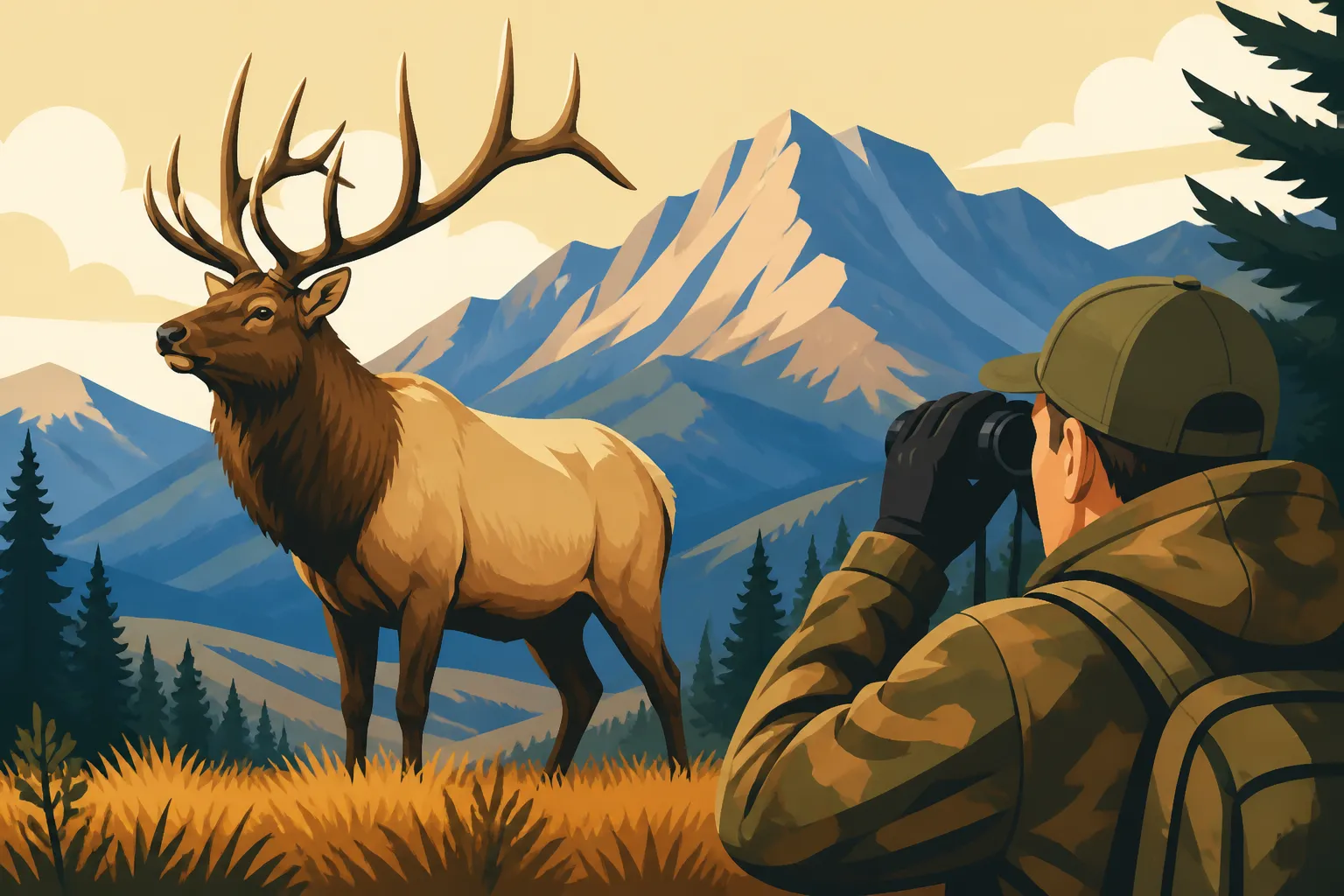
When an elk appears, don't just glance. Get your binoculars up immediately and stable. If you're hunting in steep terrain, try to find a rest – a trekking pole, a tree, your backpack, or even going prone – to steady your view. This stability is key to discerning individual points, judging brow tine length, and assessing mass. Pay close attention to the background behind the antlers; sometimes, a dark timber background can obscure points, making a bull appear to have fewer points than it actually does. Wait for the elk to turn, offering different angles. Look for the brow tines first, then count up the main beam. If it's a permit unit, scan for specific point counts. If you are hunting in vast, open country, a spotting scope is invaluable for evaluating distant animals without spooking them. Remember, Best Optics for Montana Big Game can make all the difference in that crucial moment.
Estimating Distance and Overcoming Optical Illusions
The rugged landscape of Montana is breathtaking, but it can also play tricks on your eyes, especially when it comes to judging distance and antler size. Elevation changes, open meadows, and dense timber can all create optical illusions that might lead you to misjudge a bull's size or antler characteristics.
Always, always use a rangefinder. Relying on visual estimation for distance in mountainous or vast prairie environments is a recipe for error. What looks like 200 yards across a canyon might easily be 350. An animal that appears large close up might be a legal, but smaller, bull, while a distant animal might appear smaller than it truly is. Furthermore, angles can distort your perception of antlers. An elk looking straight at you will appear to have a narrower spread than it actually does. If its head is tilted, certain points might be obscured or made to look shorter. Try to wait for the animal to turn broadside or present a clear profile before making your final judgment. Being patient for that clear view can save you from a missed shot or, worse, a regulation violation. Many experienced hunters find that How to Glass Montana's Big Country helps them develop a more discerning eye for judging animals at extreme distances.
Decision Making Under Pressure
This is arguably the hardest part of field judging: making a clear, confident decision when the moment of truth arrives. The pressure is immense, the window of opportunity is often fleeting, and adrenaline can cloud judgment. Before your hunt, establish your personal "minimum" for what you are willing to shoot, not just legally, but ethically and for personal satisfaction. Are you after any legal elk for meat, or are you holding out for a mature bull?
When a bull steps out, take a breath. Stabilize yourself. Get your optics on the animal. Quickly confirm legality first – brow tine length, point count, whatever your unit requires. If it passes the legality test, then consider its age and trophy potential if that's a factor for you. If there’s any doubt about legality, do not take the shot. It is far better to pass on an animal and walk away empty-handed than to make an illegal harvest or wound an animal you shouldn't have shot. This is a core tenet of ethical hunting. Practice field judging by looking at photos and videos of elk, paying close attention to specific antler details and body characteristics. This mental rehearsal can build confidence for when it truly counts. Remember, preparing for the mental game is just as important as How to Physically Prepare for a Montana Elk Hunt. You can find resources from experts, even on platforms like GoHunt, that showcase different elk age classes and antler configurations to help sharpen your field judging skills before you ever set foot in the woods.
Disclaimer
Please remember that hunting regulations, seasons, and requirements can change frequently. The information provided in this guide is for general informational purposes only and should not be considered legal advice. Always consult the official Montana Fish, Wildlife & Parks regulations for the most current and accurate information before planning or engaging in any hunting activities. It is your responsibility to know and abide by all applicable laws and regulations.