Montana Bison Hunting Explained
Hunting for Montana bison is often seen as the ultimate long-shot dream, a true lottery win that few ever experience. Many hunters feel overwhelmed by the sheer mystique and difficulty of drawing one of these coveted tags, not to mention the challenge of understanding the complex regulations and unique hunting methods. This guide aims to demystify Montana bison hunting, providing a realistic look at the process, what to expect, and how to prepare for this once-in-a-lifetime opportunity.
Understanding Montana Bison Hunting: A Truly Unique Challenge
Montana bison hunting isn't your typical big game pursuit. Unlike elk or deer, where general tags are readily available for residents and numerous opportunities exist for nonresidents through a combination license, bison tags are incredibly rare, highly sought after, and managed with extreme care. The animal itself is a symbol of American wilderness, and hunting it carries a weight of history and responsibility. It's not just a hunt; it's an experience rooted in conservation, history, and raw challenge.
The Rarity of a Montana Bison Tag
Drawing a Montana bison tag is like hitting the jackpot. Each year, only a handful of tags are offered, primarily for specific management units around the state. These limited entry permits are designed to manage specific herds or address particular conservation goals, rather than to provide widespread hunting opportunities. The low number of tags combined with thousands of applicants means the odds are astronomically low. Many hunters apply for decades without ever drawing one. It's a testament to the dedication of the hunting community that so many continue to apply, holding onto that slim hope year after year. It's crucial to understand that securing one of these tags is less about skill and more about persistent application and sheer luck in the draw.
Why Bison Hunting is Different
Beyond the rarity of the tag, the hunt itself presents a distinct set of challenges. Bison are not like other big game animals in their behavior or the terrain they inhabit. They are incredibly tough animals, built for survival on the plains and in harsh winter conditions. Their herd dynamics are unique, and their reaction to hunters can be unpredictable. Furthermore, many bison hunt opportunities occur in areas with unique access rules, often adjacent to national parks or tribal lands, adding layers of complexity to the planning. It's a hunt that demands not just physical prowess but also a deep understanding of animal behavior, meticulous planning, and an unwavering respect for the animal and its environment.
The Conservation Story of American Bison
The story of bison in America is one of incredible recovery, and the hunting of them today is deeply tied to their conservation. Once numbering in the tens of millions, bison were driven to the brink of extinction by the late 19th century. Dedicated conservation efforts, including the establishment of national parks and refuges, helped bring them back. Today, regulated hunting plays a vital role in managing specific herds, particularly those that have expanded beyond park boundaries or those on designated public lands managed by entities like Montana Fish, Wildlife & Parks (FWP). Each tag issued is part of a larger management strategy, ensuring healthy populations and preventing overpopulation in specific areas. Understanding this conservation context adds another layer of appreciation for the privilege of a bison tag.
The Elusive Montana Bison: Biology and Behavior
To even dream of successfully hunting a Montana bison, you first need to understand the animal itself. These aren't just big, shaggy cattle; they are wild, powerful creatures with distinct behaviors, formidable defenses, and a deep connection to their environment. Knowing their habits, habitat, and how they react to pressure is fundamental, whether you're lucky enough to draw a tag or just admiring them from afar.
Bison Habitat and Herd Dynamics
Montana's bison herds typically inhabit specific regions, often on a mix of public and private lands, or within designated wildlife management areas. Historically, they roamed vast prairies, but today's free-ranging herds are more concentrated. Key areas include the Yellowstone ecosystem (including the FWP-managed Gardiner and West Yellowstone units), the American Prairie Reserve, and other smaller, scattered populations. They are incredibly adaptable, thriving in open grasslands, sagebrush-steppe, and even timbered areas, depending on the herd.
Bison are highly social animals, living in herds that can range from small family groups to hundreds, especially during the rut or winter. These herds are led by mature cows, while bulls often form bachelor groups or roam more solitarily until breeding season. Understanding these dynamics is crucial: a lone bull might present a different challenge than a bull within a massive herd. Their sheer size and group cohesion make them formidable, and approaching a herd requires extreme caution and respect.
Physicality and Defensive Mechanisms
A mature bison bull can weigh over 2,000 pounds and stand over six feet tall at the shoulder, while cows are smaller but still impressively robust. Their dense bone structure and thick hide make them incredibly resilient to damage, and their powerful shoulders, sharp horns, and surprising speed (they can run up to 35 mph) make them dangerous if provoked. They are known for their short temper and can charge without warning. This isn't an animal to be trifled with, and understanding their defensive capabilities is paramount for hunter safety. Proper shot placement is not just about ethics; it's about minimizing risk and ensuring a quick, humane harvest. Their keen senses, particularly smell, also play a significant role; they might not have the best eyesight, but they can detect human presence from a considerable distance downwind.
Seasonal Movements and Feeding Patterns
Like most big game, bison movements are influenced by seasons, forage availability, and weather. During spring and summer, they typically graze on lush grasses, often moving to higher elevations or areas with better forage. As winter approaches, they'll seek out protected areas, sometimes moving into timber or lower elevations, and will paw through snow to reach buried vegetation. These patterns, however, can be heavily influenced by specific local conditions and management strategies for a given herd. For example, bison migrating out of Yellowstone National Park into the FWP-managed units might have very distinct and often rapidly changing movement patterns, which are closely monitored by wildlife officials. E-scouting tools, like those offered by GoHunt, can be invaluable for understanding the general topography and potential travel corridors, though real-time intelligence for bison is often specific to the FWP hunt managers.
Navigating Montana's Bison Hunting Regulations
If you're one of the incredibly few individuals who draws a Montana bison tag, the next hurdle is understanding the labyrinthine regulations. Bison hunting in Montana is not a "general" season; it's highly regulated, specific to certain areas, and comes with a unique set of rules designed for precise herd management. This isn't a hunt where you can just show up; diligent study of the current year's regulations is absolutely critical.
The Montana Bison Draw Process
Applying for a Montana bison tag requires navigating the complex Montana Fish, Wildlife & Parks (FWP) licensing system. Unlike deer or elk which have statewide general licenses and a system of preference and bonus points, the bison draw often operates under a limited entry permit system, with very few permits issued statewide. Nonresidents can apply, but the odds are even slimmer due to statutory caps on nonresident tags for all species. There isn't a dedicated preference point system for bison like there is for deer and elk combination licenses; instead, bonus points typically apply, meaning each year you apply and are unsuccessful, you accrue an additional bonus point, which increases your odds in subsequent draws, but does not guarantee success. The application deadlines are typically in March, similar to other special big game permits like moose or bighorn sheep. You can research draw odds and application strategies for Montana Moose Sheep Goat Season Dates to get a sense of the point requirements for highly desired tags, as bison often fall into a similar category of rarity.
A table illustrating the bonus point system for rare Montana big game might look something like this:
| Species (Limited Entry) | Application Type | Point System | Odds Impact | Typical Years to Draw (Estimate) |
|---|---|---|---|---|
| Bison | Special Permit | Bonus Points | Incremental | Many Decades (if ever) |
| Moose | Special Permit | Bonus Points | Incremental | 15-30+ years |
| Bighorn Sheep | Special Permit | Bonus Points | Incremental | 20-40+ years |
| Mountain Goat | Special Permit | Bonus Points | Incremental | 10-25+ years |
| Deer/Elk Combo | General | Preference Points | Guaranteed at certain level | 0-7 years (non-resident) |
Note: "Typical Years to Draw" are rough estimates and can vary wildly based on applicant numbers, permit quotas, and individual luck.
Specific Hunt Units and Season Dates
Bison hunts are typically designated by specific hunt units, often referred to as "Bison Hunting Districts." These are not the same as the typical hunting districts for deer and elk, and often represent very confined management areas. For example, the Gardiner Late season hunt for bison, or the West Yellowstone hunts, are famous for managing bison that migrate out of Yellowstone National Park. Each unit will have its own specific regulations regarding season dates, legal weapons, and even harvest quotas (e.g., bull only, cow only, or either sex).
These seasons can be short and highly dynamic, sometimes closing abruptly once quotas are met. Hunters need to stay in constant communication with FWP for real-time updates. The unpredictability of bison movements, especially those influenced by weather and food availability near park boundaries, means that flexibility and readiness are key if you draw one of these tags. Understanding the specific geographic boundaries, often complex and involving both public and private lands, is paramount. This makes tools like onX Hunt essential for understanding your precise location and ensuring you stay within legal hunting areas.
Weapon Restrictions and Fair Chase Ethics
Montana's bison regulations often include specific rules regarding legal weapons. While generally aligning with big game regulations (e.g., minimum caliber requirements for rifles), there might be additional restrictions or recommendations for specific units. Given the incredible toughness of bison, using an adequately powered firearm and quality ammunition is not just recommended, it's an ethical imperative to ensure a clean, humane harvest. Hunters must also adhere to strict fair chase ethics, which are even more emphasized when hunting such an iconic animal. This includes respecting herd animals, avoiding undue stress, and ensuring that any animal taken contributes to sound wildlife management. Furthermore, specific protocols for reporting harvests and potentially even required check-ins with FWP personnel are common with bison tags, reflecting the high level of management involved.
Preparing for a Montana Bison Hunt: Gear and Logistics
Drawing a Montana bison tag is just the beginning; the real work starts with meticulous preparation. This isn't a last-minute road trip hunt. A successful and ethical bison hunt demands serious physical conditioning, specialized gear, and careful logistical planning, especially when considering the remote or challenging environments where these hunts often occur.
Physical Conditioning Requirements
Bison, particularly the Gardiner or West Yellowstone hunts, often involve navigating rugged, snow-covered terrain, sometimes at higher elevations. Hauling out 1,000+ pounds of meat and hide, often in challenging weather, is a monumental task. As such, physical preparation is paramount. You need to be in top-tier shape, capable of hiking long distances with a heavy pack, possibly in deep snow or icy conditions. Think endurance training, strength training, and certainly spending time on your feet in the type of terrain you anticipate. Consider a regimen similar to that outlined in an article like How to Physically Prepare for a Montana Elk Hunt, but potentially amplified, given the sheer size and weight of a bison. This isn't just about the hunt itself; it's about the demanding work of retrieving the animal post-harvest.
Essential Gear for Bison Country
Your gear list for a Montana bison hunt will mirror that for other big game, but with some crucial upgrades.
- Weapon and Ammunition: A powerful, accurate rifle (e.g., .300 Win Mag, .338 Win Mag, .375 H&H) with premium, heavy-for-caliber bullets is non-negotiable. Ethical shot placement is key, and adequate stopping power ensures a clean harvest.
- Optics: High-quality binoculars (10×42 or 12×50) and a spotting scope will be invaluable for locating bison, assessing herd dynamics, and judging animals from a distance, especially when hunting in open country or trying to distinguish between legal animals.
- Clothing: Layered clothing suitable for extreme cold, wind, and snow is a must. Think high-quality insulation, waterproof outer shells, and warm boots. You might be out in bitter cold for extended periods. Brands like Sitka Gear or Kuiu offer systems designed for such conditions.
- Backpack: A robust internal or external frame pack capable of hauling heavy loads is essential. You'll need to pack out large quantities of meat, often over challenging terrain. Consider a pack with a dedicated meat shelf. For a comprehensive list, consult a resource like Montana Backcountry Hunting Gear List.
- Field Care and Recovery: Heavy-duty game bags (Alaska Game Bags are excellent), a quality bone saw, multiple sharp knives, and perhaps even a small hatchet or saw for quartering are critical. You'll need equipment capable of processing a very large animal quickly, especially in cold weather. Having a sled or specialized game cart for snow can be a lifesaver.
- Navigation: A GPS device (like a Garmin inReach or dedicated GPS unit) and a reliable mapping app (such as onX Hunt) are indispensable for navigating unit boundaries, tracking your movements, and marking the kill site. Given the dynamic nature of some bison hunts near park boundaries, staying aware of your exact location is vital.
Logistical Planning: Access, Accommodations, and Recovery
Logistics for a bison hunt can be complex. Access to certain units might be limited, requiring foot travel, snowmobiles, or even horses. Researching travel options and potential access points well in advance is crucial. You'll need to consider accommodations – will you be staying in a town, a remote cabin, or even setting up a spike camp? The season dates often fall during prime winter conditions, making reliable transportation and emergency planning critical.
Perhaps the most significant logistical challenge is meat recovery. As mentioned, a bison yields a massive amount of meat. You'll need a plan for quartering the animal in the field, packing it out, and then storing or processing it. This often requires multiple trips, a team of helpers, and access to a walk-in cooler or a reputable meat processor. For those considering a DIY Montana DIY Elk Hunting Guide, the lessons learned apply directly to bison, only amplified by the scale of the animal. Don't underestimate the effort and time involved in retrieving a bison.
Hunting Strategies for Montana Bison
Once you've drawn the tag and prepared your gear, the actual hunt begins. Bison hunting requires a unique approach, blending patience, careful observation, and a thorough understanding of their behavior. It's less about fast-paced action and more about strategic positioning and a well-executed plan.
Locating and Approaching Bison
Finding bison can be the first challenge. While some herds are somewhat predictable in their general range, specific animals can be elusive. Glassing large areas from advantageous vantage points is often the best strategy, similar to how one might approach How to Glass for Montana Mule Deer. Look for dark, moving masses against the snow or open fields. Pay attention to changes in terrain where they might seek shelter from wind or find forage. Wind direction is critical; bison have an excellent sense of smell. Always approach with the wind in your favor, keeping your scent away from the herd.
Approaching bison requires extreme caution. They are not easily spooked but can be unpredictable and dangerous if they feel threatened. Unlike deer or elk that might flee, a bison herd might bunch up, stampede, or a bull might decide to stand its ground or even charge. Use natural terrain features to break up your silhouette and move slowly, deliberately. Keep your distance until you can confidently identify a legal animal and execute a safe shot. Never put yourself in a position where you are between a cow and her calf.
Shot Placement and Follow-Up
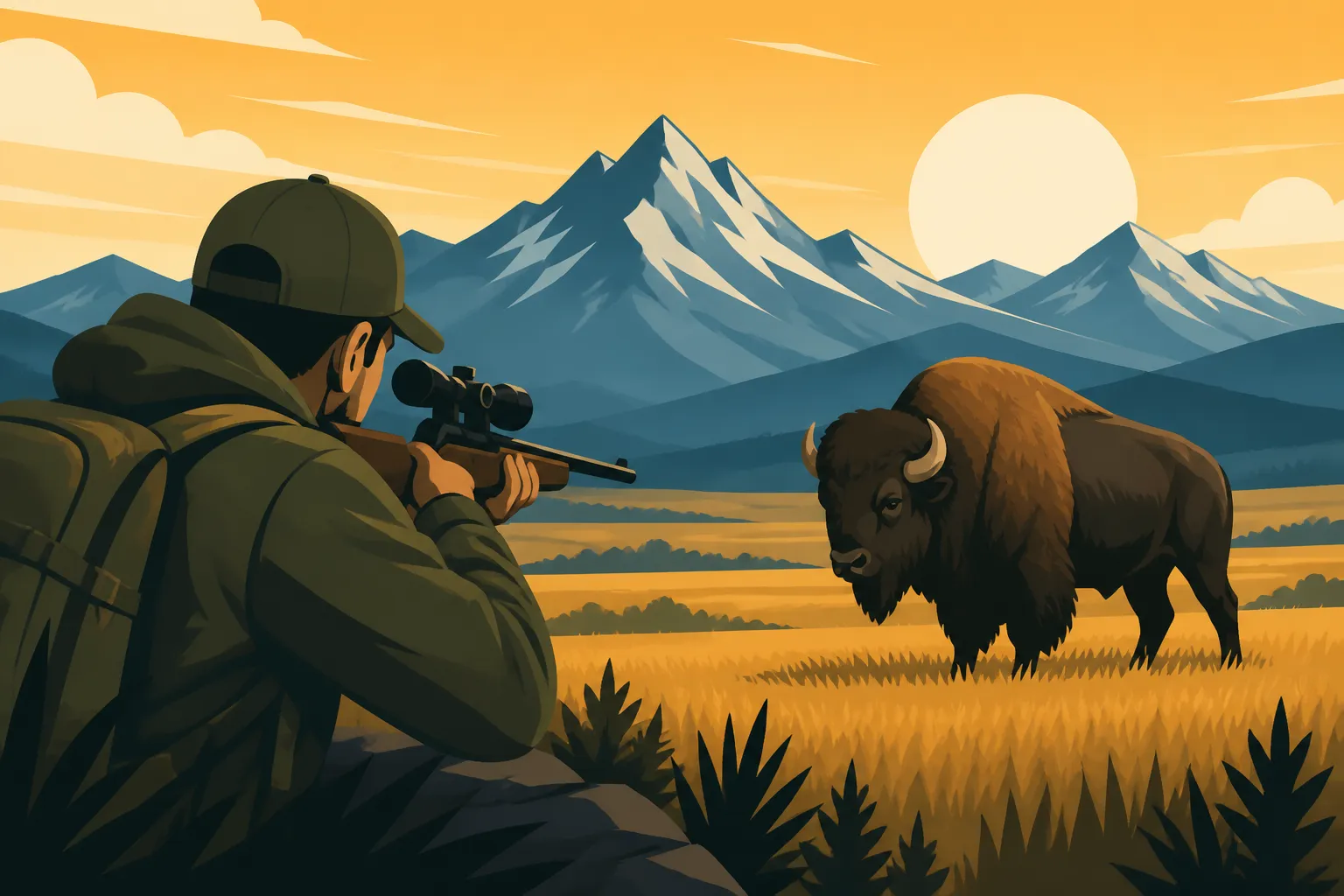
Due to their massive size and robust anatomy, shot placement on a bison is absolutely critical. Their vitals are situated deeper and further forward than on deer or elk. A broadside shot targeting the heart-lung area, just behind the shoulder and a third of the way up the body, is generally ideal. Avoid shoulder shots unless you're confident in your rifle's power and your ability to penetrate the thick bone and muscle. Headshots are extremely risky and generally discouraged due to the small target area and potential for non-lethal injury.
After the shot, do not rush in. Bison can be incredibly tough, and even a well-placed shot might not drop them instantly. Observe their reaction carefully. If they move off, give them time, just as you would when hunting for Montana Elk Hunting Methods Explained. If they go down, approach cautiously from a distance, watching for any signs of movement. A follow-up shot may be necessary to ensure the animal is humanely dispatched. Always prioritize safety, as a wounded bison is an extremely dangerous animal.
The Role of Technology and E-Scouting
Modern technology plays an increasingly important role in bison hunting, particularly in the e-scouting phase. While GoHunt primarily focuses on application strategy and drawing odds, platforms like onX Hunt provide invaluable mapping tools. These allow you to study terrain, identify potential bedding and feeding areas, locate water sources, and most importantly, clearly define public land boundaries and specific hunt unit lines. This is especially crucial in areas where private and public lands intermingle or near sensitive park boundaries. Using satellite imagery to identify open areas versus timber, or potential migration corridors, can save countless hours of boots-on-the-ground scouting. While it won't replace real-time field observation, effective e-scouting helps narrow down vast areas and allows for a more strategic approach once you're in the field.
The Reality of a Montana Bison Tag: What to Expect Post-Harvest
Drawing a Montana bison tag is an immense achievement, but the work doesn't end with the harvest. In fact, for many, the real "hunt" begins after the animal is down. The logistical challenge of processing and packing out such a large animal, especially in remote or difficult conditions, is a critical part of the experience and something every successful bison hunter must be prepared for.
Meat Yield and Quality
A mature bison can yield anywhere from 400 to 700 pounds of boneless meat, depending on the size of the animal and your processing methods. This is a substantial amount of high-quality, lean, and flavorful meat. Bison meat is typically lower in fat and cholesterol than beef and has a distinct, rich taste. Many hunters describe it as a cleaner, slightly sweeter flavor than elk. This impressive meat yield is a major draw for many applicants, offering years' worth of sustainable, wild protein. However, handling such a large quantity of meat requires proper planning: large coolers, access to a freezer, and potentially a local meat processor that can handle game. How to Keep Elk Meat Cool in Montana's Early Season offers relevant advice, though bison processing is often on an even larger scale.
Field Quartering and Packing Out
Field quartering a bison is a massive undertaking. Unlike an elk, which can often be handled by two or three people, a bison often requires a larger crew or multiple, arduous trips. You'll need specialized equipment like heavy-duty game bags and sharp, robust knives. The sheer weight of the quarters, head, and hide means that a team of strong individuals, pack animals, or specialized sleds for snow conditions are often necessary. In some regulated hunts, like those near Yellowstone, there are specific protocols and designated access points for meat recovery, and often FWP personnel will be involved in assisting or monitoring the process. Knowing How to Pack Out an Elk in Montana is a good starting point, but understand that bison will be significantly more demanding. It's a true test of grit and teamwork, and it's essential to have a solid plan and capable hands available before you pull the trigger.
Required Reporting and Ethical Obligations
Once a bison is harvested, there are usually stringent reporting requirements. This often involves contacting FWP within a specified timeframe, sometimes within hours, and may include bringing the head or hide to a check station for inspection, data collection, and tagging. These requirements are in place to ensure proper management of the herd, collect biological data, and prevent poaching. Ethical obligations extend beyond the harvest; it's about respecting the animal throughout the entire process, minimizing waste, and ensuring that all legal requirements are met. This includes proper disposal of non-edible parts and leaving the land as pristine as you found it. The harvest of a Montana bison is a privilege that comes with significant responsibility.
Disclaimer
Please note that hunting regulations, season dates, and draw procedures in Montana are subject to change annually by Montana Fish, Wildlife & & Parks (FWP). This article provides general information and should not be considered a substitute for reading the official FWP hunting regulations and staying informed through their official channels. Always consult the most current regulations before planning any hunting trip.